
Are You Lighting Money on Fire with Every Text You Send?
Sending an SMS campaign without knowing the destination carrier is like shipping 10,000 packages without address labels. You aren’t just risking lost messages; you are paying a premium for “returns” and “rerouting.”
In the high-volume world of SMS marketing, Blind Sending is a budget leak.
Every mobile carrier, Verizon, T-Mobile, and AT&T, charges different “Termination Fees.” If you route a T-Mobile message through a Verizon gateway, you are paying a massive surcharge.
Without a Phone Carrier Lookup Service, you are flying blind and overpaying for every single text that leaves your system.
What is a Phone Carrier Lookup Service?
Think of a Phone Carrier Lookup Service as “Caller ID on Steroids.”
It is a specialized API or software tool that queries the global mobile network to identify exactly which telecom provider owns a specific phone number right now.
The Critical Distinction: Original vs. Current
- The Database Check (Old Way): Tells you the number was created by AT&T in 2015.
- The Real-Time Lookup (New Way): Tells you the number is currently serviced by Mint Mobile in 2026.
This real-time distinction is the difference between a delivered message and a “Failed” status.
The Challenge of Mobile Number Portability (MNP)
The Area Code is a Liar.
In 2026, you cannot trust a phone number’s prefix. Due to Mobile Number Portability (MNP), millions of users switch service providers every year but keep their original phone numbers.
- A “212” (New York) number could be on a T-Mobile device in California.
- A “305” (Miami) number could be on a Verizon device in Seattle.
According to Mobile Number Portability rules, consumers own their numbers, not the carriers. This is great for them, but a nightmare for marketers using static lists.
Pro Tip: Don’t rely on outdated area codes. Check the live carrier status of any number instantly with 1Lookup’s free carrier lookup tool to ensure accurate routing. 1Lookup is built by the same team as VoiceDrop.
How Real-Time HLR Queries Work
How does the software know? It utilizes a technology called HLR (Home Location Register) Lookup.
When you run a check, the tool sends a rapid signal to the global mobile network. It pings the Home Location Register to ask, “Is this SIM card active, and which network is currently hosting it?” Crucially, this process is 100% silent.
It does not ring the prospect’s phone or notify them in any way, but it provides you with accurate, live data about the device status.
Top Business Use Cases for Carrier Detection
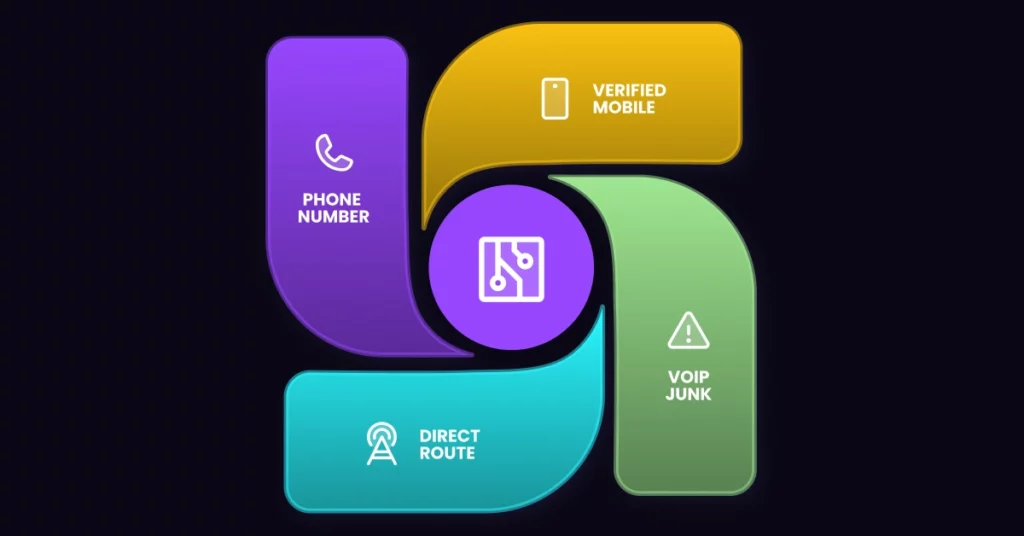
Why are top-tier businesses paying for carrier data? It isn’t just for curiosity; it is a direct driver of ROI.
Optimizing SMS Routing and Reducing Costs
Why are top-tier businesses paying for carrier data? It provides immediate ROI in three ways:
1. Least Cost Routing (Saving 20% on Bills). If you know the destination carrier, you can choose the cheapest path.
- Scenario: You have a message for a T-Mobile user.
- Optimization: Your system detects “T-Mobile” and routes the SMS through a gateway with a direct peering agreement.
- Result: You avoid expensive “inter-carrier” transit fees, reducing bulk messaging costs by 15-20%.
2. Filtering VoIP & Junk Leads. Not all numbers are mobile. Carrier lookups instantly reveal if a number is VoIP (Voice over IP), like Google Voice or Skype.
These numbers often signal low-intent leads or potential fraud. By excluding them from your Mass Text Messaging Campaigns, you ensure your budget is spent only on real prospects.
Filtering VoIP and Non-Mobile Numbers
Not all numbers can, or should, receive SMS marketing. Carrier lookups reveal if a number belongs to a traditional mobile carrier or if it is a VoIP (Voice over IP) number, like Google Voice or Skype.
VoIP numbers are often associated with lower conversion rates, burner accounts, or potential fraud. By identifying these early, you can exclude them from your Mass Text Messaging Campaigns to ensure your budget is focused solely on high-intent mobile users.
Troubleshooting Delivery Failures
Carrier data also solves technical headaches. Some smaller, regional carriers have limitations on file sizes or do not support MMS (picture messaging) at all. If you try to send a high-res image to a carrier that doesn’t support it, the message will bounce.
Knowing the carrier beforehand allows you to format your content correctly to avoid the dreaded “Message Failed” status.
Have a number that keeps bouncing? Stop guessing. Run a free diagnostic check with 1Lookup’s carrier lookup API to see if it’s a landline or a disconnected number.
Understanding the Technical Data: MCC and MNC
For developers and tech-savvy marketers, the value lies in the specific codes returned by the API. A professional lookup service doesn’t just say “Verizon”; it returns:
- MCC (Mobile Country Code): A three-digit code identifying the country (e.g., 310 for the USA).
- MNC (Mobile Network Code): A two- or three-digit code identifying the specific carrier (e.g., 410 for AT&T).
Developers use these Global Mobile Network Codes to programmatically map numbers to specific routing logic within their applications.
Essential Features of a Reliable Carrier Lookup Tool
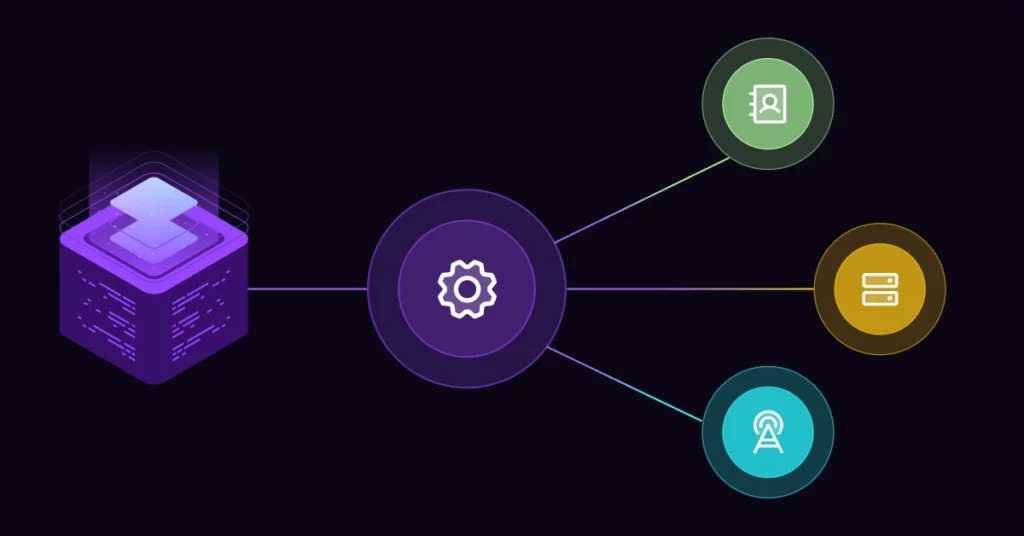
If you are in the market for a tool, prioritize speed and accuracy over everything else.
Real-Time vs. Cached Data
Beware of “cheap” providers that rely on Cached Data. These providers download a database once a month and serve you old information.
Because porting happens daily, cached data is dangerous. You must insist on Real-Time Lookups that ping the network at the moment of your request.
Seamless CRM and API Integration
Your sales team shouldn’t have to leave their workflow to check a number. The best tools offer seamless integration with platforms like Salesforce, HubSpot, or Pipedrive.
For developers, a clean JSON API response is essential for building custom apps. With robust VoiceDrop Integrations, you can automate this hygiene process so that every new lead entering your CRM is automatically scanned for carrier data without human intervention.
Best Phone Carrier Lookup Services (2026 Comparison)
Here is how the market leaders stack up.
1. VoiceDrop (Best for Sales & Marketing Teams) Most tools force you into a fragmented workflow: Buy data from Tool A -> Download CSV -> Upload to Tool B -> Send.
VoiceDrop closes the loop. It is the “All-in-One” solution that cleans your list and executes the campaign in one seamless flow. You never pay to message a dead number because the verification happens inside the sending platform.
- Best For: Teams who want to Book a Demo and start closing deals, not wrangling spreadsheets.
2. Twilio Lookup (Best for Developers) Twilio remains the industry standard for engineers building custom apps. If you have a dev team and want to build your own router from scratch, this is your best bet.
Twilio Lookup (Best for Developers)
Twilio remains the industry standard for engineers. If you are building a custom application from scratch and have a development team, Twilio’s API is powerful and reliable, though it lacks the built-in marketing interface of VoiceDrop.
Plivo (Good for International Coverage)
If your business relies heavily on non-US markets, Plivo is a strong contender. They offer extensive coverage in Asia and Europe, making them a solid choice for global fragmentation.
Compliance: Why Carrier Types Matter for TCPA
Beyond saving money, carrier detection keeps you out of court. The Telephone Consumer Protection Act (TCPA) treats landlines and mobile phones differently.
Automated dialing systems (robocalls) generally require stricter express written consent when calling mobile phones compared to landlines.
If you accidentally use an auto-dialer to call a landline that was ported to a mobile phone without knowing it, you could be liable for damages.
Checking the carrier type and cross-referencing with the National Do Not Call Registry is your best defense against compliance lawsuits.
Conclusion: Smarter Routing Starts with Better Data
Stop “Spraying and Praying” Your Budget Away
In 2026, accuracy is your competitive advantage. Bad data isn’t just annoying; it is a budget leak that sinks campaigns.
By integrating a Phone Carrier Lookup Service, you stop paying for failed messages, you bulletproof your sender reputation, and you ensure your sales team spends 100% of their time talking to real prospects.
Don’t let dead numbers kill your campaign. Start with a clean slate and automated outreach today with VoiceDrop.
FAQ’s
Is a carrier lookup the same as a valid number check?
Not exactly. A validation check simply confirms if the number exists and has the correct format. A carrier lookup goes deeper, telling you who provides the service (e.g., AT&T vs. Verizon). VoiceDrop does both simultaneously.
Can I check the carrier of an international phone number?
Yes, reputable lookup services have global access to international HLR databases and can identify carriers in over 190 countries, ensuring your global campaigns are routed correctly.
How often do people switch carriers (Porting)?
Millions of users switch carriers every year while keeping their phone numbers. This constant movement is why “Static Lists” or old databases don’t work, and why a real-time lookup is required for accuracy.