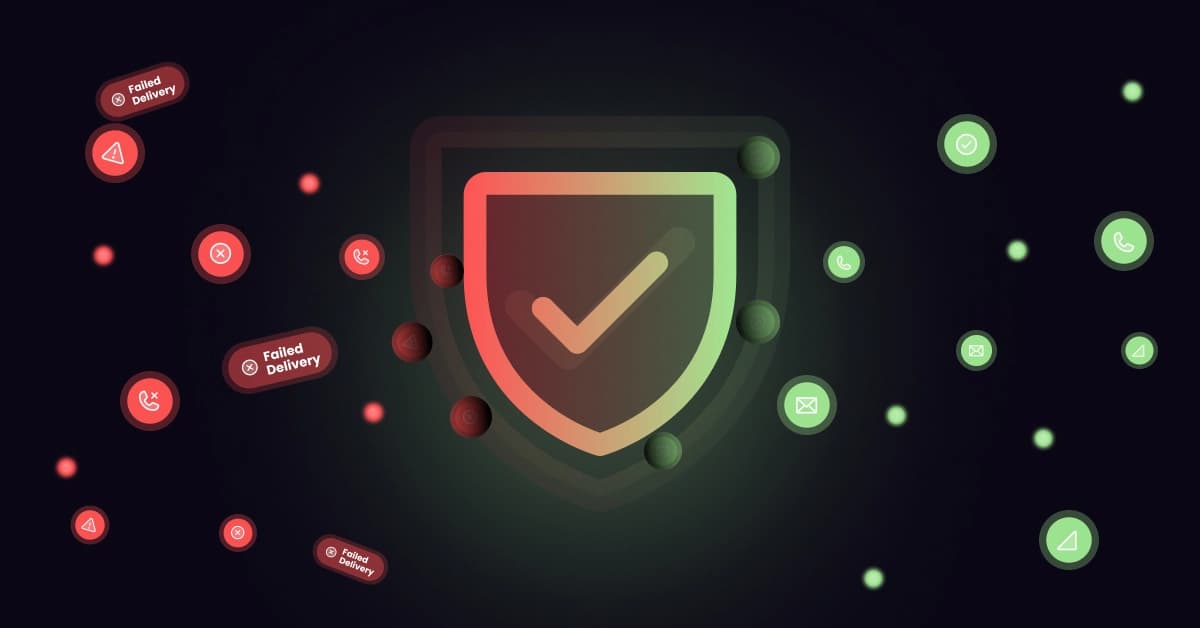
Are You Paying Your Team to Dial Dead Air?
Currently, how much of your budget is being set on fire? For instance, every time an SDR dials a disconnected number, or your marketing automation sends an SMS to a void, you aren’t just losing pennies; you are torching your team’s morale and your campaign’s ROI.
Unfortunately, “Failed Delivery” is the silent killer of modern sales. If you send 10,000 texts and 2,000 bounce, you haven’t just wasted 20% of your spend; you’ve invited carriers to block the other 80%.
Moreover, Phone Number Verification Software isn’t just about cleaning lists anymore; it is the essential firewall protecting your business reputation.
What is Phone Verification Software and How Does it Work?
Fundamentally, at its core, phone verification software acts as a digital gatekeeper. Specifically, it validates contact data to ensure that every number on your list is valid, active, and reachable before you ever attempt to contact it.
However, the process goes far beyond checking if a number has ten digits. The 3-Step Audit: How Top-Tier Software Scrubs Your List
Therefore, don’t settle for a basic format check. A robust Phone Number Verification Software executes a deep technical audit:
Syntax Check (The Formatting Gatekeeper): First, it rejects numbers with missing digits or invalid area codes, saving your system from processing junk data.
Domain & Network Check: Additionally, it verifies the number is attached to a valid provider (e.g., Verizon, T-Mobile) rather than a defunct network.
HLR Lookup (The Real-Time Ping): Finally, the deepest level of verification that pings the network to ensure the SIM is active right now.
The Power of HLR (Home Location Register) Lookup
Undoubtedly, the “secret sauce” of modern verification is the HLR Lookup. In contrast, while basic tools rely on outdated databases, premium software communicates directly with the mobile network.
Specifically, the software sends a “ping” to the carrier’s Home Location Register to ask, “Is this SIM card active right now?” Crucially, this process is completely silent.
As a result, it determines if the subscriber is active without ever ringing the prospect’s phone. This distinguishes Real-Time Carrier Checks (live, accurate data) from Database Checks (static, often outdated data).
Distinguishing Between Landline, Mobile, and VoIP
Crucially, for marketers, knowing who you are calling is just as important as knowing if the number works. Verification software identifies the line type: Mobile, Landline, or VoIP.
After all, sending an SMS to a landline is a guaranteed bounce. Even worse, it signals to carriers that your data is dirty. Verification software identifies the line type: Mobile, Landline, or VoIP.
This is especially crucial for Mass Text Messaging Campaigns. Unfortunately, you cannot text a landline, and VoIP numbers (like Google Voice) are often low-intent leads.
Pro Tip: Don’t waste budget on “undeliverable” messages. Instantly check if a number is mobile or landline using 1Lookup’s line type lookup before you hit send. 1Lookup is built by the same team as VoiceDrop.
The Hidden Risks of Unverified Data: Why Clean Hygiene Matters

Often, skipping verification to save a fraction of a cent is like picking up pennies in front of a steamroller. In reality, the real cost isn’t the wasted text message; it’s your Sender Reputation.
Furthermore, carriers monitor your “Bounce Rate” aggressively. For example, if you hit a Spam Trap (fake numbers used to catch scrapers) or exceed a 5-10% failure rate, carriers will blacklist your number.
Eventually, once you are flagged, even your legitimate messages to valid customers will be blocked.
Protecting Your Sender Reputation (10DLC & Carriers)
Carriers monitor your “Bounce Rate” relentlessly. If your campaigns exceed a specific failure threshold (often as low as 5-10%), carriers will throttle your throughput or block your sender ID entirely.
Therefore, verification software acts as an insurance policy for your sender score. By scrubbing invalid numbers before you launch, you keep your bounce rate near zero.
Consequently, if your bounce rate spikes, carriers categorize you as spam, destroying your Sender Reputation and Deliverability.
Essential Features to Look for in Verification Tools
Not all validators are created equal. However, to support a high-performance sales or marketing workflow, you need specific capabilities.
Real-Time vs. Bulk Processing
Since not all validators fit your workflow. Therefore, ensure your tool offers:
1. Bulk CSV Processing: Perfect for “Spring Cleaning” your legacy database. Upload 10,000 old leads and remove the 30% that have gone dark.
2. Real-Time API Validation: Ideally, catch bad data at the door. Verify leads the second they submit a form to ensure only valid numbers enter your CRM.
Alternatively, do you need a quick check? You don’t always need a bulk upload. Run an instant search on 1Lookup to validate a single number in seconds.
Disposable and Temporary Number Detection
Clearly, a modern problem requires a modern solution: “Burner phones.” Currently, many users sign up for services using temporary, disposable phone numbers to avoid sales calls.
Fortunately, high-quality software can flag these temporary lines, allowing you to filter out leads that have no intention of engaging.
API Integration with CRMs
Above all, efficiency is key. In other words, you have to manually download Excel sheets, clean them, and re-upload them. Your verification tool must talk directly to your CRM.
Instead, seamless data flow is possible through robust VoiceDrop Integrations, connecting your verification tool directly to Salesforce, HubSpot, or Pipedrive to automate hygiene.
Best Practices: When to Verify Your Phone Lists
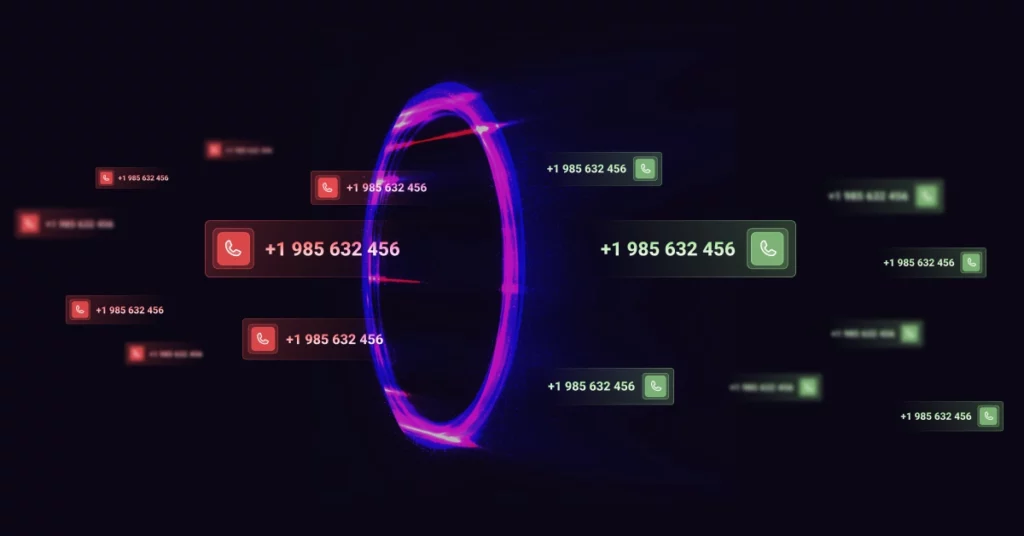
Remember, data hygiene is not a one-time event; it is a strategy. Thus, to maintain a healthy pipeline, you should verify numbers at two critical stages: Point of Capture (via API on your web forms) and Quarterly Scrubbing (maintenance of existing lists).
The “Data Decay” Reality
Unfortunately, contact information has a shelf life. For example, people change jobs, switch carriers, or disconnect lines constantly.
In fact, according to industry Marketing Data Statistics, customer contact data degrades by approximately 30% every single year. A list that was pristine in 2023 is likely “dirty” and dangerous to use in 2025 without re-verification.
Top Phone Number Verification Tools Reviewed (2025)
Here is how the top players in the market compare based on accuracy, speed, and utility.
VoiceDrop (Best for Validation + Outreach)
Notably, VoiceDrop is the only tool on this list that closes the loop. Typically, traditional tools force you to validate a list, export it, and then import it into a separate sending platform.
The VoiceDrop Advantage: It cleans your list and executes the campaign in one seamless flow. As a result, you never pay to message a dead number because the verification happens inside the sending platform.
Best For: Sales teams who want to Book a Demo and start closing deals, not just cleaning spreadsheets.
2. ZeroBounce (Best for Raw Data)
A powerhouse for data scientists who need deep hygiene metrics but don’t need outreach features.
3. NumVerify (Best for Developers)
A lightweight JSON API solution perfect for app developers building custom verification into their own software.
Navigating Compliance: TCPA and GDPR
Verifying a number is legal, but how you contact that number is heavily regulated. However, it is important to remember that just because a number is “Valid” does not mean the owner has given “Consent.”
The Role of Verification in TCPA Compliance
The Telephone Consumer Protection Act (TCPA) has distinct rules for mobile phones versus landlines. Automated calls to mobile phones require stricter express written consent.
Consequently, by verifying “Mobile vs. Landline,” you can segment your lists to ensure you don’t accidentally breach these rules. Remember, ignorance is not a defense; always adhere to the TCPA Compliance Guide to avoid costly litigation.
Conclusion: Clean Data Equals Higher Revenue
In summary, bad data is a leak in your boat that eventually sinks the ship. In 2025, accuracy is your competitive advantage.
Ultimately, by integrating Phone Number Verification Software, you stop paying for failed SMS, you bulletproof your sender reputation, and you ensure your sales team spends 100% of their time talking to real prospects.
Therefore, don’t let dead numbers kill your campaign. Start with a clean slate and automated outreach today with VoiceDrop.
FAQ’s
Can phone verification software check international numbers?
Yes, most premium tools like VoiceDrop support global HLR lookups to verify numbers in almost any country, ensuring your international campaigns remain efficient.
What is the difference between a valid number and an active number?
A “valid” number has the correct number of digits and formatting (syntax). An “active” number is currently connected to a network and can receive calls. You need software that checks for “active” status via HLR.
Does verifying a phone number notify the user?
No, the HLR lookup process is completely silent. It pings the mobile network infrastructure, not the user’s actual device, so the owner of the phone never knows their number was verified.