Your best sales script is useless if nobody hears it.
You are paying for leads, paying for SDRs, and paying for dialer software. But if your Caller ID displays “Scam Likely” or “Spam Risk,” you are lighting that budget on fire.
In 2026, “Number Health” is the single biggest variable in outbound success. Just as a blacklisted domain sends emails to spam, a damaged reputation sends calls straight to voicemail.
If you aren’t monitoring this daily, you aren’t just losing calls, you’re losing revenue.
What is a Phone Spam Check Tool?
Think of a Phone Spam Check Tool as a credit report for your phone lines.
It is a specialized API or dashboard that queries the “Big Three” analytics engines, Hiya, TNS, and First Orion, to reveal exactly what your prospects see when you call.
The Scary Reality: Reputation is not static. Your number might be “Clean” on Monday morning, but flagged as “High Risk” by Tuesday afternoon based on your dialing speed.
A spam check tool is the only way to catch this shift before it burns your leads.
How Reputation Scoring Works (0-100 Scale)
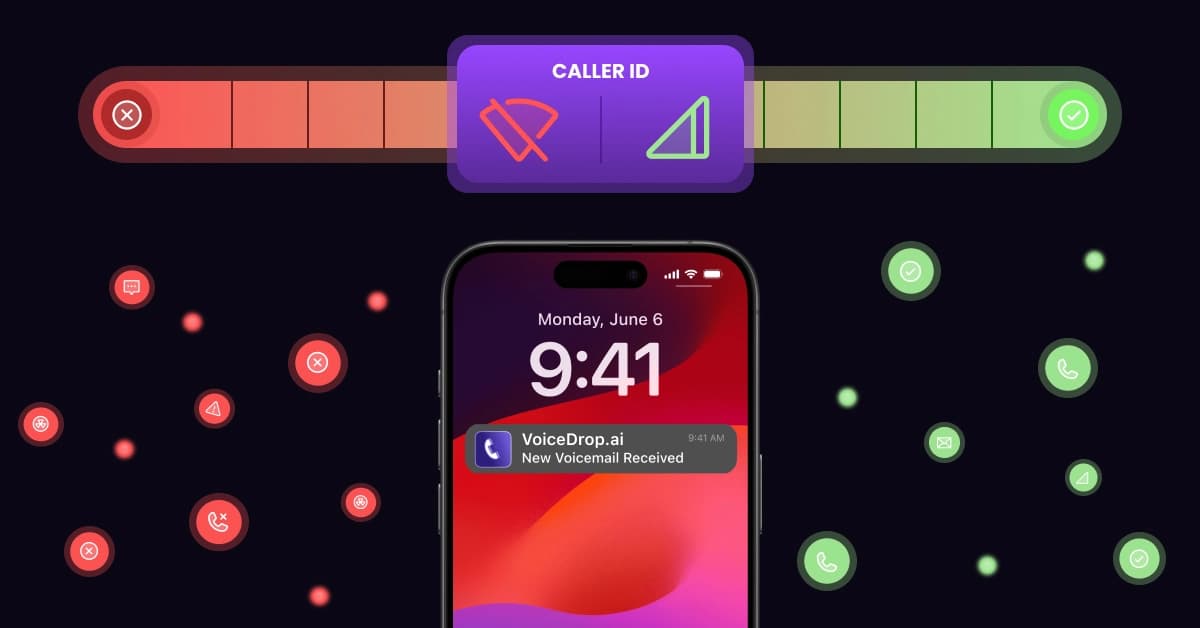
Think of this like a credit score for your phone lines. Carriers and analytics providers assign a “Trust Score” to your number, typically on a scale of 0 to 100 or Low to High.
- High Score (Verified Business): Your calls ring through with a clear Caller ID, sometimes even displaying your brand logo.
- Medium Score: Your calls go through, but without a verified checkmark.
- Low Score (Spam Risk): Your calls are either blocked at the network level or displayed with a “Scam Likely” warning.
The Role of Carrier Analytics Engines (Hiya, TNS, First Orion)
Carriers do not guess whether a call is spam; they rely on massive data partners to make that decision in milliseconds.
The “Big Three” analytics engines, Hiya, TNS, and First Orion, process billions of calls to analyze traffic patterns.
- Hiya, powers AT&T.
- TNS powers Verizon.
- First Orion powers T-Mobile.
A professional spam check tool queries these specific databases to give you accurate, cross-carrier data. If you aren’t checking all three, you are only seeing a fraction of the picture.
Why Your Business Numbers Get Flagged (The Triggers)
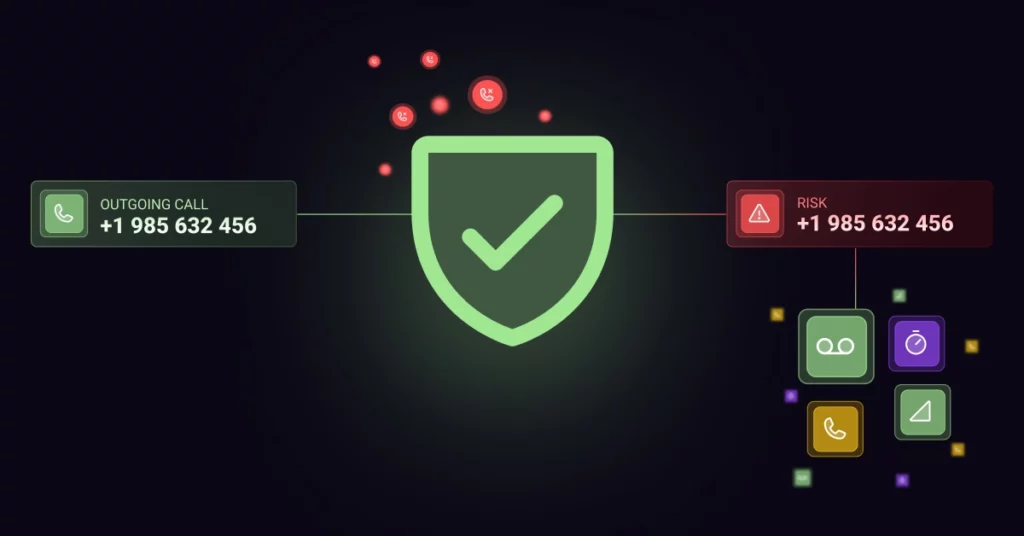
Legitimate businesses get flagged because they accidentally mimic “Robocaller Behavior.” Carrier algorithms look for specific patterns:
- Volume Spikes (The #1 Killer): If a single number (DID) dials 500+ times in an hour, algorithms flag it as non-human. Humans can’t dial that fast; only bots (and aggressive power dialers) can.
- Short Duration Calls (ASR): If 90% of your calls last less than 6 seconds (immediate hang-ups), carriers assume you are spamming.
- Consumer Blocks: If prospects manually press “Block Number” on their iPhone or Android, your reputation score takes an immediate, global hit.
The Critical Role of STIR/SHAKEN Protocols
The regulatory landscape changed permanently with the introduction of the FCC’s STIR/SHAKEN framework. This protocol requires providers to digitally “sign” calls to verify their origin.
If your calls are not signed with Attestation Level A (meaning the carrier knows exactly who you are and that you have the right to use that number), downstream carriers treat the call as suspicious. This is currently the #1 technical reason legitimate businesses get blocked.
For a deeper understanding of these requirements, you can review the FCC Call Authentication Rules, which detail how these standards protect consumers from illegal spoofing.
Consumer Reports and “Block” Actions
Algorithms are powerful, but user feedback is king. Modern smartphones allow users to report a call as spam or block a number with two taps.
If a significant percentage of your prospects manually press “Block this number” on their iPhone or Android devices, your reputation score drops globally and immediately.
These user reports are shared across networks, meaning a few angry prospects can burn a number for everyone.
How to Check Your Number’s Reputation
You cannot fix what you do not measure. There are two ways to handle this: the “Slow Way” and the “Scalable Way.”
1. The Scalable Way (Automated APIs) High-volume teams cannot Google their own numbers every morning. You need a system like VoiceDrop that scans your DIDs daily. If a number’s health score drops, the system flags it automatically so you can pause it before you dial.
2. The Diagnostic Way (Instant Check) If you suspect a specific number is “burned,” don’t guess.
Pro Tip: Use 1Lookup to run a free, instant carrier and validity check. It reveals the technical status of the line immediately, saving you from troubleshooting blindly.
Manual Cross-Carrier Testing
If you don’t have an automated tool yet, you can perform the “Poor Man’s Test.”
Gather three colleagues or friends who subscribe to different carriers (one with Verizon, one with T-Mobile, and one with AT&T). Call them from your business line and ask: “What exactly does my name say on your screen?”
- Does it say “Unknown”?
- Is your Business Name displayed?
- Or does the screen show “Spam Risk”?
While this method is slow and not scalable, it provides an immediate snapshot of how you appear on specific networks.
Pro Tip: Don’t rely solely on guesswork. Run a free carrier and validity check on 1Lookup’s spam phone checker to see the technical status and carrier details of any number instantly. 1Lookup is built by the same team as VoiceDrop.
How to Remove “Scam Likely” Labels (Remediation)
If your audit reveals that your numbers are flagged, don’t panic. “Spam” is a status, not a life sentence. Here is how to fix it.
Registering with the Free Caller Registry
If your audit reveals a “Spam Risk” label, do not abandon the number yet. You can restore its health.
Step 1: The “Whitelisting” Appeal. The analytics engines (Hiya, TNS, First Orion) operate a unified portal called the Free Caller Registry. Submit your business details here to prove you are a legitimate entity. This single action can often clear a spam label across all three major carriers within 24 to 72 hours.
Step 2: The 30-Day Cool Down. If registration doesn’t work immediately, the number needs rest. Remove it from your active dialing pool for 30 days. Often, when the aggressive traffic stops, the algorithms automatically reset the score to neutral.
Best Practices to Maintain High Answer Rates
Prevention is always cheaper than remediation. Follow these rules to keep your numbers clean.
Intelligent Number Rotation
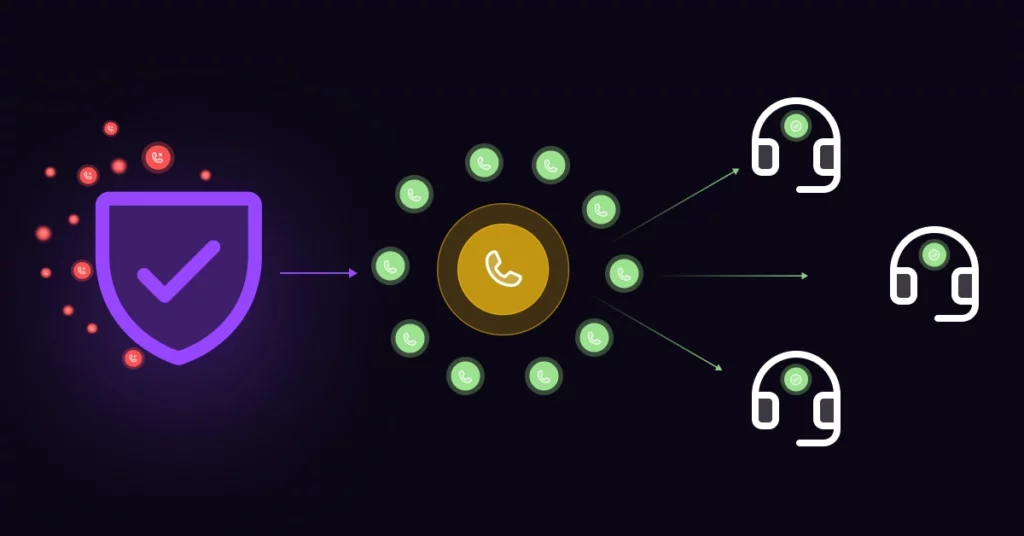
1. Implement “Did Rotation” Logic. The ratio matters. If you have 10 agents making 1,000 calls a day, you cannot rely on 10 phone numbers. You need a pool of 30-50 numbers rotating dynamically. This keeps the “Calls Per Hour” (CPH) low for each specific line, staying under the radar of carrier algorithms.
2. Scrub Your Data First Dialing disconnected numbers or “Honey Pots” (trap numbers) is a fast track to a spam label.
- Quick Fix: Before loading a list, verify the numbers are active using 1Lookup.
- Permanent Fix: Use VoiceDrop Integrations to clean every lead automatically inside your CRM.
Top Phone Spam Check Tools Comparison (2026)
Not all tools are created equal. Here is how the market solutions stack up.
1. VoiceDrop (The All-in-One Defense) Most tools force you to buy two subscriptions: one to validate numbers and another to check spam reputation. VoiceDrop combines both. It ensures the number is connected and clean. It allows you to automatically identify damaged numbers and swap them out instantly, so your team never wastes a dial on a “Spam Risk” Caller ID.
- Book a Demo to see the reputation monitor in action.
2. Robotalker For teams using ringless voicemail or outbound voice tools, maintaining clean number health is crucial. RoboTalker offers a free spam and reputation check to all customers as part of their platform – helping identify potential flags early, rotate numbers proactively, and avoid carrier blocks without extra cost. This complements bulk monitoring tools by providing quick, no-subscription validation for smaller campaigns or ongoing hygiene.
3. Number Verifier (Basic) Good for one-off checks, but lacks the bulk processing power needed for enterprise call centers.
4. Carrier Apps (Scam Shield) Great for consumers blocking calls, but useless for businesses trying to make calls.
If you are the consumer in that sentence, blocking treats the symptom. Give the next quote form a temporary phone number instead and the calls stop reaching your real line. ExpressNumber is built by the same team as VoiceDrop.
Compliance: TCPA and The Do Not Call Registry
Beyond the annoyance of spam labels, there is the legal risk of fines. The Telephone Consumer Protection Act (TCPA) allows for massive penalties for unsolicited calls.
Getting flagged as spam is often a precursor to legal trouble. If you are calling numbers listed on the DNC, you are generating complaints that lead to spam labels.
Always scrub your lists against the National Do Not Call Registry to avoid being reported. Staying compliant is the best way to keep your reputation score high.
Conclusion: Reputation is Your Asset
Don’t Let Bad Data Silence Your Team.
You can have the best sales trainers and the most persuasive scripts in the world, but if your call is blocked before the phone even rings, you have already lost.
Your phone number reputation is a tangible business asset. Protect it. Stop “spraying and praying” with damaged numbers. Start auditing your reputation today and watch your answer rates climb back to where they belong.
FAQ’s
How long does it take to remove a spam label?
It varies. If you register with the analytics engines and prove legitimacy, the label can be removed in 24 to 72 hours. However, if you rely on the organic “Cooling Off” method, it can take 30+ days for the score to reset.
Does buying new numbers guarantee they are clean?
No. Carriers recycle phone numbers. You might purchase a “new” number that was used by a spammer last month and dropped. Always check the reputation of a new number before you assign it to an agent.
Is a “Likely Spam” label permanent?
No, it is dynamic. If you change your dialing behavior, lower your call frequency, and register your business, the label can be removed, and your Trust Score restored.