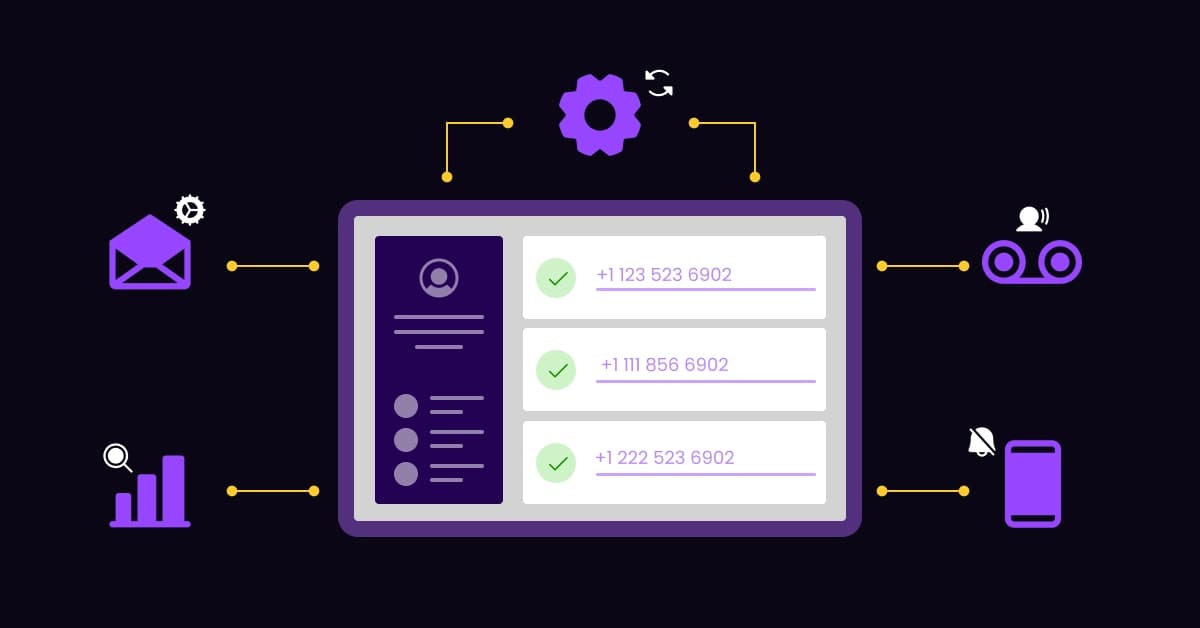
Managing a database of customer contact information is a significant challenge for modern enterprises. Inaccurate or outdated phone numbers lead to failed deliveries, wasted marketing spend, and security vulnerabilities.
In 2025, innovative businesses must move beyond basic contact forms. You need a programmatic solution to verify, clean, and enrich your phone number data in real time.
This guide provides a roadmap for integrating validation into every stage of your customer journey to drive growth.
Why Real-Time Validation Is Critical for Modern Enterprises
The shift toward mobile-first communication means your data accuracy is non-negotiable. Modern customers expect instant interaction through SMS and voice.
If your database contains “garbage” data, your automated systems fail. Effective data cleaning connects directly to long-term business survival and brand authority.
Companies that ignore data hygiene face rising operational hurdles. Research into global communication trends shows that businesses lose millions annually due to poor data quality. You can find more on industry benchmarks via Statista.
Rising Costs of Invalid Data
Dead numbers drain your marketing budget silently. Every time you send an automated SMS or place a voice broadcast to an invalid number, you pay for a failure.
Consider the Math of “Silent Failures.” If you run a campaign targeting 50,000 users and your database has a 20% error rate (a common industry average), you are paying to send 10,000 messages that will never be delivered. At standard carrier rates, this waste compounds monthly, bleeding thousands of dollars from your annual budget.
Manual data entry errors often result in 15% of leads being unreachable from day one. Phone Number Verification prevents these costs by identifying undeliverable numbers before you attempt to contact them. By filtering out landlines and disconnected mobile lines before you hit “send,” you ensure your resources are spent only on reachable, high-intent leads.
What Financial Waste Occurs without Validation
Companies often lose 15-20% of their marketing budget to “silent failures”, messages sent to numbers that cannot receive them. Every undelivered SMS or failed voice broadcast carries a cost. A Phone Number Verification service stops this waste at the source.
By filtering out landlines and disconnected mobile lines before you hit “send,” you ensure your resources are spent only on reachable, high-intent leads.
How Fraud and Bots Affect Your Bottom Line
Bot sign-ups are a silent epidemic for SaaS and e-commerce platforms. Fraudsters use “burner” numbers or non-fixed VoIP lines to create thousands of fake accounts. These bots skew your analytics and can even exploit promotional offers.
Using a Real-time API to flag these high-risk numbers during registration allows you to block malicious activity before it enters your ecosystem.
The Importance of Fraud Prevention and Trust
Customers trust platforms that prioritize security. Using a Real-time API to implement Two-Factor Authentication (2FA) ensures that sensitive codes reach only legitimate users.
You should use validation to identify high-risk VoIP Detection patterns or burner numbers. In 2025, fraudsters use automated bots to create thousands of fake accounts.
This strategy protects your platform from bot signups and malicious actors by blocking “non-fixed” numbers at the point of entry.
Advanced APIs now offer predictive risk scoring. This allows your security team to flag a number based on its carrier history and reputation.
By filtering out virtual numbers used in “account takeover” attacks, you maintain a secure environment that builds long-term brand credibility.
Understand Your Data Needs and Technical Requirements
Audit your current database before you implement new technology. You must understand the health of your existing records to measure the ROI of a validation service. Deep data insights lead to better segmentation and higher SMS Delivery Rates.
Building Accurate Customer Profiles
A quality API provides more than a simple status check. It gathers metadata such as carrier name, line type, and location.
You should treat mobile and landline numbers differently in your outreach strategy. Use SMS for mobile users and reserved voice calls for landlines to ensure your message is heard.
Leveraging HLR Lookups for Live Connectivity
For mission-critical communication, like Two-Factor Authentication (2FA), you need to know if the phone is actually switched on and connected to a network. An HLR Lookup (Home Location Register) queries the mobile network in real time.
This ensures that time-sensitive codes aren’t sent to “dead” handsets, improving your login success rates and user satisfaction.
Stop wasting your marketing budget on invalid leads. Use 1Lookup’s phone validation API to verify your customer database in real-time and ensure 100% delivery for your SMS and voice campaigns. 1Lookup is built by the same team as VoiceDrop.
Identifying Bot Patterns and Fake Signups
Analyze your API response codes to uncover fraud patterns. If a high percentage of signups come from “Virtual” or “VoIP” line types, you may be under a bot attack. Blocking these numbers at the point of registration keeps your lead pool clean and your analytics accurate.
Optimize Your Registration Workflow for High Conversions
Your signup page must balance security with a smooth user experience. A Phone Number Verification service should feel invisible to the user. If the process is too slow, users will abandon your form.
Real-Time Validation Best Practices
Integrate the API to auto-format numbers to the E.164 Standard as the user types. This ensures that every entry follows international rules regardless of how the user inputs their digits.
Use Real-time API calls with low latency so that the “Valid” check happens instantly without causing a lag in your form’s performance.
High-speed APIs like those found at 1lookup handle these checks in milliseconds. This prevents “form friction,” where a user might leave your site because the validation takes too long to load.
By providing instant verification, you improve the user experience and ensure your SMS Delivery Rates remain high from the very first interaction.
Clear Feedback for User Errors
Show helpful error messages instead of generic “invalid” alerts. If a user enters an incorrect country code, tell them exactly what to fix. Reducing friction at the entry point increases the total number of verified leads in your system and prevents users from abandoning the sign-up process out of frustration.
Leverage Global Data to Dominate International Markets
International Formatting allows your business to scale across borders without delivery failures.
You must handle different prefix lengths and dialing rules for over 200 countries. Effective Content Marketing Strategies rely on reaching a global audience accurately.
You can learn more about reaching audiences via Social Media Examiner.
Handling Complex Country Codes
Use the API to automatically detect and correct prefix errors. This feature is vital for companies running global marketing campaigns. The API also provides local time-zone data. Use this information to schedule marketing calls during appropriate hours for the recipient.
Implement Automated Database Cleaning Strategically
Database Cleaning is a recurring strategy, not a one-time event. Phone numbers change owners and carriers frequently. You must refresh your data to maintain a high-quality list.
| Feature | Business Benefit |
| Carrier Lookup | Identifies ported numbers for accurate routing |
| VoIP Detection | Flags high-risk entries to prevent fraud |
| HLR Lookup | Confirms if a mobile handset is currently active |
| Line Type | Separates SMS-capable leads from landlines |
Batch Processing for Legacy Lists
Upload your large CSV files to the API to purge “dead” numbers. This process removes inactive records and updates carrier information. Run a Carrier Lookup every 90 days to stay updated on ported numbers.
Cleaning your database is the first step toward a high-performing outreach strategy. Once you verify your mobile numbers, you can use automated tools to deliver your message at scale.
Platforms like VoiceDrop allow you to send ringless voicemails to your clean lists, ensuring your marketing reaches the customer’s inbox without a disruptive ring.
This combination of clean data and smart delivery maximizes your engagement rates while staying compliant with industry regulations.
Use Ringless Voicemail for Verified Leads
Once your list is clean, use tools like ringless voicemail to nurture leads. This technology delivers personalized messages directly to the user’s voicemail without a disruptive ring.
Ensure your list is verified to maintain TCPA Compliance and avoid legal risks. Learn more about mass voice messaging for your outreach.
Track Your Data ROI and Optimize Performance
Monitoring API metrics is essential for marketing efficiency. You must know if your data quality is improving over time. Use tools to measure voice messages and SMS campaign success.
Key KPIs for Data Hygiene
- Invalid Number Percentage: Measures the quality of your lead sources.
- SMS Success Rate: Tracks how many messages actually reach a mobile device.
- Cost-per-Verified-Lead: Calculates the true price of acquiring a real customer.
- Lead-to-Conversion Ratio: Shows the impact of clean data on your bottom line.
Take the Next Step
Don’t let data decay dictate your growth. Stop wasting budget on dead numbers and start validating your leads in real time.
Get your free demo of VoiceDrop today and see how clean data transforms your marketing ROI.
FAQ’s
What is the most effective way to verify phone numbers in 2025?
Using a real-time API at the point of entry is the most effective strategy. This method ensures data accuracy and prevents fraud before the data enters your database.
Does phone validation help with SMS delivery?
Yes. Validation identifies landlines and disconnected numbers. This allows you to target only active mobile devices, which significantly increases your delivery rates.
How does an API detect fraudulent numbers?
The API checks for line types, such as VoIP and virtual numbers. Bots often use these to create fake accounts. The system flags these numbers so you can block them.
What is the E.164 standard?
It is the international numbering plan for public telecommunication. It ensures that each device has a unique number globally, usually formatted with a plus sign and country code.
Now ready to clean your database and secure your platform? Start your free trial at 1lookup today to access global phone validation and advanced carrier intelligence for your business.