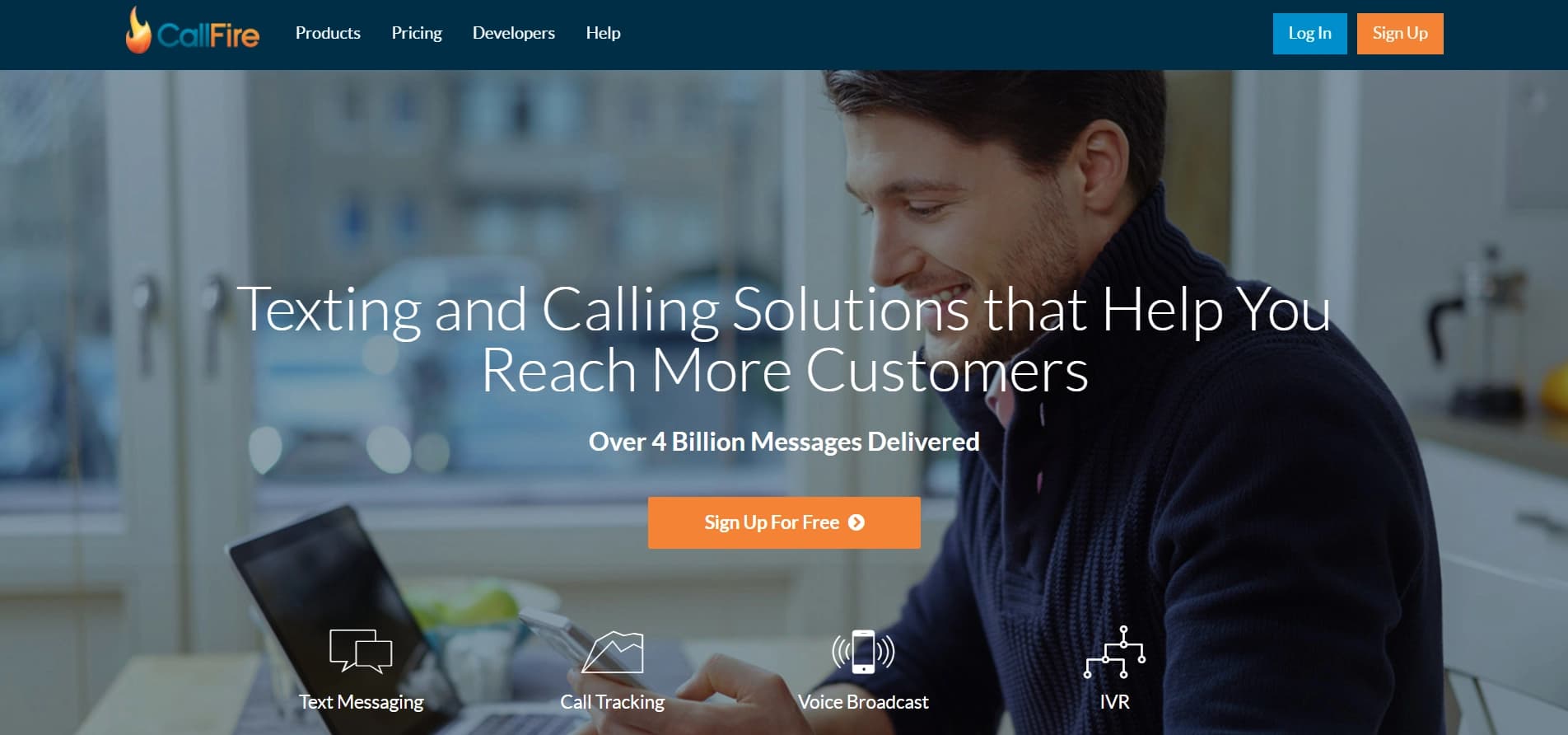
CallFire positions itself as a leading “Voice Marketing & SMS Platform,” specifically engineered to help businesses streamline outreach through automated voice broadcasts and text messaging.
According to CallFire, the software enables marketing teams to bypass the inefficiencies of manual outreach, empowering businesses to connect with thousands of contacts instantly by automating communication.
In this review, we conduct a deep dive into CallFire, evaluating the company’s promises, how actual users describe their day-to-day experience on authority sites like G2 and Capterra, and what prospective customers should weigh before purchasing in 2026.
CallFire Overview
CallFire markets itself as a tool built explicitly for small-to-mid-sized businesses (SMBs), political campaigns, and non-profits that need to maximize outreach volume without requiring complex enterprise infrastructure.
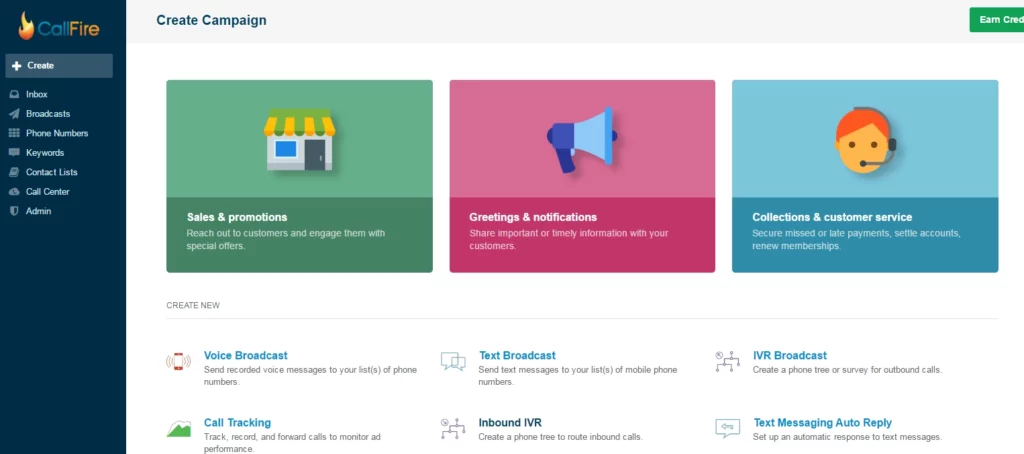
It is frequently advertised as the bridge between effortless mass communication and customer engagement, ensuring that users spend their time analyzing results rather than manually dialing numbers or sending individual texts.
According to the platform, its core capabilities include:
- Mass Voice Broadcasting (Robocalls)
- Business Text Messaging (SMS Marketing)
- Call Tracking & Analytics (ROI Measurement)
- Interactive Voice Response (IVR System)
- Cloud Call Center (Power Dialing)
- Local & Toll-Free Number Leasing
- Real-time reporting and contact management
Understanding the exact cost per message can be complicated due to CallFire’s tiered credit system. If you’re worried about budget overruns, read our detailed breakdown of CallFire Pricing to see if it actually fits your ROI goals.
So, does CallFire actually drive engagement and ROI for real businesses?
To determine that, we audited feedback across several trusted review networks to reveal what modern marketing teams are actually encountering.
Let’s dissect the data.
User reviews and ratings
On G2
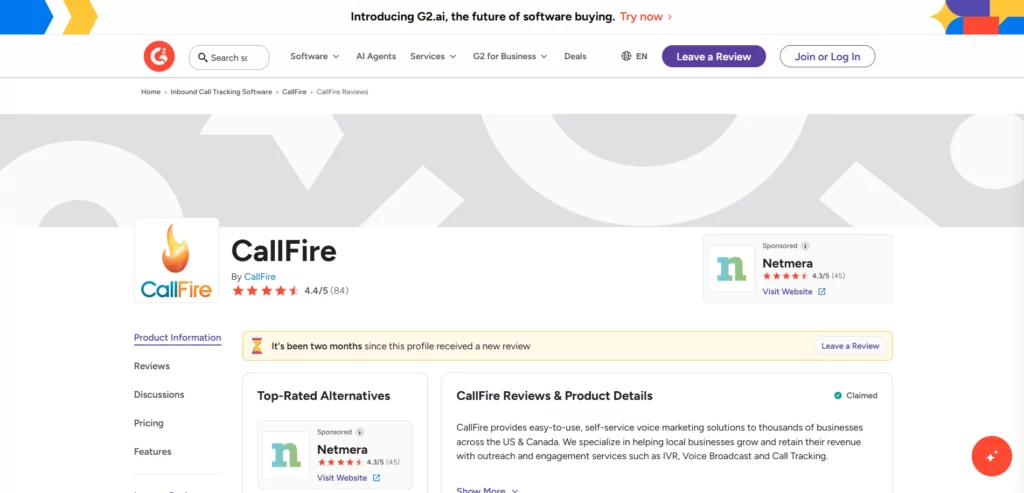
Rating: 4.4/5 (80+ reviews), with the majority of users praising the platform’s simplicity and the effectiveness of its broadcast campaigns. From the “Pros & Cons” generated from user testimonials, the standout positives are:
- Ease of Use (Intuitive interface for setting up campaigns)
- Scalability (Handles thousands of calls simultaneously)
- SMS Broadcast (High open rates for text campaigns)
- IVR Capabilities (Simple to create custom phone trees)
- Cost Transparency (Pay-as-you-go options are popular)
On the flip side, some reviewers point out:
- Support Response Times (Can be slow during peak hours)
- Feature Stagnation (Platform hasn’t seen major UI updates recently)
- Cost at Scale (Per-minute rates can get expensive for heavy users)
- Strict Compliance Filters (Aggressive filtering of specific keywords)
(Credit: G2)
On Capterra
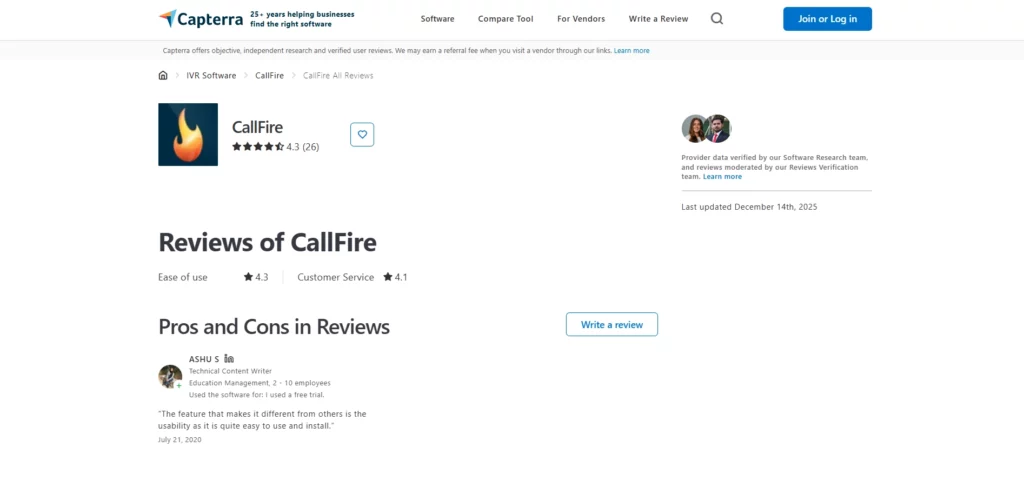
Rating: 4.3/5 (20+ reviews). Capterra feedback tends to emphasize the reliability of the infrastructure and the utility of the call-tracking features. According to various users, the software excels at attributing leads to specific marketing efforts.
Positive feedback frequently highlights:
- The ability to purchase local phone numbers quickly. This supports the growing need for localized marketing presence.
- The seamless integration of voice and text in a single dashboard.
- The “Cloud Call Center” feature allows remote agents to dial from anywhere.
Negative feedback on Capterra generally focuses on billing transparency. Some users note that credit expiration policies can be frustrating if not monitored. Others note that the reporting, while functional, lacks the granular depth of enterprise-grade competitors.
(Credit: Capterra)
On Trustpilot
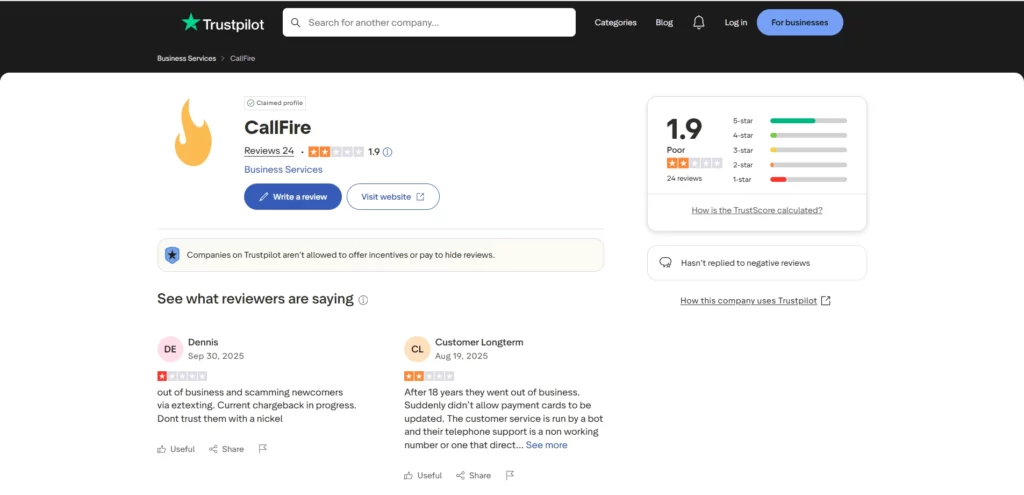
Rating: 1.9/5 (20+ reviews)
While CallFire performs well on G2 and Capterra, its Trustpilot reputation is significantly lower, raising red flags for potential buyers. A score of 1.9 typically indicates severe dissatisfaction with post-purchase support and billing practices.
What users liked:
- Initial Setup: Most negative reviews still admit that the platform is easy to set up and the interface is user-friendly for beginners.
What users disliked:
- Billing Nightmares: The majority of 1-star reviews cite “predatory billing” practices, such as being charged after cancellation or auto-recharge features draining bank accounts unexpectedly.
- Account Suspensions: Several users reported that their accounts were blocked or flagged for “compliance” issues without warning, freezing their credits and halting active campaigns.
- Non-Refundable Credits: A major pain point is the refusal to issue refunds for unused credits, even when the service didn’t work as advertised.
(Credit: Trustpilot)
Review Authenticity
Every review aggregator enforces its own distinct validation protocols.
- G2 mandates LinkedIn verification or business email validation to prevent bot-generated feedback.
- Capterra uses a combination of fraud-detection algorithms and manual checks to ensure reviewers are legitimate software users.
On G2 and Capterra, the majority of CallFire reviews carry the Verified Current User badge, suggesting the feedback comes from active professionals in marketing, real estate, and political advocacy.
Another critical indicator is recency. CallFire receives a steady stream of feedback, indicating it remains a staple tool for SMBs rather than a legacy product losing market share.
In summary, the publicly available data depict a dependable, user-friendly communication tool with a reputation for stability, though it demands careful budget management for high-volume campaigns.
Pros & Cons
CallFire’s pros
- Simplicity & Speed: Users universally cite the “user-friendly interface” as the primary benefit, allowing teams to launch massive voice or text campaigns in minutes without technical training.
- Flexible Pricing: The “Pay-As-You-Go” model is a massive advantage for seasonal businesses or political campaigns that don’t want to commit to monthly contracts.
- IVR Customization: The visual IVR builder allows businesses to create professional phone menus easily, ensuring inbound callers are routed correctly.
- Call Tracking: The ability to provision local numbers and track inbound traffic sources helps marketers prove ROI on physical and digital ads.
- Reliability: Users report high deliverability rates for SMS and Voice, which is essential when time-sensitive notifications must reach the audience.
CallFire’s cons
- Pricing for Scale: While flexible, the per-minute/text rate is higher than some wholesale competitors’; high-volume users might find monthly bills climb quickly.
- Limited Dialer Features: Compared to dedicated predictive dialers, CallFire’s “Cloud Call Center” lacks advanced features such as voicemail drop detection during live calls or dynamic scripting.
- Credit Expiration: A common grievance is that purchased credits on specific plans may expire if not used within the billing cycle, requiring careful usage planning.
- Integrations: While it offers API access, native integrations with newer CRM platforms can sometimes require third-party connectors like Zapier.
Given the mixed feedback regarding billing and support, many businesses are now exploring more modern, AI-driven tools. You can find the best match for your team in our list of the Top 5 CallFire Alternatives to Scale Your Outreach.
Don’t invest in any tool before…
Considering the following tips:
- Calculate your estimated monthly volume to see which model is cheaper: a subscription or pay-as-you-go.
- Test the “Do Not Call” (DNC) compliance features to ensure they meet your legal requirements.
- Look for discussions on marketing forums to see how deliverability rates hold up during high-traffic seasons (like elections).
- Speak to other business owners about their experience with customer support responsiveness.
Ultimately, the right software is the one that allows you to reach your audience effectively without overwhelming your budget.
CallFire is a titan for voice broadcasting and SMS marketing, but if your strategy relies more on stealthy, non-intrusive touchpoints like ringless voicemail…
Consider VoiceDrop as an Alternative
If you are seeking a high-leverage, AI-driven ringless voicemail tool, VoiceDrop is the superior choice for marketing teams, recruiters, real estate agents, and lead gen professionals.
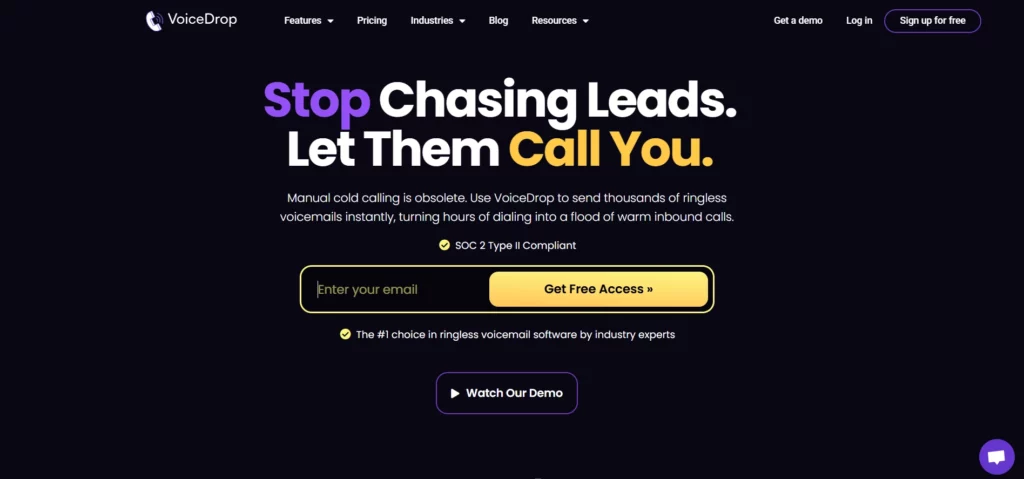
Unlike CallFire, which often focuses on traditional ringing broadcasts that can interrupt prospects, VoiceDrop provides scalable automation that delivers messages directly to voicemail in the background so that you can focus on closing.
Starting at just $95 per month, VoiceDrop lets you deliver up to 1,000 ringless voicemails. The ENTERPRISE tier offers the industry’s most competitive cost-per-drop structure.
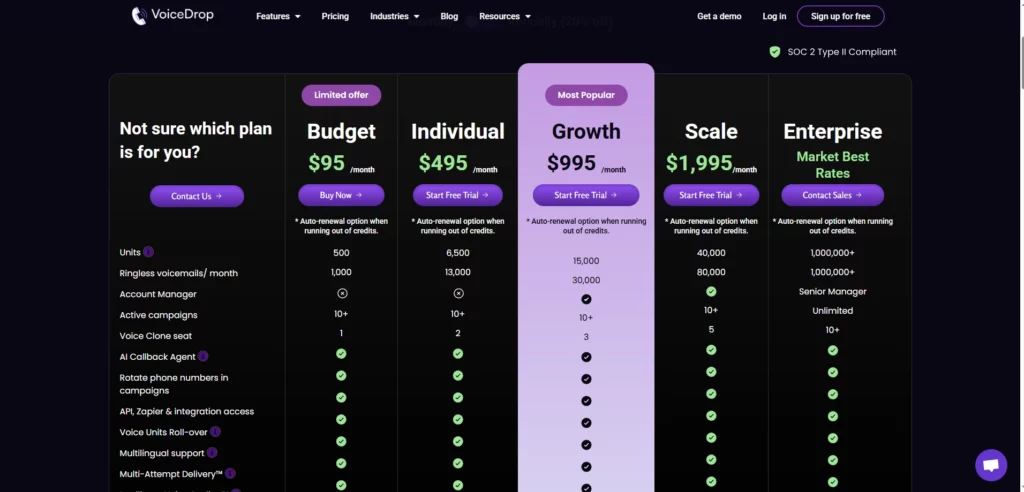
Key features include:
- Clone your own caller ID for higher trust
- Run 10+ simultaneous campaigns
- Voice Clone technology for personalized drops
- Smart number rotation to protect reputation
- Full API, Zapier, and Make integration
- Rollover Voice Units
- Global language support
- Multi-Attempt Delivery™ for higher penetration
- Intelligent Voice Scaling™
VoiceDrop currently provides a 7-day free trial so you can test the power of asynchronous outreach yourself.
Grab your free trial and launch your first campaign today!