
It is the scenario every recruiter dreads. You are sitting in an empty Zoom room, checking your microphone for the third time, or staring at the lobby door waiting for a candidate who is already ten minutes late. Eventually, the realization sinks in: they aren’t coming.
You haven’t just lost a candidate; you’ve lost valuable time.
This scenario is frustratingly common in modern recruitment. However, “ghosting” is not just rude; it disrupts the entire hiring pipeline. When a candidate vanishes without a trace, it wastes expensive recruiter hours, delays critical projects, and demoralizes hiring managers.
Consequently, finding a reliable candidate interview no-show solution has become the recruiter’s ultimate safety net.
The Rising Trend of Candidate Ghosting
Unfortunately, ghosting has normalized within the job market. With the rise of “Easy Apply” features, candidates often apply to dozens of jobs in minutes.
The result? They treat interviews as optional. If they do not feel a personal connection to a specific company, they prioritize other offers without canceling existing appointments. You are not alone in this struggle; it is an industry-wide epidemic.
To understand the scale of this issue, recent data highlights the alarming Trends in Candidate Ghosting. Without a strategy to build rapport, these numbers will keep climbing.
Why Traditional Confirmation Methods Are Failing

For the last decade, recruiters have relied on a standard playbook: send a calendar invite and follow up with an automated email. While this method was once effective, it is rapidly failing to ensure attendance in today’s saturated digital environment.
The “Inbox Blindness” of Automated Emails
Candidates receive hundreds of automated emails from job boards like Indeed and LinkedIn every week. Consequently, a generic “Interview Confirmation” email suffers from serious flaws:
- Lack of Urgency: It blends into the noise of daily newsletters and spam.
- Spam Filters: Critical reminders are often routed directly to the “Promotions” or “Junk” folder.
- Passive Engagement: It requires the candidate to read and remember, rather than actively listen.
Relying solely on email means you are leaving your attendance rates up to an algorithm. If the candidate never sees the reminder, the likelihood of a no-show increases dramatically.
The Impersonal Nature of Texting (SMS)
Many recruiters have pivoted to SMS to cut through the email clutter. While SMS is fast, it feels incredibly transactional.
A text message typically does not create a “social obligation.” It is easy to ignore a text from a stranger, but it is much harder to ignore a human voice. A text says, “Here is info,” whereas a voice creates a sense of accountability and human connection.
The “Blue Ocean” Strategy: Ringless Voicemail for Recruitment
To solve this, savvy talent acquisition teams are turning to a “Blue Ocean” strategy: Ringless Voicemail (RVM). VoiceDrop offers a solution that cuts through the digital noise by leveraging the power of the human voice without the massive time drain of manual calling.
What is Ringless Voicemail (RVM)?
VoiceDrop technology allows you to drop a pre-recorded voice message directly into the candidate’s voicemail inbox without their phone ever ringing.
This is a crucial distinction. It acts as a polite “courtesy reminder” that respects the candidate’s time. This is especially important if the candidate is currently working at another job and cannot answer a phone call mid-day.
They receive a notification and can listen to your warm, personal reminder at their leisure, creating a seamless candidate experience.
The Psychology of Voice: The “Social Contract”
This is the key argument for switching to voice. When a candidate hears a recruiter’s actual voice saying, “We are excited to meet you,” it creates a psychological bond. This “social contract” makes it significantly harder for a person to ghost you.
Hearing a human voice triggers a sense of guilt; they feel compelled to show up or, at the very least, call back to reschedule. For more examples of how this psychology works in hiring, you can explore various Recruitment Use Cases.
Strategic Implementation: The “Pre-Interview Nudge”
Timing is everything when it comes to reducing no-shows. Implementing a “Pre-Interview Nudge” strategy ensures your reminder lands at exactly the right time for the candidate as they plan their schedule.
The 24-Hour Reminder Rule
We recommend sending the voice drop exactly 24 hours before the scheduled interview. This serves as a perfect reminder as the candidate plans their schedule for the next day. It brings your company back to the “top of mind” without being intrusive, effectively humanizing the hiring process right before the big meeting.
Pro Tip: Ringless voicemail creates a magic moment, but only on mobile devices. Stop wasting budget on landlines. Clean your candidate list instantly with 1Lookup’s Carrier Lookup Tool. 1Lookup is built by the same team as VoiceDrop.
Offering an “Out” to Save Time
The goal of this strategy is attendance OR communication. If a candidate cannot make it, a friendly voice drop encourages them to text back and reschedule. While a cancellation is annoying, it is far better than a no-show because it saves the recruiter from waiting in an empty meeting room.
Integrating VoiceDrop with Your ATS
Recruiters live in their Applicant Tracking Systems (ATS) like Greenhouse, Lever, or Bullhorn. Fortunately, you do not need to log into a new platform manually to send these voicemails.
Automating the Flow via Zapier
You can set up a recruitment automation workflow that runs entirely in the background, saving you hours of manual dialing. Here is how it typically works:
- Trigger: An interview is scheduled in your ATS (like Greenhouse or Lever).
- Action: A “Wait Step” holds the process until 24 hours before the event.
- Result: Zapier triggers the VoiceDrop API to automatically send the reminder.
Once set up, this runs on autopilot for every single candidate. To see which platforms connect easily, check out the ATS Integrations.
Segmentation: Prioritizing High-Value Roles
While effective for all roles, consider prioritizing this specifically for hard-to-fill roles or high-volume hiring events. In these scenarios, the cost of a no-show is highest, and the personal touch of a voice message yields the highest return on investment.
Scripting Your Success: The “Friendly Recruiter” Approach
The script you use matters. The tone should be warm, professional, and encouraging, never demanding. Here are templates you can use today.
The “Excited to Meet You” Script
“Hi [Name], this is [Recruiter Name] from [Company]. The hiring manager and I are really looking forward to chatting with you tomorrow at [Time]. If anything comes up, just shoot me a text. See you soon!”
The “Post-Interview Next Steps” Script
You can also use this to keep candidates warm after the interview so they don’t ghost you later during the offer stage.
“Hi [Name], great meeting you today. I just wanted to personally let you know to keep an eye on your email for the next steps regarding the offer…”
Compliance and Candidate Experience
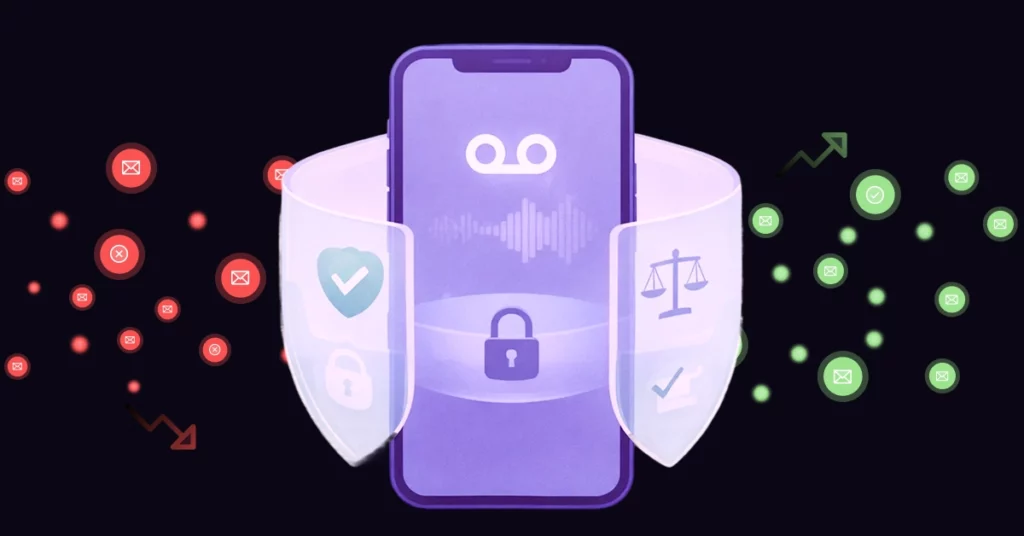
Recruiters often worry about privacy and professionalism. However, when done correctly, RVM enhances the candidate experience rather than detracting from it.
Consent and The Application Process
Ensure your application forms include a checkbox for consent to be contacted via phone or media. Since these are active applicants who have expressed interest in your company, Ringless Voicemail is generally considered a compliant and welcomed communication method.
Ensuring Clean Data (Avoiding Wrong Numbers)
Nothing hurts your employer’s brand reputation more than spamming the wrong person or repeatedly calling a dead number.
Therefore, it is vital to verify phone numbers before sending drops. This ensures high deliverability rates and protects your domain reputation.
Don’t risk your sender reputation by hitting dead ends. Before you launch your campaign, ensure every number is an active mobile line using the Free Phone Number Validator by 1Lookup.
Measuring ROI: Time vs. Cost
To justify this tool to leadership, you need to look at the math. The cost of the tool is negligible compared to the cost of wasted time.
Calculating the Cost of a No-Show
Break it down simply: Add the Recruiter’s hourly rate to the Hiring Manager’s hourly rate. That total is the money lost every single time a candidate ghosts. VoiceDrop costs pennies compared to these lost wages. For a deeper dive into the financial impact of unfilled roles, you can review the Cost of Vacancy.
Improving “Time to Fill” Metrics
Furthermore, higher attendance rates lead directly to faster hiring decisions. By reducing the time spent rescheduling ghosted interviews, you improve the department’s key performance indicators (KPIs) and get talent in the door faster.
Conclusion
In a competitive labor market, the “human touch” is the ultimate differentiator. Candidates choose companies that treat them like people, not numbers.
By automating a personal voice connection, you stop the ghosting cycle and build respect from the very first interaction. You save money, reduce time-to-fill, and most importantly, you stop wasting your own time.
Ready to stop sitting in empty Zoom rooms? Start Your Free Trial today and see the difference a voice makes.
FAQ’s
Will candidates think this is a robocall?
No, because it lands directly in voicemail without ringing, and the message is a genuine recording from their specific recruiter, mentioning their specific interview.
Can I use this for bulk hiring events?
Absolutely. It is the most efficient way to instantly remind 50+ candidates about a hiring open house or job fair.
Does this work with international candidates?
Yes, VoiceDrop supports international delivery, which is crucial for remote teams hiring globally.