The landscape of mass communication has shifted dramatically, fundamentally changing how businesses connect with their audiences.
Recent data from Gartner Marketing suggests that while traditional voice broadcasting is seeing a decline in engagement, asynchronous communication (such as ringless voicemail and SMS) is achieving open rates of up to 98%.
The ability to deliver thousands of messages instantly without being blocked by carriers or ignored by prospects is often the deciding factor between a campaign that generates ROI and one that burns budget.
If you are currently evaluating alternatives to CallFire, the market is full of robust platforms that offer higher delivery rates, modern AI features, and more competitive pricing models.
Whether your objective is stealthy ringless voicemail drops, high-volume SMS marketing, or a more intelligent mass notification system, selecting the right tool can drastically elevate your response rates.
Let’s explore the top contenders and examine how they compare in helping you dominate your market.
Introduction to CallFire and Its Purpose
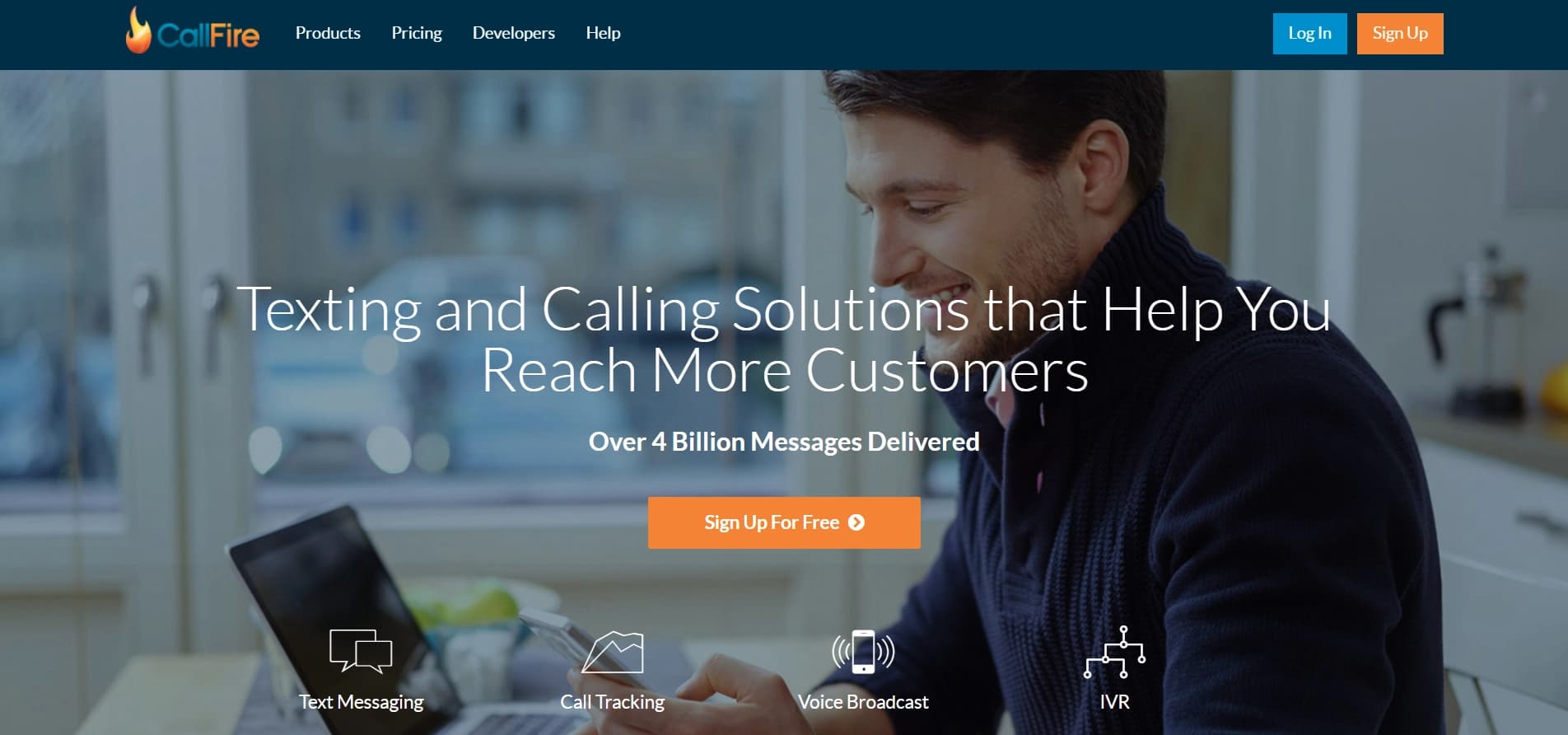
CallFire is a veteran communication platform engineered to help businesses broadcast voice messages and texts to large contact lists.
It is best known for its “Voice Broadcast” and “Cloud Call Center” features, which enable organizations to dial thousands of numbers simultaneously to deliver a pre-recorded message.
This solution empowers marketing teams to streamline mass outreach by offering features such as IVR (Interactive Voice Response) setup, local caller IDs, and call tracking to measure advertising performance.
With capabilities like text-to-speech and do-not-call (DNC) management, CallFire is widely regarded as a reliable choice for political campaigns, non-profits, and businesses that prioritize sheer volume over nuanced engagement.
While CallFire has been a staple in the industry for years, its performance in 2026 varies across different platforms. For a deep dive into user experiences and expert ratings, check out our comprehensive CallFire Review.
Why You Might Look for Alternatives
While CallFire is a stable legacy platform, it may not be the perfect fit for every modern outreach strategy. You might be in the market for a solution that offers better “stealth” delivery, AI personalization, or more affordable scaling.
Marketing teams today are transitioning from “blasting” messages to “smart” engagement. As noted in recent HubSpot trend reports, the momentum is moving toward non-intrusive touchpoints that respect users’ time.
CallFire relies heavily on traditional networks that ring the prospect’s phone. This often leads to higher block rates and annoyed consumers. Additionally, their pay-as-you-go rates can become prohibitively expensive for high-volume users compared to newer flat-rate competitors.
Moreover, some alternatives offer specialized engagement tactics, such as AI-driven ringless voicemail, which delivers messages directly to the inbox without the phone ever ringing, a faster, more innovative way to nurture leads.
Assessing these competitors ensures you adopt a tech stack that aligns with your financial plan and specific engagement philosophy.
One of the biggest triggers for switching is the cost management of high-volume campaigns. CallFire’s credit system can be tricky to navigate, so we’ve broken down the potential pitfalls in our CallFire Pricing guide to help you avoid unexpected bills.
Top CallFire Alternatives
When investigating alternatives to CallFire, prioritize platforms that deliver high-deliverability routes or unique functionalities that enhance your current process.
According to Forrester Research, the most impactful campaigns combine efficient automation with a sense of personal connection.
This is where forward-thinking tools like VoiceDrop excel: they provide a mechanism to scale your touchpoints while preserving the sincerity of a human voice.
Here are the premier options to evaluate:
VoiceDrop
Meet VoiceDrop: Transform your mass outreach and lead nurturing through intelligent ringless voicemail automation. Step beyond the constraints of intrusive ringless broadcasts; guarantee every prospect receives a message tailored to them.
Its advanced AI voice-cloning technology generates audio that sounds identical to a human recording, driving superior response metrics. It integrates effortlessly with leading CRM systems, bypassing the clunky “CSV upload” fatigue often associated with older software.
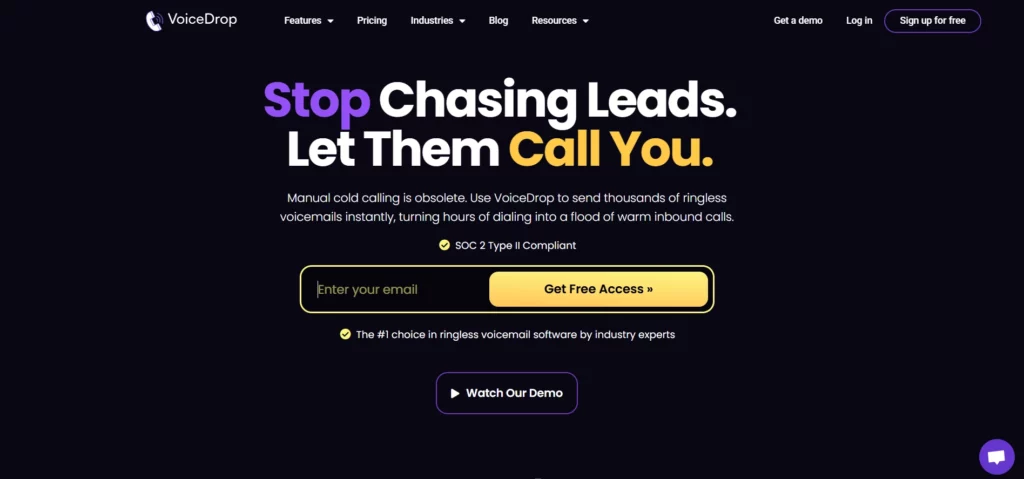
VoiceDrop differentiates itself through a highly competitive enterprise architecture and “Smart Delivery” technology, making it an ideal choice for organizations that want to maximize throughput without triggering carrier spam filters.
Features:
With VoiceDrop, imagine dispatching personalized ringless voicemails using a digital clone of your own voice straight to a mobile inbox, all without their device ever ringing. It generates a notification that creates curiosity while remaining respectful of their schedule.
- Smart Number Rotation: Protects your caller’s reputation by automatically rotating IDs during large campaigns.
- Clone Your Voice: Create infinite message variations without re-recording, perfect for A/B testing scripts.
- Higher Penetration Rates: Because the phone doesn’t ring, carriers are less likely to flag the traffic as “Robocall,” ensuring your message actually reaches its intended recipient.
Pricing
VoiceDrop offers a flexible subscription model, ensuring your expenses deliver a predictable ROI rather than a fluctuating bill.
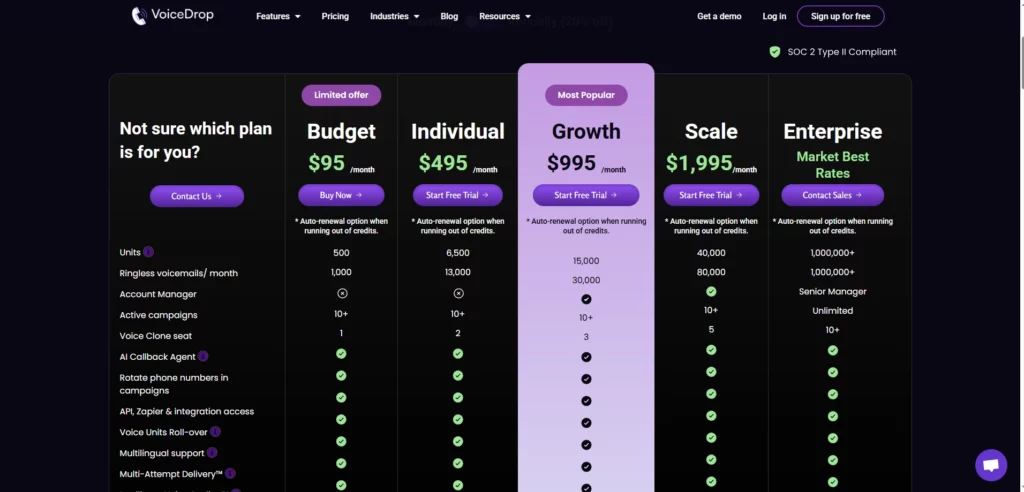
They provide adaptable tiers starting at just $95/month, offering a budget-friendly alternative to CallFire’s per-minute charges, which can add up quickly.
Pros
- AI Voice Cloning: Produces authentic-sounding audio that builds credibility.
- Non-Intrusive: Delivers the message without interrupting the prospect’s dinner.
- High Deliverability: Proprietary routing avoids common spam traps.
- Full API Access: Connects deeply with Zapier, HubSpot, and Salesforce.
- Quick Setup: Launch campaigns in moments with a streamlined dashboard.
EZ Texting
EZ Texting reinvents mass communication by focusing strictly on SMS. If your primary use case for CallFire was text broadcasting, EZ Texting offers a far more sophisticated suite of tools.
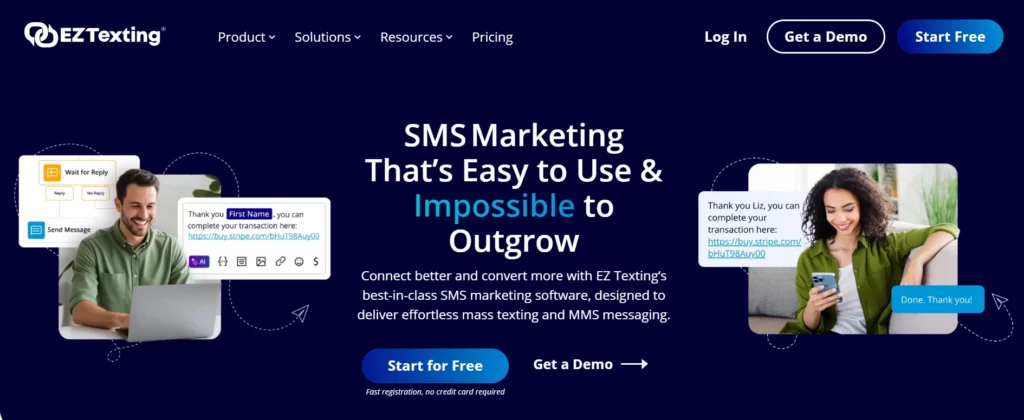
It replaces the “blast” mentality with “conversational” features, enabling two-way texting and the sending of rich media (MMS).
Features:
- Shutterstock Integration: Easily add professional images to your text campaigns.
- Keywords & Short Codes: Allow customers to opt-in by texting “JOIN” to a number.
- Drip Campaigns: Automate a series of texts over time.
- SafeSTOP: Automatic compliance handling for opt-outs.
Pricing
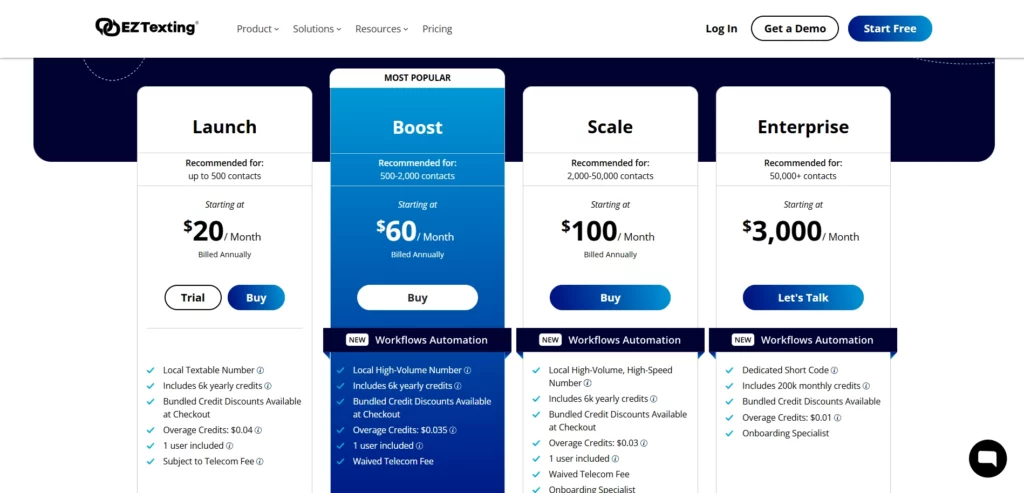
EZ Texting plans typically start around $20/month, scaling up based on the volume of texts sent and the number of keywords needed.
Pros & Cons
Pros:
- Beautiful, modern UI that feels like a marketing tool rather than a utility.
- Excellent compliance features to keep you safe from fines.
- High engagement rates for retail and promotions.
Cons:
- It is strictly SMS; you lose the “voice” touchpoint entirely.
- Credits do not rollover on some lower-tier plans.
DialMyCalls
DialMyCalls is a mass notification system designed for schools, non-profits, and property managers. It simplifies the CallFire model into a “three-click” process for emergency alerts or event reminders.
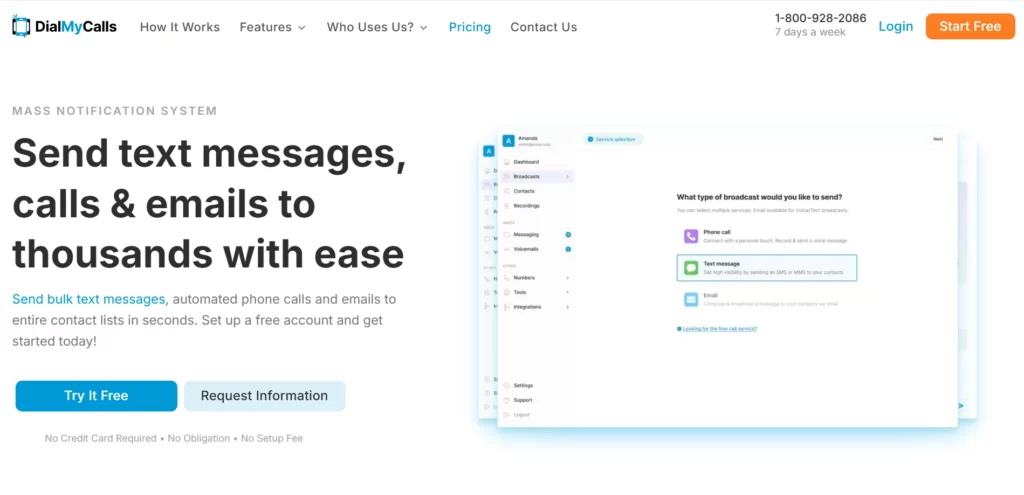
While it offers broadcasting, it distinguishes itself from CallFire by focusing on community and internal communication rather than aggressive sales and marketing.
Features:
- Multi-Channel Sending: Send a voice call, text, and email simultaneously.
- Polling: Ask recipients to press a key to vote or confirm receipt.
- Contact Management: easy grouping for different lists (e.g., “Parents” vs “Staff”).
- Recurring Messages: Set up weekly reminders automatically.
Pricing
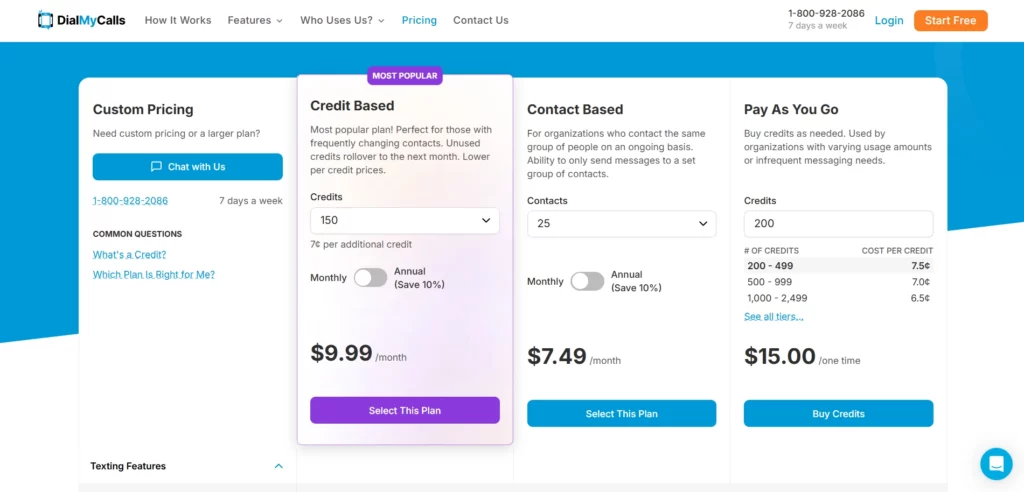
DialMyCalls offers a credit-based system and monthly plans starting at $9.99/month, making it very accessible for small organizations with infrequent needs.
Pros & Cons
Pros:
- All-in-one platform for internal and external alerts.
- No hardware required; completely web-based.
- Very affordable entry point.
Cons:
- Not designed for high-velocity sales or lead generation.
- Lacks CRM integrations compared to VoiceDrop or CallFire.
TextMagic
TextMagic is a comprehensive bulk SMS service that focuses on global reach. It is a strong alternative if your CallFire campaigns need to reach international audiences.
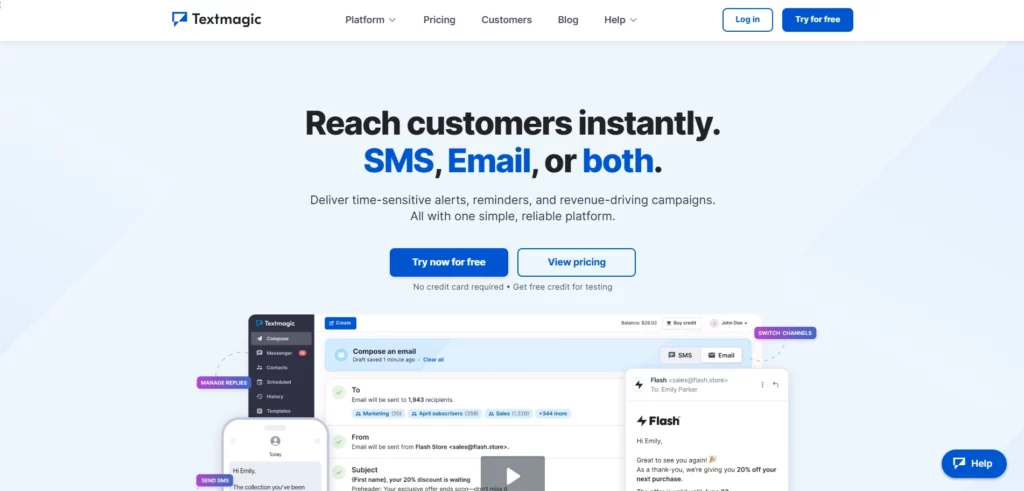
It is designed for businesses that need a “texting ecosystem” capable of handling notifications, alerts, and cross-border marketing.
Features:
- Email to SMS: Send texts directly from your email client.
- Global Coverage: Reach customers in over 200 countries.
- Sub-Accounts: Create accounts for different team members with shared credit limits.
- Zapier Integration: Connects with thousands of apps for automation.
Pricing
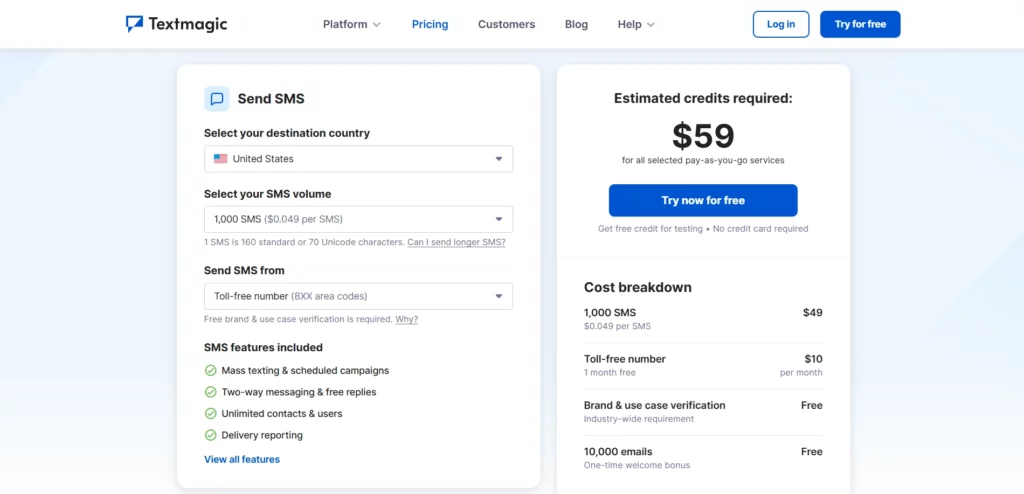
TextMagic uses a purely “pay-as-you-go” model based on the destination country, offering transparency but potentially higher costs for high-volume domestic campaigns.
Pros & Cons
Pros:
- Unbeatable for international outreach.
- Very clean, easy-to-use API for developers.
- No monthly fees; you pay only for what you send.
Cons:
- No voice broadcasting capabilities.
- It can become expensive if sending thousands of texts daily in the US.
How to Select the Best Alternative for Your Requirements
When selecting an alternative to CallFire, consider variables such as delivery method (Voice vs. SMS), list size, financial resources, and your overarching engagement strategy.
CallFire is a workhorse for mixed voice/text campaigns, but it lacks the nuance of modern AI tools; alternatives may provide higher delivery rates or smarter, asynchronous engagement at a better value.
Return on Investment (ROI) is vital; verify that the platform you choose results in more responses, not just more “attempts.” Efficacy is about delivering your value proposition without getting blocked.
Lastly, ensure the software fits your team’s ecosystem, whether that demands seamless Salesforce data flow, AI-generated audio drops, or simple emergency alerts.
Clarifying Your Needs
Defining your core objective is the initial step. Are you aiming to blast 10,000 political alerts, or to drop 500 personalized voicemails to warm leads?
Grasping this nuance can help you select a platform that respects your budget while boosting your conversion efficiency.
Based on these factors, VoiceDrop emerges as a premier choice for companies valuing high-efficiency, non-disruptive outreach.
Its ability to deliver AI-personalized audio at scale without the intrusion of a ringing phone is a distinct advantage in a contemporary sales technology stack.
Book a demo today to discover how VoiceDrop can revolutionize your mass communication.
FAQ’s:
What is the main difference between CallFire and VoiceDrop?
CallFire is a traditional voice broadcasting service that dials the recipient’s phone to play a message. VoiceDrop is a ringless voicemail platform that deposits messages directly into voicemail boxes without ringing the device, resulting in fewer complaints and higher listen rates.
Why might I switch from CallFire to an alternative?
You might explore alternatives if you are experiencing low answer rates (due to spam labelling), if CallFire’s per-minute costs are becoming too high, or if you wish to pivot to non-intrusive strategies, such as ringless voicemail provided by tools like VoiceDrop.
Can I try out alternatives to CallFire before committing to a paid plan?
Yes, numerous alternatives, such as VoiceDrop, offer a free trial or free credit, allowing you to test delivery rates and usability before committing to a long-term contract.
How does the ease of use compare between CallFire and its alternatives?
CallFire is robust but has an older interface. Alternatives like EZ Texting and VoiceDrop are often engineered with modern, “drag-and-drop” dashboards, allowing teams to launch campaigns and start contacting leads in moments with a minimal learning curve.