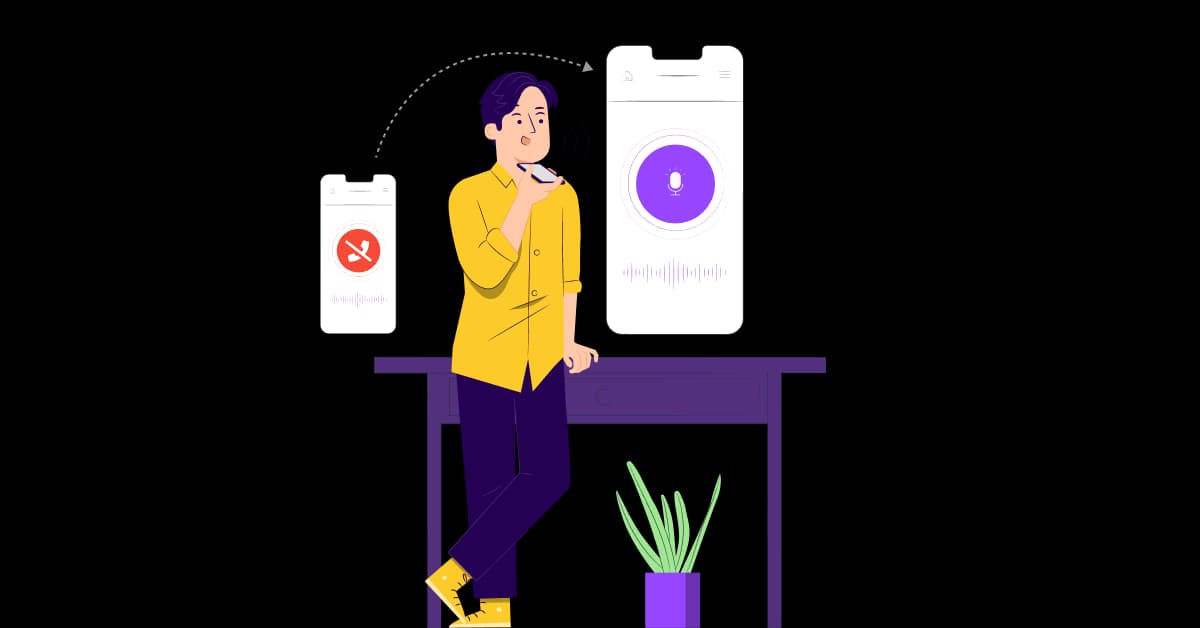
Leaving voicemails might seem like an outdated tactic in today’s world of DMs, emails, and chatbots - but it’s far from irrelevant. In fact, when done well, effective sales voicemails can be one of your strongest tools to boost engagement and open new conversations.
Most sales reps leave voicemails, but few do it effectively. That’s often because they’re winging it, overloading the message or don’t follow up. 48% of sales reps don’t make a follow up call! The good news? With some structure, clarity, and a little personalization, you can up your game at leaving effective sales voicemails.
In this article, we’ll break down what makes effective sales voicemails, highlight common mistakes to avoid, and share eight sales voicemail templates you can use across your pipeline.
Why Effective Sales Voicemails Still Work
More prospects are letting calls go to voicemail, especially from unknown numbers. In fact, about 80% of calls go to voicemail. But that’s not a dead end - it’s an opening.
A well-timed, well-crafted voicemail can:
- Establish trust
- Introduce your brand in a personal way
- Drive curiosity
- Increase the chances of a callback or reply
When combined with a follow-up email or LinkedIn message, voicemails can create a multi-channel touchpoint that’s harder to ignore.
That said, not all voicemails are created equal. If you want to cut through the noise, you need to leave effective sales voicemails - the kind that spark interest and earn responses.
What Makes For An Effective Sales Voicemail?
Here are the key ingredients to get it right:
- Keep it short: Aim for 20–30 seconds. Anything longer risks being skipped or deleted.
- Make it personal: Refer to something specific about the person, company, or context.
- Be clear: Speak at a moderate pace, and repeat your number at the end.
- Focus on value: Tell them what’s in it for them, not just what you offer.
- Follow up: A voicemail alone is rarely enough - pair it with an email or message.

Effective Sales Voicemails For Cold Outreach
Use these when reaching out to prospects for the first time.
Sales Voicemail Template #1: Personalized Hook + Value
“Hi [Name], this is [Your Name] from [Company]. I saw that you’re hiring SDRs and thought I’d reach out - we help growing teams ramp reps 2x faster with less churn. I’ll send over a quick email with details. Feel free to call me back at [Your Number].”
This works because it shows research, relevance, and results in one concise message.
Sales Voicemail Template #2: Social Proof
“Hi [Name], this is [Your Name] from [Company]. We recently helped [Competitor/Similar Company] increase their booked meetings by 40% in two months - I’d love to share how. I’ll follow up via email, but I’m at [Your Number] if you’d prefer to chat.”
Leaning on social proof builds credibility and piques curiosity.
Sales Voicemail Template #3: Quick Insight + CTA
“Hey [Name], this is [Your Name] from [Company]. I have a quick idea that could help your team cut down lead response time. I’ll send more info your way, but I’d love to talk - my number is [Your Number].”
This approach teases a benefit and encourages action without pressure.
Effective Sales Voicemails For Follow-Ups
These work best after an initial message or call attempt.
Sales Voicemail Template #4: Friendly Nudge
“Hi [Name], it’s [Your Name] again from [Company]. Just wanted to follow up on my message from earlier this week. I’ve got a couple of ideas I think could be useful for your team. Give me a call at [Your Number] or reply to my email - either works.”
A gentle reminder keeps you top of mind without sounding pushy.
Sales Voicemail Template #5: Add New Value
“Hey [Name], [Your Name] here. I came across a quick case study that reminded me of your situation - figured I’d share it with you. I’ll include it in an email too, but happy to discuss. My number is [Your Number].”
Delivering something useful gives prospects a reason to engage.
Sales Voicemail Template #6: Last Attempt
“Hi [Name], it’s [Your Name] from [Company]. I know things get busy, so I’ll make this my last check-in for now. If [specific benefit or challenge] is still on your radar, I’d be happy to reconnect. Reach me at [Your Number].”
This “last-touch” approach can create urgency and increase response rates.

Effective Sales Voicemails for Warm Leads
Use these when someone has already engaged with your content, booked a demo, or started a trial.
Sales Voicemail Template #7: Post-Download Follow-Up
“Hi [Name], this is [Your Name] from [Company]. Thanks for checking out our [Guide/Webinar/etc.]. I’d love to learn more about what you’re exploring and share a few tips that others have found helpful. You can reach me at [Your Number].”
This aligns perfectly with inbound intent - warm, timely, and helpful.
Sales Voicemail Template #8: Trial or Demo Engagement
“Hey [Name], [Your Name] from [Company]. I saw you’ve started exploring the platform - great to see. I’d love to answer any questions or help you get the most out of the trial. Feel free to give me a call at [Your Number].”
A friendly check-in during onboarding can boost product adoption and reduce churn.
Common Mistakes to Avoid For Effective Sales Voicemails
Even skilled sales reps fall into these traps. Here’s what to avoid if you want to leave effective sales voicemails that actually work.
1. Sounding Too Salesy
Your voicemail is not a pitch - it’s an opener. Avoid pressure tactics or generic value statements. Instead, focus on starting a conversation.
Bad: “We’re the best solution in the market.”
Good: “I noticed you’re hiring SDRs - we help teams ramp reps faster.”
2. Cramming in Too Much Info
Don’t try to say everything. Overloading your voicemail with product specs, pricing, or calendar links will only confuse the listener. Tease just enough to spark interest. Save the details for your email or the callback conversation.
3. Speaking Too Fast or Too Vague
If they can’t understand your name or number, the call is wasted. Speak slowly, clearly, and repeat your callback number at the end. Bonus tip: Spell out your name if it’s hard to pronounce or uncommon.
Final Tips for Leaving Better Sales Voicemails
Here’s how to make your sales voicemail templates even more effective:
- Smile while talking: It literally changes the tone of your voice and makes you sound more inviting.
- Take note of your posture: Stand or sit up straight, instead of slouching. Your posture affects how your tone of voice.
- Speak slowly and clearly: Especially when stating your name or phone number.
- Repeat your number at the end: Always.
- Use voicemail and email together: Mention in the email that you left a voicemail - it doubles your visibility.
- Leverage tools like VoiceDrop: For volume and consistency, tools like VoiceDrop let you deliver personalized voicemails at scale without ringing the recipient’s phone.

Deliver Effective Sales Voicemails at Scale with VoiceDrop
If you’re calling dozens (or hundreds) of leads a day, manually leaving voicemails is a time sink. VoiceDrop lets you pre-record personalized messages and send them directly to voicemail - without interrupting the recipient’s day.
Combine these sales voicemail templates with VoiceDrop’s automation to reach more prospects with less effort - and drive more callbacks.
VoiceDrop also has an inbound AI agent to automate the handling of your callbacks. It can handle the first conversation, book a meeting, send you a summary and best of all, it can sound just like you – thanks to VoiceDrop’s advanced AI voice cloning.
Book a demo or start a 7 day free trial of VoiceDrop to experience it for yourself today!