The “Contact Us” page is where sales deals go to die.
You have identified the perfect prospect. You know your product can solve their problem. But if you are sending your pitch to a generic info@company.com address, you are shouting into a void.
The “Gatekeeper” problem is the silent killer of B2B revenue. Decision-makers protect their inboxes to stay focused. Email Lookup for Lead Generation is the key to bypassing those gatekeepers and unlocking the direct inbox of the person who actually signs the checks.
Your perfect prospect is one click away, but only if you have the right address.
How Email Finder Technology Actually Works (The Mechanics)
To the uninitiated, finding a CEO’s private email address might seem like magic or hacking. It is neither. It is data science.
Modern email lookup tools rely on a sophisticated mix of public data crawling, historical database access, and algorithmic prediction to deliver results. They don’t just “guess”; they engineer the answer.
Pattern Matching Algorithms
At the most basic level, email finders use pattern matching. Most companies follow a specific email format for all employees. If you know that John Doe at Acme Corp uses john.doe@acme.com, the software can predict that Jane Smith likely uses jane.smith@acme.com.
Relying on pattern matching alone is a gamble. People use nicknames, middle initials, or unique formatting. If you guess wrong, you bounce. If you bounce, you damage your domain.
Don’t leave your outreach to chance.
Found a name but missing the verified contact info? Stop guessing. Find the work email behind a name with Emailchaser and check you are reaching the right person before you hit send. Emailchaser is built by the same team as VoiceDrop.
SMTP Verification (The Ping Test)
This is the technical differentiator between a cheap tool and a professional one. Premium email lookup software performs an “SMTP Handshake” or “Ping Test.”
Here is how it works: The software contacts the target company’s mail server and asks, “Does this user exist?” The server responds with a code (like “250 OK” for yes, or “550 User Unknown” for no). The software then disconnects before actually sending an email. This ensures the email is active and safe to send without you ever having to risk a bounce.
Why “Deliverability” is the Holy Grail of Cold Email
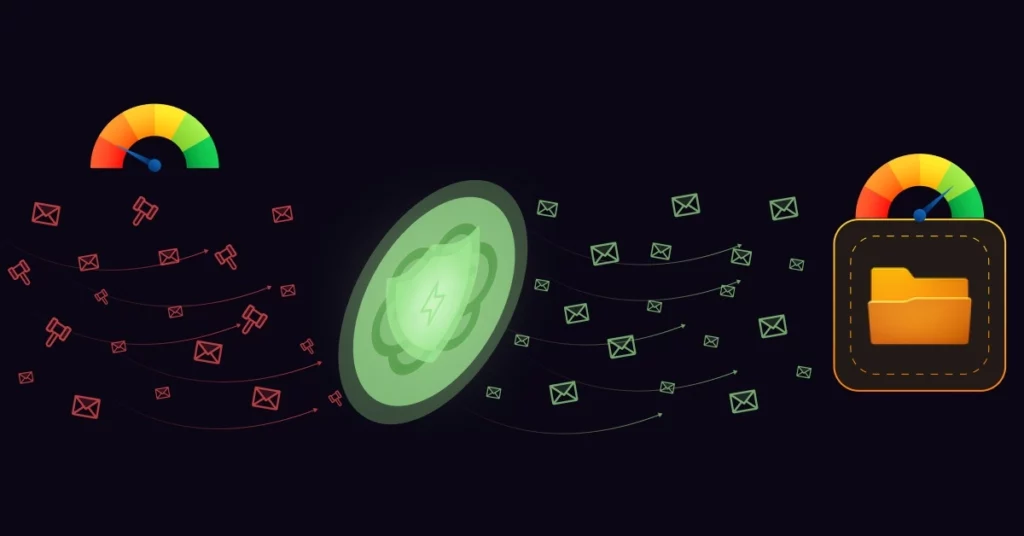
New sales reps often obsess over list size. “I have 10,000 leads!” they say. But having a list of 10,000 emails is useless if 30% of them bounce.
In fact, it is worse than useless; it is dangerous.
This comes down to Domain Reputation. Internet Service Providers (like Google and Outlook) monitor your sending behavior. If you consistently send emails to bad addresses, they label you as a spammer.
Once your domain reputation tanks, even your legitimate emails to current clients will start landing in the Junk folder.
Hard Bounces vs. Soft Bounces
Understanding the difference is critical for maintaining your sender score.
- Soft Bounces: These are temporary issues, such as the recipient’s inbox being full or the server being down. You can usually try these again later.
- Hard Bounces: These are fatal. A hard bounce means the address is invalid or does not exist. A high hard bounce rate is the fastest way to destroy your domain reputation.
A high-quality lookup tool is designed specifically to eliminate hard bounces before you launch a campaign.
The Risk of “Catch-All” Servers
There is a technical pain point that trips up many investors: the “Catch-All” server.
Some organizations configure their mail servers to accept all emails sent to their domain, regardless of whether the specific user exists.
A basic verification tool will mark these emails as “Valid.” In reality, they are black holes. You send the pitch, but it never reaches a human, or worse, it bounces back three days later, hurting your sender score.
The Solution? Deep Verification.
High-quality tools flag these as “Risky” so you can decide if the lead is worth the risk.
Pro Tip: Not sure if your lead list is up to date? Don’t risk your domain reputation on bad data. Run a quick cross-check with 1Lookup’s email validation to confirm your prospect’s details are active and safe. 1Lookup is built by the same team as VoiceDrop.
Top Features to Look for in Email Lead Gen Tools
Not all email finders are created equal. If you are shopping for a tool in 2026, look beyond just the ability to find a single email.
Bulk Enrichment & CSV Upload
Sales is a numbers game. You cannot afford to search for prospects one by one.
You need a tool that allows Bulk Enrichment. This feature lets you upload a CSV file containing thousands of company names and prospect names.
The software then processes the entire list, filling in the missing email addresses and contact details in minutes rather than days. This is how you scale.
Chrome Extensions for LinkedIn
LinkedIn is the world’s largest B2B database, but it doesn’t give you contact info.
A robust Chrome Extension bridges this gap. It allows you to browse a prospect’s LinkedIn profile, click a button, and instantly reveal their verified email address without ever leaving the page. It connects social selling directly with your email outreach workflow.
API Integrations for Developers
For advanced sales teams and agencies, a manual interface isn’t enough. You need automation.
Look for tools that offer API Access. This allows you to build lead generation directly into your own applications or website, automatically enriching new leads as they enter your system.
Strategic Use Cases for B2B Sales Teams
Data is only potential power. Execution is real power. Here is how successful sales teams use email lookup to generate revenue.
The “Omnichannel” Beast (Email + Phone)
This is where the top 1% of sales teams separate themselves from the amateurs. They don’t rely on a single channel.
If you send an email, it might get buried. If you call, they might not answer. But if you combine them, you become undeniable.
The Winning Workflow:
- Identify: Use your lookup tool to find the prospect’s verified email and mobile number.
- Engage: Send a personalized intro email to warm them up.
- Amplify: Immediately follow up with a Ringless Voicemail Drop.
This “double-tap” approach puts your brand in their inbox and their voicemail notification simultaneously, significantly boosting response rates without being intrusive.
Account-Based Marketing (ABM)
In high-ticket B2B sales, you aren’t just selling to one person; you are selling to a committee.
Email lookup tools allow you to map out an entire organization. You can find the email addresses for the CEO, the CMO, and the VP of Sales simultaneously.
This allows you to attack the account from multiple angles, ensuring your message resonates with every key decision-maker.
Reviving Dead CRM Leads
Every company has a “Graveyard” in its CRM, leads that went cold six months ago. Often, these deals didn’t close because the contact left the company.
You can use bulk lookup tools to refresh your old database. By identifying which contacts have moved on and finding the new decision-makers, you can integrate with your CRM to automatically update records and revive dead deals.
Free vs. Paid Email Finders: The Hidden Cost
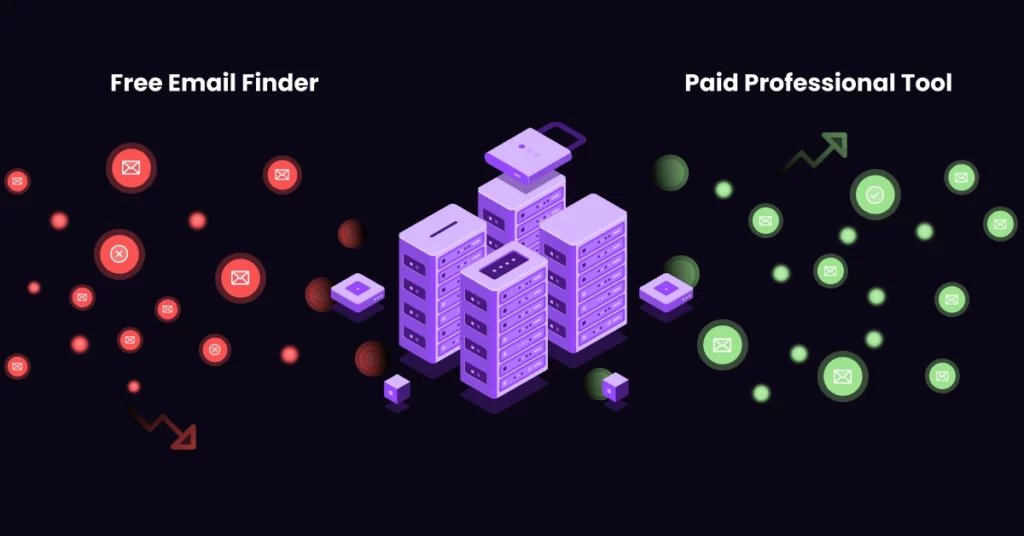
Everyone wants to save money, but in data, you get what you pay for.
Data Decay in Free Tools
B2B data decays at a rate of roughly 22% per year as people change jobs and companies go out of business. Free email finders often rely on stagnant, outdated databases.
While the tool might be “free,” the cost of using it is high. Sending emails to invalid addresses from 2021 will wreck your sender score. When your domain gets blocked by Google for spamming, the “free” tool suddenly becomes very expensive.
The Legal Landscape: Compliance & Ethics
Cold outreach is a legitimate business strategy, but it must be done responsibly.
CAN-SPAM Compliance
In the United States, B2B cold emailing is legal under the CAN-SPAM Act. However, you must follow the rules:
- Don’t use false or misleading header information.
- Don’t use deceptive subject lines.
- Tell recipients where you are located (include a physical address).
- Crucially: You must tell recipients how to opt out of receiving future emails.
Always refer to the official CAN-SPAM compliance guide to ensure your campaigns remain compliant.
GDPR & Legitimate Interest
If you are targeting prospects in Europe, the rules are stricter. Under GDPR, you often need to prove a “Legitimate Interest” to contact a business prospect. Ensure your data provider is GDPR compliant if you plan to scale internationally.
Conclusion: Quality Data Wins Deals
Stop Guessing. Start Closing.
In the modern sales landscape, volume alone doesn’t win. Precision wins. A small, highly targeted list of verified emails will always outperform a massive list of unverified guesses.
Stop wasting your time writing emails that bounce. Protect your domain, respect your prospects, and build a clean list that actually converts.
Ready to scale your outreach? Start your lead gen campaign today and get your message in front of the people who matter.
FAQ’s
What is the average bounce rate for cold email?
A healthy bounce rate should be under 2%. If your bounce rate exceeds 5%, your domain is at risk of being blacklisted. Using a verified email lookup tool helps keep this number low. You can verify this against global email marketing statistics.
Can I legally email business addresses I find online?
In the US, yes, under the CAN-SPAM Act. You must provide a way to opt out and not use deceptive subject lines. Always check local regulations for international leads.
How does email lookup differ from email verification?
Lookup finds the email address based on a name and company (discovery). Verification tests an existing email address to see if it is valid and active (validation). The best tools do both simultaneously.