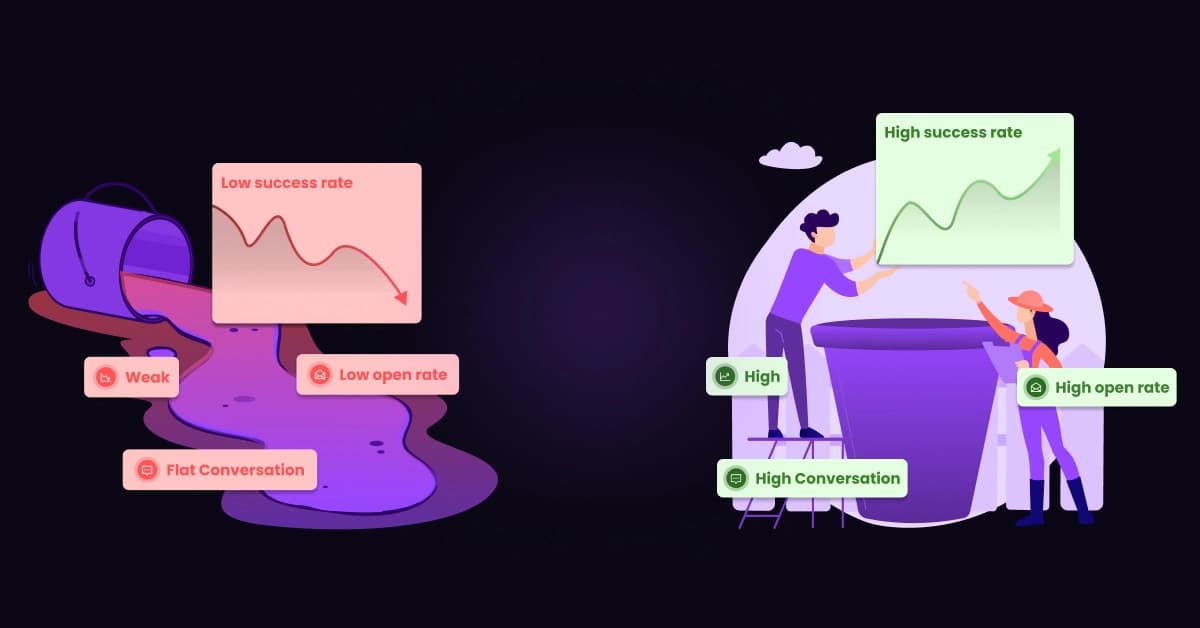
Imagine this scenario: You spend weeks crafting the perfect marketing campaign. You’ve nailed the subject line, designed beautiful creatives, and segmented your audience.
You hit “Send” with high hopes. But 24 hours later, you check the analytics, and your heart sinks, a 10% open rate.
Where did it go wrong? The problem likely isn’t your content; it’s your list. You are pouring water into a leaky bucket.
For too long, marketers have viewed email verification as a boring, technical chore best left to the IT department. This is a mistake. Email Validation for Marketing is the “Quality Control” foundation of every profitable campaign.
Why “List Hygiene” is a Marketer’s Best Friend
There is a common misconception in digital marketing that a bigger list equals more revenue. This is false. “More Leads” does not equal “More Revenue” if those leads are fake, inactive, or bots.
Sending emails to invalid addresses is the digital equivalent of printing thousands of flyers and throwing them directly into the trash, except it’s worse, because you are paying for the privilege.
You are paying your Email Service Provider (ESP) monthly fees to host dead subscribers who will never buy from you.
Boosting Open Rates by Fixing the Denominator
If you want to see an immediate boost in your metrics, you have to look at the math. Your Open Rate is calculated with a simple formula:
$$Open Rate = \frac{Total Opens}{Emails Delivered}$$
Most marketers try to improve the top number (Total Opens) by writing better subject lines. But the smarter strategy is to fix the bottom number (Emails Delivered).
If you remove the “Undelivered/Dead” emails from your list (the denominator), your open rate percentage naturally skyrockets.
You haven’t changed a single word of your copy, but your performance metrics immediately look better because you are only measuring engagement from real people.
Protecting Your Brand’s Sender Reputation
Your domain has a reputation score, much like a credit score. If your marketing emails bounce frequently, ISPs notice. They label your brand domain as “Spam.”
Once your reputation is damaged, the consequences are severe. It doesn’t just affect your newsletters; even your critical transactional emails, like password resets or order confirmations, might start going straight to the Junk folder.
According to current email marketing benchmarks, maintaining a high deliverability rate is the single most important factor in long-term campaign success.
Where to Implement Validation in Your Marketing Strategy
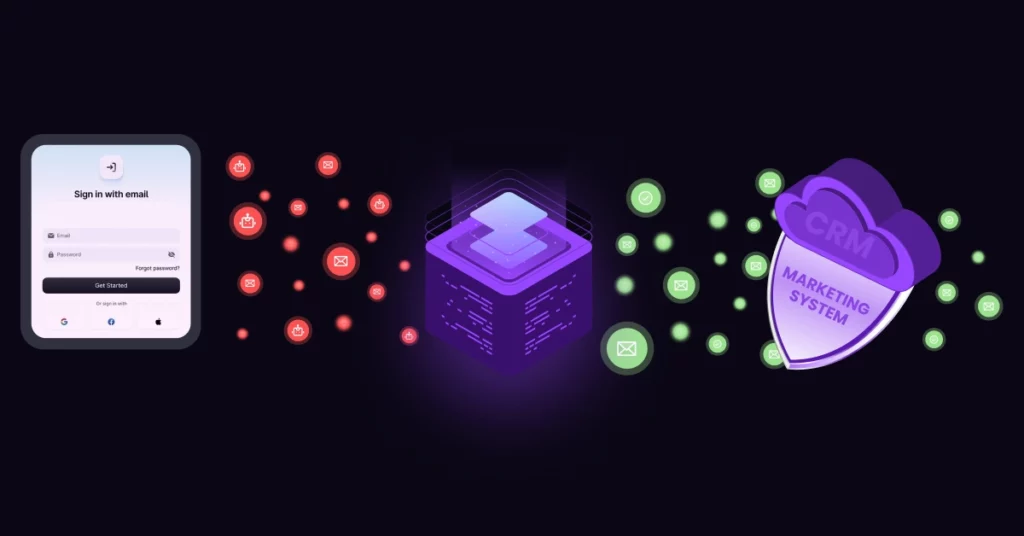
Email validation is not a “one-and-done” task. To maintain a healthy ecosystem, validation must be implemented at two critical points in your strategy.
Point of Capture (Real-Time API)
The best way to clean a list is to never let it get dirty in the first place. You need to stop bad data at the “Front Door.”
By implementing a real-time API on your landing pages and newsletter signup forms, you can prevent typos from entering your CRM. For example, if a user accidentally types “name@gmal.com” instead of “gmail.com,” the API catches it instantly and asks them to correct it.
This ensures that your welcome automation sequences are actually delivered to a human. Leveraging robust VoiceDrop API Integrations allows you to automate this protection seamlessly across all your lead capture forms.
Bulk Cleaning (Quarterly Maintenance)
For your existing databases, you need a maintenance schedule. Data decays; people change jobs and abandon old email addresses.
A “deep clean” strategy is recommended at least quarterly. It is especially critical to run a bulk clean before major seasonal campaigns, like Black Friday or Holiday Sales. This ensures you maximize deliverability during the times of year when revenue potential is highest.
Beyond Verification: Enriching Data for Better Segmentation
A valid email is just the start. To market effectively, you need to know who is behind the email. Modern validation tools offer data enrichment that can drastically improve your segmentation.
Identifying “Catch-All” Servers
“Catch-All” domains are corporate servers configured to accept all mail sent to that domain, regardless of whether the specific user exists.
Identifying these helps marketers make risk-based decisions. For a low-risk campaign, like a generic newsletter, you might keep them. But for a high-value personal offer, sending it to a Catch-All server is risky because you cannot confirm if a decision-maker will ever see it.
Pro Tip: Don’t gamble on risky “Catch-All” emails. Before you send, run a quick reverse lookup on 1Lookup to confirm if a real human profile and job title are associated with that email address.
Using Lookup Tools for Personalization
Verifying identity leads to better personalization. Instead of treating a lead as just an email address, use lookup tools to find the prospect’s LinkedIn profile or phone number.
Tools like 1Lookup can help you turn a simple email lead into a multi-channel prospect, giving you more ways to connect.
Unlock the Full Profile: A validated email is just the start. Use 1Lookup’s email append to instantly enrich that email with the prospect’s phone number and LinkedIn profile, giving you the context you need to craft the perfect pitch. 1Lookup is built by the same team as VoiceDrop.
From Validation to Conversation: The VoiceDrop Strategy
You have validated your list and ensured it is clean. Now what? The inbox is crowded, and even valid emails can get ignored. This is where a “Multichannel” approach wins.
Retargeting Non-Openers with Ringless Voicemail
Here is a pro strategy for 2026: If a valid lead doesn’t open your email, don’t just spam them with another email. Pivot to a different channel.
Use VoiceDrop to leave a Ringless Voicemail (RVM) or send an SMS. This targets the prospect on their phone, a much less crowded channel, without being intrusive.
VoiceDrop Multichannel Campaigns allow you to set up triggers so that verified non-openers automatically receive a friendly voicemail, significantly increasing your conversion chances.
Measuring the Marketing ROI of Clean Data
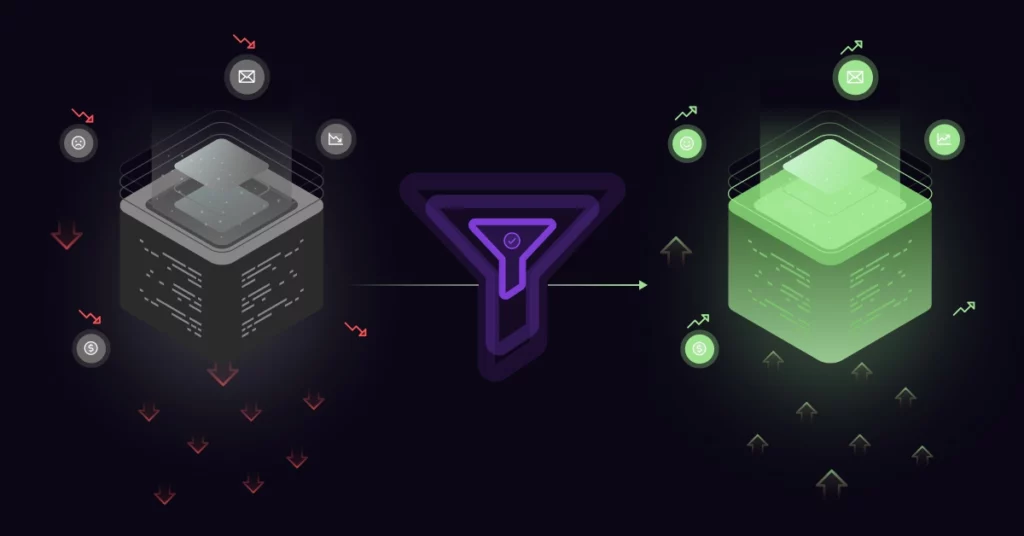
Marketing leaders need to prove the value of every tool. Fortunately, the ROI of email validation is easy to prove.
Reduced ESP Costs vs. Validation Costs
Compare the costs. Validation is relatively cheap. In contrast, platforms like HubSpot, Salesforce, or Mailchimp charge you based on the number of contacts you store.
- The Cost of Inaction: Hosting 20,000 dead leads in an enterprise CRM is expensive, often costing hundreds of dollars a month in wasted tier pricing.
- The Savings: Cleaning them out often pays for the validation tool instantly through reduced hosting fees.
Navigating Legal and Compliance Issues
Handling marketing data comes with legal responsibilities. Validation helps you stay on the right side of the law.
GDPR and Data Processing Agreements
If you market to users in Europe, you must comply with GDPR. You are responsible for the vendors you choose. Using a non-compliant validation tool that stores data on insecure servers can lead to massive fines.
CAN-SPAM Act Compliance
In the US, the CAN-SPAM Act requires you to honor opt-out requests promptly. If your list is full of bad data and bounces, it becomes difficult to manage opt-outs effectively. Cleaning your list ensures you are only emailing active users who have consented to be there, keeping you compliant.
Conclusion: Quality Data Wins Deals
It is time to stop chasing vanity metrics like list size and start chasing value metrics like engagement. Email validation is the foundation of a healthy sales funnel. It protects your reputation, lowers your costs, and ensures your carefully crafted messages are actually read.
Don’t let your budget bounce. Start your VoiceDrop Demo today to clean your marketing list and convert those leads with superior automated outreach.
FAQ’s
Does email validation affect my SEO?
Indirectly, yes. Better email engagement drives more traffic to your site from newsletters. High engagement signals relevance to Google, which can support your overall SEO efforts.
How often should I validate my marketing list?
Best practice is to validate before every major campaign. At a minimum, you should perform a bulk clean once every 3 months (quarterly) to combat natural data decay.
Will validation remove real customers?
No, it only removes invalid, dead, or dangerous addresses. In fact, it protects your real customers by ensuring your emails don’t get blocked by spam filters, ensuring they actually receive your updates.