If you have been evaluating cloud-based phone systems to optimize your sales and support communications, AirCall is likely to have appeared on your shortlist.
Renowned for its “customer-obsessed” voice platform and deep integrations, it is a favored choice for sales teams, support centers, and distributed workforces needing a reliable, scalable VoIP solution.
However, when you scrutinize AirCall pricing, does the investment actually match your operational requirements?
With premium features like Power Dialing, AI-powered call transcription, and live monitoring, understanding precisely what your budget unlocks and identifying potential hidden fees is essential.
In this guide, we will dissect AirCall’s pricing tiers, the features bundled with each plan, and how it compares to competitors.
While this guide focuses on costs, you can explore a deep dive into its features, pros, and user ratings in our comprehensive Aircall Review.
By the end, you will have a definitive view of whether AirCall is the strategic fit your growth goals demand.
What is AirCall?
AirCall is a cloud-based Voice Platform engineered to empower sales and customer support teams by streamlining phone operations and integrating voice data into business workflows.
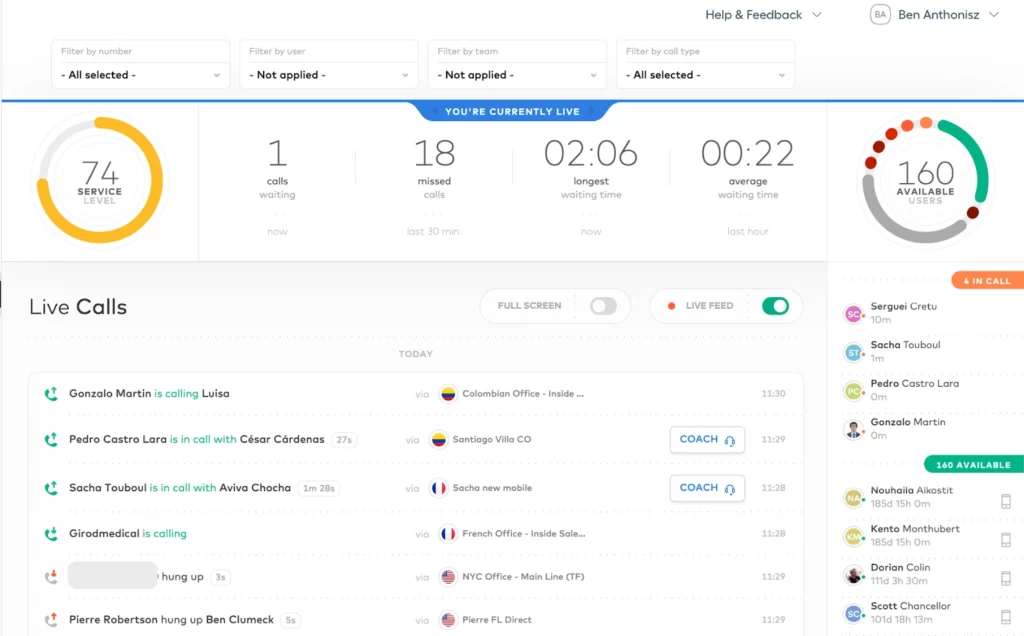
Unlike legacy PBX systems, AirCall focuses on instant setup and seamless connectivity with your existing tech stack.
It leverages VoIP technology to handle inbound and outbound calls, offering a flexible system that lets teams work from anywhere while automatically capturing vital conversation data.
It is frequently utilized by:
- Sales Development Representatives (SDRs)
- Customer Success Managers
- Remote & Hybrid Teams
- E-commerce Support Desks
- Recruitment Agencies
The software syncs deeply with major CRM and helpdesk tools like HubSpot, Salesforce, and Zendesk, aiming to eliminate data silos and keep every customer interaction visible and actionable.
AirCall Pricing Plans Overview
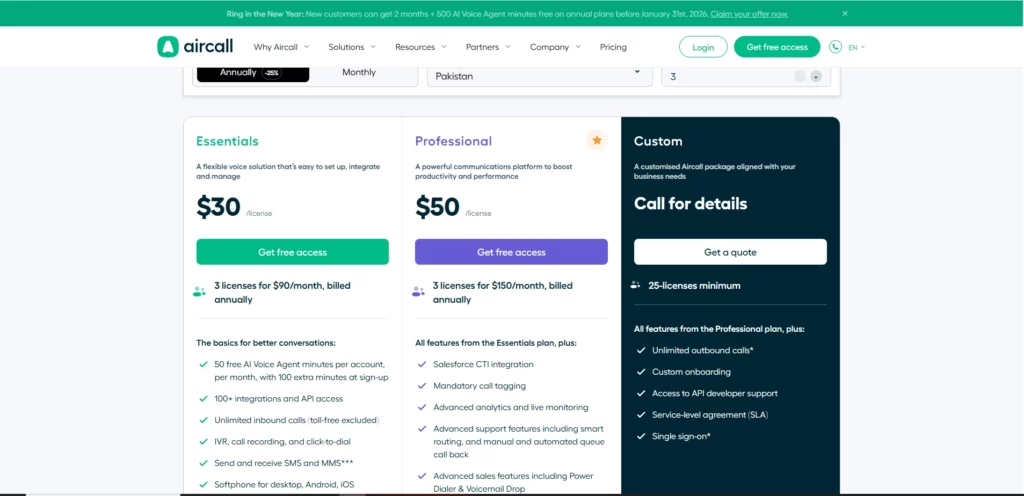
AirCall segments its solutions into tiers based on feature complexity and team needs: Essentials, Professional, and Custom (Plan names generally reflect the depth of functionality provided).
A few critical considerations before we explore the tiers:
- Pricing is per user, per month (billed annually or monthly).
- Annual billing typically secures a significant discount (often around 16-25%).
- There is a strict minimum seat requirement (usually 3 users) across standard plans.
- Additional costs apply for international calling, toll-free numbers, and advanced AI add-ons.
Let’s break down what these tiers typically include based on current market data.
Essentials Plan (Entry Level)
Price:
$30 per user/month (billed annually)
Free trial:
Yes (7-day free trial typically available)
Features included in the plan:
- Unlimited inbound calls (excluding toll-free)
- Unlimited outbound calls (US & Canada)
- IVR (Interactive Voice Response) menus
- Call recording & transcription basics
- Click-to-dial
- 50+ Standard Integrations (HubSpot, Slack, etc.)
- Softphone for Desktop & Mobile
The Essentials tier serves as the foundational entry point for smaller teams needing a professional voice presence without heavy automation.
It delivers the core necessities: a functional business phone system, standard call routing, and the ability to log calls into your CRM.
If your primary objective is to establish a reliable business line and ensure basic call tracking, this plan provides the necessary infrastructure.
However, if your team requires advanced sales automation features such as a Power Dialer or deeper Salesforce integration, you may find this tier limiting.
Professional Plan (Scaling Operations)
Price:
$50 per user/month (billed annually)
Free trial:
Yes
Features included in the plan:
- Everything in Essentials
- Power Dialer (Automated outbound dialing)
- Salesforce Integration
- Live Call Monitoring (Whisper, Barge)
- Advanced Analytics & Reporting
- Call Tagging & Dispositioning
- Queue Callback
- Unlimited simultaneous outbound calls
The Professional plan is the standard for growing sales and support organizations where efficiency and coaching are priorities. It unlocks the Power Dialer, AirCall’s key feature for high-volume outbound teams.
According to sales performance data, automated dialing tools can significantly increase daily call volume by reducing manual tasks between conversations.
This tier is designed to leverage that efficiency. It includes advanced monitoring features that allow managers to listen in on live calls and whisper guidance to agents, crucial for training and quality assurance.
For managers, the enhanced analytics and mandatory call tagging ensure that granular data informs decision-making.
Custom Plan (Enterprise & High Volume)
Price:
Custom Quote
Free trial:
Contact Sales
Features included in the plan:
- Everything in Professional
- Unlimited International Calling (Global bundles available)
- Custom Onboarding & Training
- API Developer Support
- SLA (Service Level Agreement)
- Single Sign-On (SSO)
- Dedicated Account Manager
- Unlimited Analytics history
For large-scale enterprises or teams with specific global needs, AirCall offers bespoke packages that focus on scale, support, and customization. The value here lies in infrastructure reliability and tailored implementation.
At this level, you aren’t just buying software; you are securing a partnership that ensures your phone system adapts to complex organizational structures.
If your organization requires prioritized support, custom API development, or extensive international reach, the Custom tier is the right choice.
The Overall Pros & Cons
AirCall is a leader in the modern voice stack, offering a sleek, integrated, and reliable solution. Here is a summary of the user experience.
Pros
- User Interface: The design is intuitive and modern, minimizing the learning curve for both new agents and admins.
- Integration Ecosystem: The vast library of one-click integrations (HubSpot, Salesforce, Zendesk) is a significant productivity booster.
- Call Quality: Generally praised for reliable voice clarity, utilizing strong global carrier partnerships.
- Live Monitoring: Excellent tools for managers to coach reps in real-time without disrupting the flow of the call.
- Power Dialer: The inclusion of dialing automation in the mid-tier plan is a significant advantage for sales teams.
Cons
- Minimum Seat Requirement: The 3-user minimum helps filter for teams, but makes it inaccessible to solo founders or small partnerships.
- Cost: With plans starting at $30/user (plus minimums), it is pricier than some basic VoIP competitors.
- Add-on Costs: AI features, advanced analytics history, and additional numbers often come with extra fees.
- Mobile App: While functional, some users report that the mobile experience is less robust than the desktop application.
- SMS Limitations: SMS capabilities can sometimes be restricted by region or carrier regulations compared to dedicated SMS platforms.
If these costs or minimum requirements don’t align with your budget, we have compiled a list of better-suited options. Check out the Top 5 Aircall Alternatives for modern teams.
The best alternative for AirCall in terms of an AI voice agent and ringless voicemails
If your primary focus is maximizing reach through AI-powered voice and ringless voicemails rather than a traditional seat-based VoIP phone system, AirCall might be excessive infrastructure for your specific outreach needs.
That’s where VoiceDrop comes in.
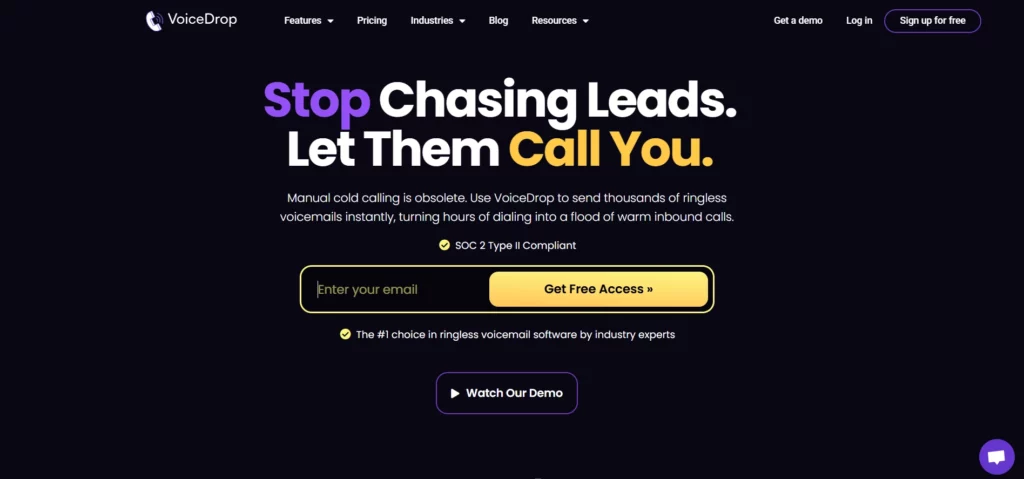
VoiceDrop is built specifically for sales teams, cold outreach specialists, lead-gen agencies, recruiters, and businesses looking to reach new prospects with scalable, automated voice campaigns and ringless voicemail drops.
Unlike standard phone systems like AirCall, which require an agent to be physically present for every live dial, Ringless Voicemail drops messages directly into the prospect’s inbox. This respects their time while ensuring delivery at a massive scale without burning out your agents.
Starting at $95 per month, VoiceDrop lets you send up to 1,000 ringless voicemails. The ENTERPRISE plan also guarantees the best pricing in the market.
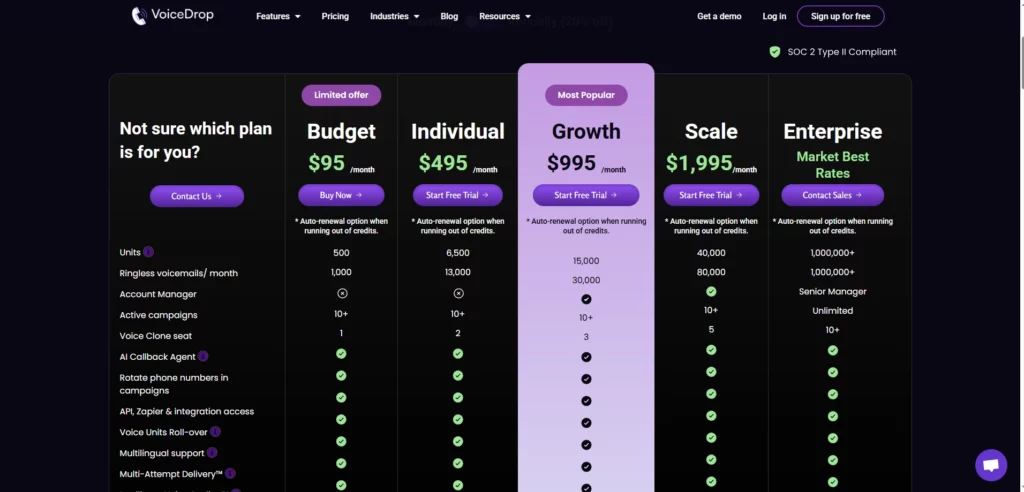
Features of VoiceDrop include:
- Use a phone number you already own
- 10+ active campaigns
- Voice Clone seat(s)
- Rotate phone numbers in your campaign
- Use any phone number you own to send out the RVM
- API, Zapier, Make & CRM integration access
- Voice Units Roll-over
- Multilingual support
- Multi-Attempt Delivery™
- Intelligent Voice Scaling™
You’ll get all features included in other plans, plus a 7-day free trial to see why VoiceDrop is considered the top choice for ringless voicemail software by industry experts, and how it stands out in real-world use cases compared to traditional manual dialing systems.
FAQ’s
Is AirCall free?
No, AirCall does not have a permanently free plan. They typically offer a 7-day free trial, allowing you to test the platform’s capabilities before committing to a subscription.
Does AirCall require a minimum number of users?
Yes. AirCall generally requires a minimum of 3 users for its Essentials and Professional plans. This means the starting monthly cost is effectively higher than the single-user price suggests.
What is AirCall used for?
AirCall is primarily used for managing business phone operations for sales and support teams. It handles inbound and outbound calls, automates call routing, and logs all voice activity directly into CRMs like Salesforce and HubSpot.
Is there a setup fee or onboarding cost?
For standard plans, there is typically no setup fee as the system is self-service. However, for the Custom enterprise plan, onboarding fees may apply depending on the complexity of the implementation and training required.