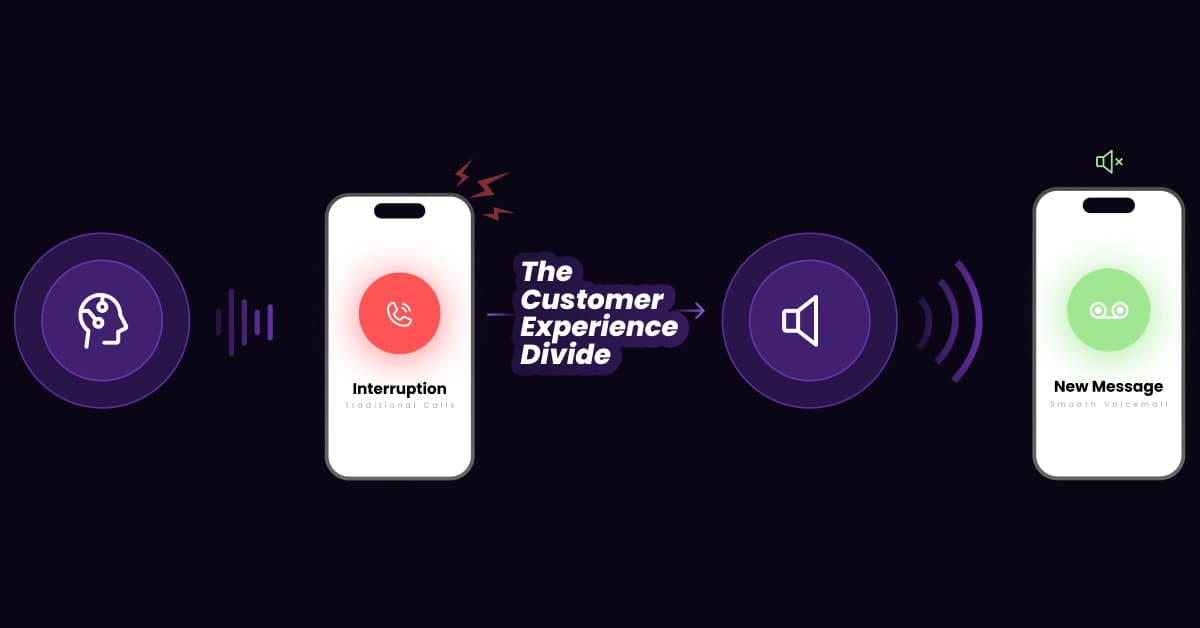
Are you spending too much money on Outbound Call Automation that yields few results? Is your sales team constantly trying to decide between the high cost of human agents and the low engagement of impersonal robocalls? How can you scale your outreach quickly and affordably while ensuring strict legal Compliance? The decision between two powerful modern tools, Ringless Voicemail vs AI Caller, is critical to solving these problems.
Both technologies aim to automate communication and improve Lead generation. However, they offer dramatically different Customer Experience, cost structures, and compliance risks. This expert guide provides a data-driven, practical comparison of these two Outreach strategy methods. We will look at cost, performance, and long-term results to help you choose wisely. We show you why VoiceDrop.ai (Site Name) provides a highly scalable and compliant option for businesses seeking powerful voice outreach.
How AI Callers Work
An AI Calling system is an automated platform that simulates a real human phone conversation. It uses complex technology to talk to a recipient live. These systems rely on several core components: Natural Language Processing (NLP), text-to-speech, voice cloning, and sophisticated automated dialog flow. These components allow the AI to understand and respond to human speech in real-time.
The process flow begins when the AI caller pulls data, such as a contact’s name or inquiry details, from a Customer Relationship Management (CRM) system. It then initiates Outbound Call Automation. When the customer answers, the AI begins a script. It listens for key phrases or questions and uses a branching dialog flow to respond accordingly. The goal is often rapid lead qualification or scheduling a follow-up. For example, the AI can handle initial questions about a policy, routing the call to a human agent only once the lead is fully qualified. This is transforming call center agent roles by automating routine tasks.
How Ringless Voicemail Works
Ringless Voicemail (RVM) operates entirely differently from AI Calling. The system does not simulate a live conversation. Instead, it delivers a pre-recorded or dynamically generated audio message directly to the recipient’s mobile voicemail inbox. This is achieved through a technical server-to-server connection. Emphasizing its non-intrusive delivery method, the message appears instantly as a new voicemail notification without the customer’s phone ever ringing.
The delivery workflow is simple and scalable. A user uploads a contact list and a finalized audio recording of the message. The RVM system then connects to the mobile carrier’s voicemail server, silently dropping the message directly into the inbox. This process is instant and efficient. The recipient can listen to the Voicemail Drops at their convenience. This method effectively bypasses the traditional calling process entirely. This means no interruptions, no busy signals, and no need to wait for the phone to ring out. Find a detailed explanation of “how ringless voicemails work” and their simple technical process.
ROI & Performance Comparison
Comparing the ROI of Ringless Voicemail vs AI Caller depends heavily on your specific business goals, but RVM generally provides a stronger return for most initial outreach and follow-up campaigns. The difference lies in cost efficiency, scalability, and Customer Experience.
Cost Efficiency
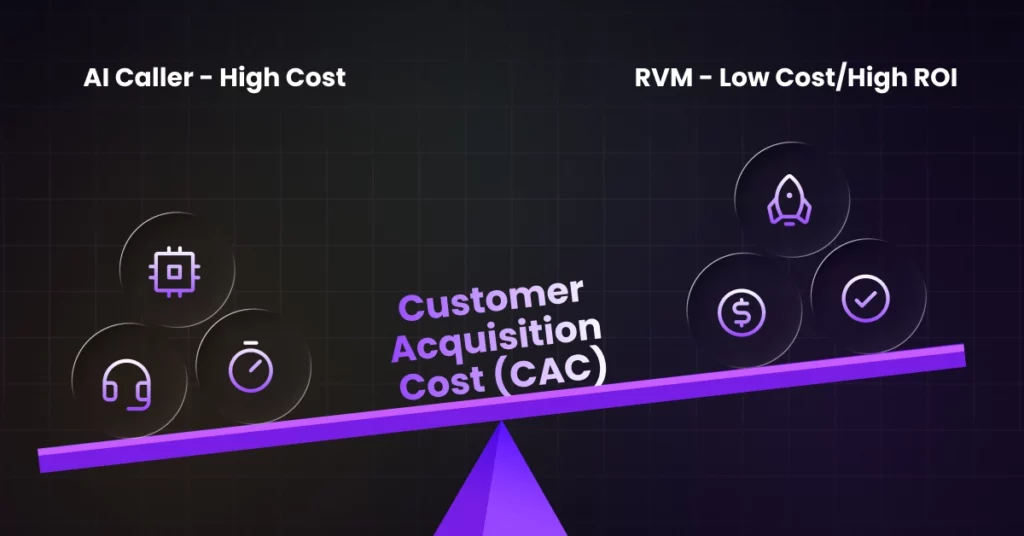
AI Calling platforms often have high setup costs, complex per-minute billing for live conversations, and significant technical overhead. They require continuous monitoring and training. Ringless Voicemail, however, has a much simpler cost structure, typically charging a low cost-per-drop. This makes RVM significantly more budget-friendly. It delivers a lower Cost comparison per contact, leading to a drastically reduced customer acquisition cost (CAC). Reviewing guides on calculating customer acquisition cost reveals the value of RVM’s low cost-per-touch model.
Conversion & Response Rates
AI Calling aims for real-time conversion. Its success depends entirely on the prospect answering the phone and engaging naturally with the bot. Pickup rates for unknown AI callers can be very low, often below 5%. Voicemail Drops, while not real-time, consistently yield higher callback rates (the best VoiceDrop campaigns reach 8% to 10%) because the message is heard by the prospect at their leisure. RVM is non-intrusive and less confrontational, leading to a higher potential for qualified Lead generation. Learning how to increase callback rates shows the direct impact of RVM.
Scalability & Throughput
RVM is designed for massive, rapid deployment. An RVM platform can drop thousands of messages in minutes. This makes it ideal for large Political campaigns, widespread announcements, or sudden sales pushes. AI Calling, while scalable, is often limited by the capacity to handle simultaneous live conversations and requires call throttling to avoid overwhelming staff who take the transfer. Ringless Voicemail offers superior throughput for pure Outreach strategy volume.
Time Savings & Team Efficiency
Both methods save time over manual dialing, but RVM offers cleaner efficiency. AI Calling requires agents to be ready to take transfers the moment a lead is qualified, tethering human agents to the phone. Voicemail Drops require zero agent time during delivery, freeing the sales team to focus only on returning calls from qualified, engaged prospects who listened to the message. This drastically speeds up follow-ups.
Long-Term ROI Potential
Ringless Voicemail is excellent for low-pressure nurturing and maintenance across the entire customer lifecycle. It serves as a consistent, periodic touchpoint. AI Calling is typically reserved for aggressive qualification or immediate sales pushes. RVM offers stronger Long-term ROI because its non-intrusive nature builds goodwill and supports consistent customer lifecycle marketing campaigns without irritating the recipient.
Cost-Benefit Analysis
The Cost comparison reveals the primary financial advantage of Ringless Voicemail vs AI Caller. AI Callers have expensive technology, complex conversational logic, and high per-minute charges. This leads to a high Cost Per Acquisition (CPA), especially when the conversation fails or the bot struggles with complex accents or questions.
Voicemail Drops (like those from VoiceDrop) eliminate labor cost during outreach and have a micro-transactional cost-per-drop model. This results in an incredibly low cost-per-contact and a superior ROI for initial contact and follow-up. While AI Calling can handle complex real-time queries, its complexity means the initial investment and maintenance for a Long-term ROI are much higher. For businesses primarily focused on getting a callback for a human agent to close the deal, RVM offers the clearest path to a low CPA.
Vendor Comparison
When evaluating vendors for Ringless Voicemail vs AI Caller, focus on the unique Features of voicemail and calling platforms. AI caller platforms emphasize Natural Language Processing (NLP) accuracy, integration with internal knowledge bases, and complex transfer logic.
RVM platforms (such as VoiceDrop.ai) focus on high deliverability rates, Compliance safeguards (DNC scrubbing, opt-out management), ease of Voicemail Drops scheduling, and AI Voice Cloning for personalized voicemail messaging. RVM vendors win on simplicity, compliance, and Cost comparison. AI vendors win on real-time problem-solving. Most businesses find the immediate, low-cost Features of voicemail drops more practical for scalable outreach.
Decision Framework
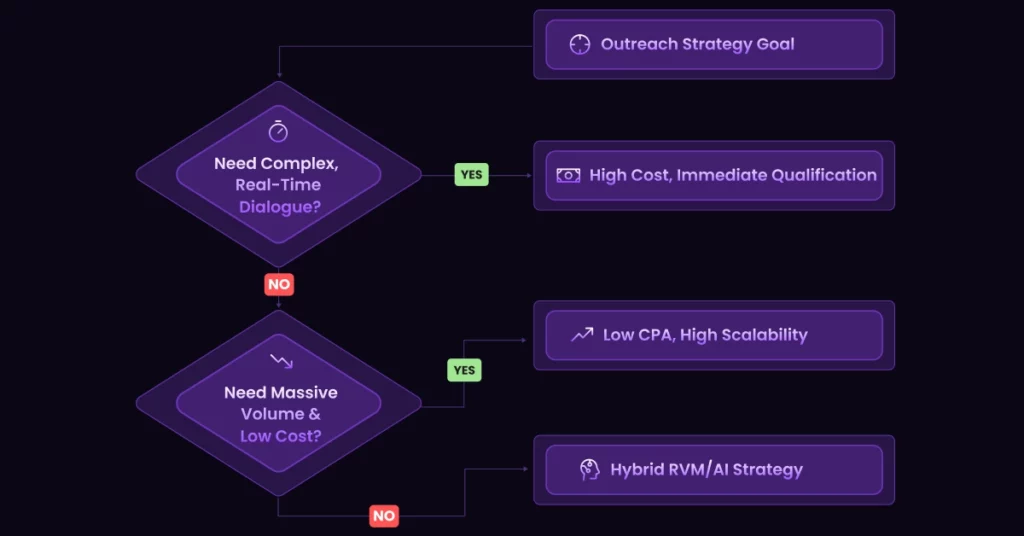
Choosing between Ringless Voicemail vs AI Caller requires a clear Decision framework. Use these questions to guide your choice:
- What is the Goal? If the goal is high-volume, low-pressure follow-up (reminders, thank yous, simple check-ins), RVM is best. If the goal is immediate, real-time qualification or complex objection handling, AI Calling is necessary.
- What is the Budget? For low setup cost and high scaling affordability, choose RVM. If you have a large budget for advanced Outbound Call Automation, consider AI Calling.
- What is the Audience? For cold lists or prospects who are easily irritated by interruptions, RVM delivers a better Customer Experience. For warm leads expecting a real-time interaction, AI Calling may be better.
- What are the Compliance Risks? Both require consent, but RVM, when done correctly, is generally less likely to face live-call complications and maintains better Compliance documentation.
Implementation Tips
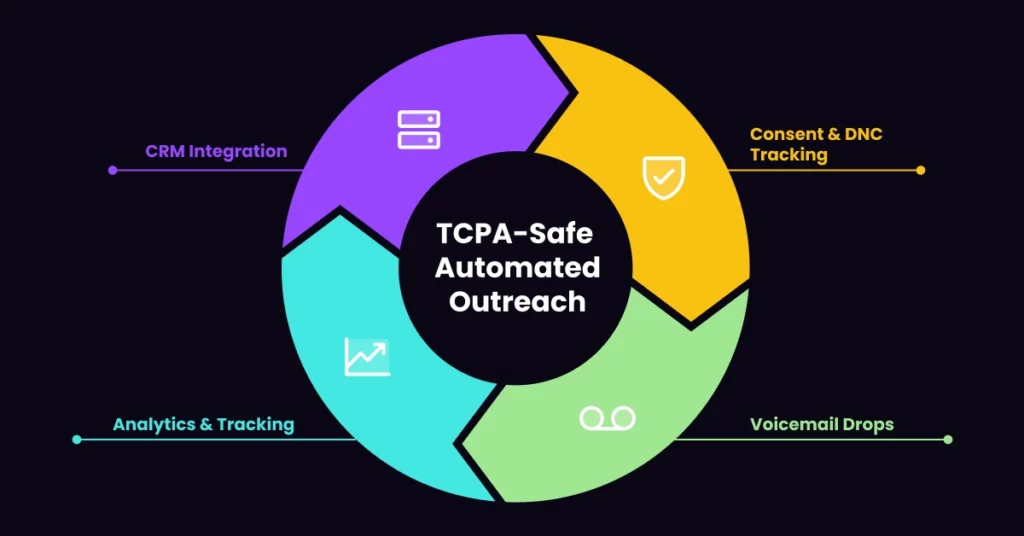
Whether you choose Ringless Voicemail vs AI Caller, successful implementation relies on strong fundamentals.
- Integration First: Ensure your chosen platform integrates seamlessly with your CRM and Marketing Automation Software. VoiceDrop.ai offers robust CRM integration to link data and automatically trigger follow-ups.
- Scripting Matters: For AI, focus on detailed logic and objection handling. For RVM, focus on a concise, high-impact message that includes clear Features of voicemail callbacks.
- Consent is King: Always secure and track prior express consent to ensure Compliance.
- Test Rigorously: Run small test batches to check audio quality, personalization logic, and callback functionality before a full campaign launch.
- Audit Continuously: Monitor campaign analytics and tracking weekly and adjust your message, timing, and contact list segmentation based on performance. This maintains positive Customer Experience and maximizes Lead generation.
Why Ringless Voicemail Often Wins for Most Businesses
Ringless Voicemail often wins for the majority of small and growing businesses because it delivers high impact with low friction. The core advantage is the Customer Experience, it is non-intrusive. Businesses achieve massive Lead generation volume at a fraction of the cost of AI Calling. The simple per-drop Cost comparison and ease of setup reduce the barriers to entry for advanced outreach.
Furthermore, RVM excels in high-volume, essential Use Cases such as payment reminders, Political campaign updates, event promotions, and initial lead follow-up. Its reliable, silent delivery ensures your message is heard, which is the first and most critical step in the sales process. This reliable performance is why platforms focusing on Voicemail Drops offer superior Long-term ROI for scalable, compliant outreach.
Final Verdict: Which Solution Delivers the Best ROI for Your Business?
The ultimate verdict in the Ringless Voicemail vs AI Caller debate depends on the Decision framework you apply. If your business needs real-time customer service or requires complex, live troubleshooting from an automated system, AI Calling may be justified, despite the high Cost comparison and compliance hurdles.
However, for the vast majority of sales, marketing, and follow-up campaigns, Ringless Voicemail offers the best Long-term ROI. It minimizes risk, maximizes throughput, and delivers a superior Customer Experience through non-intrusive contact. The simple operation and low cost make it the clear choice for efficient Lead generation. VoiceDrop.ai delivers a platform that makes RVM even more effective through automation, high deliverability, easy setup, and robust Compliance features.
Ready to stop gambling on high-cost AI callers and start seeing a reliable ROI? Implement the low-friction, high-conversion solution today.
Click here to schedule a demo and see how VoiceDrop delivers superior performance to your outreach strategy.
FAQ’s
1. What is the difference between ringless voicemail and an AI caller?
Ringless Voicemail (RVM) delivers pre-recorded Voicemail Drops directly to voicemail without ringing the phone. An AI Calling system makes live calls using artificial intelligence to simulate a real-time conversation.
2. Which method provides better ROI for businesses?
Ringless Voicemail usually delivers higher ROI for most small and mid-sized businesses due to lower costs, higher scalability, and less intrusive delivery that supports better Customer Experience.
3. Is ringless voicemail legal and TCPA-compliant?
Yes, if businesses obtain proper consent and follow DNC rules. Platforms like VoiceDrop provide built-in Compliance features to simplify this process.
4. Can small businesses use both RVM and AI callers together?
Yes. A hybrid Outreach strategy can be effective, but most high-volume campaigns find the lower cost and higher reach of Voicemail Drops more practical for pure Lead generation.
5. How does Voicedrop make ringless voicemail campaigns easy?
VoiceDrop automates message scheduling, personalizes outreach, tracks engagement, ensures Compliance, and provides detailed campaign analytics and tracking to optimize Long-term ROI.