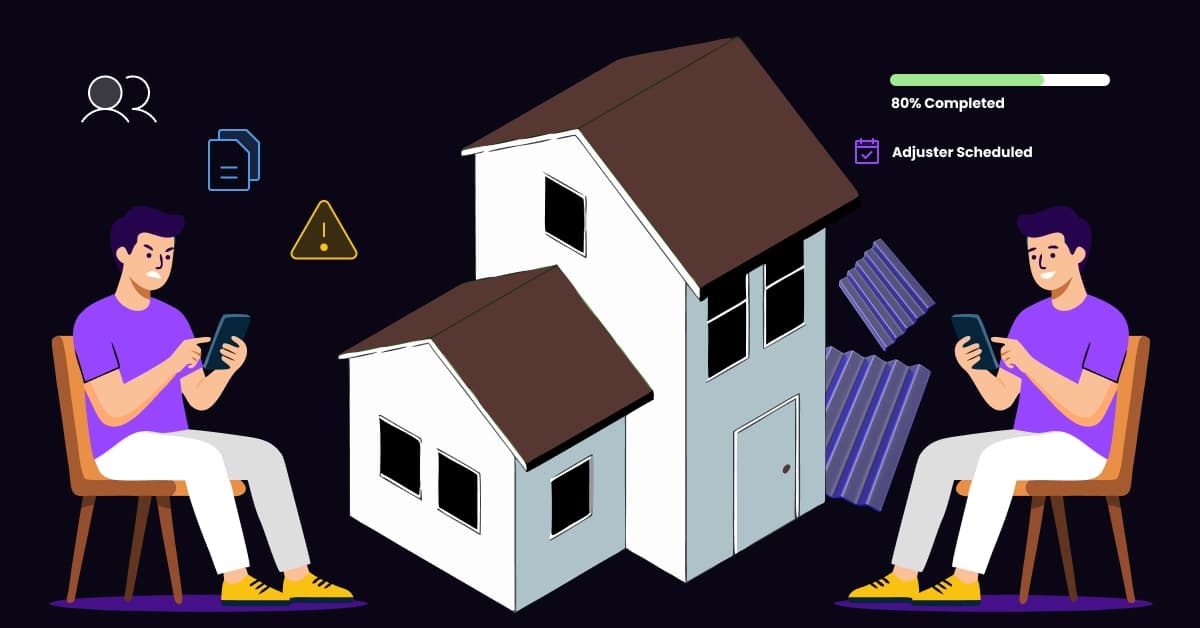
You signed the homeowner, high-fived the client, and planted your yard sign in the front lawn. The Contingency Agreement is secured. But now, you enter the most dangerous phase of the sale: “Paperwork Purgatory.”
You are waiting on the insurance adjuster, the carrier review, and the Scope of Loss. While you wait, the homeowner’s excitement fades. They start reading “scam” articles online or listening to their skeptical neighbour.
The sale isn’t closed when the pen hits the paper; it is closed when the materials hit the roof. Automating these “Waiting Game” updates is the only way to prevent cancellations and secure the build.
The “Valley of Death” in Roofing Sales
In the roofing industry, the time gap between signing the contingency agreement and getting the Scope of Loss approved is often called the “Valley of Death.” This period can last anywhere from two to four weeks. If communication drops during this window, the trust you built begins to crumble.
The Psychology of Silence
When a contractor goes silent, the homeowner assumes nothing is happening. Even if you are working hard behind the scenes negotiating with the desk adjuster, the client cannot see that effort. Consequently, they assume you have taken their signature and moved on to the next victim, leading to anxiety and suspicion.
Competitor Poaching
Furthermore, this silence leaves the door open for your competition. Other roofers, often called “door knockers,” will spot your sign and knock anyway. They will try to convince the homeowner to switch, claiming they can “get it done faster” or that your silence is a red flag. Without a strong relationship, your client might be tempted to jump ship.
Buyer’s Remorse
The initial adrenaline of getting a “Free Roof” eventually wears off. Once the reality sets in, homeowners often experience buyer’s remorse. You need to keep the excitement alive by constantly reminding them that you are fighting for their approval.
Why Manual Follow-Ups Fail
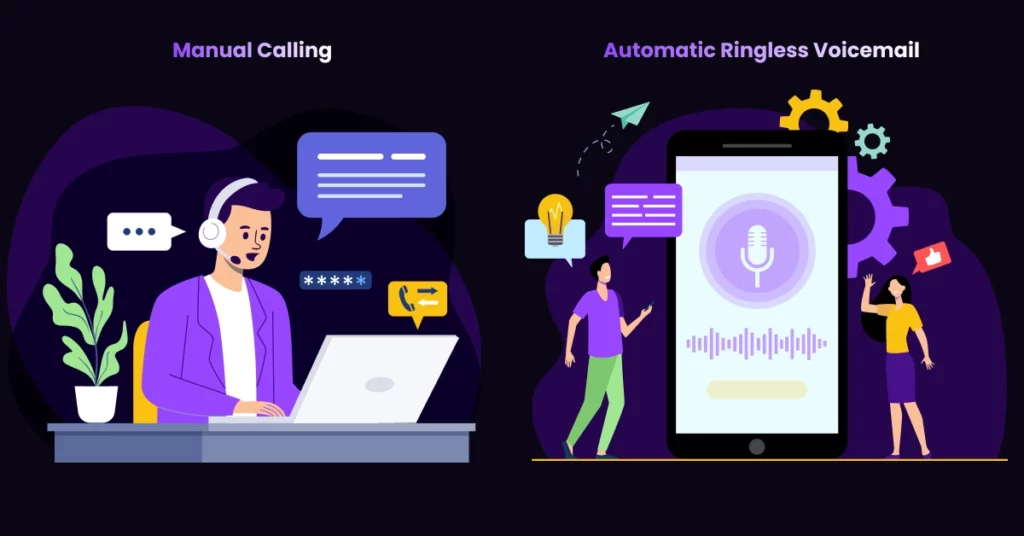
Relying on sales reps to manually update “pending” files is a recipe for failure. Asking a “Hunter” to be a “Farmer” rarely works.
- Chasing New Meat: Reps want to close new deals, not babysit files sitting on a desk. Calling 50 past clients just to say “We are still waiting” kills their morale.
- Inconsistent Messaging: One rep texts weekly; another forgets entirely. Automation ensures every client gets the same “White Glove” experience.
- The Voicemail Abyss: 80% of calls go to voicemail. Using Ringless voicemail marketing lets you update 50 homeowners in two minutes, without wasting hours listening to dial tones.
⚠️ Stop Calling Dead Numbers. A typo in a phone number means your update never arrives, and the customer thinks you ghosted them. Clean Your Customer List with 1Lookup ➔. 1Lookup is built by the same team as VoiceDrop.
Step 1: Data Hygiene and Verification
Before you automate any campaign, you must ensure you have the correct contact info. Automation amplifies your process, so if your data is bad, your results will be messy.
Identifying the Decision Maker
First, ensure you are messaging the policyholder. Occasionally, a spouse or relative who isn’t on the deed might open the door and provide their number. However, the claim updates need to go to the actual decision-maker to be effective.
Mobile vs. Landline
It is important to remember that ringless voicemail requires mobile numbers. If you attempt to send these drops to landlines, they will fail. Therefore, scrubbing your list to separate mobile numbers from landlines is a critical first step.
Ensuring Clean Data
Finally, using tools to verify the homeowner’s identity prevents you from sending sensitive claim info to the wrong person. With 1Lookup Data Coverage, you can instantly verify that the phone number on the contingency agreement matches the homeowner of record, protecting your reputation.
Step 2: The “Status Update Loop” Strategy
The core of this strategy is consistency. Even if there is no “new” news, the act of updating the client provides reassurance. Here is a timeline of how the loop should work.
Day 2: The “Welcome Aboard”
- Script: “Hi [Name], this is [Name] with [Company]. I just wanted to confirm that I’ve submitted all the initial paperwork to your insurance carrier. We are just waiting for them to assign a specific insurance adjuster to the file. I’ll reach out as soon as I get that name!”
Day 7: The “We’re Fighting For You”
- Script: “Hi [Name], just a quick update. The adjuster is reviewing our Scope of Loss now. We noticed they missed a few items on the gutters, so we are pushing for full Replacement Cost Value (RCV) to make sure you aren’t paying out of pocket. I’ll keep you posted.”
Day 14: The “Hold Tight”
- Script: “Hi [Name], we are still waiting on final approval. Don’t worry, delays are normal with this storm date. According to the National Roofing Contractors Association, timelines stretch during peak season, but we are on top of it.”
Step 3: Integrating with Your CRM
To make this truly hands-off, you need to integrate VoiceDrop with your existing tools. This removes the need for manual uploads.
Triggering from Job Status
Most modern CRMs, such as JobNimbus, AccuLynx, and HubSpot, support automation triggers. You can set up a workflow where, as soon as a job status moves to “Insurance Pending,” the VoiceDrop campaign begins automatically.
Stop Triggers
Equally important is knowing when to stop. When the job status moves to “Approved” or “Production,” the loop must stop immediately. You don’t want a customer who is scheduled for a build tomorrow to receive a voicemail saying you are still waiting on the adjuster. You can easily manage this via VoiceDrop Integrations to ensure a seamless experience.
Handling the Inbound Questions
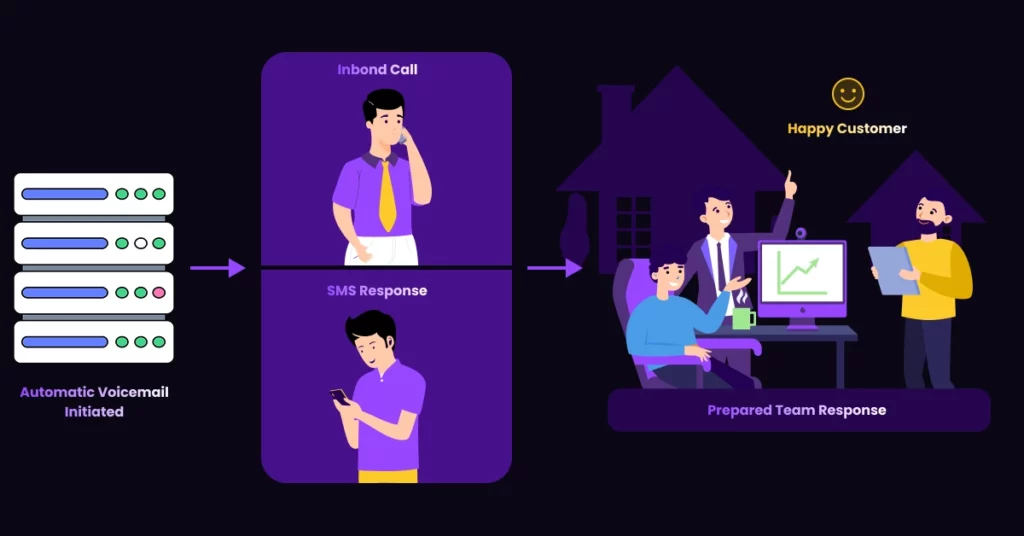
Once these voicemails go out, your phone will ring. This is a good sign, as it means your customers are engaged.
The “Soft Landing”
Ensure your office staff knows that the automated drops have gone out. Nothing is worse than a customer calling back to say, “I just got a voicemail about my claim,” and the receptionist having no idea what they are talking about.
Using SMS for Quick Replies
For best results, pair the voicemail with a text message. A simple SMS saying, “I just left you a voicemail about your claim status. Text me back if you have questions,” gives the homeowner an easy, low-friction way to respond.
Compliance and Transparency
While automation is powerful, you must operate within legal boundaries.
Transactional vs. Marketing
It is important to note that these are “Informational” or transactional messages about an existing contract. Generally, this gives you more leeway under TCPA regulations than with cold sales calls, as the customer already has an existing business relationship with you.
Honest Updates
Never promise approval if you don’t have it. The goal is transparency. If the claim is denied or only partially approved, use the call to explain the next steps, such as a re-inspection, rather than giving false hope.
Conclusion
You worked hard to get that signature. Don’t let the deal die in the “Valley of Death.”
By automating your updates, you keep the homeowner engaged, stop competitors from poaching your signed deals, and build trust without burning out your sales team.
Stop the “Where is my roof?” phone calls. Start Your Free Trial of VoiceDrop Today ➔
FAQs
Is a roofing contingency agreement legally binding?
Yes, it protects both the roofer and the homeowner, ensuring work is done only if the insurance approves the price. It prevents the homeowner from being stuck with a bill they cannot pay.
How often should I update the homeowner?
You should update them at least once a week during the insurance negotiation phase. Even if there is no update, hearing from you reassures them that you haven’t forgotten them.
Can I automate text messages, too?
Yes, VoiceDrop supports omnichannel sequences. Combining Ringless Voicemail with SMS increases the chances that your message is seen and heard.