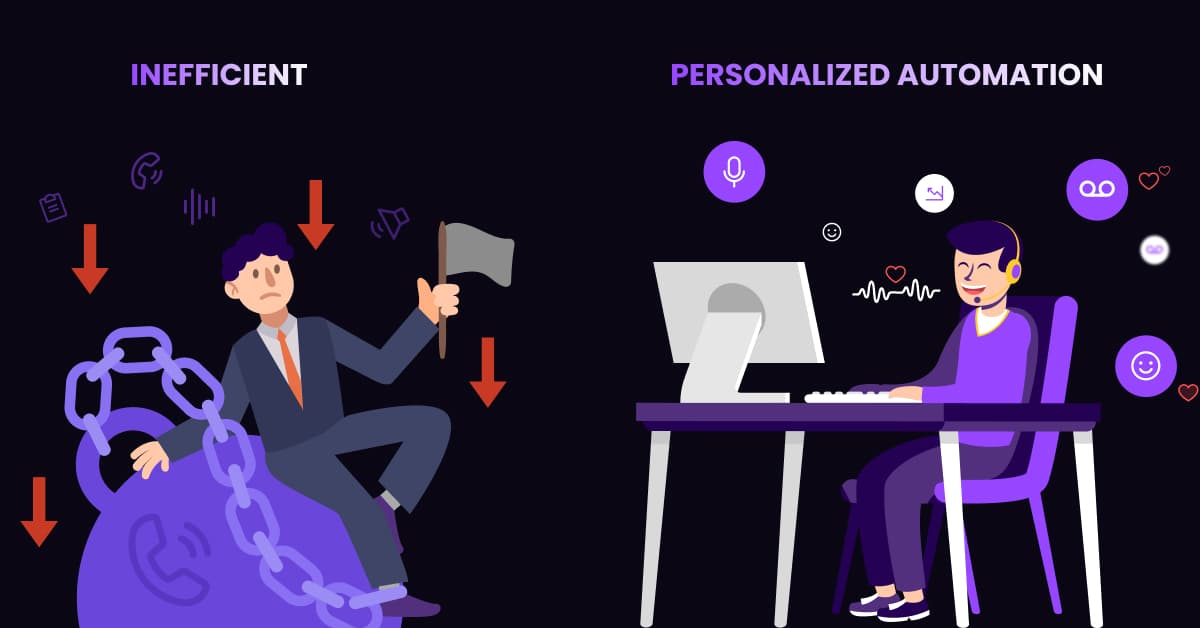
Is your sales team wasting hours leaving the same Voicemail Message over and over? Are valuable leads slipping away because follow-ups are inconsistent and slow? How can you inject efficiency and Automation Tool power into your sales process without losing the personalized touch that closes deals? The solution is Sales Follow-up Automation powered by voicemail drops. This strategy takes the tedious work out of follow-ups. It ensures every lead gets a warm, consistent touchpoint at the Optimal Timing.
This expert guide shows you how to implement Sales Follow-up Automation using automated voicemail campaigns. We explain why this approach increases callbacks, maintains personalization, and integrates seamlessly with your existing workflow. You will learn the implementation steps, the best Voicemail Scripts, and how to measure ROI tracking to drive higher conversions.
The Problem with Manual Follow-Ups
Manual follow-up is the biggest bottleneck in modern sales. Sales Development Representatives (SDRs) spend over half their time on low-value, repetitive tasks. This includes constant Cold Calling, logging data, and leaving non-personalized Voicemail Messages after Voicemail Messages. Manual efforts are time-consuming, prone to human error, inconsistent, and difficult to scale.
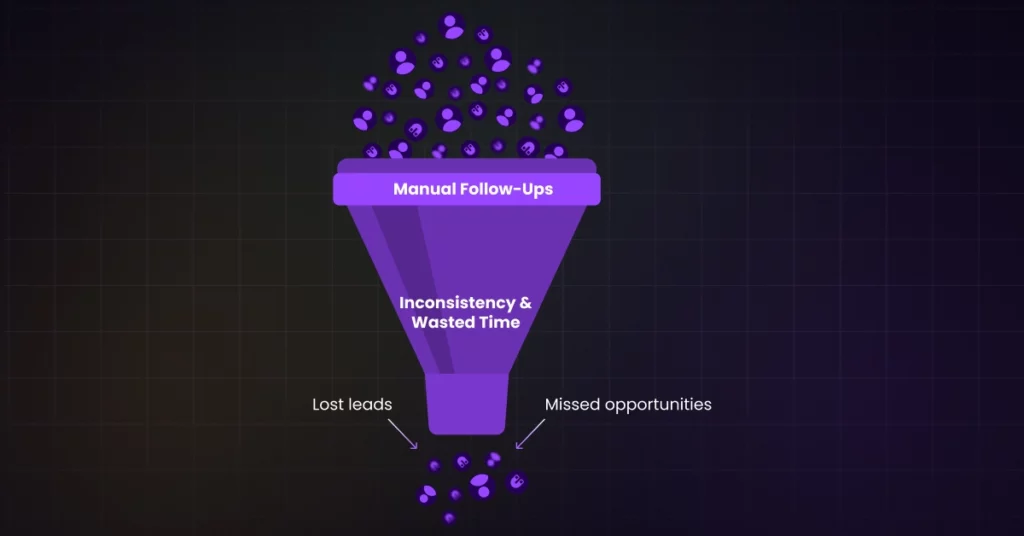
When teams rely on manual processes, errors are frequent. Leads are often missed entirely. This inconsistency leads to missed opportunities and a lower callback Response Rate. Furthermore, the time wasted on manual effort means sales reps have less time for high-value activities, like handling qualified leads or closing deals. This inefficiency reduces overall sales productivity and lowers the effectiveness of every Sales Calls campaign. The solution is automation, but it must be smart and personalized to improve Lead Engagement.
What Is Sales Follow-Up Automation?
Sales Follow-up Automation is the use of tools and technology to schedule, send, and track follow-ups automatically. It removes manual effort from the repetitive stages of the Sales Cycle. This process ensures that every lead receives a timely, personalized sequence of messages across multiple channels.
Automation brings two key benefits: efficiency and consistency. Instead of a human agent manually sending a generic Voicemail Message or Email Content, the system triggers the right message at the perfect moment. Methods include automated emails, AI-Powered Follow-Ups, and voicemail drops, emphasizing the efficiency and consistency automation brings to the sales process. The goal is to maximize the speed of Response Time and improve overall Lead Engagement. Sales Follow-up Automation is crucial for scaling a modern sales team effectively. This process is increasingly being handled by intelligent AI. You can read more about how companies are leveraging AI for sales funnel automation in 2025.
How to Automate Sales Follow-Ups Using Voicemail Drops
Automating Sales Follow-up Automation using Voicemail Message drops provides the best of both worlds: automation speed and personal voice connection. This strategy uses specialized ringless voicemail platforms, like VoiceDrop.ai, to deliver pre-recorded Sales Voicemails directly to the recipient’s inbox without their phone ever ringing.
This approach addresses the core problem of Cold Calling, getting past the gatekeeper and the constant interruption. Key benefits include saving agent time, maintaining personalization through voice cloning, and achieving a higher Response Rate. Automated Workflows ensure timely delivery, maximizing the chance the lead listens to the message. Using high-quality, effective sales voicemails drives better sales outcomes.
Common Mistakes
Sales Follow-up Automation is powerful, but easily misused. Sales teams frequently make errors that reduce Lead Engagement and conversions. Avoiding these mistakes is essential for maintaining a positive Customer Experience.
Overusing Automation
A frequent mistake is sending too many automated messages without any human follow-up. This is “set it and forget it” automation. It quickly annoys prospects and damages Brand Reputation. Over-automation can overwhelm prospects and make them feel like a mere data point. The fix is setting clear frequency caps and incorporating mandatory human check-in points within the sequence.
Generic or Long Scripts
Generic or long Voicemail Scripts drastically reduce Response Rate. Prospects quickly delete messages that sound impersonal or take too long to get to the point. Voicemail Scripts that are longer than 45 seconds often fail. Long, impersonal scripts reduce response rates because they waste the prospect’s time. Focus on concise, personalized, and value-driven Sales Voicemails.
Poor Timing and Frequency
Leaving Sales Voicemails at inconvenient times (like 6 AM or 9 PM) or too frequently (twice in one day) reduces effectiveness. Poor timing alienates prospects and signals a lack of respect for their schedule. Discuss the effects of leaving voicemails at inconvenient times or too frequently. The best time to follow up is often mid-morning or mid-afternoon. Research confirms that hitting the Right Response Time is crucial to success.
Implementation Steps
Setting up successful Automated Lead Follow-up System campaigns requires a structured approach. Follow these steps for smooth integration and effective outreach.
Segment Leads
Start by clearly defining your Target Audience. Explain how to categorize prospects based on industry, company size, role, or previous User Behavior. This segmentation allows for highly personalized messaging. Segmenting leads ensures you use the correct Sales Voicemails for each group. Using the right sales outreach tools helps with accurate segmentation.
Create Effective Scripts
Tips for concise, engaging, and action-driven Voicemail Scripts are vital. The message should be under 45 seconds, focus on a single pain point, and include a clear call-to-action (CTA). Avoid jargon. Record your Sales Voicemails in a warm, natural tone to enhance personalization.
Schedule and Automate Drops
Guidance on timing, frequency, and using automation platforms like VoiceDrop.ai is essential. Use the Optimal Timing data for your industry. Schedule drops to align with business hours. Automation platforms handle the delivery process, ensuring consistency and accuracy across thousands of contacts.
Email + Voicemail Cadences
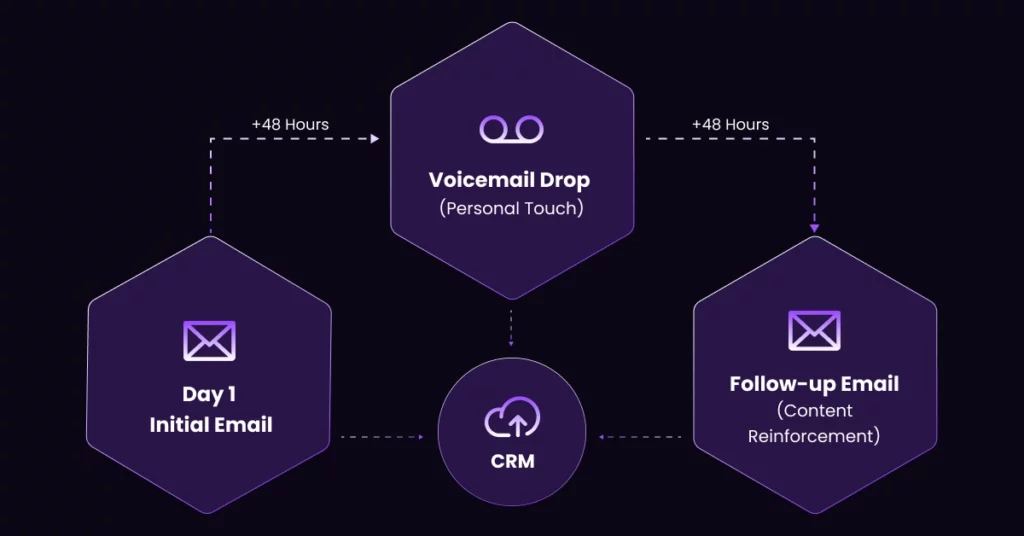
Combining email and voice in a coordinated sequence is the most effective approach for Sales Follow-up Automation. This is multi-channel sales outreach. It addresses the issue of prospects favoring different communication methods. A prospect who ignores Email Content might listen to a personal Sales Voicemail.
The cadence structure is important. An example cadence is: Email 1 → Voicemail Drop 1 (48 hours later) → Email 2 (48 hours later). This sequence reinforces the message across channels. The Voicemail Message often breaks through the digital noise created by too much Email Content. This coordinated effort increases callbacks and conversions compared to single-channel attempts. Integrating AI-Powered Follow-Ups into this sequence can further optimize the timing of each touchpoint.
ROI Tracking
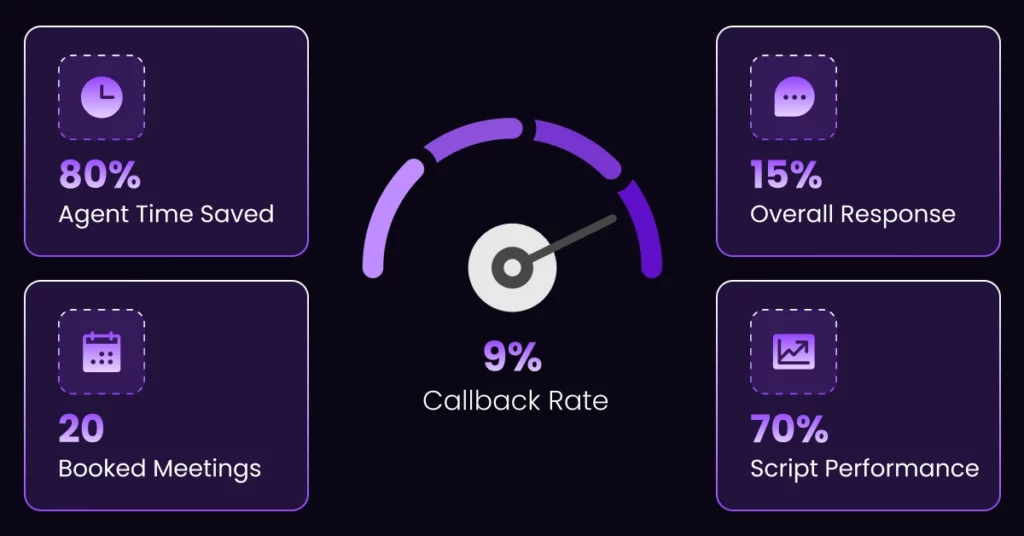
Measuring the effectiveness of your Sales Follow-up Automation is crucial for continuous improvement. This section describes how businesses can measure the ROI tracking of their automated voicemail campaigns.
Focus on key performance indicators (KPIs):
- Callback Rate: The percentage of prospects who return a call after receiving the Voicemail Message.
- Response Rate: The overall percentage of replies (call, email, text).
- Conversion Rate: The percentage of engaged leads that convert to booked meetings or closed deals.
- Time Saved: Calculation of agent hours saved by automation.
Explain how to use analytics tools, CRM tools, dashboards, and platforms like VoiceDrop.ai to track performance. Integrating the voicemail platform directly with your CRM is necessary for accurate data logging. This allows you to optimize Voicemail Scripts and timing for maximum returns. Explore how to set up VoiceDrop integration for accurate ROI tracking.
Closing Thoughts
Sales Follow-up Automation using voicemail drops is a powerful strategy for modern sales teams. It solves the key problems of inconsistency and lack of personalization in outreach. By structuring Automated Lead Follow-up Systems properly, testing Voicemail Scripts, scheduling drops, and integrating with your CRM tools, you can significantly improve Lead Engagement and drive higher conversions. This is the future of Sales Operations: automation that maintains the human touch.
Ready to stop wasting time on manual follow-ups? Take control of your sales process and drive higher conversions with intelligent automation.
Click here to schedule a demo and see the AI-powered difference.
FAQ’s
Q1: What is sales follow-up automation?
Sales Follow-up Automation uses tools and technology to schedule, send, and track follow-ups automatically, reducing manual work and improving consistency.
Q2: How do voicemail drops improve follow-up effectiveness?
Voicemail drops allow personalized Voicemail Messages to reach prospects directly without requiring live calls, increasing callbacks and Lead Engagement rates.
Q3: Can I combine voicemail drops with email outreach?
Yes. Combining Voicemail Message with Email Content in a coordinated cadence increases touchpoints, reinforces messaging, and improves lead conversion.
Q4: How do I track the success of my automated voicemail campaigns?
Key metrics include callback rates, Response Rates, conversions, and ROI tracking. Platforms like VoiceDrop.ai and CRM tools dashboards help monitor these metrics.
Q5: How often should I send automated voicemail follow-ups?
Frequency depends on lead type and campaign goals, but avoid over-automation. Space touchpoints to maintain Lead Engagement without overwhelming prospects.