
It is a hard truth: 98% of B2B website visitors leave without filling out a form. They visit your pricing page, read your case studies, and then vanish.
These aren’t just “hits,” they are active buyers. By letting them leave anonymously, you are throwing 98% of your potential leads into the trash.
In 2026, relying on passive “Contact Us” forms is a losing strategy. You need to be proactive. Reverse IP Lookup changes the game by acting as a “Digital Caller ID,” instantly revealing the company behind the click so you can reach out first.
The “Dark Funnel”: Why You Can’t See Your Leads
Most of the B2B buying journey happens in the shadows. This phenomenon is known as the “Dark Funnel,” which consists of the research a buyer conducts before they ever speak to a sales representative.
The Limitations of Google Analytics
Standard tools like Google Analytics are excellent for understanding general traffic trends. However, they tell you what happened, not who did it. For example, you might see “100 visits from New York,” but that data lacks actionable context. To close deals, you need identity, not just geography. Without specific company data, your sales team is essentially flying blind.
The Opportunity Cost of Anonymity
Consider the financial impact of anonymity. If a high-value prospect, such as Microsoft or a major local hospital, visits your pricing page but leaves without converting, that lead is typically gone forever. Consequently, you lose the opportunity to engage with a buyer who has already demonstrated high intent. Identifying these visitors allows you to reclaim that lost revenue.
What is Reverse IP Lookup? (The Technical Breakdown)
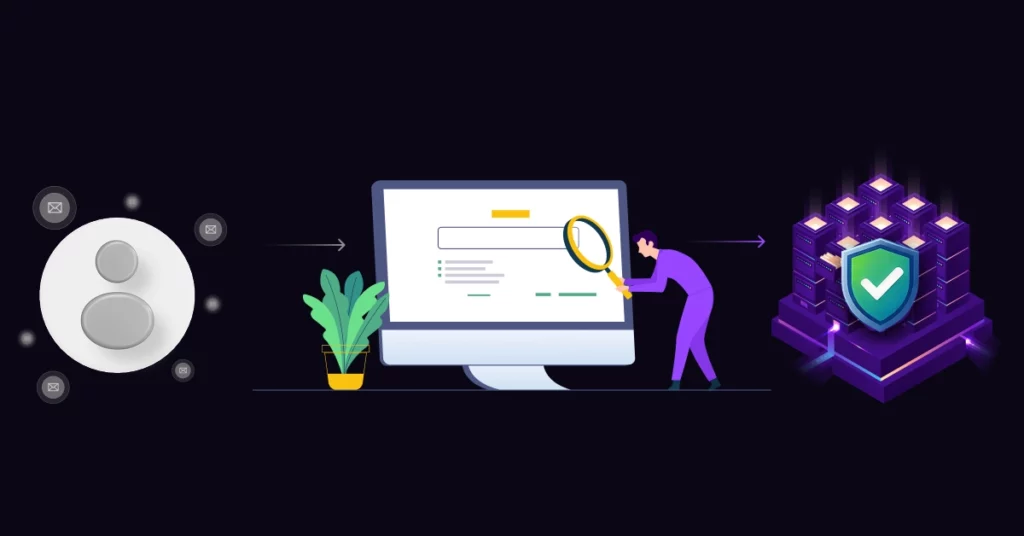
To understand the solution, we must first look at the mechanics. Reverse IP lookup is the process of mapping an anonymous numerical address to a business identity.
Translating IP Addresses to Domain Names
Think of an IP address like a car’s license plate. When you drive on a public road (the internet), your plate is visible.
Large businesses (e.g., Ford, Oracle) register their “license plates” (Static IPs) under their corporate identity. A reverse lookup tool simply queries the public DMV, in this case, the ARIN Registry database, to match that numerical IP (192.xxx.xxx) to the company name.
It’s not magic; it’s public directory data used smartly.
Static Corporate IPs vs. Dynamic Residential IPs
You might wonder why this is effective for B2B but not B2C. The answer lies in how internet connections are assigned. Large companies use “Static IPs” for security and network stability, making them easier to identify consistently. Conversely, consumers typically use “Dynamic IPs,” which change constantly and are much harder to track back to a specific household.
The Filtering Process: Separating Buyers from Bots
Not all data is good data. Therefore, a robust reverse IP strategy requires a filtering layer to separate valuable leads from digital noise.
Removing ISPs (Internet Service Providers)
When analyzing your traffic, you do not want to know that a visitor is using “Comcast” or “Verizon.” These are Internet Service Providers (ISPs), not potential buyers. Professional lookup services automatically filter out these ISP addresses, showing only organizational traffic. As a result, you see clear company names like “Oracle” or “Delta Airlines” instead of generic internet providers.
Detecting Bot Farms and Data Centers
Furthermore, the web is full of non-human traffic. If a visit originates from an AWS data center or a known VPN exit node, it is likely a bot, a scraper, or a competitor spying on you. Reverse IP technology helps filter out “fake traffic” from your sales pipeline, ensuring your team focuses only on legitimate human prospects.
🛡️ Instant Verification: Unsure if an IP or phone number is legitimate? Run a free carrier and IP check on 1Lookup to separate real leads from bots. 1Lookup is built by the same team as VoiceDrop.
Turning Data into Deals: The Sales Use Case
Once you have clean data, the goal is to convert insights into revenue. This technology fundamentally shifts the sales approach from reactive to proactive.
De-anonymizing the “Warm” Lead
Cold calling is dead because it lacks context. Reverse IP Lookup gives you the “cheat code.”
Instead of guessing, your sales team can see that Company X just spent 5 minutes on your Enterprise Pricing page. Now, the outreach changes from a generic pitch to a targeted solution:
“Hi [Name], I noticed your team at Company X is researching enterprise solutions. I wanted to share a case study relevant to your industry…”
This context drastically increases connection rates because you are solving a problem they are currently researching.
Account-Based Marketing (ABM) Triggers
For sales teams that target specific large accounts, timing is everything. Getting a real-time alert that “Target Account A” is currently browsing your site allows for immediate engagement. Once the account is identified, you can deploy a ringless voicemail follow-up to contact the key decision-makers non-intrusively, ensuring your brand stays top-of-mind.
From Company Name to Contact Person (Data Enrichment)
Reverse IP Lookup gives you the company name, but you cannot sell to a logo; you must sell to a person. The next step is data enrichment.
Building the “Buying Committee”
After identifying a visiting company, such as “Adobe,” you need to find the people responsible for the purchase. You can use platforms like LinkedIn or ZoomInfo to map out the “Buying Committee,” identifying relevant roles such as Marketing Directors or VPs of Sales. This targeted approach ensures you aren’t wasting time on gatekeepers.
Verifying Contact Details
However, simply finding a name isn’t enough. Before you reach out, you must verify business phone numbers and email addresses to ensure they are valid. This step is critical to avoid bounces or calls to disconnected numbers, which can harm your sender’s reputation and waste valuable sales time.
Compliance & Privacy: Navigating the “Creepy” Factor
Whenever data tracking is discussed, privacy concerns naturally arise. It is vital to understand the distinction between corporate intelligence and personal surveillance.
Corporate Identity vs. PII (Personally Identifiable Information)
Reverse IP identifies the legal business entity, not the individual home user. For instance, it tells you “General Motors” visited your site, not “John Smith from Detroit.” This distinction is key for staying compliant with GDPR and CCPA regulations in the B2B space, as you are not tracking personal browsing habits.
First-Party Data Usage
Additionally, because the visitor came to your website, analyzing their IP address is considered legitimate first-party data processing. This is fundamentally different from buying third-party lists of people who have never heard of you. For total peace of mind, you should always review a GDPR compliance checklist to ensure your data processing remains transparent and compliant.
Implementation Strategy with VoiceDrop
How do you practically apply this data? Integrating IP intelligence with communication tools creates a powerful workflow.
Creating Segmented Outreach Lists
You should not treat all visitors the same. Start by grouping your identified visitors by industry, such as “All Manufacturing Companies” or “SaaS Providers.” Once segmented, you can upload these lists to VoiceDrop for a targeted broadcast that speaks directly to that industry’s pain points.
Automating the “Speed to Lead”
In B2B sales, speed is the currency of victory. You can integrate your IP intelligence directly with VoiceDrop to trigger instant workflows:
- Trigger: A “Target Account” visits your website.
- Action: VoiceDrop automatically schedules a ringless voicemail to the company’s main line or key stakeholders.
This ensures you strike while the iron is hot, often while the prospect is still on your website, without lifting a finger.
Measuring the ROI of Identity Resolution
Finally, you must prove that this strategy is profitable. Tracking the right metrics will demonstrate the value of de-anonymizing your traffic.
Conversion Rate Optimization (CRO)
One of the best ways to measure success is to compare the conversion rate of cold leads versus leads identified via Reverse IP. Almost invariably, the latter converts at a higher rate because they have already shown intent by visiting your site. They are aware of your brand, which removes the biggest sales hurdle.
Attribution and Pipeline Influence
Moreover, you should track the full journey. Monitor how many “Unknown” web visits eventually turned into “Closed Won” deals after being identified and nurtured through proper verification channels. By analyzing campaign performance, you can attribute revenue directly to the leads that would have otherwise remained invisible.
Conclusion
In a crowded market, ignorance is expensive. You cannot afford to let 98% of your traffic remain a mystery.
Reverse IP Lookup bridges the gap between anonymous clicks and signed contracts. It turns your passive website into your best-performing sales representative.
Don’t let your best leads leave without a trace.
Ready to see who is on your site right now? Get a demo of VoiceDrop and start verifying your traffic today.
FAQs
Can a reverse IP lookup identify a specific person?
No, it identifies the network owner, which is the company. You still need to research the specific contact person within that company using professional networking sites or data enrichment tools.
Does this work for people working from home?
This works only if they are connected to a corporate VPN. Otherwise, they will appear as residential ISP traffic, which is usually filtered out to ensure data quality.
Is this software expensive?
While costs vary, most tools offer tiered pricing. Typically, the ROI from capturing just one or two “lost” large accounts is enough to pay for the software for the entire year.