Cloud-based sales acceleration software has fundamentally reshaped how inside sales teams and high-velocity SDRs connect with prospects.
According to sales engagement trends, the shift toward specialized CRM dialers is driven by the demand for instant data logging and higher connect rates. Yet, many sales leaders still grapple with clunky interfaces or steep per-user costs that eat into margins.
The ability to execute high-volume outreach without technical hurdles is often the deciding factor between hitting quota and missing the mark.
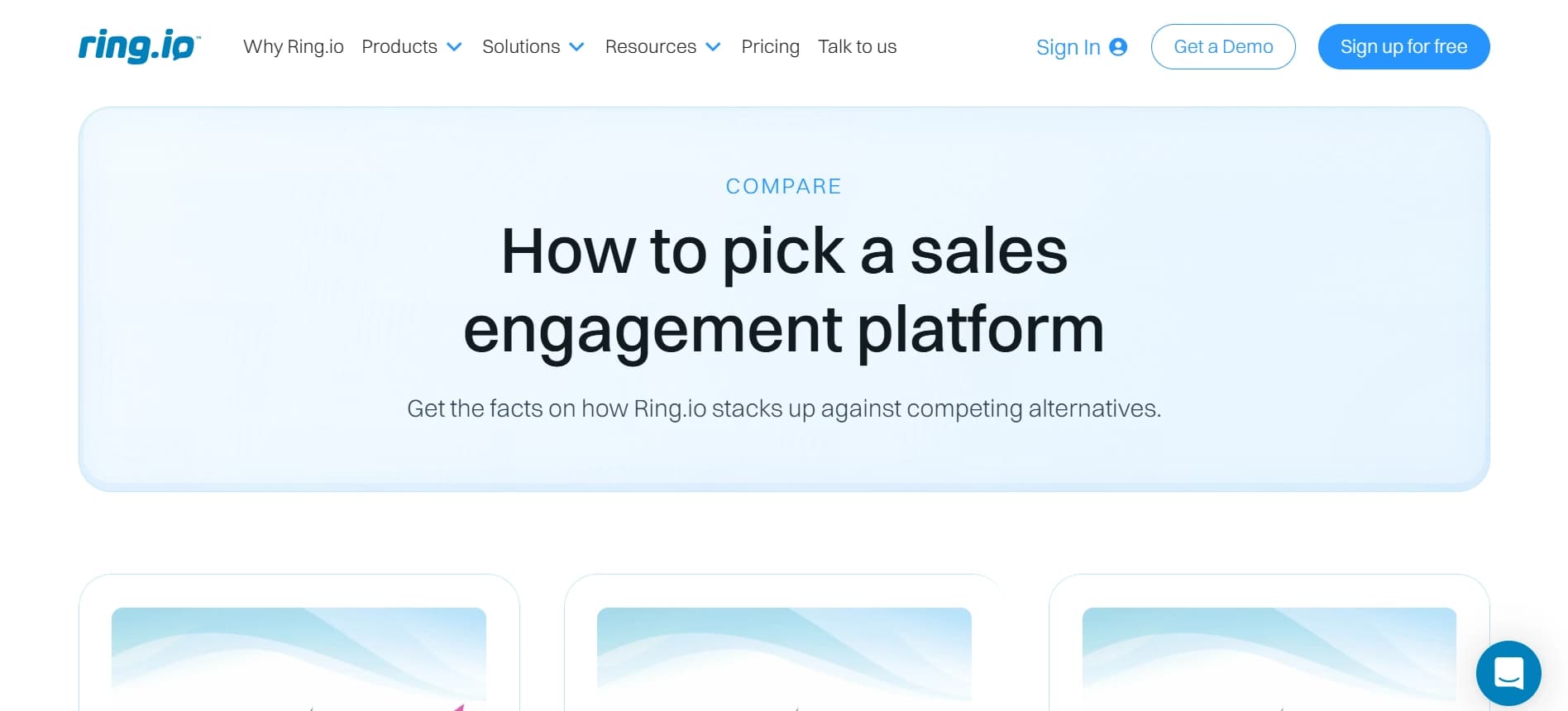
If you are currently evaluating Ring.io or searching for a replacement, you are not alone. While Ring.io is a formidable contender in the Salesforce and Zoho ecosystems, numerous platforms offer sharper pricing, more modern interfaces, or specific automation capabilities that better suit your revenue goals.
Whether your priority is cleaner SMS workflows, a more intuitive mobile experience, or a dedicated ringless voicemail strategy, the right alternative can revolutionize your team’s daily output.
Let’s delve into the top contenders and how they stack up against Ring.io in 2026.
Introduction to Ring.io and Its Purpose
Ring.io is widely acknowledged for its CRM-first philosophy, allowing sales teams to embed telephony workflows directly into platforms like Salesforce and Zoho without constant tab-switching. It operates as a bridge between your phone and your customer database.
This platform assists teams in moving beyond manual dialing, offering features specifically engineered to increase talk time, such as Local Presence and Click-to-Call.
With capabilities such as Automatic Call Logging and IVR Routing, it is a robust tool for call-heavy organizations that require strict data hygiene and adherence to processes.
Why Look for Ring.io Alternatives?
Despite its deep integration capabilities, Ring.io isn’t the flawless solution for every sales floor.
If you want a deep dive into its pros, cons, and real user feedback before looking at other tools, check out our comprehensive Ring.io review.
Here are common reasons why organizations seek other options:
- User Interface (UI) Design: Users often note that the interface feels dated or “utilitarian” compared to modern SaaS tools, which can affect user adoption among younger reps.
- Cost Efficiency: For smaller teams or those not needing enterprise-grade routing, the per-user cost (often exceeding $100/mo for full features) can be prohibitive compared to lighter solutions. To see exactly how much you might spend across their Startup, Growth, and Enterprise tiers, read our complete Ring.io pricing breakdown.
- Setup Complexity: While powerful, configuring complex IVR flows and routing rules often requires a steeper learning curve or dedicated admin time.
- Platform Dependency: Because it relies heavily on its CRM housing (like Salesforce), if your team needs a standalone powerhouse that works independently of a specific CRM’s uptime, you might feel restricted.
Top Ring.io Alternatives to Consider
Here are the best sales dialing and outreach platforms that rival Ring.io in performance, distinct features, and overall value.
VoiceDrop
Best for: High-volume automated outreach and ringless voicemail.
Meet VoiceDrop: If your primary objective isn’t managing intricate inbound call queues but rather proactive lead activation, Ring.io might be overkill. VoiceDrop delivers a specialized solution for teams that need to broadcast messages at scale without exhausting their sales reps.
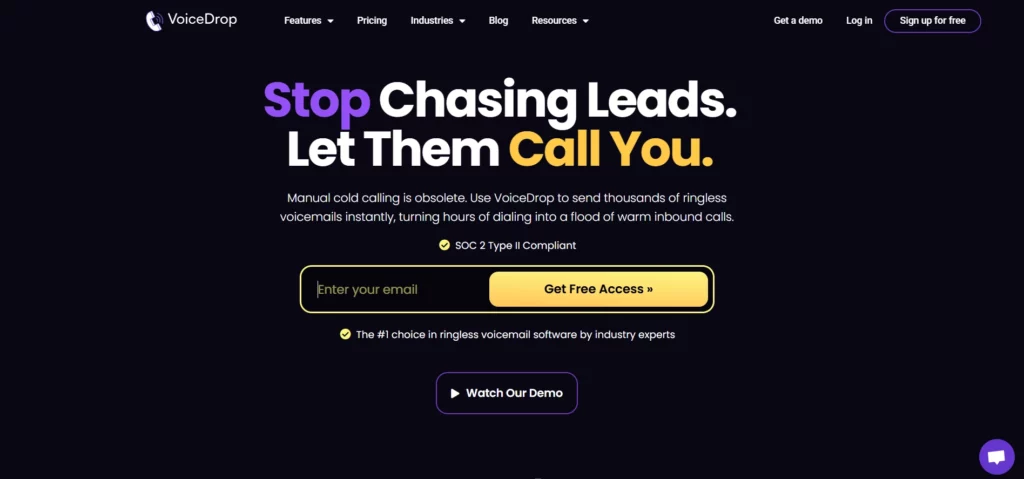
Unlike Ring.io’s heavy telephony infrastructure, VoiceDrop leverages Ringless Voicemail technology, allowing you to deposit a perfectly recorded message directly into a prospect’s voicemail inbox without their phone ever buzzing.
Key Features
- Stealth Delivery: Lands quietly in mobile and landline voicemail boxes, bypassing the immediate “gatekeeper” rejection.
- AI Voice Cloning: Synthesize personal messages in your own voice, eliminating the need to record every script manually.
- Set-and-Forget Automation: Launch campaigns that work in the background while your reps focus purely on handling warm callbacks.
- Budget-Friendly: Drastically more affordable than purchasing expensive power dialer seats for purely outbound touchpoints.
Pricing
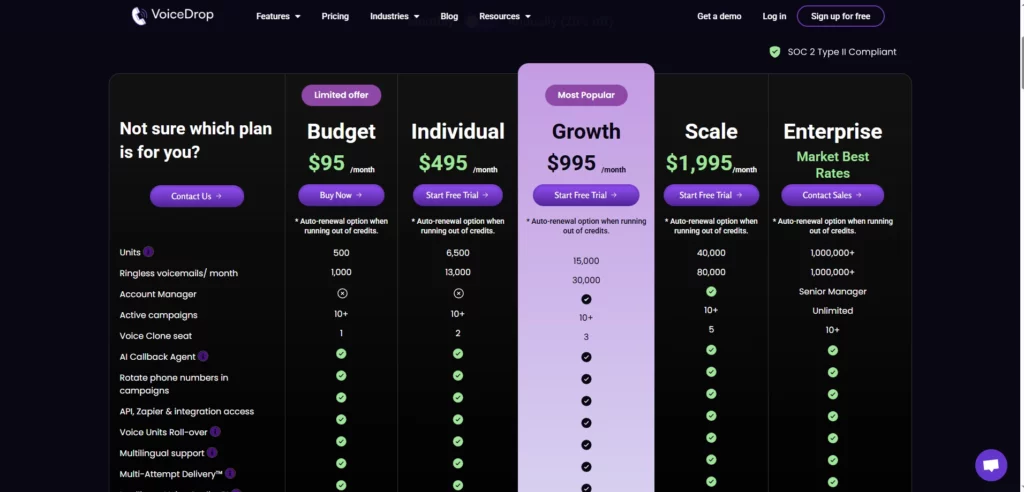
VoiceDrop presents a highly aggressive pricing model starting at just $95/month, positioning it as a fraction of the investment required for a full Ring.io implementation.
Orum
Best for: AI-powered parallel dialing for Enterprise Teams.
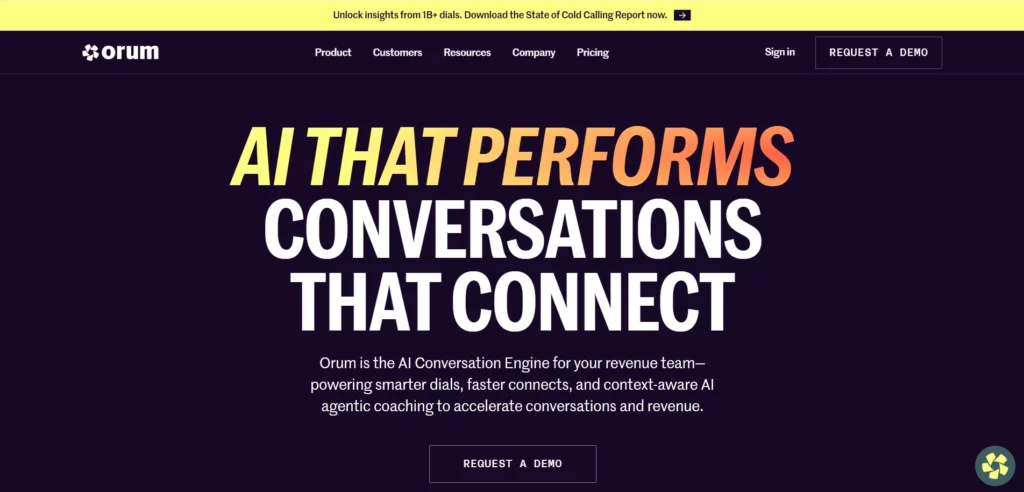
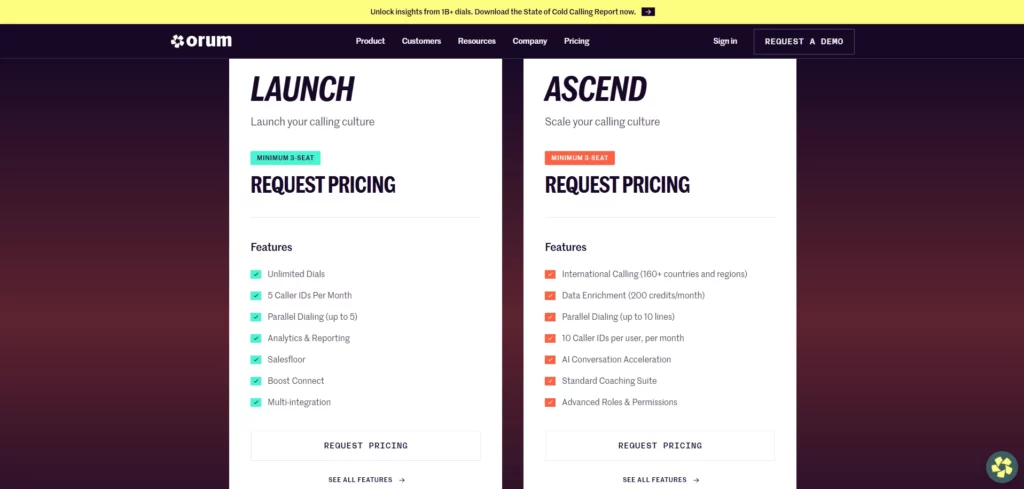
Orum is a premium “live conversation platform” that uses AI to instantly detect voicemails and bad numbers, connecting reps only when a human answers.
Pricing
Orum is a high-end solution, with the Launch plan starting at $250 per user/month (billed annually), and higher tiers requiring custom quotes.
Pros:
- Parallel Dialing: Can dial up to 5-10 numbers simultaneously per rep, drastically increasing the number of conversations per hour.
- Virtual Salesfloor: Creates a digital “bullpen” where managers can listen in and coach reps in real-time, replicating the energy of an office.
- Instant Dispositions: AI automatically logs call outcomes, saving reps hours of manual data entry every week.
Cons:
- High Cost: The starting price is significantly higher than most competitors, making it accessible mainly to well-funded teams.
- Annual Contracts: Orum typically requires an annual commitment, which reduces flexibility for smaller businesses.
Apollo.io
Best for: End-to-End Sales Prospecting & Dialing.
Apollo.io is a massive B2B database that has evolved into a full sales engagement platform. It combines lead generation with calling, all in one interface.
Pricing
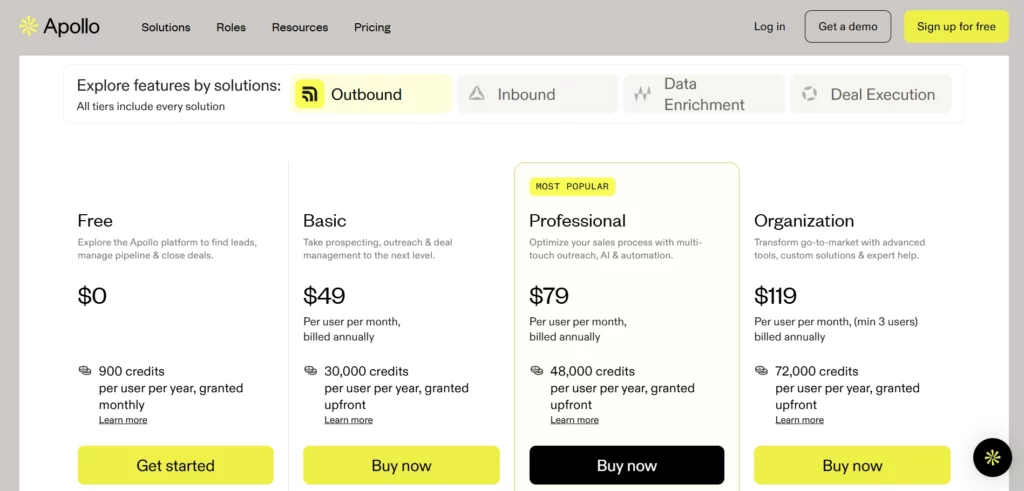
Apollo’s pricing is tiered, with a Basic plan at $49 per user/month and a Professional plan (which includes the dialer) at $119 per user/month.
Pros:
- All-in-One Database: You don’t need a separate tool for leads; you can filter 275M+ contacts and start dialing them immediately.
- Integrated Sequences: seamlessly blends emails, calls, and LinkedIn tasks into a single workflow.
- Cost-Effective: Combines the cost of a data provider and a dialer, potentially saving money on your tech stack.
Cons:
- Credit Limits: Dialing and data export are often limited by “credits,” which can result in hidden costs for heavy users.
- Support: Users on lower-tier plans often report slower response times than those from specialized dialer support teams.
Close CRM
Best for: Startups needing a CRM with a Built-in Power Dialer.
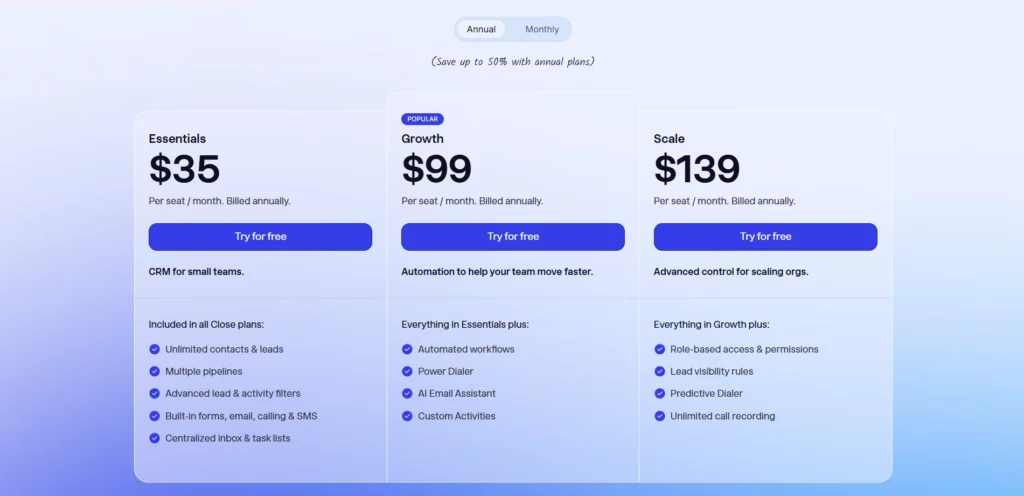
Close is a CRM built for salespeople, not just for data storage. It has a built-in power dialer that is incredibly fast and native to the system.
Pricing
Close plans start at $49 per user/month (without the dialer) and go up to $149 per user/month for the Growth plan, which includes the power dialer.
Pros:
- Zero Latency: Because the dialer is native to the CRM, there is no lag or sync delay between the call and the record.
- Speed: The “Power Dialer” mode lets you fly through lists automatically, pausing only when someone answers.
- Simplicity: It is widely praised for being the easiest CRM to set up and use, with very little training required.
Cons:
- It’s a CRM: If you already love Salesforce or HubSpot, switching to Close just for the dialer might be too big a migration.
- No Field Sales: It lacks features for field sales reps (e.g., territory mapping).
Koncert
Best for: B2B Teams needing Human-Agent Assisted Dialing.
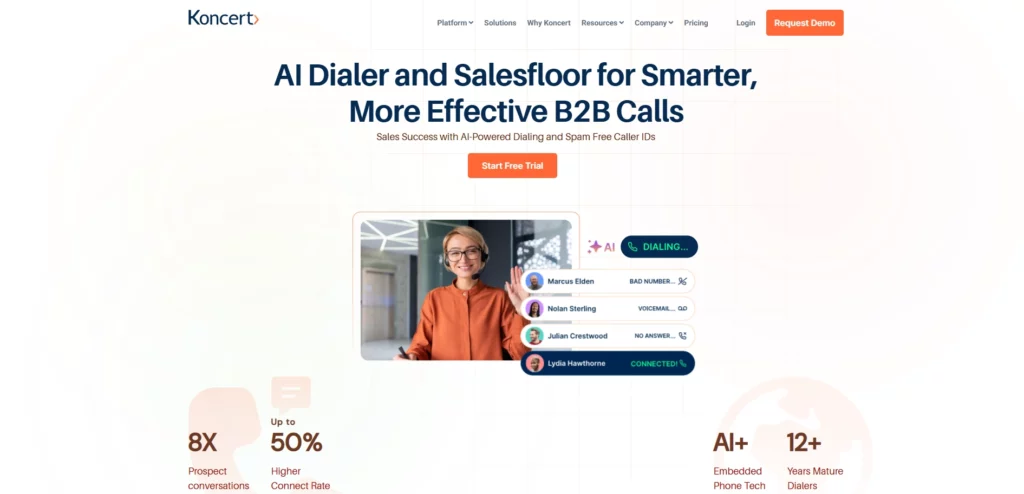
Koncert (formerly ConnectLeader) specializes in “Agent-Assisted Dialing,” where a team of human agents navigates IVRs and gatekeepers for you, transferring the call only when a prospect says “hello”.
Pricing
Koncert, a sales engagement software company, does not publish its official pricing online. Instead, it uses a custom quote model based on specific business needs and features.
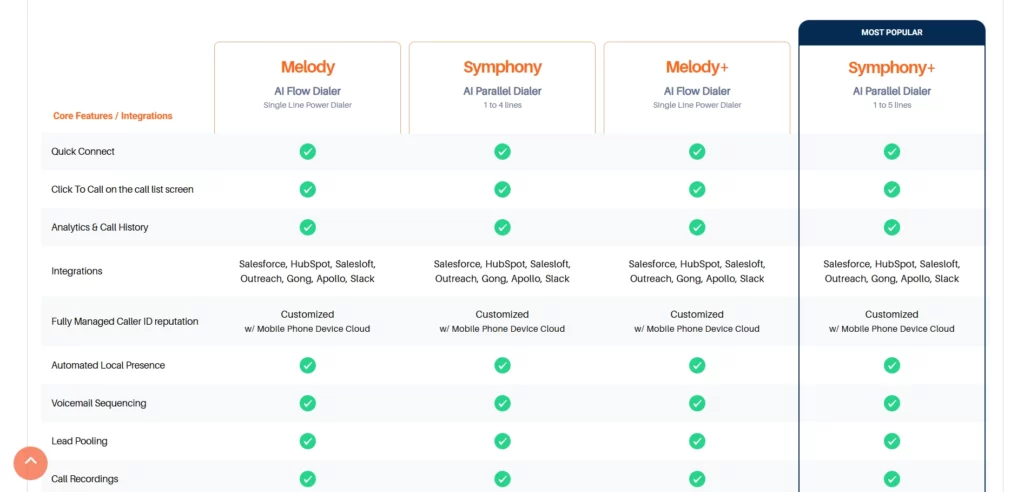
However, industry sources indicate that Koncert pricing generally starts around $40 per user per month.
Pros:
- Human Agents: Unlike AI, human agents can navigate complex phone trees and gatekeepers more effectively, delivering a live prospect to your rep.
- Remote Coach: Excellent “whisper” features for managers to guide reps during live calls without the prospect hearing.
- High Volume: Designed for teams that need to make thousands of dials a day to find a handful of qualified conversations.
Cons:
- Cost: It is one of the most expensive options due to the human labor component involved in the dialing.
- Complexity: Setting up the agent-assisted campaigns requires more planning than a simple click-to-dial tool.
Comparison Overview
| Feature | Ring.io | Orum | VoiceDrop |
| Primary Use Case | CRM-Embedded Dialing (Salesforce/Zoho) | High-Speed AI Parallel Dialing | High-Volume Ringless Outreach |
| Setup Time | Weeks (Custom Config) | Days | Minutes |
| Cost | High ($90-$150+) | Very High ($250+) | Low/Flat ($95/mo total) |
| AI Capabilities | Call Summaries & Coaching | AI Voicemail Detection | AI Voice Cloning |
| Best For | CRM-Centric Sales Teams | Enterprise SDR Teams | Lead Gen & Outreach Teams |
Which Tool is Right for You?
Selecting the ideal alternative hinges entirely on your sales team’s specific workflow and maturity.
- Choose Orum or Koncert if you have a high budget and need maximum speed (parallel dialing) to burn through massive lists of cold leads.
- Apollo.io or Close if you want to consolidate your tech stack, combining your database or CRM with your dialing infrastructure.
- Choose VoiceDrop if your goal is to drastically boost prospect contact rates and automate “nurture” messages without the massive expense and complexity of a full telephony suite.
For many high-volume sales organizations, eliminating the friction of a heavy CRM dialer in favor of a dedicated outreach accelerator like VoiceDrop is the secret to smashing revenue targets in 2026.
FAQ’s
Is Ring.io difficult to customize?
Ring.io is powerful but can be complex. Because it is designed to fit “like a glove” into CRMs like Salesforce, customizing routing rules and data mapping often requires a knowledgeable admin or support from their team to ensure it’s done correctly.
Does VoiceDrop integrate with CRMs like Ring.io?
Yes, VoiceDrop integrates with major CRM platforms (Salesforce, HubSpot, and Pipedrive) and automation tools like Zapier, allowing you to trigger voicemail drops when a lead reaches a specific stage in your sales funnel.
Can I replace Ring.io with these alternatives for inbound support?
It depends. Tools like Close and Ring.io are excellent for handling inbound calls. However, specialized tools like Orum and VoiceDrop are optimized for outbound sales efficiency rather than handling inbound customer service queues.
Why consider Ringless Voicemail over a Power Dialer?
Ringless voicemail lets you reach thousands of prospects with a personal message without a rep having to dial and wait for an answer. This significantly lowers the “cost per interaction” and frees up your closers to talk only to interested prospects who call back.