Is your business using ringless voicemail? Are you sure your campaigns are legal? What are the legal risks and penalties if your outreach violates federal rules? Ringless Voicemail Compliance is the most critical factor for any business using this technology. The line between efficient automated messaging compliance and violating the law is extremely thin. Running non-compliant campaigns risks massive fines and destroys brand reputation.
This expert guide gives you a clear roadmap to running safe and legal Ringless Voicemail Compliance campaigns. We will explain the Telephone Consumer Protection Act (TCPA), the FCC’s specific rulings, and the exact steps for managing consent and opt-outs. By adopting the best practices outlined here and leveraging tools like VoiceDrop.ai (Site Name), you can run scalable outreach campaigns while staying TCPA safe.
What the TCPA Is and Why It Matters
The Telephone Consumer Protection Act (TCPA) is a federal law passed in 1991. Congress created it to restrict the use of automated telephone equipment, particularly robocalls. The law aims to protect consumer privacy and prevent intrusive marketing. The TCPA regulates calls, faxes, and text messages. Crucially, it sets strict rules for using automated messaging compliance systems, especially those that contact mobile phones.
The TCPA is enforced by the FCC and carries severe penalties. Violations can cost your business between $500 and $1,500 per message sent. This is why understanding the TCPA is critical to avoid legal penalties. You must adhere to these regulatory guidelines for businesses to protect your company’s finances and reputation. Get a detailed overview of the Telephone Consumer Protection Act to grasp its full scope.
FCC’s Ruling on Ringless Voicemail
For years, the legal status of ringless voicemail was debated. The central question was whether a drop that does not ring the phone qualified as a “call” under the TCPA. The Federal Communications Commission (FCC) provided a definitive answer in 2022. The FCC ruled that messages delivered using Ringless Voicemail Compliance technology to wireless numbers are classified as a “call” under the TCPA.
This ruling has critical practical implications for businesses. The key takeaway is simple: if you use RVM for marketing to a mobile phone, you must now abide by the TCPA’s consent requirements, just as you would for an automated call. This classification emphasizes why Ringless Voicemail Compliance is necessary for all campaigns. This ruling dictates the consent requirements for your campaigns. Read the full summary of the FCC’s ruling on ringless voicemails for complete clarity.
Types of Consent Required
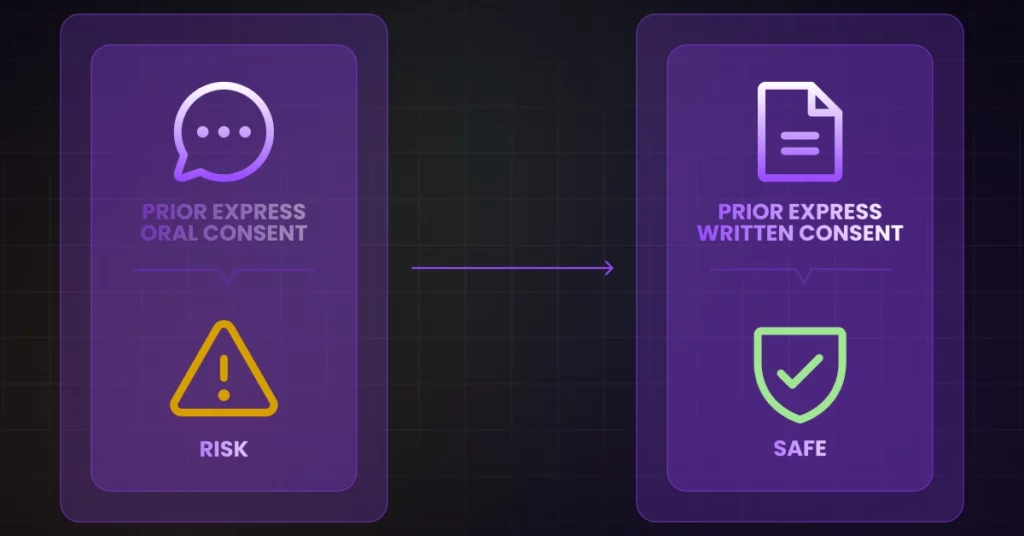
The TCPA mandates specific consent levels for Ringless Voicemail Compliance. The type of consent needed depends on the message content, whether marketing or informational. Understanding these requirements is crucial to avoiding legal issues.
Prior Express Written Consent
For marketing messages, those encouraging the purchase of a product or service, you must obtain prior express consent. This means the customer must clearly agree in writing to receive messages from your organization. Written consent includes digital opt-ins, checkboxes on web forms, or signed agreements. You must clearly disclose that the user will receive automated calls/messages. Learn exactly what constitutes prior express written consent for TCPA compliance.
Prior Express Oral Consent
Oral consent can apply in limited situations, typically for informational, non-marketing calls about an existing business relationship (e.g., appointment reminders). This type of consent is harder to prove in court. If you rely on oral consent, you must implement strict internal practices for recording and documenting the verbal agreement. Always use written consent for marketing campaigns to ensure the highest level of Ringless Voicemail Compliance.
Best Practices for Consent Management
You must have strict protocols for tracking, storing, and verifying consent records. Implement regular audits to ensure your contact list is clean. Every automated messaging compliance system needs robust opt-in and opt-out management. Use platforms that offer consent tracking software to automate this process efficiently. This recordkeeping is your primary defense against lawsuits.
Common Compliance Mistakes
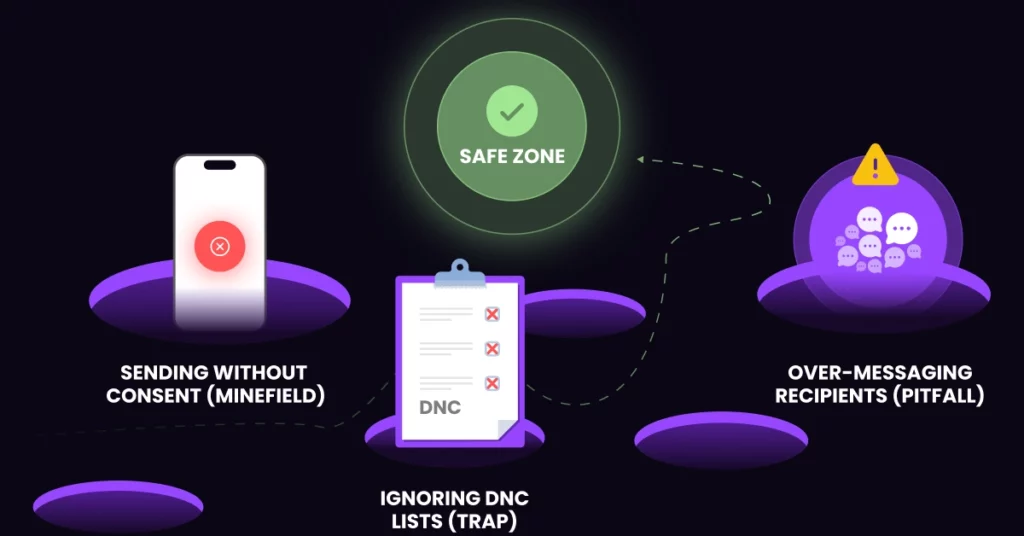
Even well-meaning businesses can easily violate TCPA rules through simple operational errors. Recognizing and correcting these mistakes is vital for continuous Ringless Voicemail Compliance.
Sending Without Proper Consent
The most frequent and costly mistake is dropping voicemails without prior express consent (written or oral). Many businesses mistakenly believe RVM is exempt from TCPA rules. Sending without proper consent exposes your business to massive legal risks and penalties. Always verify the source and documentation of every lead on your list before initiating outreach.
Ignoring Do-Not-Call Lists
The TCPA requires businesses to check both national and relevant state Do-Not-Call (DNC) registries. Ignoring these DNC lists or using outdated scrubbing procedures results in TCPA violations. Use a platform with a built-in phone number validator to automatically check against DNC registries. This process should be integrated into your lead handling workflow. VoiceDrop offers a phone number validator tool to help manage this process.
Over-Messaging Recipients
Sending too many voicemails or calling too frequently is a common source of consumer complaints. High complaint rates can lead to regulatory scrutiny and legal action. Excessive contact can be interpreted as harassment under consumer protection laws. Best practice is to limit frequency and allow ample time between messages. This is key to maintaining ethical standards.
Failing to Include Opt-Out Instructions
Every automated messaging compliance effort must include a clear, easy-to-use method for the recipient to opt out of future communication. Failing to include a clear opt-out option violates TCPA rules. The voicemail message itself should briefly mention how to stop future messages (e.g., “Press 1 or call our toll-free number”).
Best Practices to Stay Safe
Adopting these actionable strategies ensures your Ringless Voicemail Compliance remains robust and minimizes legal exposure. Safety requires diligence and the right technology.
Obtain and Document Proper Consent
Collect, verify, and store written consent records effectively. This means keeping a time-stamped log of when and where the consent was granted. Use consent tracking software integrated with your CRM. This documentation serves as indisputable proof of compliance.
Respect DNC Lists and Consumer Preferences
Emphasize checking and updating contact lists frequently to ensure you avoid numbers on Do-Not-Call registries. Strictly honor all opt-out requests immediately. Segment your audience based on their consent status and preferences to prevent accidental non-compliant outreach.
Limit Frequency and Timing of Messages
Limit the frequency and timing of RVMs to avoid complaints and legal scrutiny. Do not send marketing messages outside of the legal calling window (typically 8:00 AM to 9:00 PM local time). Adhere to any stricter state and federal voicemail laws regarding daily or weekly contact limits.
Use Clear Identification and Opt-Out Instructions
Always identify the sender and your company clearly in the voicemail. Provide clear and simple instructions for recipients to opt out of future messages. Make the opt-out mechanism functional and immediately responsive.
Leverage Compliance Features in RVM Platforms
Tools like VoiceDrop.ai offer built-in compliance features. These platforms help automate consent tracking, opt-out handling, and time-zone-based scheduling. Using technology reduces human error and drastically lowers legal risk.
Legal Resources & Tools
Businesses must rely on authoritative legal resources to understand Ringless Voicemail Compliance. The FCC website and established TCPA blogs are key resources. These sources provide continuous updates on state and federal voicemail laws. You must also use tools designed for compliance. This includes platforms with DNC scrubbing and automated campaign documentation and recordkeeping.
When to Consult Counsel
Always seek legal advice before launching complex or high-volume campaigns. Consulting an attorney is critical when you are unsure about consent requirements, state and federal voicemail laws, or specific industry regulations (like HIPAA or FDCPA). Do not assume your campaign is compliant; verify it. This pre-emptive measure is the best way to avoid severe legal risks and penalties.
Documentation & Recordkeeping
Proper documentation and recordkeeping are your primary legal defense. You must log every consent action, every voicemail drop, every opt-out request, and the time/date of each. This comprehensive campaign documentation and recordkeeping prove compliance during audits. Store these records securely for at least four years, as required by law.
Consent Management
Effective Consent Management requires detailed strategies and tools. You must ensure every contact has valid, documented permission before receiving RVMs. Highlight platform features, like those in VoiceDrop.ai, that help automate consent tracking, opt-out handling, and record maintenance. This automated system ensures your opt-in and opt-out management is flawless and compliant. Automating your campaign messaging must be paired with automated consent management.
State vs Federal Rules
While the federal TCPA sets the baseline, state and federal voicemail laws often differ. Some states have stricter rules than the federal TCPA. For example, some states have shorter permissible calling windows or more rigorous consent requirements. Businesses operating in multiple states must verify both federal and state regulations before launching campaigns.
Penalties & Case Law
Violating the TCPA can result in legal risks and penalties ranging from $500 to $1,500 per call/message. Class-action lawsuits can lead to millions of dollars in damages. Relevant case law consistently shows that courts hold businesses responsible for obtaining prior express consent. Ignoring these rules is not an option; the financial consequences are severe and often unrecoverable.
Compliance Checklist
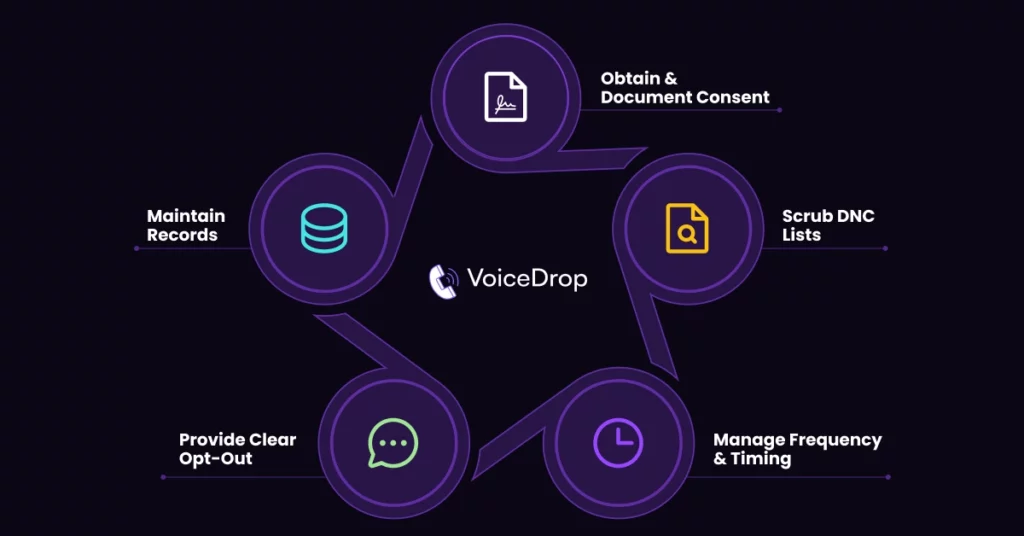
Use this actionable compliance checklist for RVM to ensure your campaigns are safe:
- Verify written prior express consent for marketing messages.
- Scrub lists against the National DNC registry.
- Include clear opt-in and opt-out management instructions in every message.
- Limit messages to the 8:00 AM – 9:00 PM local time window.
- Ensure campaign documentation and recordkeeping are enabled.
- Integrate your RVM tool with your CRM for tracking. VoiceDrop offers easy CRM integration to link data.
Conclusion
Ringless Voicemail Compliance is non-negotiable for modern outreach. The FCC’s ruling mandates that RVM is subject to the Telephone Consumer Protection Act rules. Businesses must prioritize obtaining prior express consent and implementing robust opt-in and opt-out management. By following this detailed compliance checklist for RVM, you can mitigate the substantial legal risks and penalties.
VoiceDrop.ai is a platform built with compliance in mind. It helps you automate consent tracking, manage opt-outs, and maintain records easily. Take control of your compliance today to ensure your outreach is both effective and legally sound.
Ready to launch scalable campaigns without the legal worry? Secure your outreach today with compliant automation.
Click here to schedule a demo and see how VoiceDrop provides TCPA-safe RVM.
FAQ’s
1. Is ringless voicemail subject to TCPA rules?
Yes. The FCC considers ringless voicemails sent to wireless numbers as “calls” under the Telephone Consumer Protection Act (TCPA), requiring prior express consent.
2. What type of consent is needed for RVM campaigns?
Businesses must obtain prior express consent for most Ringless Voicemail Compliance campaigns. For marketing messages, this must typically be documented written consent.
3. Do I need to check state laws for compliance?
Yes. Some states have stricter rules than the federal TCPA. You must verify both federal and state and federal voicemail laws before launching campaigns.
4. What happens if I violate TCPA rules?
Non-compliance can result in fines, statutory damages, lawsuits, and severe legal risks and penalties.
5. How can I manage opt-outs and consent records efficiently?
Platforms like VoiceDrop.ai help automate opt-in and opt-out management and campaign documentation, and recordkeeping to reduce compliance risk.