The mechanics of outbound sales have evolved rapidly, transforming how revenue teams initiate and sustain conversations with prospects.
Recent insights from Gartner Sales indicate that while standard VoIP dialing remains a staple, intelligent engagement (blending asynchronous drops and AI-driven voice) is becoming the primary driver of quota attainment, potentially increasing response rates by up to 60%.
The capacity to connect with prospects without being tethered to a manual dialer or suffering from “connection latency” is often the distinguishing factor between a team that hits revenue targets and one that merely burns through data.
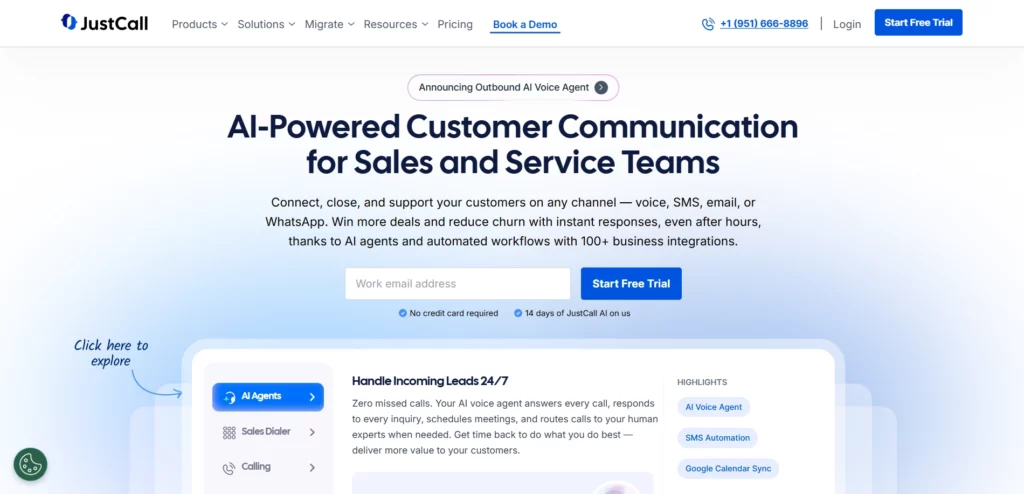
If you are currently assessing alternatives to JustCall, the market is populated with dynamic platforms that offer superior connectivity, advanced AI automation, and more scalable pricing structures.
Whether your goal is seamless ringless voicemail, smarter parallel dialing, or deeper integration with your CRM, choosing the right tool can dramatically improve your connection-to-booked-meeting ratio.
Before we dive into the competitors, if you want a deep dive into how the platform performs in real-world scenarios, check out our comprehensive JustCall Review.
Let’s evaluate the leading contenders and analyze how they stack up in helping you dominate your sales territory.
Introduction to JustCall and Its Purpose
JustCall is a prominent “Cloud Phone System” designed to help sales and support teams manage calls and texts from a unified dashboard.
It is best known for its “Sales Dialer” and VoIP capabilities, which allow reps to make calls from their browser, use SMS automation, and integrate with major CRMs like HubSpot and Salesforce.
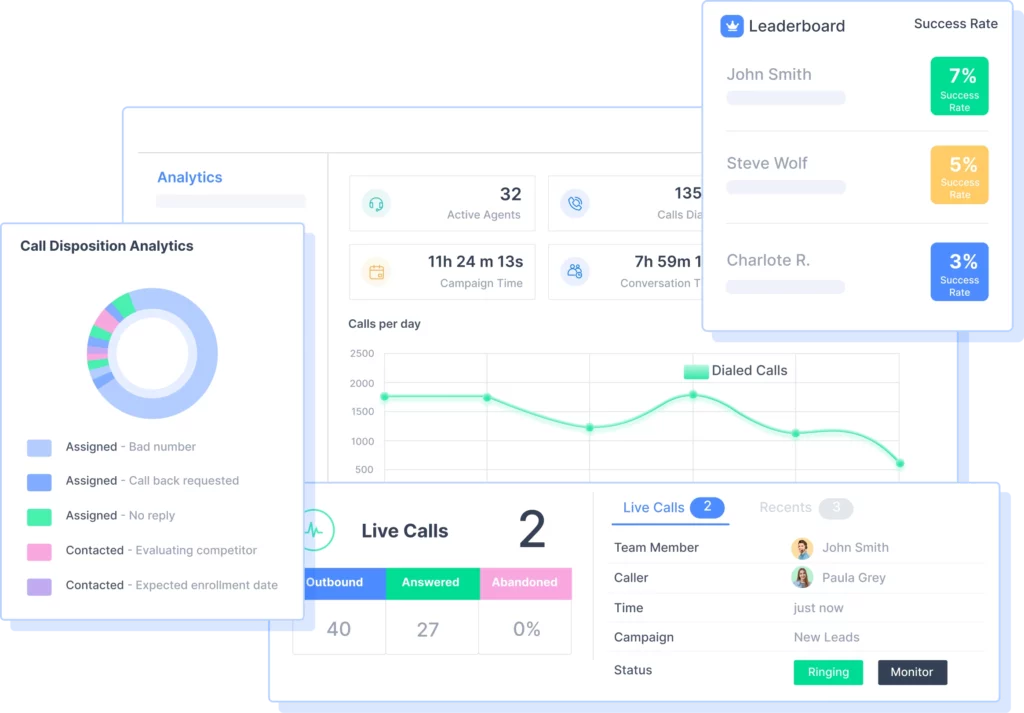
This technology empowers sales teams to centralize their communication, offering features like call recording, live call monitoring, and analytics to track team performance.
With capabilities like appointment scheduling and native workflow integrations, JustCall is considered a solid choice for teams that need a generalist VoIP solution that covers both inbound support and outbound sales dialing.
Why You Might Look for Alternatives
While JustCall is a powerful telephony engine, it may not align with every high-velocity sales methodology. You might be searching for a solution that offers specialized “non-intrusive” reach, deeper AI analytics, or a more robust infrastructure for high-volume campaigns.
Sales organizations today are pivoting from “manual-heavy” strategies to “automation-first” engagement. As highlighted in recent HubSpot sales reports, the trend is shifting toward tools that respect the prospect’s time, such as Ringless Voicemail and intelligent drops, to nurture leads more effectively without the friction of a cold call.
JustCall focuses heavily on the live connection aspect of the sales cycle. This can sometimes lead to efficiency bottlenecks (reps spending hours listening to dial tones) or audio quality issues common with browser-based VoIP. Furthermore, their per-user pricing model can become restrictive for teams that need to scale flexible seat counts quickly.
Additionally, some alternatives offer broader engagement tactics, such as Smart Voicemail Automation, which delivers messages directly to a prospect’s inbox without ringing their phone, ensuring high delivery without the interruption.
One major reason teams switch is the cost structure; as we discussed in our JustCall Pricing guide, the per-user fees and hidden add-ons can scale quickly, making these alternatives more attractive for growing businesses.
Evaluating these competitors ensures you deploy a sales stack that aligns with your financial constraints and your specific customer-acquisition methodology.
Top JustCall Alternatives
When researching alternatives to JustCall, prioritize platforms that deliver consistently high rates and offer unique features that streamline your entire workflow, not just the dialing phase.
As suggested by Forrester Research, the most successful sales technologies are those that merge automation with human authenticity and multi-channel capability.
This is where specialized platforms like VoiceDrop stand out, providing an ecosystem to scale your outreach while maintaining the quality of every interaction.
Here are the premier options to evaluate:
VoiceDrop
Meet VoiceDrop: Revolutionize your outbound strategy by moving beyond the limitations of manual dialing. VoiceDrop specializes in Ringless Voicemail (RVM) technology, allowing you to drop a perfect voicemail directly into a prospect’s inbox without their phone ever ringing.
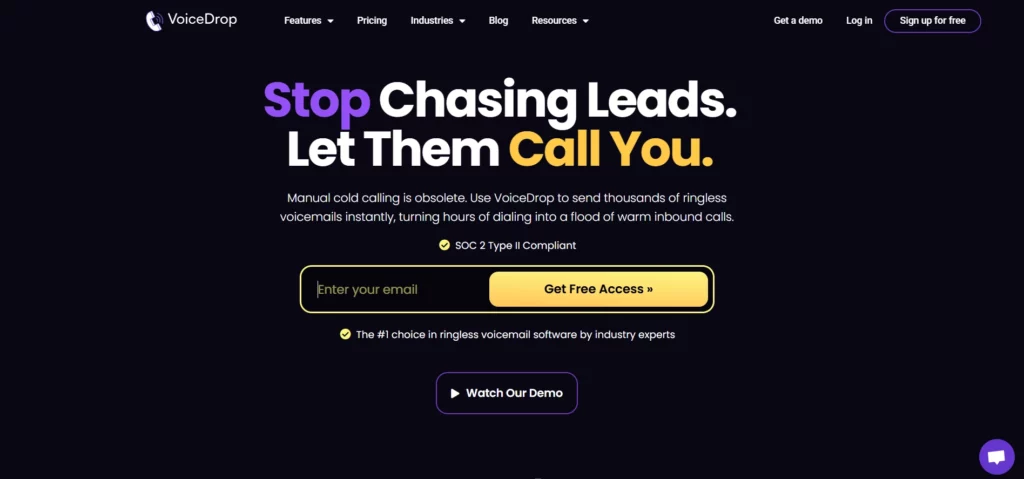
It enables sales teams to reach thousands of leads in minutes rather than days, generating callbacks from interested prospects who have already listened to your pitch. It integrates natively with Zapier and major CRMs, eliminating the manual grind of leaving voicemails one by one.
VoiceDrop distinguishes itself with “Smart Delivery,” ensuring your message lands when it’s most likely to be heard, making it the ideal choice for teams that wish to maximize throughput without burning out their SDRs on dead tones.
Features:
With VoiceDrop, imagine orchestrating automated voicemail campaigns alongside your email workflows, ensuring each lead receives a personal touch immediately, with everything logged automatically. It creates a seamless loop that drives engagement while respecting the prospect’s time.
- Ringless Voicemail: Delivers messages directly to server-side voicemail boxes, bypassing the ring.
- Intelligent Scheduling: Automates drops based on time zones to maximize open rates.
- Campaign Analytics: Real-time tracking of successful drops and callback rates.
Pricing
VoiceDrop uses a usage-based, or flexible, subscription model, ensuring your spending aligns with campaign volume rather than just seat count.
They offer feature-rich tiers that are often significantly more cost-effective for high-volume outreach than JustCall’s per-seat, recurring costs, which can strain marketing budgets.
Pros
- High Efficiency: Reach thousands of contacts instantly without manual dialing.
- Non-Intrusive: Respects the prospect by allowing them to listen at their convenience.
- Automation Friendly: Easily triggers drops based on CRM stages.
- Scalable: Perfect for both small blasts and enterprise-grade campaigns.
- Fast Setup: Upload a list and start dropping messages in minutes.
Aircall
Aircall is a cloud-based voice platform that focuses heavily on the “app ecosystem” experience. It operates as a direct functional competitor to JustCall, specifically targeting support and sales teams who want a polished, reliable UX.
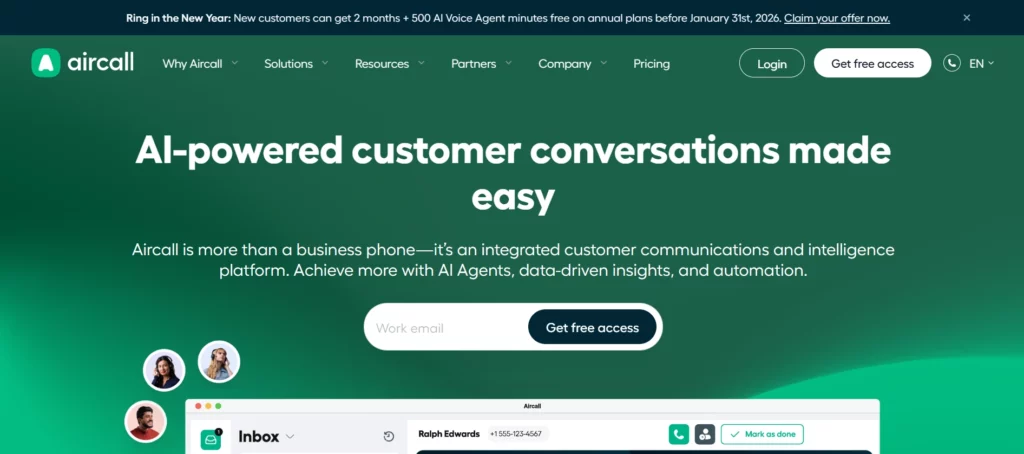
It is celebrated for its “One-Click Integration” marketplace, which allows teams to seamlessly connect voice data with virtually any tool in their stack.
Features:
- Power Dialer: Automatically dials numbers from a webpage to save time.
- Call Whispering: Managers can speak to reps during live calls without the prospect hearing.
- Analytics Dashboard: Deep insights into call volume, miss rates, and wait times.
- IVR Routing: robust drag-and-drop call routing to ensure leads reach the right rep.
Pricing
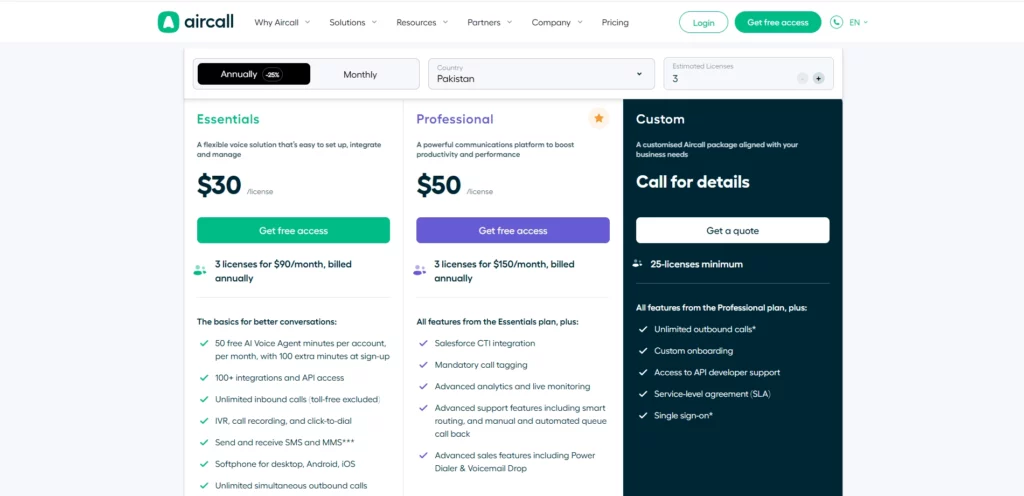
Aircall typically starts around $30/month per user. While powerful, it maintains a minimum seat requirement, positioning it as a tool for established teams rather than solo founders.
Pros & Cons
Pros:
- Superior user interface and ease of use.
- Massive library of native integrations (100+).
- Reliable call quality with global infrastructure.
Cons:
- Minimum seat count (usually 3 users) can be a barrier.
- Lacks the native “Ringless Voicemail” specialization of VoiceDrop.ai.
Dialpad
Dialpad is an AI-powered communication platform that emphasizes “Voice Intelligence.” If your primary issue with JustCall was a lack of real-time coaching or transcription, Dialpad offers a futuristic alternative.
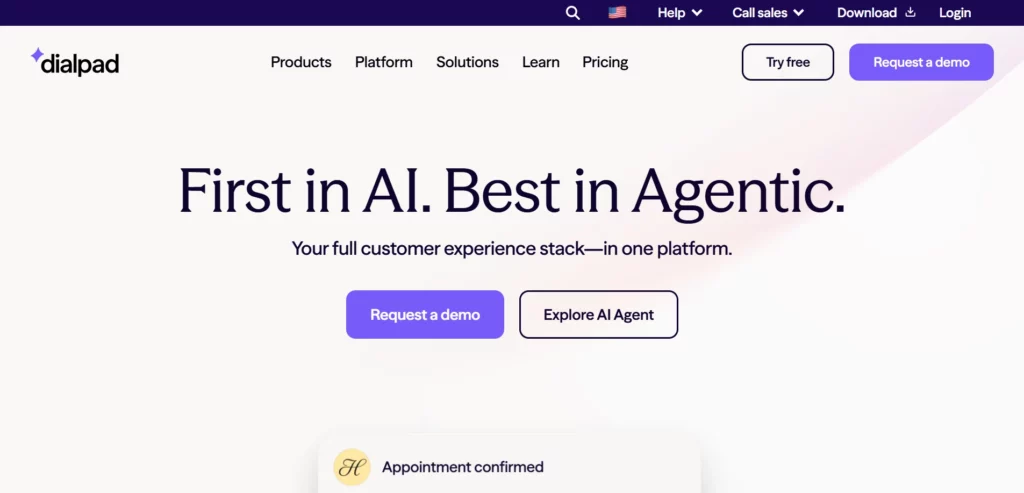
It replaces standard VoIP with a “Vi (Voice Intelligence)” engine that transcribes calls in real time, takes notes, and automatically performs sentiment analysis.
Features:
- Real-Time Transcription: AI generates a live transcript of every conversation.
- Live Coaching: Suggests answers to reps when competitors or objections are mentioned.
- Omni-Channel: Integrates voice, video, and messaging in one app.
- Global Reach: easy provisioning of numbers in over 50 countries.
Pricing
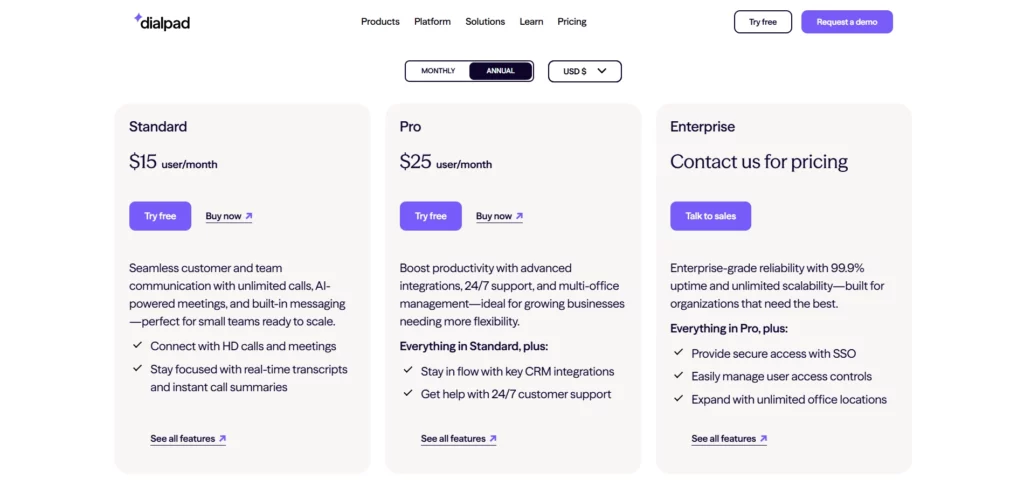
Dialpad plans typically start around $15/month per user for standard business voice, with sales-specific AI features pushing the price higher.
Pros & Cons
Pros:
- Industry-leading AI and transcription accuracy.
- Sleek, modern application for desktop and mobile.
- Automated post-call summaries save reps time.
Cons:
- Sales dialer features are often an add-on cost.
- It can be overkill for teams that just need simple outbound dialing.
Quo
Quo is a modern business phone system designed for startups and speed. It simplifies the JustCall model into a collaborative, inbox-style interface that feels more like a messenger app than a traditional phone system.
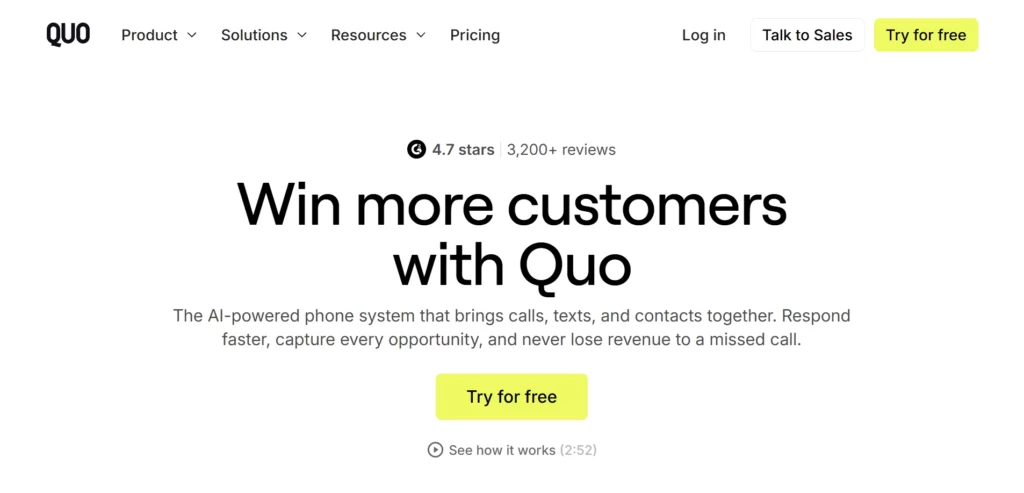
While it offers dialing, it distinguishes itself from JustCall through its focus on “Shared Numbers” and a delightful UI that makes managing contacts feel like using a personal iPhone.
Features:
- Shared Inboxes: Teams can work together on a single phone number seamlessly.
- Snippets & Templates: Send canned SMS responses instantly.
- HubSpot Integration: Automatically logs calls and texts to the CRM.
- Lightweight App: Works flawlessly on mobile and desktop without bloat.
Pricing
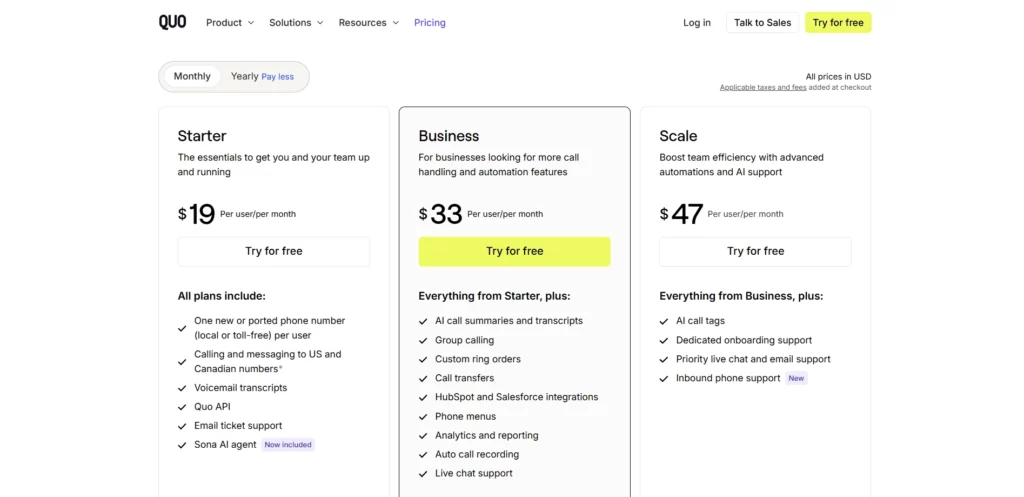
Quo offers a very competitive model, starting around $19/month per user. It is highly cost-effective for growing teams that need flexibility without the commitment of enterprise contracts.
Pros & Cons
Pros:
- Best-in-class user experience and design.
- Extremely affordable entry point.
- Shared numbers make team collaboration effortless.
Cons:
- Power dialing features are less robust than JustCall or Aircall.
- Reporting analytics are simpler and less in-depth for large sales floors.
RingCentral
RingCentral is the heavyweight champion of business communication. It is a strong alternative if your JustCall usage needs to expand beyond sales into a complete Unified Communications as a Service (UCaaS) solution.
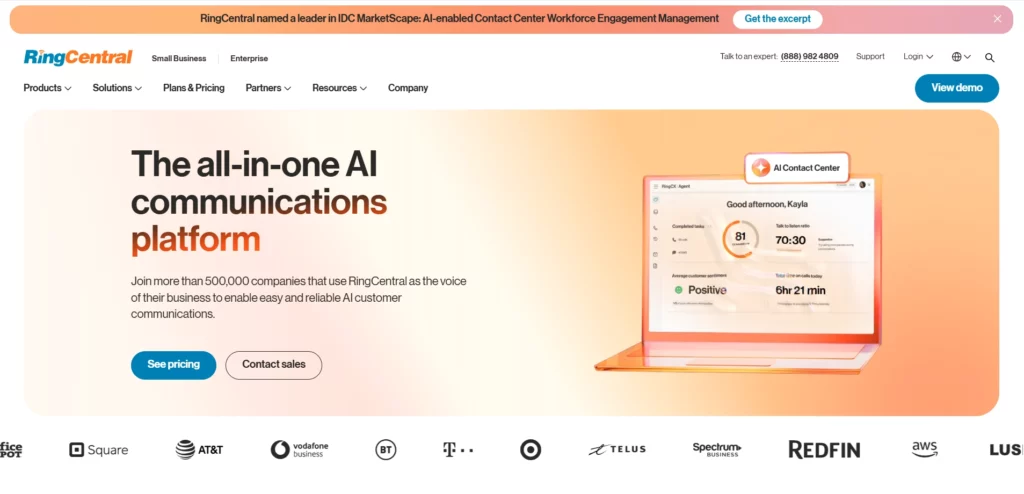
It is designed for businesses that need a “Total Enterprise Ecosystem” that integrates PBX, video meetings, webinars, and contact center operations into a single robust platform.
Features:
- Enterprise Grade Reliability: 99.999% uptime SLA.
- Multi-Level IVR: Complex call routing for large organizations.
- Video & Messaging: Includes Glip for team chat and video conferencing.
- Global Presence: Support for multinational offices and local numbers everywhere.
Pricing
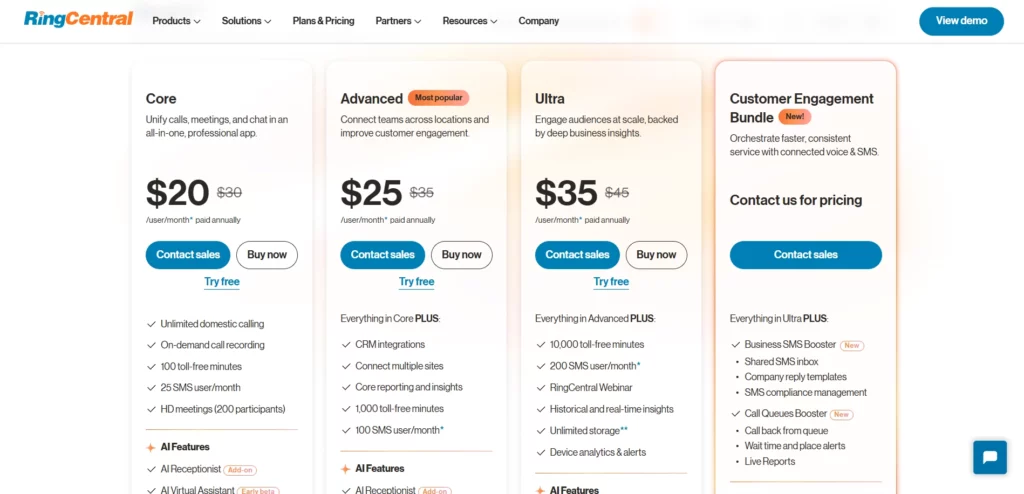
RingCentral offers a very competitive model, starting around $20/month per user. While it provides reliability, costs can be higher, and contracts can be more rigid than with agile tools like JustCall or OpenPhone.
Pros & Cons
Pros:
- Unmatched reliability and uptime for mission-critical calls.
- Comprehensive feature set covers every possible communication need.
- Strong security and compliance certifications (HIPAA, etc.).
Cons:
- Implementation can be complex and slow.
- Interface can feel dated compared to modern tools like Dialpad or OpenPhone.
How to Select the Best Alternative for Your Requirements
When selecting an alternative to JustCall, consider variables such as your primary outreach channel (Voice vs. RVM), team size, financial resources, and your overarching engagement strategy.
JustCall is a workhorse for general VoIP, but it may lack the specific efficiency of VoiceDrop.ai for voicemail drops or the AI intelligence of Dialpad; alternatives may provide better connection quality or smarter, asynchronous engagement at a better value.
Return on Investment (ROI) is vital; verify that the platform you choose results in more conversations, not just more dials. Efficacy is about reaching prospects where they are listening.
Lastly, ensure the software fits your team’s ecosystem, whether that demands seamless Salesforce data flow, AI-generated call summaries, or stealthy voicemail drops.
Clarifying Your Needs
Defining your core objective is the initial step. Are you aiming to dial 100 numbers a day manually, or to drop 1,000 intelligent voicemails to generate inbound callbacks?
Grasping this nuance can help you select a platform that respects your budget while boosting your conversion efficiency.
Based on these factors, VoiceDrop emerges as a premier choice for companies valuing high-volume, non-intrusive outreach.
Its capacity to merge Ringless Voicemail technology with robust automation makes it a distinct advantage in a contemporary sales technology stack.
Get started today to discover how VoiceDrop can revolutionize your sales communication.
FAQ’s:
What is the main difference between JustCall and VoiceDrop.ai?
JustCall is primarily a VoIP and Power Dialer platform focused on live calling and SMS. VoiceDrop.ai specializes in Ringless Voicemail (RVM) technology, allowing you to deliver voice messages directly to a prospect’s voicemail inbox without ringing their phone, focusing on asynchronous, high-volume outreach rather than manual 1-to-1 dialing.
Why might I switch from JustCall to an alternative?
You might explore alternatives if you find JustCall’s call quality inconsistent, if you want to move away from manual cold calling towards automated strategies like RVM (VoiceDrop.ai), or if you need deeper AI coaching features provided by tools like Dialpad.
Can I try out alternatives to JustCall before committing to a paid plan?
Yes, numerous alternatives, such as VoiceDrop.ai and OpenPhone, offer free trials or pilot programs, enabling you to test delivery rates, CRM integration, and usability before committing to a long-term contract.
How does the ease of use compare between JustCall and its alternatives?
JustCall is intuitive but can be complex due to its many features. Alternatives like OpenPhone offer a more simplified, “consumer-app” feel, while VoiceDrop.ai focuses on a streamlined “upload and drop” workflow that minimizes the learning curve for launching campaigns.