The landscape of sales engagement has evolved rapidly, fundamentally altering the daily routines of revenue-generating teams.
Research from Salesforce indicates that sales professionals allocate a mere 28% of their work week to actual selling activities, with the vast majority of their time consumed by administrative burdens and manual data entry.
The capacity to move swiftly through lead lists without being stalled by disconnects, gatekeepers, and unanswered calls is often the deciding factor between a team that exceeds its quota and one that misses the mark.
If you are currently evaluating alternatives to Kixie, the market is crowded with robust platforms that offer unique strengths, versatile billing structures, and cutting-edge outreach methodologies.
Whether your objective is non-intrusive ringless voicemail automation, a more comprehensive cloud phone system, or a communication hub with deeper AI insights, selecting the right tool can significantly improve your connection rates.
Let’s explore the top contenders and examine how they compare in helping you surpass your revenue targets.
Introduction to Kixie and Its Purpose
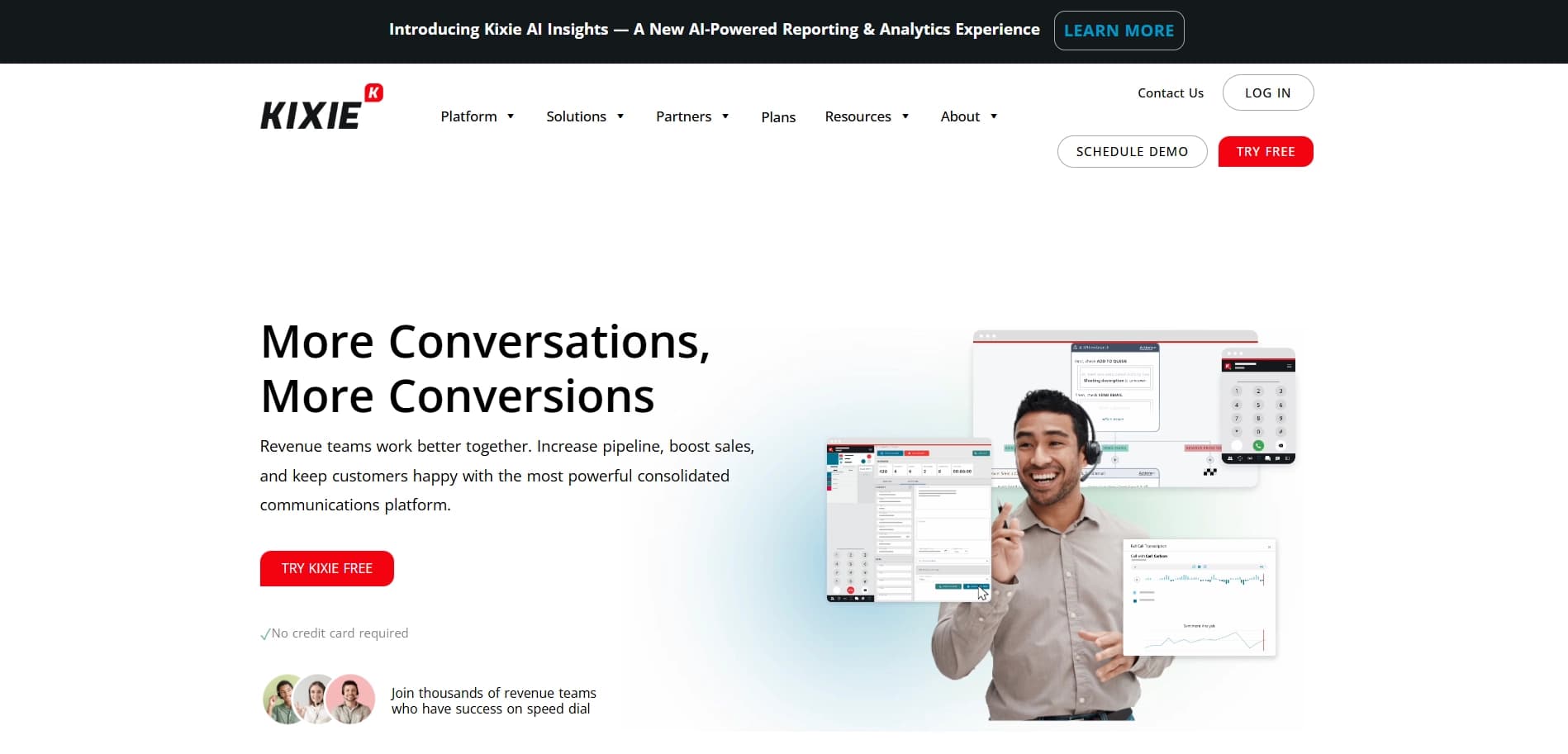
Kixie is a sales engagement platform engineered to transform your CRM into a fully integrated business phone system.
It is best known for its “PowerCall” dialer and “ConnectionBoost” features, which leverage local presence dialing to increase the likelihood that prospects will answer the phone.
This solution empowers sales teams to streamline their daily workflow, offering tight integrations with major platforms like HubSpot, Pipedrive, and Salesforce to trigger automated SMS follow-ups and log calls instantly.
With capabilities like click-to-call, live call coaching, and voicemail drop, Kixie is widely regarded as a reliable choice for teams that prioritize deep CRM functionality and steady power dialing over massive multi-line volume.
Why You Might Look for Alternatives
While Kixie is highly dependable for CRM-centric calling, it may not be the perfect fit for every outreach strategy. You might be in the market for a solution that offers higher dialing speeds, distinct billing structures, or a different method of prospect engagement.
Sales organizations today are transitioning from basic telephony tools to strategic engagement hubs. As noted in recent Gartner sales reports, the momentum is moving toward hyper-personalized interactions rather than generic, single-channel persistence.
Kixie primarily acts as a power dialer (dialing one line at a time), which can limit throughput for teams that need to process thousands of leads daily via parallel dialing. Additionally, the costs for extra minutes and SMS capabilities can accumulate quickly for high-volume teams.
Moreover, some alternatives offer specialized engagement tactics, such as AI-driven ringless voicemail, mass audio campaigns, and collaborative virtual salesfloors that provide a faster, smarter way to nurture pipelines.
Assessing these competitors ensures you adopt a tech stack that aligns with your financial plan and specific go-to-market philosophy.
Top Kixie Alternatives
When investigating alternatives to Kixie, prioritize platforms that deliver high-leverage outreach utilities or unique functionalities that enhance your current process.
As Deloitte Digital indicates, the most impactful customer journeys combine efficient automation with authentic human personalization.
This is where forward-thinking tools like VoiceDrop excel: they provide a mechanism to scale your touchpoints while preserving the sincerity of a human voice.
Here are the premier options to evaluate:
VoiceDrop
Meet VoiceDrop: Transform your lead generation and nurturing sequences through intelligent integrations and standalone audio campaigns. Step beyond the constraints of synchronous live calling; ensure every prospect receives a message tailored to them.
Its advanced AI voice-cloning technology generates audio that sounds identical to a human recording, driving superior response metrics. It integrates effortlessly with leading CRM systems, bypassing the complicated setup often associated with heavy VoIP software.
VoiceDrop differentiates itself with a transparent pay-as-you-go model and scalable subscriptions, making it an ideal choice for organizations that want to maximize engagement without the financial burden of purchasing a dedicated dialer license per agent.
Features
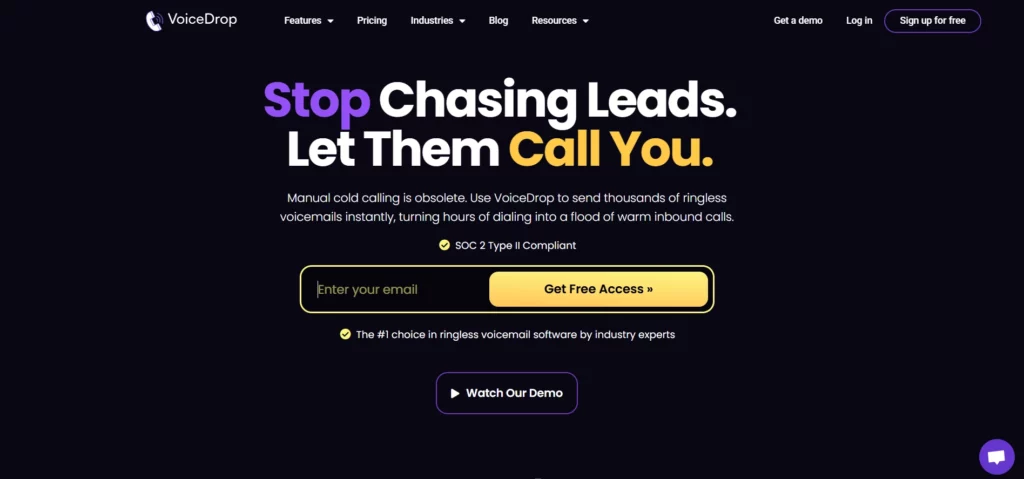
With VoiceDrop, imagine dispatching personalized ringless voicemails using a digital clone of your own voice straight to a lead’s mobile inbox, all without their device ever ringing. It generates a notification that creates urgency without being disrespectful of their schedule.
- Meet VoiceDrop: Accelerate your sales pipeline with AI-crafted audio messages that build human rapport at scale.
- Get Started with Your Free Trial: VoiceDrop offers a streamlined interface that is far easier to navigate than the cumbersome interfaces of enterprise phone systems. It is tailor-made for voicemail marketing initiatives, where response rates frequently outpace cold-call connection rates.
- Higher Conversion Rates: Ringless voicemails often yield stronger engagement than traditional cold calling because they allow prospects to listen and reply at their convenience.
Pricing
VoiceDrop uses a volume-based pricing model, ensuring your costs are directly correlated with the success of your message delivery.
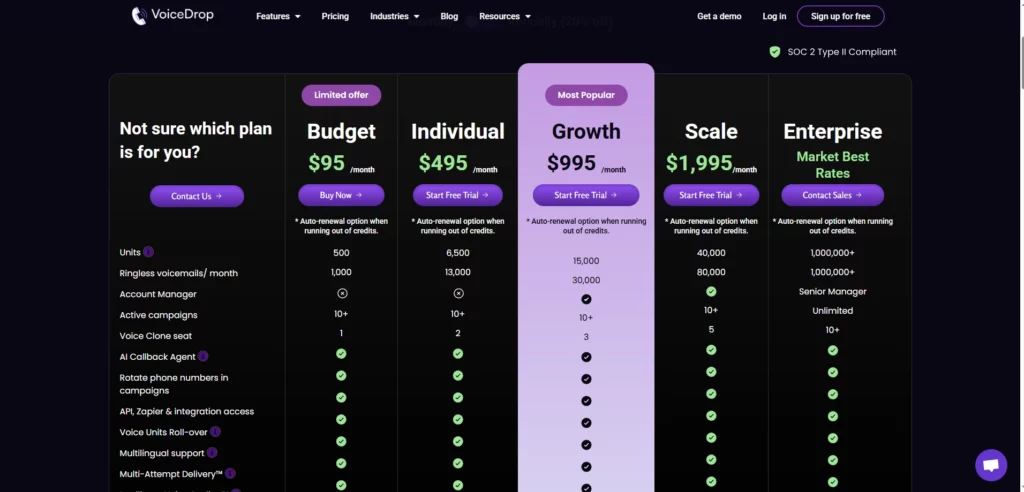
They provide adaptable tiers for both AI-synthesized and standard ringless voicemail drops, offering a budget-friendly alternative to costly per-user seat contracts.
Pros
- AI Voice Cloning: Produces authentic-sounding audio that builds credibility.
- Cost Efficiency: You pay for delivered messages, not for agent idle time.
- Zero Hidden Costs: Clear pricing structures with granular delivery analytics.
- Non-Intrusive Outreach: Honors the prospect’s time while ensuring the message is received.
- Quick Setup: Launch campaigns in moments with a free trial and simple CRM connections.
Aircall
Aircall is a cloud-based voice platform specifically designed for modern sales and support teams. It operates as a direct competitor to Kixie in the VoIP space, offering a clean, user-friendly interface that integrates deeply with business tools.
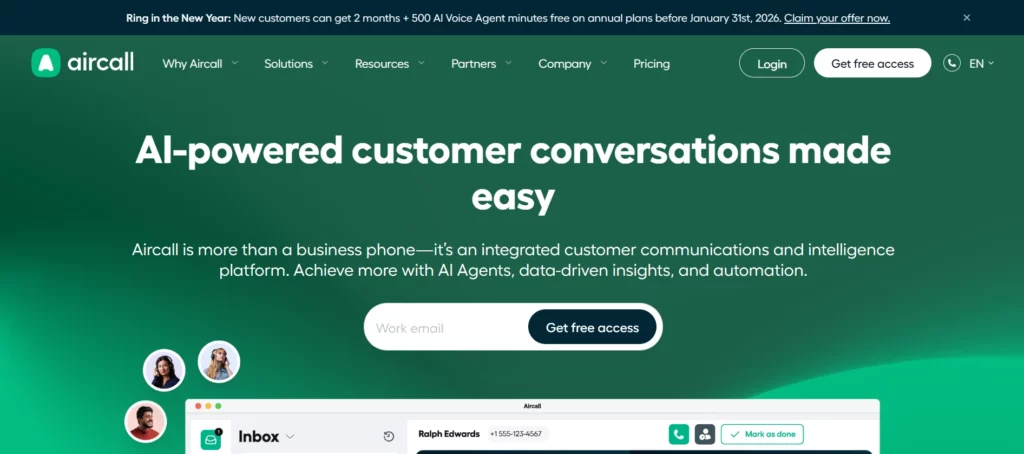
It is celebrated for its App Ecosystem, which allows for one-click integrations with dozens of CRMs and helpdesk tools, making it a versatile choice for teams that wear multiple hats.
Features
- Power Dialer: Automatically extracts phone numbers from a webpage and dials them sequentially.
- Call Whispering: Managers can speak to agents during a call without the prospect hearing.
- IVR Menus: Customizable routing to ensure callers reach the right department.
- Analytics Dashboard: Visual reporting on missed calls, wait times, and agent performance.
Pricing
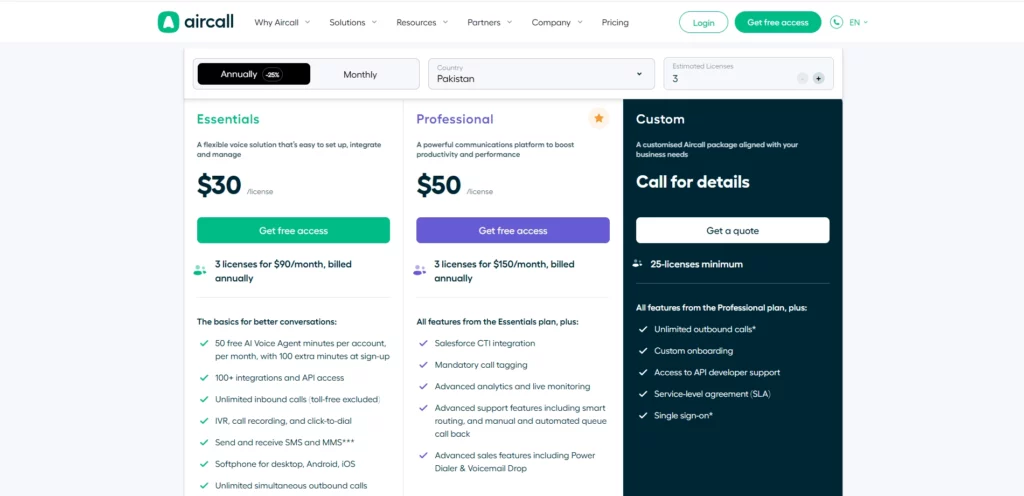
Aircall’s plans typically start around $30 per user/month, with a minimum seat requirement often applied, positioning it as a mid-market solution similar to Kixie’s entry tiers.
Pros & Cons
Pros:
- Extremely intuitive interface that requires minimal training.
- Massive library of native integrations beyond just the major CRMs.
- Strong mobile app for sales reps on the go.
Cons:
- It can become expensive as you add premium features and users.
- Some users report occasional latency issues depending on internet stability.
Quo
Quo reinvents the business phone system for the modern era, focusing on a collaborative, inbox-style interface that unifies calls, texts, and contacts.
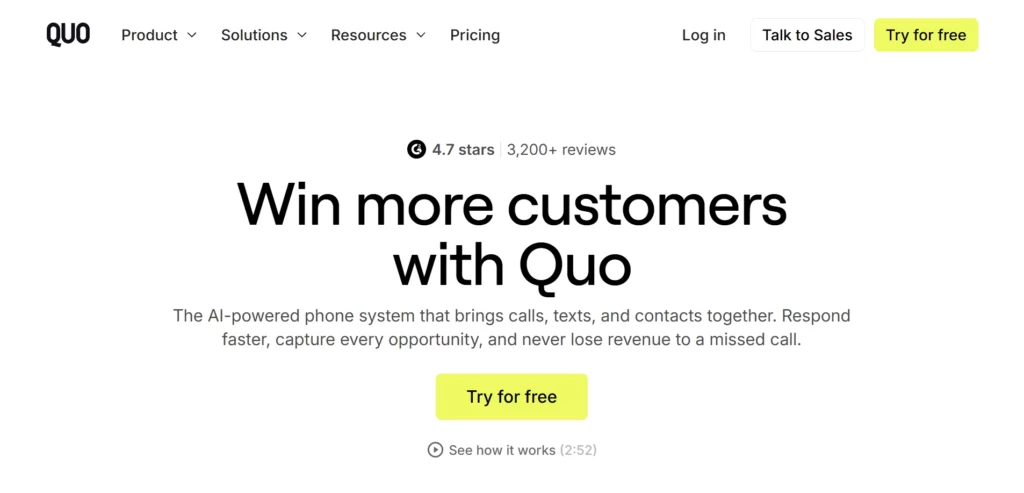
It replaces the traditional “dialer” feel with a sleek workspace where team members can comment on calls, share contacts, and manage communication threads together.
Features
- Shared Numbers: Multiple team members can call or text from a single business number.
- Snippets & Auto-Replies: Automate text responses to missed calls or common questions.
- Threaded Conversations: Views call history and SMS in a single, chat-like window.
- Lightweight CRM: Built-in contact management that feels lighter than Salesforce or HubSpot.
Pricing
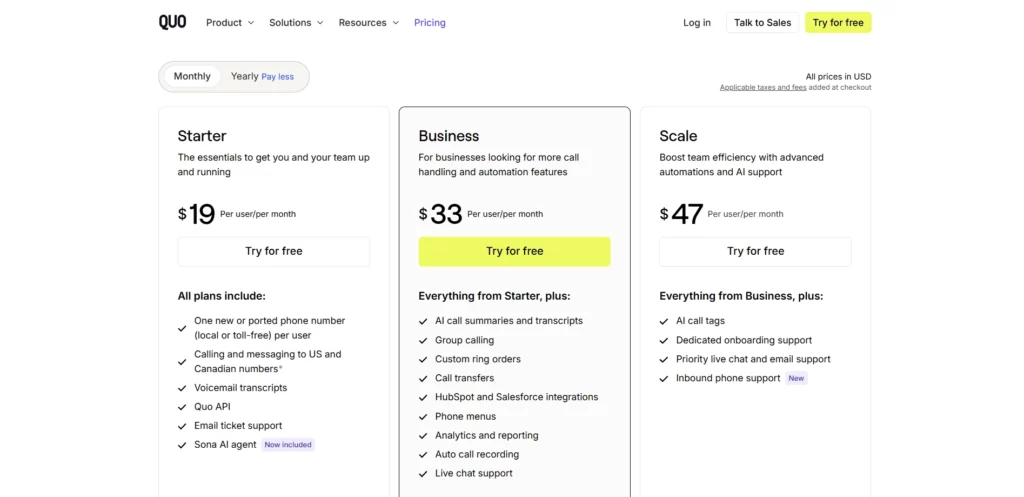
Quo offers very accessible pricing, starting at approximately $19 per user/month, making it one of the most affordable Kixie alternatives for startups and small businesses.
Pros & Cons
Pros:
- Modern, collaborative UI that feels like a messaging app.
- Very affordable entry point with transparent billing.
- Excellent for teams that rely heavily on SMS alongside calling.
Cons:
- Lacks the advanced “power dialing” velocity of Kixie or PhoneBurner.
- Integration depth with enterprise CRMs is growing, but it is less mature than Kixie.
Dialpad
Dialpad is an AI-centric cloud communications platform that provides a contemporary sales hub featuring “Voice Intelligence” (Vi) for real-time transcription and sentiment tracking.
While it offers dialing capabilities, it distinguishes itself from Kixie through its heavy investment in Artificial Intelligence, which coaches reps in real time during conversations.
Features
- Real-Time Coaching: AI offers on-screen recommendations to reps during challenging objections.
- Sentiment Analysis: Monitors the prospect’s attitude throughout the interaction.
- Omnichannel View: Manages calls, texts, and video meetings in a single interface.
- CRM Sync: Automatically logs activities and notes into Salesforce and other CRMs.
Pricing
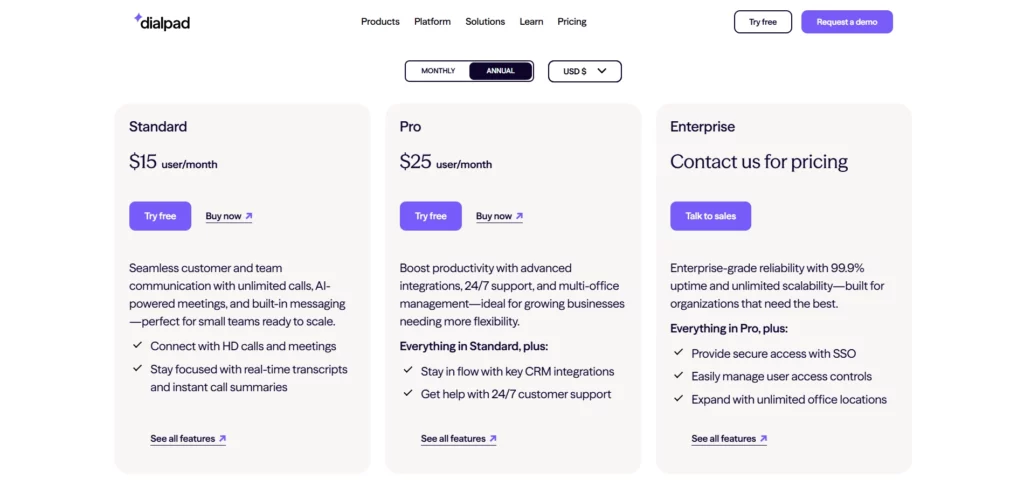
Dialpad’s sales-oriented tiers typically begin around $15 per user/month, increasing as you add advanced AI coaching and analytics capabilities.
Pros & Cons
Pros:
- Sophisticated AI transcription and live sentiment features.
- All-in-one platform for internal and external business communication.
- Very accessible price point for scaling organizations.
Cons:
- Lacks the specialized dialing velocity of tools like Orum or Nooks.
- Reporting dashboards can require configuration to track specific SDR metrics.
JustCall
JustCall is perhaps the most direct alternative to Kixie, offering a very similar suite of power-dialing and SMS-automation tools centered on CRM integration.
It is designed for businesses that need a “phone system in a box” that can be deployed instantly to remote teams worldwide.
Features
- Sales Dialer: Includes predictive, auto, and power dialing modes.
- Appointment Scheduler: Allows prospects to book time slots that sync with call flows.
- SMS Bot: Automates text message sequences for nurturing leads.
- Workflow Automation: Triggers calls or texts based on CRM status changes.
Pricing
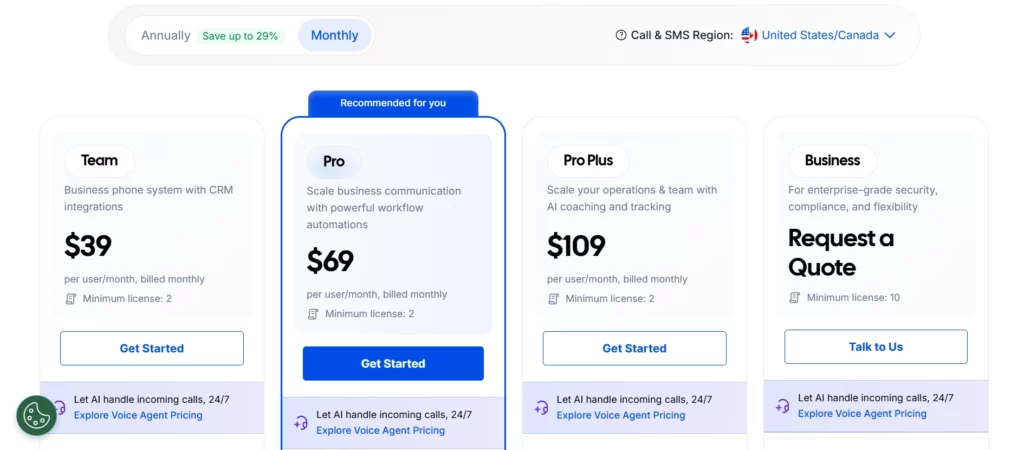
JustCall plans generally start at $39 per user/month, with advanced dialing features unlocked in higher tiers, making it competitively priced with Kixie.
Pros & Cons
Pros:
- Offers a wide variety of dialing modes (Predictive, Auto, Power).
- Fast setup and reliable integration with over 100 business tools.
- 24/7 customer support is frequently cited as a strength.
Cons:
- The interface is functional but can feel cluttered compared to Quo.
- Call quality can vary depending on the region and carrier routing.
How to Select the Best Alternative for Your Requirements
When selecting an alternative to Kixie, consider variables such as dialing speed requirements, squad size, financial resources, and your overarching engagement strategy.
Kixie is a workhorse for CRM integration and stability, but it has limits on volume; alternatives may provide faster throughput or smarter, asynchronous engagement at a better value.
Return on Investment (ROI) is vital; verify that the platform you choose results in more qualified opportunities, not just higher activity metrics. Efficacy is about delivering your value proposition to the right prospect at the perfect moment.
Lastly, ensure the software fits your team’s ecosystem, whether that demands seamless Salesforce data flow, AI-generated voicemail drops, or a high-velocity parallel dialing environment.
Clarifying Your Needs
Defining your core objective is the initial step. Are you aiming to log 500 manual dials per day per agent, or to ensure 500 prospects listen to your voicemail pitch?
Grasping this nuance can help you select a platform that respects your budget while boosting your sales efficiency.
Based on these factors, VoiceDrop emerges as a premier choice for companies valuing high-efficiency, non-disruptive outreach.
Its ability to distribute AI-personalized audio at scale is a distinct advantage in a contemporary sales technology stack.
Book a demo today to discover how VoiceDrop can revolutionize your sales interactions.
FAQ’s
What is the main difference between Kixie and VoiceDrop?
Kixie is a power dialer and phone system focused on connecting live calls through your CRM. VoiceDrop is a ringless voicemail platform that deposits pre-recorded, AI-personalized audio messages directly into voicemail boxes without ringing the device.
Why might I consider switching from Kixie to an alternative?
You might explore alternatives if you require faster parallel dialing capabilities (like Orum or Nooks), if Kixie’s per-minute or SMS costs are becoming too high, or if you wish to pivot to non-intrusive strategies like ringless voicemail provided by tools like VoiceDrop.
Can I try out alternatives to Kixie before committing to a paid plan?
Yes, numerous alternatives, such as VoiceDrop and PhoneBurner, offer free trials or month-to-month pilots, allowing you to test ROI and usability before committing to a long-term contract.
How does the ease of use compare between Kixie and its alternatives?
Kixie is generally user-friendly but requires CRM configuration to maximize its potential. Alternatives like VoiceDrop are often engineered with streamlined “plug-and-play” dashboards, allowing teams to launch campaigns and start contacting leads in moments.