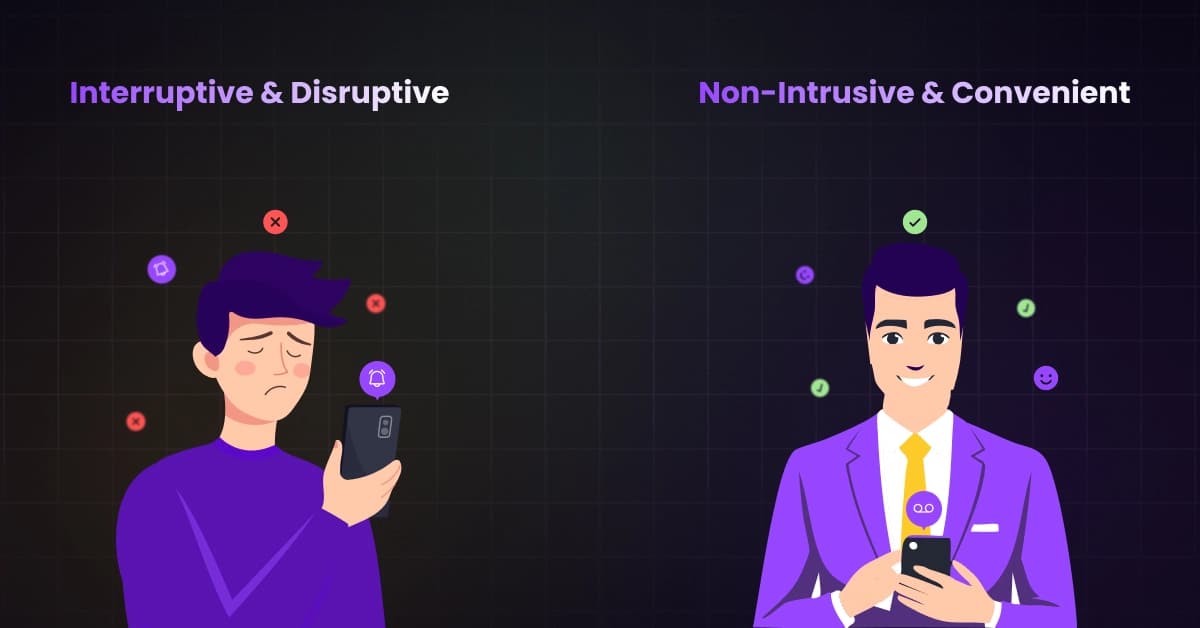
Is your business wasting precious time and budget on outreach that prospects instantly ignore? Is Automated Call Marketing still effective, or does it risk damaging your brand with intrusive interruptions? How do you choose a scalable communication tool that is both compliant and cost-effective in 2025? The rise of automation has complicated outreach. Businesses must now decide between the immediate but interruptive nature of automated calls and the quiet, personal power of ringless voicemail drops.
This expert guide provides a definitive side-by-side comparison of Automated Call Marketing and Ringless Voicemail Drops. We will explore the key differences in compliance, Customer Experience, and cost. You will gain actionable insights into which method is best for generating high-quality Sales Opportunities, nurturing leads, and scaling your campaigns successfully.
What Is Automated Call Marketing?
Automated Call Marketing (ACM) is the process of using technology to initiate outbound calls to a large list of contacts without a human agent manually dialing each number. This technology, often referred to as an auto-dialer, relies on predefined rules to launch high volumes of Automated Call Campaigns. These systems can run fully autonomously or be predictive, routing live answers to agents instantly.
ACM is typically deployed for large-scale, time-sensitive communications. Common features include playing a prerecorded message, offering interactive options through an IVR (Interactive Voice Response) menu, auto-qualification logic, and call scheduling. The systems often leverage Natural Language Processing (NLP) to handle simple interactions or screen leads, aiming for an immediate connection. Industries like insurance, debt collection, and political campaigns frequently use ACM for speed and reach. However, the high volume and speed must be weighed against strict compliance rules and the resulting Customer Experience.
What Are Ringless Voicemail Drops?
Ringless Voicemail drops (RVM) are a non-intrusive method of delivering a pre-recorded voice message directly to a recipient’s voicemail inbox. Crucially, the recipient’s phone never rings. This is achieved using specialized software that bypasses the ringing mechanism, delivering the message silently via the carrier network. Businesses choose RVM precisely because it removes the friction and interruption associated with traditional Automated Call Marketing.
RVM is favored by sales, marketing, and customer service teams seeking to maintain a personal touch while scaling outreach. Unlike a live automated call, the recipient can listen to the Voicemail Message at their convenience, leading to a more positive Customer Experience. Platforms like VoiceDrop.ai specialize in this technology. They enable businesses to send personalized AI Ringless Voicemail drops to thousands of leads affordably. This non-intrusive approach generates stronger Lead Engagement because the communication is low-pressure. Learn more about how to use ringless voicemail drop technology effectively.
Key Differences Between Automated Calls and Ringless Voicemail
Understanding the foundational differences between ACM and RVM is essential for choosing a successful, compliant, and profitable outreach channel. The contrast centers on methodology, compliance, and how the target audience perceives the contact.
Intrusiveness & User Experience
Automated Call Marketing actively interrupts the recipient’s day. The phone rings, forcing an immediate decision to answer or reject. This often leads to high frustration, quick hang-ups, or the recipient blocking the number altogether. This results in a poor Customer Experience.
In contrast, Ringless Voicemail drops deliver messages without causing any disruption. The phone remains silent. The message is there when the recipient is ready to listen. This respectful approach is far less intrusive and significantly more likely to be heard.
Response Rates & Engagement
Automated Call Campaigns typically struggle with low pickup rates (often single digits) and high spam labeling. If the recipient does answer, their engagement is often limited to a few seconds before hanging up on the recorded message.
Ringless Voicemail drops generate higher engagement because people check voicemails more willingly when it is convenient for them. This respectful delivery leads to stronger Lead Engagement, better Response Rate quality, and significantly more qualified conversations. RVM is proven to help increase callback rates for sales teams.
Compliance & Regulations
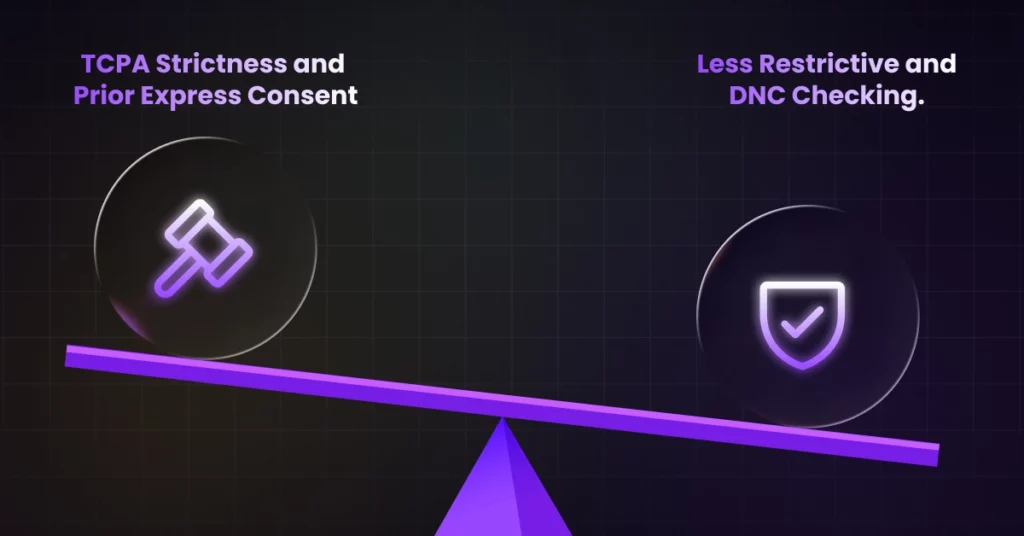
Compliance is a major point of difference. Automated Call Marketing is tightly regulated under the Telephone Consumer Protection Act (TCPA). Using autodialers or prerecorded voices requires strict prior express written consent, exposing businesses to massive legal risks and fines.
Ringless Voicemail generally aligns more easily with compliance requirements. Since the phone does not ring, it is often considered a less intrusive method, similar to Email Content or fax. While still requiring careful use, RVM significantly reduces legal risk for outreach campaigns compared to live automated dialing. Read about DNC rules and regulations.
Cost & Scalability
Automated Call Marketing involves high operational costs, including expensive dialer systems, potential dropped call charges, and the cost of human agents to handle live transfers. The unpredictability of dropped calls and agent availability increases overall campaign expense.
Ringless Voicemail offers significantly lower cost-per-drop. Because there are no agents involved and the delivery is instantaneous, voicemail drops scale more efficiently. Businesses can reach thousands of leads with predictable, controlled costs, making it a highly scalable option.
Personalization Options
Automated Call Marketing often sounds robotic or uses clumsy, scripted voice synthesis, which immediately erodes trust and hurts the Customer Experience. The ability to personalize is often limited to IVR options.
Ringless Voicemail, especially when leveraging modern AI-Powered Follow-Ups, allows for prerecorded human-like messages. These messages can be deeply personalized with the prospect’s name and specific contextual details, making outreach feel more authentic. Using specialized sales outreach tools that focus on voice ensures genuine personalization.
Benefits of Automated Call Marketing
Despite the compliance risks, Automated Call Marketing delivers strong results in specific situations where instant communication is vital. It offers immediate connections, quick qualification, and real-time actions.
Fast Real-Time Communication
Automated Call Campaigns allow businesses to deliver time-sensitive information instantly. When timing is critical, such as during a service outage, a product launch, or an urgent event, automated calls ensure rapid distribution. This capability is useful for emergency alerts, time-sensitive promotions, and urgent customer updates where the Response Time must be immediate.
Useful for Lead Qualification
Automated calling systems, particularly those integrated with advanced AI, excel at asking screening questions and qualifying leads before routing them to sales. The system can identify live answers, ask two or three qualifying questions, and pass only hot, high-intent prospects to a human agent. This helps teams prioritize high-intent leads while reducing manual screening work.
Interactive Responses (IVR)
Interactive Voice Response (IVR) menus allow recipients to press options (e.g., “Press 1 to speak to sales,” “Press 2 to unsubscribe”). This creates a two-way interactive experience that can gather survey data, complete simple transactions, or move leads further down the funnel quickly and automatically.
Benefits of Ringless Voicemail Drops
Ringless Voicemail drops are the superior choice for high-volume, low-pressure sales and nurturing campaigns. They prioritize the Customer Experience by removing interruption friction.
Higher Callback Rates
People generally avoid answering unknown numbers, but they almost always check their voicemails. This User Behavior pattern means a voicemail drop is more likely to be listened to than a live automated call is to be answered. This naturally leads to stronger Lead Engagement and often produces significantly more callbacks than live or Automated Call Marketing.
Non-Intrusive Outreach
The core benefit is that the phone never rings, so recipients do not feel interrupted or pressured. This provides a more positive brand experience compared to the frustrating experience of an Automated Call Marketing robot. This respect builds trust and improves the overall Customer Experience.
Scalable & Cost-Effective
Ringless Voicemail is incredibly Cost-Effective at scale. The low cost per drop means businesses can reach thousands of leads affordably. There is no need for costly call centers, live agents, or complex dialer infrastructure, making RVM ideal for scaling outreach efficiently.
Better for Nurturing Warm Leads
RVM is perfect for follow-ups, appointment reminders, and reactivation campaigns. It helps maintain a human touch and provides gentle AI-Powered Follow-Ups without requiring disruptive live Sales Calls. This forms a key component of any comprehensive Automated Follow-up System.
Cost & Compliance Considerations
Comparing Automated Call Marketing and Ringless Voicemail requires prioritizing legal adherence and cost efficiency. ACM faces the highest scrutiny under the TCPA, which governs autodialed and prerecorded calls. Businesses must obtain explicit consent to avoid fines up to $1,500 per violation. The compliance burden is substantial.
In contrast, Ringless Voicemail drops are generally considered less restrictive because they do not initiate a call. While still requiring responsible use (avoiding deceptive practices), RVM offers a safer channel for mass outreach. Cost-wise, ACM is unpredictable due to agent time and dropped call fees. RVM, with its fixed, low cost-per-drop, offers far better predictability and ROI. The FCC manages the national Do Not Call registry, which applies heavily to ACM.
Metrics to Compare
Businesses should use a clear, measurable comparison framework to evaluate both outreach methods and determine true effectiveness. The focus should be on KPIs that measure quality over sheer quantity.
- Response Rate: The most crucial metric. RVM typically wins here because callbacks from voicemails are often higher quality than live answers to an automated call.
- Time Saved (Response Time): RVM saves agent time on dialing and waiting. ACM saves time on qualification via IVR.
- Cost Per Engaged Lead: RVM’s low cost per drop often makes its cost per qualified response much lower than ACM’s.
- Conversion Rate: The percentage of engaged leads that convert to sales. The higher Lead Engagement quality from RVM often leads to better conversion rates.
- Spam/Block Rate: ACM rates are significantly higher due to intrusiveness, while RVM remains low.
Best Use Cases for Each
The choice between the two depends entirely on the purpose of the communication. Both Automated Call Marketing and Ringless Voicemail have areas where they excel.
When to Use Automated Call Marketing
Automated Call Marketing is ideal when immediate, real-time interaction is required. It is useful for situations where customers must confirm, respond, or take action instantly.
- Emergency Alerts & Important Notifications: Time-sensitive updates where urgency matters, such as system outages or severe weather alerts.
- Order Confirmations & Verifications: Automated calls to verify identity or appointment confirmations, often using a simple yes/no IVR.
- Surveys & Feedback Collection: Automated IVR-based calls where users can press options to submit feedback.
- Lead Qualification: AI-powered dialers that identify live answers and pass hot leads to human agents after basic screening.
When to Use Ringless Voicemail
Ringless Voicemail works best when businesses want to reach many contacts without interrupting them. It is ideal for messages that need to feel warm, personal, and low-pressure.
- Sales Follow-Ups: Perfect for re-engaging leads after demos, inbound inquiries, or missed calls.
- Nurturing Sequences: Send friendly check-ins that feel personal and increase callback rates.
- Appointment Reminders: Deliver reminders without disrupting the recipient’s day. Automated Workflows can handle this instantly.
- Reactivation Campaigns: Engage cold or dormant leads with a soft-touch message that prompts interest.
Choosing the Right Outreach Method
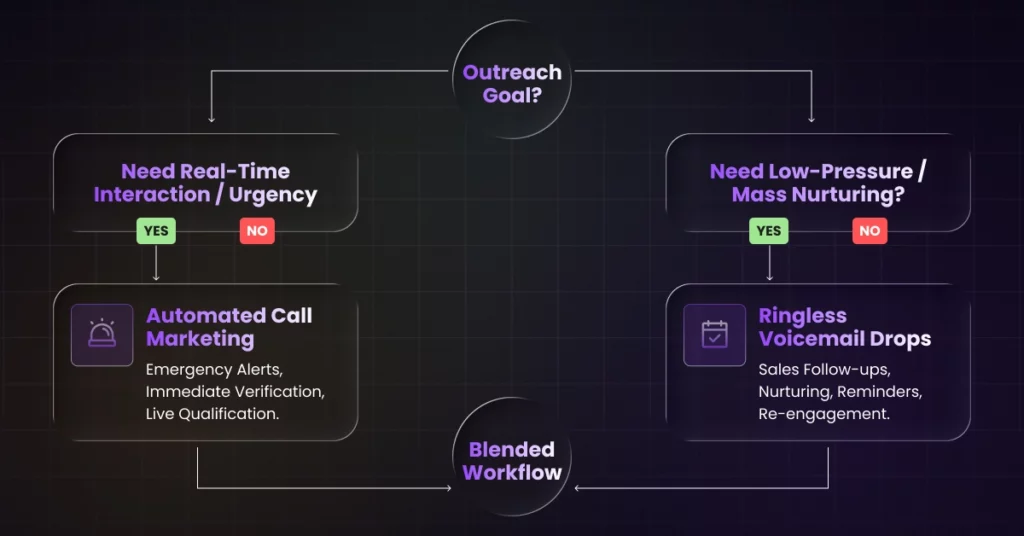
When choosing, prioritize your Customer Experience and compliance over sheer speed. For most sales and marketing purposes, a blended workflow is best. Use the non-intrusive Ringless Voicemail first to establish initial Lead Engagement. Then, follow up with Email Content or an AI-Powered Follow-Ups sequence like SMS, as noted here.
If your goal is high-volume sales outreach with personalization, Ringless Voicemail is the superior, safer foundation. VoiceDrop.ai offers a ringless voicemail tool that integrates seamlessly with CRMs and outreach stacks, allowing you to easily build these effective blended campaigns.
Final Verdict
The final choice between Automated Call Marketing and Ringless Voicemail depends entirely on urgency and intent. ACM wins when you need instant, real-time action, but RVM is the clear leader for high-volume sales, nurturing, and maintaining a positive Customer Experience. RVM provides the high Response Rate and compliance peace of mind needed to build an effective Automated Lead Follow-up System.
Ready to stop interrupting prospects and start getting real callbacks? Leverage the power of compliant, personalized voice messages in your sales workflow.
Click here to schedule a demo and see the difference VoiceDrop can make.
FAQ’s
1. What is the main difference between automated call marketing and ringless voicemail drops?
Automated Call Marketing actively rings a user’s phone and requires immediate attention, while Ringless Voicemail drops deliver a message straight to the inbox without causing a disruption.
2. Which option is more compliant with TCPA guidelines?
Ringless Voicemail drops generally face fewer restrictions because they do not initiate a live call. Automated Call Marketing, especially autodialed ones, falls under stricter TCPA regulations and often requires explicit consent.
3. Do ringless voicemail drops really get higher engagement?
Yes. Because recipients don’t feel interrupted, they are more likely to listen and call back at their convenience, leading to higher Lead Engagement rates compared to automated calls.
4. Are automated calls still useful in 2025?
Absolutely! Automated calls work extremely well for real-time communication like alerts, verification, surveys, and urgent updates where immediate action is required.
5. Which method is more cost-effective?
Ringless Voicemail is typically cheaper at scale because each drop costs less and delivers more messages simultaneously. Automated Call Marketing can become more expensive due to call duration costs.