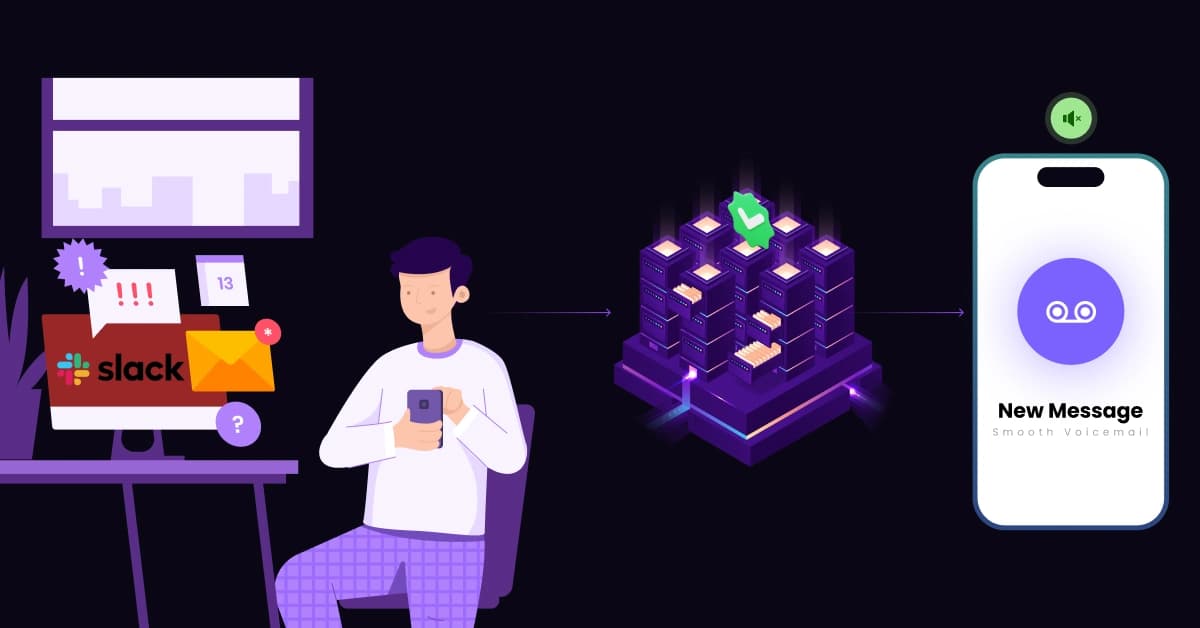
It is the “nightmare scenario” every DevOps engineer fears. It is 3:00 AM. Your primary production server has just crashed. But your phone is silent.
Why? Because Slack is down, or your office ISP has failed. The usual cacophony of alerts isn’t getting through. While the server burns, the incident response team sleeps through the silence.
By the time someone notices the downtime manually, SLAs are breached, customers are furious, and the Cost of IT downtime skyrockets. In a data-driven world, relying on a single channel like Slack for incident response is a dangerous single point of failure.
True operational resilience requires an “Out-of-Band” communication strategy, using SMS and Voice automation that operates independently of your internal network.
While the server burns, the incident response team sleeps through the silence.
By the time someone notices the downtime manually, hours have passed. SLAs are breached, customers are furious, and the Cost of IT downtime skyrockets.
In a data-driven world, relying on a single channel like Slack or Microsoft Teams for incident response is a dangerous single point of failure. True operational resilience requires an “Out-of-Band” communication strategy, using SMS and Voice automation that operates independently of your internal network to ensure the message always gets through.
The Risk of “Single-Channel” Dependency in Incident Response
Modern engineering teams have become 100% dependent on collaboration tools. While efficient for daily workflows, putting all your communication eggs in one basket creates a critical vulnerability: a Single Point of Failure (SPOF).
The “Silence” of a Slack Outage
When your primary collaboration tool fails, your incident response team essentially becomes deaf and blind. You cannot alert the on-call engineer, assemble the war room, or coordinate a fix. The delay caused by this silence is often more damaging than the technical glitch itself.
Internet vs. Cellular Failures
Often, the root cause of an internal blackout isn’t the software, but connectivity. An ISP failure at headquarters kills access to Slack, Jira, and email instantly. However, cellular networks operate on independent infrastructure. SMS and Voice calls usually remain operational even when local internet lines are cut, making them the only reliable backup.
Alert Fatigue and “Do Not Disturb”
Engineers often mute Slack notifications at night to get rest. A generic “ping” is easily ignored. In contrast, a phone call cuts through the noise. It signals urgency in a way that a push notification never can.
According to industry data, the Cost of IT downtime can average $5,600 per minute. Every second wasted trying to reach a sleeping engineer adds to that bill.
What is “Out-of-Band” Communication?

To build a resilient system, you must implement “Out-of-Band” (OOB) protocols.
Definition and Importance
To build a resilient system, you must implement “Out-of-Band” (OOB) protocols.
In incident management, Out-of-band communication means using a separate communication path from the primary system being monitored. Think of it as an emergency frequency. If your primary channel is the internet (Slack/Email), your OOB channel must be the cellular network (PSTN).
Why SMS and Voice are the Ultimate Backup
Unlike internet-based apps, SMS and Voice calls do not rely on your company’s WiFi or the status of a third-party SaaS server. They run on carrier networks that are historically more stable. They work when your servers, WiFi, and internal apps are all offline, ensuring the alert reaches the engineer’s pocket regardless of the technical environment.
Building the Automated Notification Architecture
You do not need a manual phone tree to execute OOB communication. You need automation. Here is how the data flow works to save your system.
1. The Trigger (Monitoring Tools)
The process begins with your existing monitoring stack. Tools like Datadog, New Relic, AWS CloudWatch, or PagerDuty are the first to detect latency spikes or server crashes.
2. The Webhook Handshake
Instead of sending a standard alert to a Slack channel (which might be down), the monitoring tool is configured to send a Webhook payload directly to the VoiceDrop API. This bypasses your internal chat tools entirely.
3. The Broadcast Execution
Upon receiving the webhook, the API instantly triggers a mass voice broadcast or Mass text messaging blast to the pre-set list of on-call engineers. Within seconds of the crash, phones start ringing.
Designing Your Alert Hierarchy (Who Gets Woken Up?)
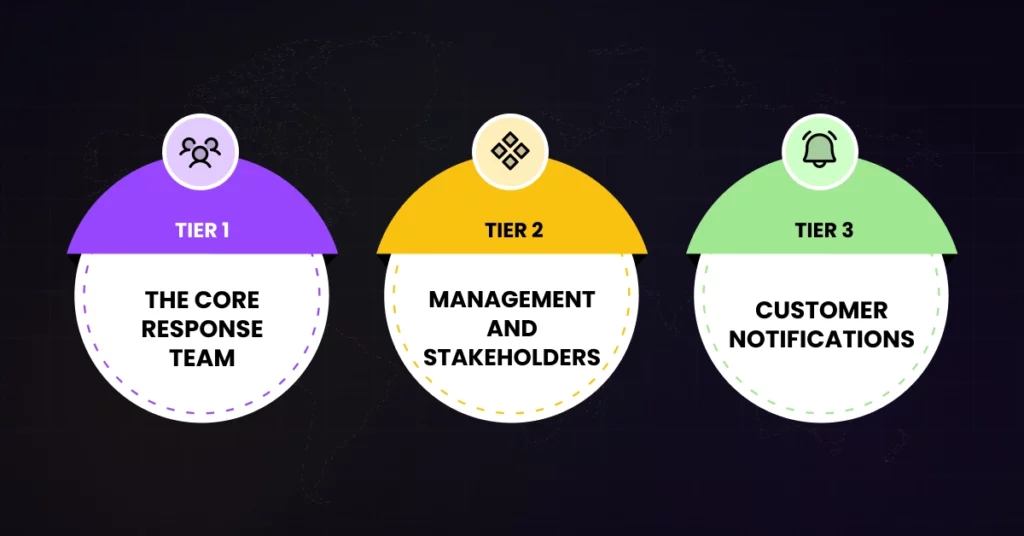
Not every glitch requires a 3:00 AM wake-up call to the entire company. To avoid panic and fatigue, you must structure your escalation policy intelligently.
Tier 1: The Core Response Team
Not every glitch requires a 3:00 AM wake-up call to the entire company. To avoid panic and fatigue, you must structure your escalation policy intelligently.
These are your SREs (Site Reliability Engineers) and DevOps leads. They need an immediate Voice Call to ensure they wake up.
Pro Tip: An escalation policy is only as good as its data. Before the crisis hits, ensure every phone number on your list is accurate and active. You can verify number ownership on 1Lookup to ensure you don’t wake up the wrong person (or a disconnected line) during a crisis.
Tier 2: Management and Stakeholders
CTOs and CS managers generally do not need to be woken up; they just need to be informed. For this group, Ringless voicemail marketing technology is perfect. It drops a voicemail notification directly into their inbox without ringing their phone, keeping them in the loop without causing panic.
Tier 3: Customer Notifications
If the outage affects end-users, silence is your enemy. Automate a polite status update via SMS to your key clients to build trust and reduce support ticket volume.
Essential Features of an Emergency Notification System
When selecting a tool for OOB communication, reliability is the only metric that matters.
API Reliability and Uptime
When selecting a tool for OOB communication, reliability is the only metric that matters.
Your backup system cannot fail when your primary system does. It needs 99.99% uptime guarantees.
Speed of Delivery (Latency)
Alerts must arrive in seconds, not minutes. In critical infrastructure, a 5-minute delay is unacceptable.
Two-Way Communication:
It is not enough to just send a message; you need to know it was received. Look for a system that allows engineers to reply “Acknowledged” to stop the escalation chain. Even giants fail; checking the Slack System Status history proves that relying on one provider is a risk no enterprise should take
Writing Effective “System Down” Templates
During a crisis, adrenaline makes it hard to type clear messages. Pre-load these templates into your automation platform.
The Internal “Wake Up” Call Script
“This is an automated emergency alert. Production Database Cluster A is unresponsive. Severity Level 1. Check your email for the war room bridge link immediately.”
The External “We Are Aware” SMS
“Dear Customer, we are currently investigating connectivity issues with our login portal. Our team is working on a fix. We will send an update in 30 minutes.”
Handling Incoming Chaos: When Customers Call You
A major outage doesn’t just mean broken servers; it means a broken support center. Your phones will likely ring off the hook.
Deflecting Support Volume
If 500 customers call your support line simultaneously, your agents cannot answer them all. Long hold times will only increase customer churn.
A major outage doesn’t just mean broken servers; it means a broken support center. Your phones will likely ring off the hook.
Deflecting Support Volume
If 500 customers call your support line simultaneously, your agents cannot answer them all. However, you cannot ignore VIP clients either.
Receiving a flood of calls from unknown numbers? Don’t guess. Use 1Lookup reverse phone lookup to instantly identify if the caller is a key stakeholder or a VIP client before you pick up. 1Lookup is built by the same team as VoiceDrop.
Automating Responses
For the rest of the volume, deploy AI voicemail agents to answer incoming calls. The AI can confirm the company is aware of the outage, apologize, and promise updates. This reassures the customer while freeing your human agents to fix the actual bug.
Conclusion
You invest heavily in redundant servers, backup power generators, and failover databases. You must invest in redundant communication.
When Slack is down, the internet is patchy, and the pressure is on, VoiceDrop is your lifeline. It bridges the gap between a silent failure and a rapid resolution.
Don’t wait for the next crash to build your lifeboat. Ensure your team is awake and ready the moment disaster strikes.
Get a free demo of VoiceDrop today and set up your automated emergency alerts.
FAQ’s
How fast can the API trigger a call?
Usually, it happens within seconds of receiving the webhook payload from your monitoring tool. The latency is minimal to ensure rapid response times.
Can I target specific teams based on the error type?
Yes. You can configure the API to route “Database” errors specifically to the DB team and “Frontend” errors to the Web team, ensuring the right experts are alerted.
Does this work if the engineer’s phone is on ‘Silent’?
Voice calls often bypass “Silent” or “Do Not Disturb” modes if the calling number is saved as a “Favorite” in the engineer’s contacts. In contrast, Slack notifications usually do not override these settings.