
Picture a typical day for a solar sales development representative. They stare at a list of expensive leads and dial each number by hand, leaving endless voicemails and hitting disconnected lines instead of speaking to real homeowners. Manual dialing burns reps out and drains morale.
A solar dialer fixes this. An auto dialer for solar sales does far more than dial faster: it acts as a complete lead-management system, keeps your outreach TCPA compliant, and connects reps directly to homeowners who are ready to talk about going solar.
The Hidden Costs of Manual Dialing in the Solar Industry
Dialing by hand wastes expensive solar leads and quietly throttles your whole pipeline. Given how much a solar customer costs to acquire, sticking with outdated methods is no longer viable.
The “Speed to Lead” Trap
Timing decides deals. Waiting even 30 minutes to call a fresh inbound solar lead sharply reduces your chance of setting an appointment, and faster competitors scoop up those prospects first.
Wasted Time on Dead Ends
Reps burn hours on rings, busy signals, and answering machines when they should be pitching the savings of solar to qualified buyers. According to the Solar Energy Industries Association, optimizing solar customer acquisition is critical to sustaining growth in this competitive market.
Even the fastest dialer fails on bad data. Before you load expensive solar leads into a campaign, make sure those numbers actually belong to the right homeowners. Verify your lists and pull accurate, up-to-date contact data with 1Lookup’s phone validation. 1Lookup is built by the same team as VoiceDrop.
Predictive vs. Power Dialers: Which Is Best for Solar?
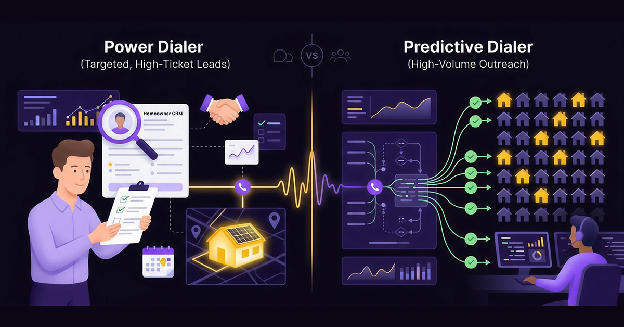
The right software depends on your call-center size and lead quality. Two options dominate solar outreach:
- Power dialers for targeted outreach: a power dialer calls one number at a time, right after the previous call ends. It suits high-ticket, warm solar leads that deserve a personalized touch, giving reps time to review the CRM profile before the call connects.
- Predictive dialers for high volume: a predictive dialer calls several lines at once and connects reps only when a live homeowner answers. It fits large call centers working massive volumes of cold data.
Key Features of Top-Tier Solar Calling Software
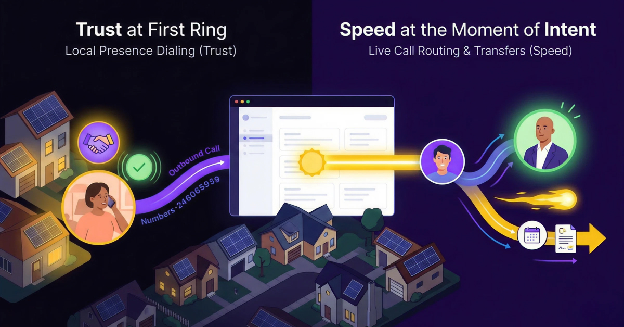
A few features separate a real solar dialer from a generic one. The software has to meet the specific demands of the renewable-energy sector:
- Local presence dialing: homeowners rarely answer unfamiliar area codes. Showing a local number lifts pickup rates and builds instant trust.
- Live call routing and transfers: when an SDR hooks a hot prospect, they need to transfer that lead to a senior closer without dropping the call. Clean handoffs stop deals from slipping away.
Step 1: Connect the Dialer to Your Solar CRM
New software should not disrupt your workflow. Done right, setup is the foundation of long-term results.
Seamless CRM Syncing
Wiring the dialer directly into your CRM updates lead statuses automatically, so a contact shifts from “New Lead” to “Site Visit Scheduled” based on the call outcome. Your CRM is only as good as its data, though: clean up your database and enrich contacts with verified direct dials using 1Lookup, then let a VoiceDrop CRM integration keep those clean lists in sync with your dialing platform.
Triggering Automated Workflows
Once a prospect converts, the system should react immediately. Moving a homeowner through the pipeline automatically stops further prospecting calls, which protects your brand and keeps you from annoying a new customer.
Step 2: Maximize “Speed to Lead” for Inbound Prospects
Response time is everything for inbound leads from Facebook ads or solar calculators. Delaying outreach by minutes can kill the sale.
The 5-Minute Rule
Calling a lead within the first five minutes dramatically increases conversion rates. To see the impact, look at HubSpot’s sales response-time statistics on how fast reps need to react.
Automated Inbound Routing
Modern systems route fresh web leads straight to an available rep’s headset, so no inquiry sits untouched in a stagnant queue.
Step 3: Optimize Outreach with Ringless Voicemails
Homeowners will not always pick up, no matter how fast you call. You can still turn missed connections into warm callbacks.
Bypassing the Inbox
Instead of leaving a message after endless ringing, dropping a pre-recorded voicemail straight into the prospect’s inbox earns a higher listen rate and feels less intrusive. Pairing ringless voicemail with your dialer creates an effective omnichannel follow-up.
Crafting the Perfect Solar Pitch
Your message has to grab attention in the first few seconds. Record a tight pitch about energy savings, new tax incentives, or zero-down programs. A strong hook is what prompts the callback.
Step 4: Navigate TCPA Compliance in Solar Sales
The solar industry faces heavy scrutiny over outbound calling, so the legal side is non-negotiable. A TCPA compliant dialer builds these safeguards in for you.
Managing Opt-Outs Automatically
Your dialer should scrub numbers against national and internal Do Not Call lists before it makes a single attempt. A dedicated DNC scrubber handles this in real time and keeps you off the wrong lists.
Call Abandonment Rules
Predictive dialers must follow specific rules on dropped calls and pre-recorded messages. Stay current with the FCC’s TCPA rules, the government authority on telemarketing law.
Step 5: Measure the Impact on Solar Installations
Eventually you have to prove ROI to the owner. The way to do that is with data.
Tracking Connection and Appointment Rates
Watching how many calls connect with a homeowner versus hit voicemail shows the real health of a campaign, and tracking how many connections become site visits shows rep performance. Tools that let you measure voice messages and call data make this easy.
Analyzing Cost Per Acquisition (CPA)
Appointments are great, but cost matters just as much. Tracking how higher, more efficient call volume lowers your cost to acquire a solar customer proves the tool’s financial value. A lower CPA means fatter margins.
Conclusion
A solar dialer is the foundation of a modern renewable-energy sales floor. It keeps reps selling instead of hand-dialing, and it keeps every call compliant. Stop wasting expensive leads and start having more conversations with qualified homeowners. When you are ready to upgrade your floor, get a free demo to see it in action.
Frequently Asked Questions
Is using an auto dialer legal for solar sales?
Yes. An auto dialer is legal as long as your team follows TCPA guidelines and respects national and internal Do Not Call lists.
Will a solar dialer integrate with my current CRM?
In most cases, yes. Modern dialing platforms use flexible APIs to connect with popular CRMs like GoHighLevel and HubSpot, so your data stays in sync without manual entry.
What is the difference between a predictive dialer and a power dialer?
A power dialer uses one-to-one logic, calling a single number for targeted outreach. A predictive dialer uses many-to-one logic, calling several lines at once and connecting reps only when someone answers.