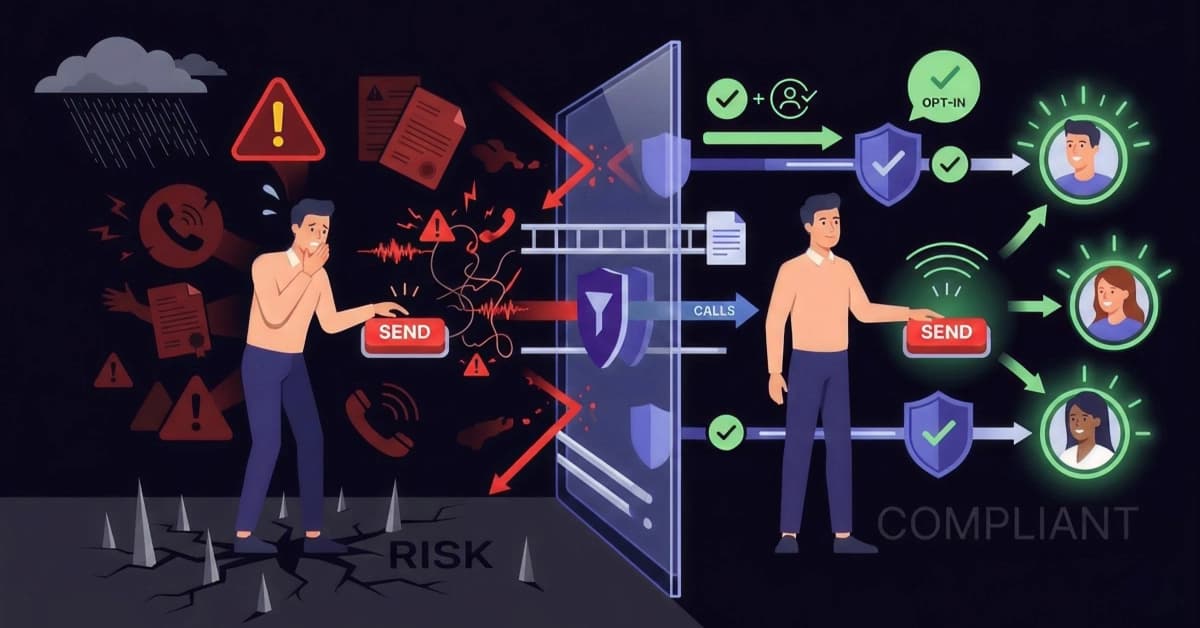
Does the fear of a lawsuit keep you from hitting “send” on your marketing campaigns?
You are not alone. Legitimate businesses are often paralyzed by the fear of being labeled spammers or facing aggressive legal action. This anxiety is not unfounded; the regulatory environment has tightened, and the stakes for non-compliance are incredibly high. Under the Telephone Consumer Protection Act (TCPA), fines can reach up to $1,500 per violation.
However, remaining silent is not the answer to compliance. You do not have to stop marketing to be safe; you simply need to switch to a “White Hat” strategy. By prioritizing permission and utilizing non-intrusive technology, you can maintain high outreach volume without the legal nightmares.
Defining the Enemy: What Actually Constitutes a “Robocall”?
There is significant confusion in the marketplace regarding automated outreach. Many business owners mistakenly believe that any use of automation constitutes an illegal robocall. However, to protect your business, you must distinguish between intrusive dialing and passive notification.
Auto-Dialers vs. Pre-Recorded Drops
The primary driver of consumer complaints is the predictive auto-dialer. These systems blast thousands of calls simultaneously, ringing phones and demanding immediate attention. Conversely, Ringless Voicemail (RVM) operates on a completely different infrastructure.
RVM technology creates a server-to-server connection, dropping a message directly into the voicemail inbox without ever ringing the device. Therefore, it bypasses the cellular network’s voice channel entirely. Since RVM only works on mobile devices, you must ensure your data is accurate.
Stop wasting budget on landlines. Run a quick check on 1Lookup to instantly identify valid mobile lines perfect for your campaigns.
The Consumer Perception Problem
Ultimately, lawsuits usually stem from interruption. If you interrupt a family dinner with a ringing phone, you generate anger. However, if you leave a silent notification, you provide value. By respecting the prospect’s time, you shift the interaction from harassment to helpfulness.
The Legal Landmines: TCPA, DNC, and Fines
To successfully run a “White Hat” campaign, you must navigate the complex web of regulations governing automated voice messages. Ignorance of the law is not a valid defense; therefore, understanding the basics is essential for survival.
The Telephone Consumer Protection Act (TCPA)
The TCPA is the primary federal statute governing telemarketing. While the rules are extensive, the core principle is simple: Consent is King. Specifically, for automated marketing messages sent to mobile phones, you generally require “prior express written consent.”
The National Do Not Call (DNC) Registry
Furthermore, respecting the National Do Not Call Registry is mandatory, not optional. The Federal Trade Commission (FTC) maintains this list to protect consumers. If you are calling cold data, you must scrub your list against this registry. Even accidental calls to DNC numbers can trigger an investigation.
You can review the specific national DNC registry rules to ensure your agency understands the full scope of these requirements.
The “White Hat” Framework: Permission is Profit
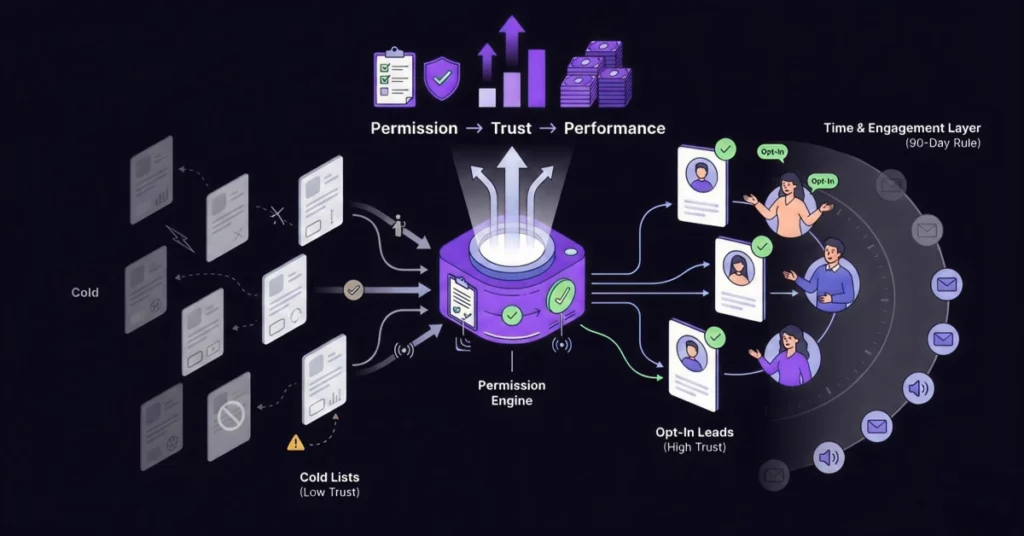
Shifting to a White Hat strategy moves your focus from “avoiding fines” to “building trust.” Campaigns that prioritize compliance inevitably perform better because the audience actually wants to hear from you.
- The Power of Opt-In Data: There is a massive safety difference between “Cold Lists” and “Opt-In Leads.” When a user fills out a form, they provide “express consent.” Consequently, these leads are low-risk assets.
- The 90-Day Engagement Rule: Remember that consent does not last forever. If a lead has gone cold, re-engage them via email before attempting to automate voice.
Technical Defense: Scrubbing Before Sending
Compliance is not just about policy; it is about technology. You should never rely on manual checks.
Automated DNC Scrubbing
Modern marketing platforms must include integrated compliance tools. Advanced systems automatically filter out DNC numbers before a campaign launches, acting as a safety net for your operations.
Don’t risk your campaign’s safety by guessing. Validate your leads with 1Lookup to ensure every number on your list is active, real, and safe before you hit send. 1Lookup is built by the same team as VoiceDrop.
The “Litigator Scrub” (Advanced Protection)
Beyond the DNC, there is a threat known as “Professional Plaintiffs,s” individuals who bait companies into calling them just to sue. To combat this, high-end compliance tools utilize a “Litigator Scrub” to identify and remove these bad actors.
For more details on these protections, read about VoiceDrop legal compliance.
Avoiding the “Spam Likely” Label on Caller ID
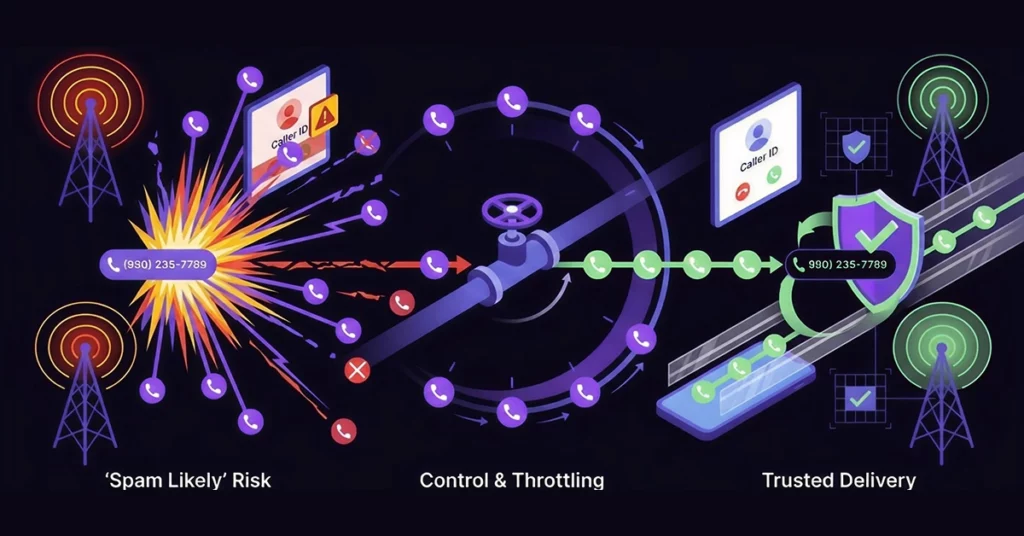
Even if your intent is pure, technical factors like Caller Reputation can ruin your campaign. Addressing STIR/SHAKEN protocols is vital to ensure deliverability.
- How Carriers Flag Numbers: If you dial too fast or receive immediate hang-ups, carriers like AT&T and Verizon mark your number as “Scam Likely.”
- Smart Delivery Scheduling: The solution is to “throttle” your campaigns. Instead of blasting 10,000 messages in 5 minutes, spread them out over 5 hours. This mimics human behavior.
Additionally, adhering to the FCC call authentication framework helps legitimate businesses verify their identity.
Why Ringless Voicemail is the Safe Alternative
If you want to maintain high volume without the high risk, you need the right tool. Ringless Voicemail is uniquely positioned to solve the intrusion problem.
Non-Intrusive Delivery
Because the phone never rings, the consumer feels no harassment. They receive a notification and can listen to the message at their convenience. This drastically reduces the complaint rate compared to cold calling or predictive dialing.
Server-to-Server Technology
The magic lies in the Server-to-Server Technology. RVM bypasses the cellular voice network entirely, depositing the message directly to the carrier’s server. To understand the mechanics, see our technical guide on how ringless voicemail works.
Handling Opt-Outs and Data Hygiene
Compliance doesn’t end when the campaign is sent. How you handle responses is just as critical as how you send the initial message.
The Internal DNC List
Every business must maintain its own “Do Not Call” list. If a customer replies “STOP” or requests removal, you must honor that request immediately. Failure to process an opt-out request is one of the easiest ways to lose a TCPA lawsuit.
Automating the Removal Process
Human error is the enemy of compliance. You should use tools that automatically block a number when a user opts out. This ensures that a lead who asked to be removed is never accidentally added to a future campaign.
Conclusion
Running a business in today’s regulatory environment doesn’t mean you have to stop outreach; it simply means you have to get smarter. By adopting White Hat principles, identifying professional litigators, and using non-intrusive technology, you can safely grow your revenue.
White Hat campaigns build long-term brand equity while protecting the company from lawsuits. Don’t let fear paralyze your marketing efforts. Start a safe campaign today with VoiceDrop and experience the power of compliant automation.
FAQ’s
Is Ringless Voicemail legal for business use?
Yes, Ringless Voicemail is legal in most jurisdictions, provided it is used responsibly. It is classified as an “Enhanced Information Service” rather than a traditional call, but you should still adhere to TCPA consent guidelines.
How do I remove my business number from “Spam Likely”?
You need to register your business profile with the major carriers (AT&T, T-Mobile, Verizon) and ensure your calling patterns are not aggressive. Additionally, frequently rotating your caller ID numbers can help maintain a healthy reputation.
What is the difference between a DNC Scrub and a Litigator Scrub?
A DNC scrub checks your list against the government’s Do Not Call registry. A Litigator Scrub goes further by checking against a private database of known individuals who have previously sued companies for TCPA violations, adding an extra layer of safety.