Sales acceleration platforms have completely transformed how modern sales development teams operate.
According to Salesforce research, sales representatives spend only about 28% of their week actually selling, with the rest consumed by administrative tasks and manual dialing.
The ability to navigate through prospect lists without getting bogged down by dial tones and answering machines often determines whether a team hits its revenue targets or falls short.
If you are currently assessing alternatives to Orum, the market offers powerful platforms with distinct advantages, flexible billing models, and innovative outreach methods.
Whether your goal is non-intrusive ringless voicemail drops, advanced power dialing, or deeply integrated sales engagement features, choosing the right tool can dramatically improve your connection rates.
Let’s dive into the leading contenders and analyze how they stack up in helping you crush your sales goals.
Introduction to Orum and Its Purpose
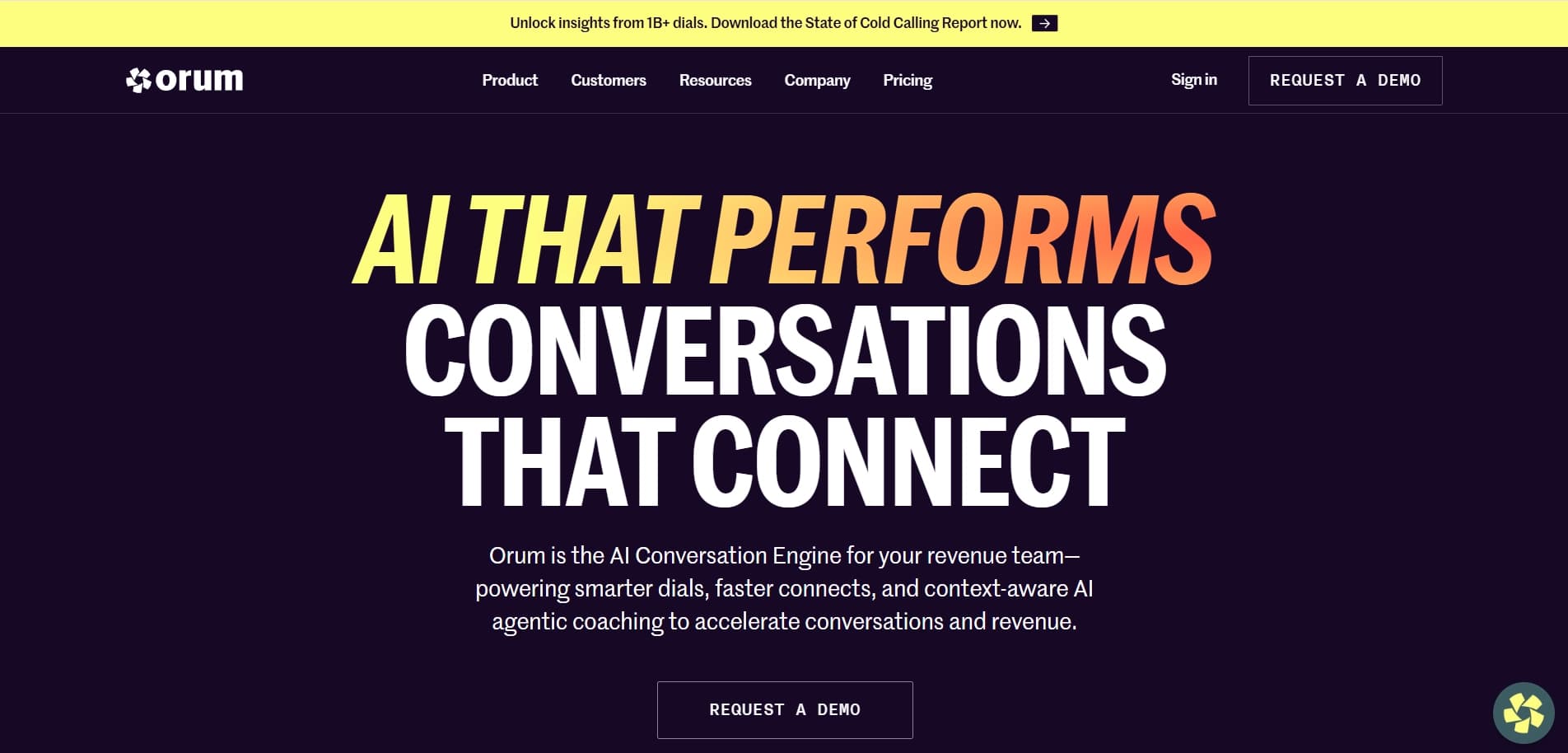
Orum is a live conversation platform designed to automate outbound calling. It is best known for its “parallel dialing” technology, which allows reps to dial multiple numbers simultaneously and instantly connects them when a human answers.
This solution enables high-growth sales teams to eliminate the dead air of dialing by leveraging AI-driven voicemail detection and seamless CRM integration to maximize daily conversations.
With features like a virtual sales floor and automated list filtering, Orum is widely considered a powerhouse for teams focused solely on high-volume cold calling and aggressive outbound strategies.
Why You Might Look for Alternatives
While Orum is highly effective for massive call volume, it isn’t always the ideal solution for every business model. You might be looking for a platform that offers more flexible pricing, broader communication channels, or a less aggressive approach to prospect engagement.
Orum’s high cost-per-seat is a common dealbreaker for growing teams. For a full breakdown of the latest tiers and hidden costs, see our detailed guide on Orum Pricing.
Sales teams today are evolving from simple dialers into strategic revenue generators. As highlighted in recent Gartner sales reports, the trend is shifting towards hyper-personalized engagement rather than just high-volume “spray and pray” tactics.
Orum often requires significant annual contracts and a high cost-per-seat that can be prohibitive for agile startups or smaller teams.
Furthermore, some alternatives offer unique engagement methods, such as AI-powered ringless voicemail, automated SMS sequences, and multi-channel touchpoints, enabling a smarter, less intrusive way to nurture leads.
Evaluating these competitors ensures you select a stack that aligns with your budget and your specific sales philosophy.
Before switching, it’s worth checking out our in-depth Orum Review to see if you’re maximizing the platform’s current features or if it’s truly time for a change.
Top Orum Alternatives
When exploring alternatives to Orum, focus on platforms that offer high-efficiency outreach tools or distinct features that complement your workflow.
As Deloitte Digital suggests, the most successful customer interactions blend automation with genuine human personalization.
This is where innovative tools like VoiceDrop shine, enabling outreach at scale while maintaining the authenticity of a personal message.
Here are the top options to consider:
VoiceDrop
Meet VoiceDrop: Elevate your lead generation and follow-up strategy through smart integrations and standalone campaigns. Move beyond the limitations of live cold calling; ensure every lead hears a message tailored specifically for them.
Its proprietary AI voice cloning technology creates messages that sound indistinguishable from a human voice, resulting in superior engagement metrics. It connects seamlessly with major CRM platforms, avoiding the complex onboarding often required by heavy dialer software.
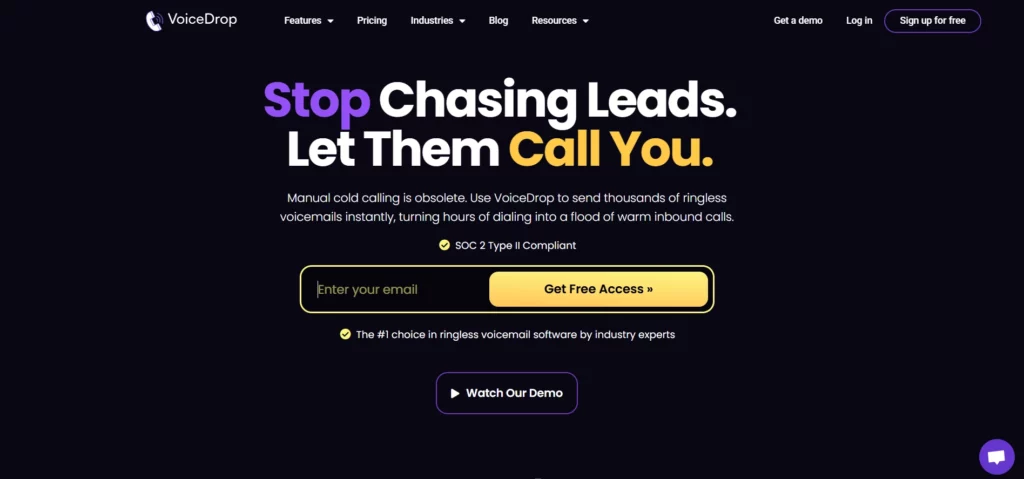
VoiceDrop stands out with a straightforward pay-as-you-go model or scalable packages, making it a perfect fit for teams that want to maximize touchpoints without the overhead of a dedicated parallel dialer seat for every rep.
Features
VoiceDrop picture sending personalized ringless voicemails using a clone of your own voice directly to a prospect’s mobile device, all without their phone ever ringing. It creates a notification that feels urgent yet respectful of their time.
- Meet VoiceDrop: Supercharge your sales funnel with AI-generated audio drops that deliver a human connection at infinite scale.
- Get Started with Your Free Trial: VoiceDrop offers a user-friendly dashboard that is far more intuitive than complex enterprise dialers. It is perfect for voicemail marketing campaigns, where callback rates often exceed cold call connection rates.
- Higher Conversion Rates: Ringless voicemails often drive better engagement than standard cold calls because they allow the prospect to listen and respond on their own terms.
Pricing
VoiceDrop operates on a volume-based pricing model, ensuring your costs are directly tied to the success of your message delivery.
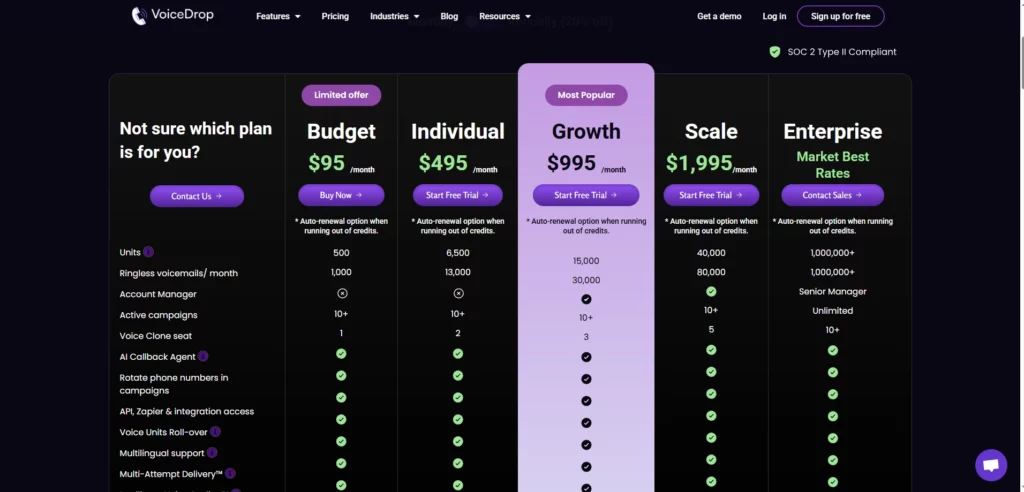
They offer flexible packages for both AI-customized and standard ringless voicemail drops, providing a cost-efficient alternative to expensive user licenses.
Pros
- AI Voice Cloning: Creates natural-sounding messages that increase trust.
- Cost Efficiency: You pay for successful drops, not just idle seat time.
- Zero Hidden Costs: Transparent billing with detailed delivery reporting.
- Non-Intrusive Outreach: Respects the prospect’s time while ensuring the message is delivered.
- Quick Setup: Start campaigns in minutes with a free trial and easy integrations.
Nooks
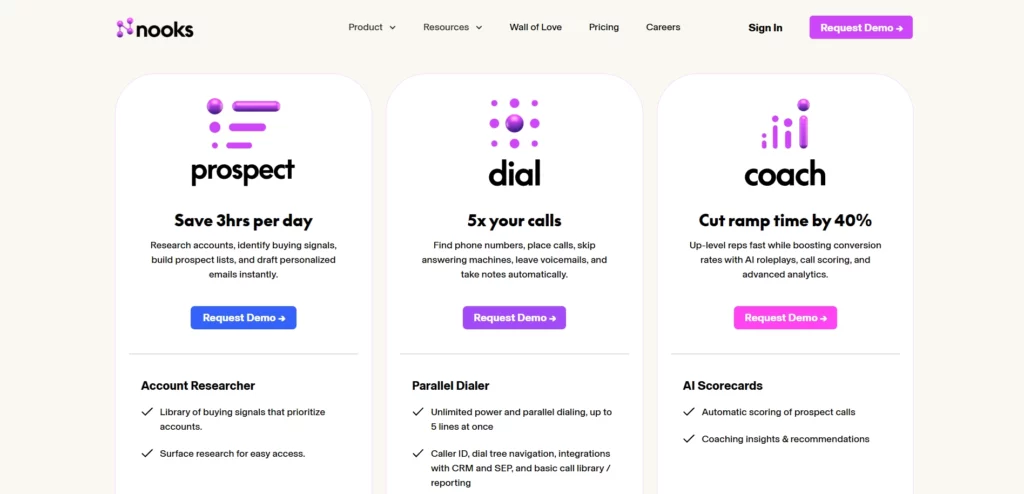
Nooks is a direct competitor to Orum in the parallel dialing space, specifically designed to bring the energy of a “bullpen” to remote sales teams.
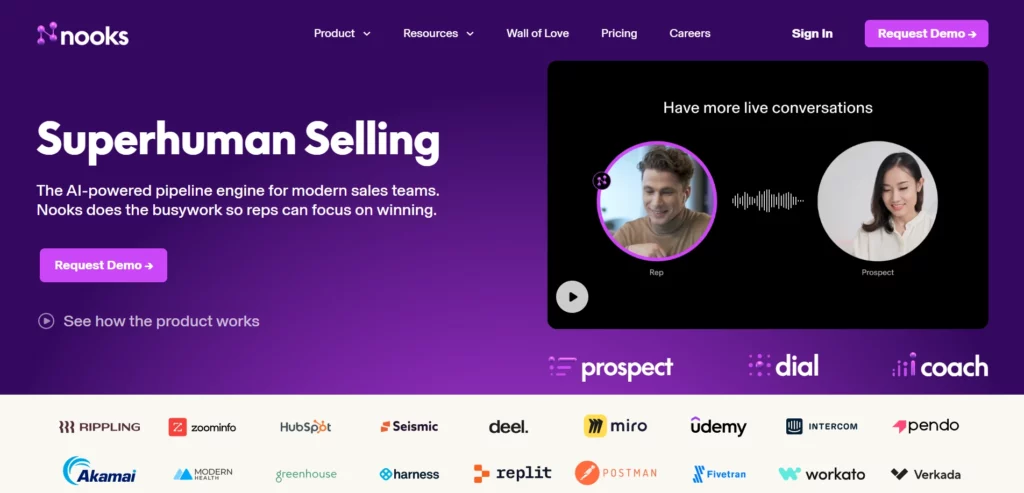
It is famous for its Virtual Salesfloor, which creates a collaborative environment where reps can listen to live calls, co-browse, and motivate each other in real-time.
Features
- AI Parallel Dialer: Dials multiple lines at once to skip bad numbers and voicemails.
- Virtual Salesfloor: A digital workspace that simulates working side-by-side with colleagues.
- Call Coaching: Managers can whisper or barge into calls to assist reps in real time.
- Workflow Automation: Automates post-call tasks to keep reps focused on dialing.
Pricing
Nooks typically offers custom enterprise pricing, often ranging from $100 to $300 per user/month, depending onfeatures and contract length, positioning it as a premium tool similar to Orum.
Pros & Cons
Pros:
- Excellent for remote team culture and collaboration.
- High-speed dialing capabilities comparable to Orum.
- Strong focus on real-time coaching and development.
Cons:
- Expensive for smaller teams or individual SDRs.
- It can feel overwhelming for teams that don’t need a virtual office simulation.
PhoneBurner
PhoneBurner is a power dialer that focuses on “quality over quantity,” claiming virtually zero delay when a prospect answers, unlike some parallel dialers.
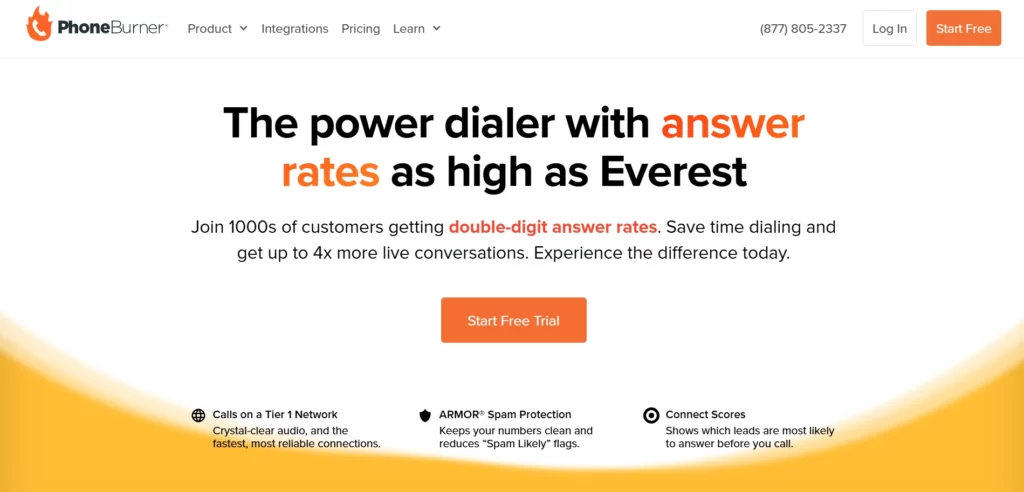
It creates a smoother experience for the prospect by ensuring the rep is on the line the moment the phone is picked up, reducing the “telemarketer pause.”
Features
- Power Dialing: Dials through lists automatically, but one at a time for better connection quality.
- Workflow Automation: Automatically sends emails or moves contacts based on call outcome.
- Local Presence: Displays local area codes to increase pickup rates.
- No Telemarketing Delay: Ensures immediate connection to avoid abandonment.
Pricing
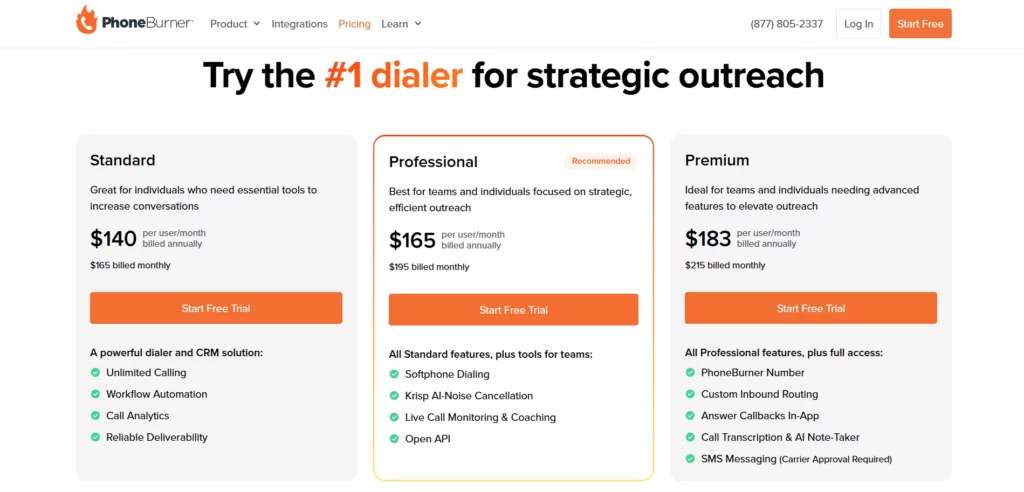
PhoneBurner offers plans starting around $140 per user/month, offering a middle ground between basic VoIP tools and enterprise parallel dialers.
Pros & Cons
Pros:
- No “awkward pause” ensures better first impressions.
- Cloud-based with no software to install.
- Unlimited dialing minutes are included in plans.
Cons:
- Slower than multi-line parallel dialers like Orum.
- CRM integration can be less robust than enterprise competitors.
Kixie
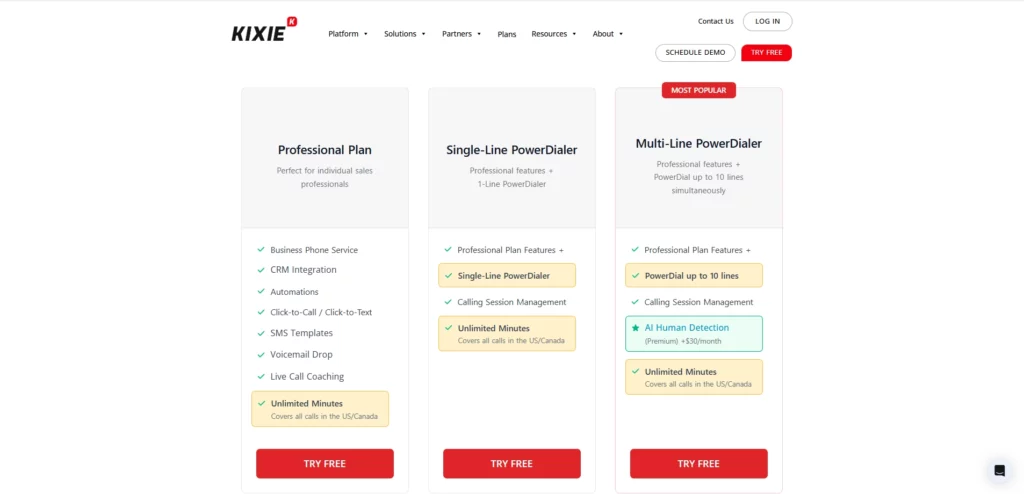
Kixie is a sales engagement platform known for its reliable “PowerCall” dialer and deep integrations with platforms like HubSpot and Pipedrive.
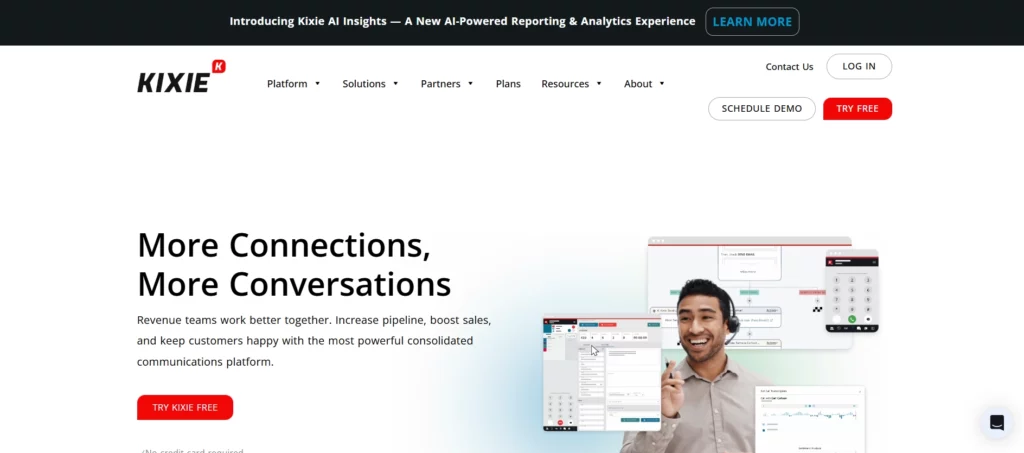
It is designed to turn your CRM into a fully functional sales phone system, complete with automated SMS and local presence dialing.
Features
- ConnectionBoost: Uses local numbers to improve answer rates significantly.
- Click-to-Call: Instantly dial from any webpage or CRM.
- Automated SMS: Trigger text messages based on call dispositions.
- Live Call Board: Real-time visibility into agent activity and performance.
Pricing
Kixie does not publicly list its pricing on its official website. However, based on third-party reviews and industry estimates, plans are reported to start at around $35 per user per month for basic calling features, with advanced plans that include power dialing typically ranging from $65 to $95 per user per month.
Pros & Cons
Pros:
- Seamless integration with major CRMs (HubSpot, Salesforce, etc.).
- Very reliable connection quality and local presence tools.
- Flexible quarterly or annual billing options.
Cons:
- The interface is functional but less modern than Nooks or VoiceDrop.
- Additional costs for minutes and SMS can add up.
Dialpad
Dialpad is an AI-powered cloud communications platform that offers a modern sales center with built-in “Voice Intelligence” (Vi) for live transcription and coaching.
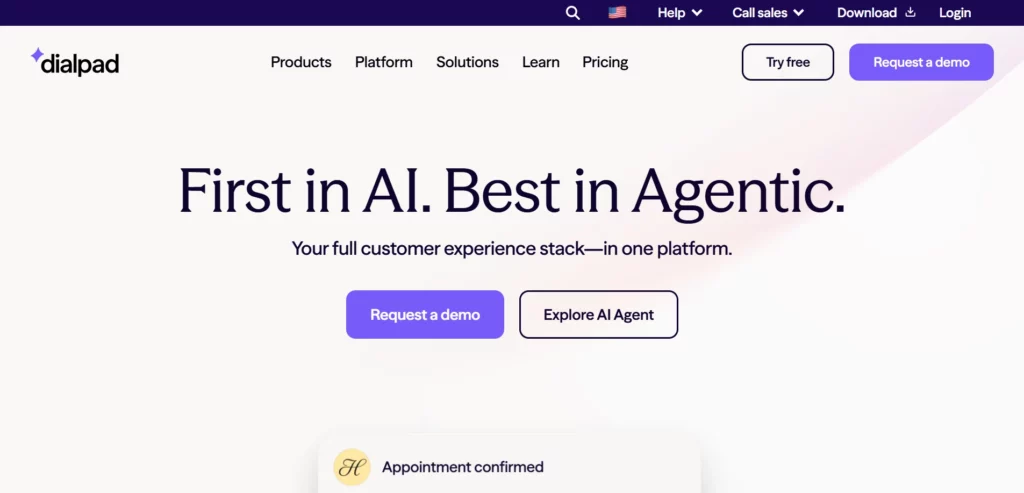
While not a pure parallel dialer, it is a robust alternative for teams that need an all-in-one communication workspace with video, chat, and voice.
Features:
- Real-Time Coaching: AI provides live suggestions to reps during difficult objections.
- Sentiment Analysis: Tracks customer mood throughout the conversation.
- Omnichannel View: Handles calls, messages, and meetings in one app.
- CRM Sync: Auto-logs calls and notes into Salesforce and other tools.
Pricing
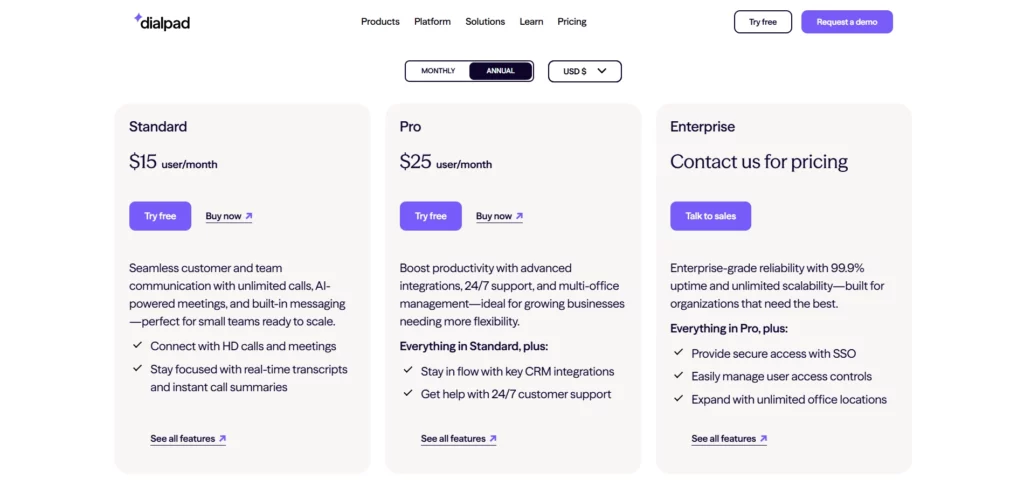
Dialpad’s sales-focused plans generally start at $15 per user/month, with higher tiers for advanced AI features and coaching tools.
Pros & Cons
Pros:
- Advanced AI transcription and sentiment analysis features.
- Unified platform for all business communication.
- Highly affordable entry point for growing teams.
Cons:
- Lacks the multi-line dialing speed of Orum.
- Reporting can be complex to customize for specific sales metrics.
How to Select the Best Alternative for Your Requirements
When choosing an alternative to Orum, evaluate factors such as connection speed, team size, budget, and your overall outreach strategy.
Orum is a beast for volume, but it comes with a high price tag; alternatives may offer smarter, more targeted engagement at a fraction of the cost.
Return on Investment (ROI) is key; ensure the tool you pick actually leads to more booked meetings, not just more dials. Effectiveness means landing your message in front of the right person at the right time.
Finally, align the software with your team’s workflow, whether that requires deep Salesforce integration, AI-driven voicemail drops, or a simple power dialer that just works.
Clarifying Your Needs
Identifying your primary goal is the first step. Are you trying to make 500 dials a day per rep, or to ensure 500 prospects hear your value proposition via voicemail?
Understanding this distinction can help you choose a platform that fits your financial constraints while boosting your sales productivity.
Based on these considerations, VoiceDrop stands out as a top contender for businesses prioritizing high-leverage, non-intrusive outreach.
Its ability to deliver AI-personalized messages at scale makes it a unique asset in a modern sales stack.
Book a demo today to see how VoiceDrop can transform your sales communication.
FAQ’s
What is the main difference between Orum and VoiceDrop?
Orum is a parallel dialer that connects live calls by dialing multiple numbers simultaneously. VoiceDrop is a ringless voicemail platform that delivers pre-recorded, AI-personalized audio messages directly to voicemail inboxes without ringing the phone.
Why might I switch from Orum to an alternative?
You might switch if Orum’s annual contracts and per-seat pricing are too high for your budget, or if you want to diversify your strategy with non-intrusive methods like ringless voicemail and SMS automation provided by tools like VoiceDrop or Kixie.
Can I try out alternatives to Orum before committing to a paid plan?
Yes, many alternatives, such as VoiceDrop and PhoneBurner, offer free trials or flexible monthly pilots, allowing you to validate ROI and ease of use before signing a long-term agreement.
How does the ease of use compare between Orum and its alternatives?
Orum is a sophisticated platform that may require onboarding and training to master its parallel dialing features. Alternatives like VoiceDrop and Kixie often feature simpler “plug-and-play” interfaces, enabling teams to launch campaigns and start reaching prospects in minutes.