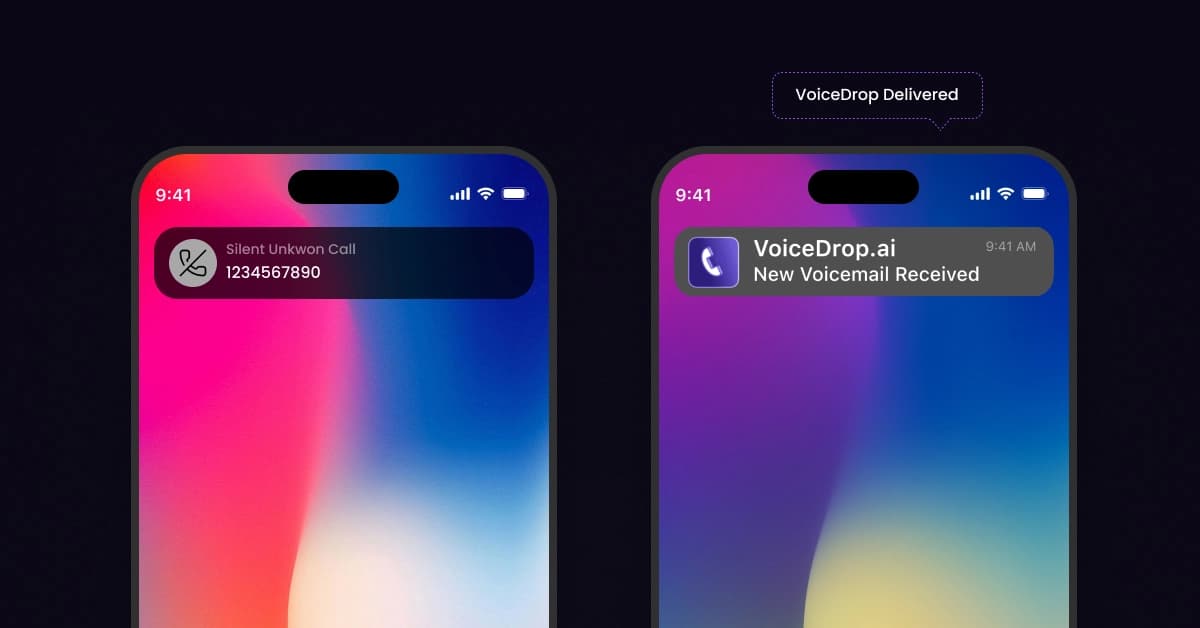
Discover how to bypass iPhone call screening using ringless voicemails and reach your prospects directly, without getting blocked or silenced.
Are you a marketer or telemarketer who is having trouble getting in touch with potential customers? Do iPhones’ advanced call screening mechanisms regularly keep your calls from getting through or answering?
In today’s digital environment, traditional cold calling is becoming less effective, especially as Apple continues to enhance protections against spam and unsolicited calls. With features like the new Call Screening in iOS 26, alongside longstanding options like “Silence Unknown Callers,” it’s harder than ever for legitimate businesses to reach their audiences.
There is a solution, though: ringless voicemails. This new method lets you send your message directly to someone’s voicemail without having to go through call screening, and it works well, doesn’t bother anyone, and follows the rules.
Find out how ringless voicemails function and why they’re essential for modern outreach. You can also leverage them to enhance your communication strategy.
What is iPhone iOS 26 Call Screening feature?
Apple has continually evolved features to help iPhone users manage and reduce unwanted calls. As of iOS 26 (released in September 2025), the Call Screening feature offers advanced options for handling calls from unknown or unsaved numbers. Users can choose from three settings in Settings > Apps > Phone > Screen Unknown Callers:
- Never: The default option, where calls from unknown numbers ring through normally and appear in Recents.
- Ask Reason for Calling: The iPhone automatically answers the call without interrupting the user, prompting the caller to state their name and reason for calling. A real-time transcript is then provided to the user via notification, allowing them to decide whether to answer, send to voicemail, or block.
- Silence: Calls are automatically silenced, sent directly to voicemail, and logged in Recents without ringing or notifying the user immediately. This builds on the older “Silence Unknown Callers” feature introduced in earlier iOS versions.
iPhones also integrate spam and scam detection, often enhanced by third-party call-blocking apps. These systems analyze call patterns, caller ID reputation, and behavior to identify and block unwanted calls.
While designed to protect users from disruptive spam and scams, these enhancements can inadvertently block legitimate business outreach, such as cold calls from sales teams or marketers.
Why Cold Calling Is Getting Harder for Businesses
Traditional cold calling faces escalating challenges due to advanced call screening, stricter regulations, and consumer skepticism. With iOS 26’s Call Screening, unknown calls may not even ring until the caller provides a valid reason, leading to lower answer rates and reduced effectiveness-especially on iPhones, which dominate the smartphone market. Callers who don’t respond to the automated prompt (e.g., robocalls or unprepared telemarketers) are often routed to voicemail or blocked outright.
This makes cold outreach less viable, as consumers grow adept at avoiding interruptions. Businesses report declining connect rates, prompting a shift to alternatives. For more on innovative approaches, explore AI cold calling and its benefits for sales teams.
To learn more about alternative approaches to cold calling, you can read about AI cold calling and its benefits for sales teams.
What Is Ringless Voicemail and How Does It Work?
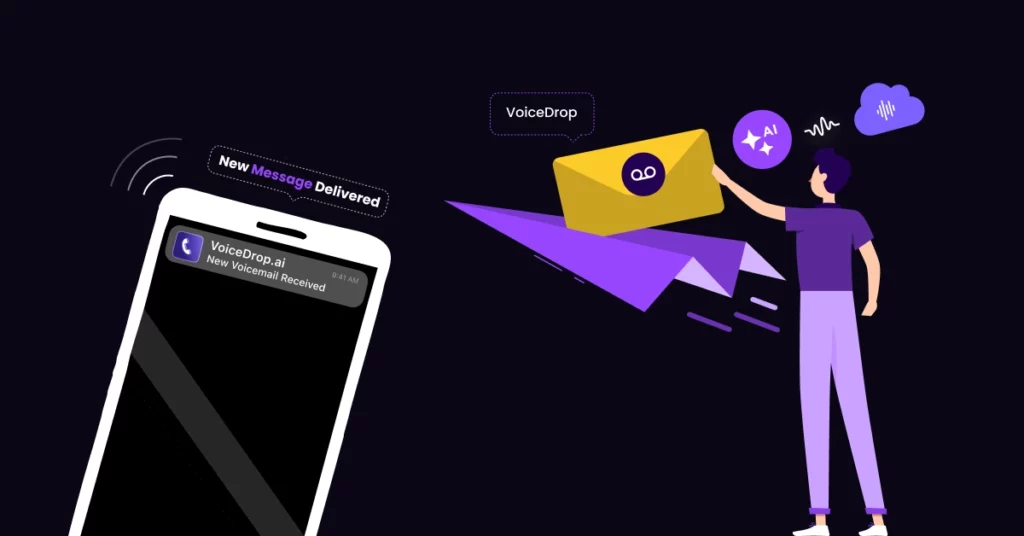
Ringless voicemail technology enables businesses to deliver voice messages directly to a recipient’s voicemail inbox without the phone ringing. This is achieved via server-to-server communication over the Internet Protocol (IP) network, bypassing traditional phone lines for faster, more reliable delivery.
So, how do ringless voicemails work for iPhone call screening? Here’s how the process generally works:
- The sender records or uploads a voice message and chooses the recipients from a list of phone numbers.
- The ringless voicemail provider then sends a request to the recipient’s voicemail server to get permission to access the voicemail box.
- If permission is granted, the voice message is delivered directly to the voicemail box without the recipient’s phone ringing or displaying a missed call notification.
- The recipient can then access and listen to the message at their convenience, just like any other voicemail.
The AI voice technology advancement method is different from robocalls, which typically involve an automated system that places a call and plays a prerecorded message. Ringless voicemails are non-intrusive because they don’t interrupt the recipient with a phone call. They also don’t charge the recipient for minutes or data to receive the message. This non-intrusive nature is key to how they avoid triggering most call screening tools.
How Ringless Voicemail Helps Bypass iPhone Call Screening
Ringless voicemail sidesteps iPhone call screening by not initiating a traditional call. Since no ring occurs, features like iOS 26’s “Ask Reason for Calling” or “Silence” aren’t triggered – the message lands directly in voicemail. This allows businesses to reach iPhone users reliably, even if their number isn’t in the contact list.
No Trigger for Silence Unknown Callers
Ringless voicemail does not activate the iPhone’s “Silence Unknown Callers” feature because it does not require a typical call. For outreach teams and advertisers, this is a huge benefit because it enables them to deliver their messages without interruption or iOS rejection. The recipient can listen to the message whenever they choose; it just shows up in their voicemail mailbox.
Bypassing Spam Detection Algorithms
Spam and robocall detection systems won’t flag ringless voicemail either. These systems frequently look at how people behave on the phone, like whether they keep calling from the same number or if they have strange patterns of calls. They also look at the reputation of the caller ID.
Ringless voicemail is sent from one server to another, not as a direct voice call. This makes it less likely that iPhones’ security layers will filter or stop it. This means that your message is more likely to go to the right person.
Is Ringless Voicemail Legal?
There are a lot of criteria that make ringless voicemail legal in the U.S., like the type of message, the reason for the communication, the recipient’s consent, and the applicable legal jurisdictions.
The Telephone Consumer Protection Act (TCPA), which was passed in 1991 to protect customers from unwanted calls, messages, and faxes, is the main regulation in the U.S. that governs automated communications. The TCPA doesn’t expressly mention ringless voicemail because it didn’t exist when the law was written.
However, it does say that automated dialing systems and pre-recorded messages can’t be used without permission first. This has caused judges and authorities to have different ideas about what it means.
In 2018, a federal court in Michigan determined that ringless voicemail constituted a “call” under the TCPA and needed prior affirmative consent. On the other hand, a federal court in Florida said in 2019 that it is not a “call” and does not require TCPA consent. Businesses also need to think about state-specific legislation.
For example, some jurisdictions have their do-not-call lists or don’t allow ringless voicemail for debt collection without permission. To stay out of trouble with the law, it’s important to get clear consent first, keep a do-not-call list, restrict the number and length of messages, and provide them the chance to opt out.
Key Benefits of Ringless Voicemail for Outreach
Ringless voicemail is becoming more popular with businesses. It is a wiser way to reach people than cold calling, especially since iOS devices often include call screening. This strategy has several important benefits that can make outreach much more effective.
High Delivery and Open Rates
One of the great things about ringless voicemails is how high their delivery rate is. Messages go straight to the voicemail inbox, which means they skip the whole unanswered call and call screening process. This results in more messages getting heard.
Did you know that ringless voicemails have an amazing average open rate of 96%? That’s way higher than email, which sits at 22%, and direct mail, which is only at 9%. Having a lot of listeners means your message is much more likely to reach and be understood by the right people, which boosts the chances of them engaging and responding.
Non-Intrusive Communication
A ringless message is a way to communicate that doesn’t bother other people. It doesn’t get in the way of the recipient’s day because their phone doesn’t ring. As the receiver can listen to the message whenever it’s convenient for them, the communication feels less pushy and more polite. Giving people a choice over when and how they interact with your message can make your outreach seem more thoughtful, which can lead to a better response.
Cost-Effective Compared to Cold Calling
Using ringless voicemail can help cut down on outreach costs. It makes it possible to send out bulk deliveries automatically, which can cut down or even remove the need for live agents in a lot of situations. Providers usually have a set fee for each message or campaign, and this can be a lot more affordable than regular phone calls.
For instance, VoiceDrop has a fee of $0.06 for each message, or you can go for a monthly plan at $412 if you want to message 6,500 contacts. You know, when you think about it, being cost-effective and having great delivery rates really can give you a much better return on investment (ROI) than sticking with traditional call centers or cold calling, right?
Who Can Benefit from Ringless Voicemails?
Ringless voicemail may help a lot of organizations and industries get great results, especially when they want to reach a lot of people in a way that is legal and scalable. Real estate, insurance, and political campaigns are just a few of the fields that find it quite useful for reaching a large number of people.
Also, recruiters and B2B sales teams can use this technology to find leads and follow up with them. In today’s world of communication, where traditional means are becoming less effective, ringless voicemails offer a distinct benefit.
How to Launch a Ringless Voicemail Campaign
Setting up a successful ringless voicemail campaign involves several key steps to achieve your outreach goals. By following best practices, you can maximize your chances of connecting with your target audience and achieving desired outcomes.
Choose a Trusted Provider
Selecting a reputable platform is crucial for a successful ringless voicemail campaign. Look for top ringless voicemail providers that offer TCPA-compliant delivery, robust analytics, and reliable customer support. Well-known providers like VoiceDrop offer them.
Key features to consider include:
- Targeting capabilities
- Integration options with your existing systems
- Reporting to track your campaign’s performance
When choosing a provider, evaluate factors like delivery rates, ease of use, and integration capabilities to ensure it meets your specific needs.
Record a Professional Script
A clear, simple, and tailored message is critical to a successful campaign. Take the time to craft a script that speaks directly to your target audience and shows your value proposition. Tone and pace should be carefully considered because they can have a substantial impact on response rates. A well-crafted message can leave a lasting impact and motivate recipients to act.
Upload Your Contact List
To avoid delivery troubles and ensure compliance, keep your contact list clean and separated. Keep your contact list accurate. Only opted-in or properly procured leads should be used, and DNC numbers should be carefully excluded. Compliance safeguards your firm from legal concerns.
Schedule and Send
Strategically arranging voicemail drops can increase engagement. Consider which days and times your target audience is most likely to listen to voicemail. It’s typically a good idea to test small quantities first to determine effectiveness, and then monitor analytics to optimize your campaign. This iterative method helps you to enhance your strategy and results over time.
Choosing the Right Ringless Voicemail Provider
When you’re picking a ringless voicemail provider, there are a few things you should think about to make sure it’s reliable and follows the rules. Check out things like good delivery rates, an easy-to-use platform, solid TCPA compliance, and helpful customer support. Integrating with your current CRM or other business tools can help make your workflow smoother.
VoiceDrop stands out for its easy-to-use platform, impressive deliverability, and its commitment to helping businesses navigate iPhone call screening smartly and legally. Take some time to check out different providers so you can find the one that suits you best.
Mistakes to Avoid When Using Ringless Voicemails
When launching ringless voicemail campaigns, businesses can make common errors that reduce effectiveness or lead to compliance issues. To ensure your campaign remains legal, professional, and high-performing, especially when targeting iPhone users with advanced call screening, it’s important to avoid these pitfalls.
These mistakes can range from not properly segmenting your audience to overlooking critical legal requirements, all of which can hinder your outreach efforts and potentially result in penalties.
Final Thoughts: Ringless Voicemail Is the Future of Cold Outreach
For businesses that need to connect with leads after the call has been screened, ringless voicemail is a smart, legal, and scalable option, especially for iPhones. Communication barriers are always changing. But systems like VoiceDrop give you the tools you need to keep reaching out without being annoying.
Explore how ringless voicemail can transform your communication strategy and keep you ahead in the competitive landscape. Discover more and schedule a demo today!