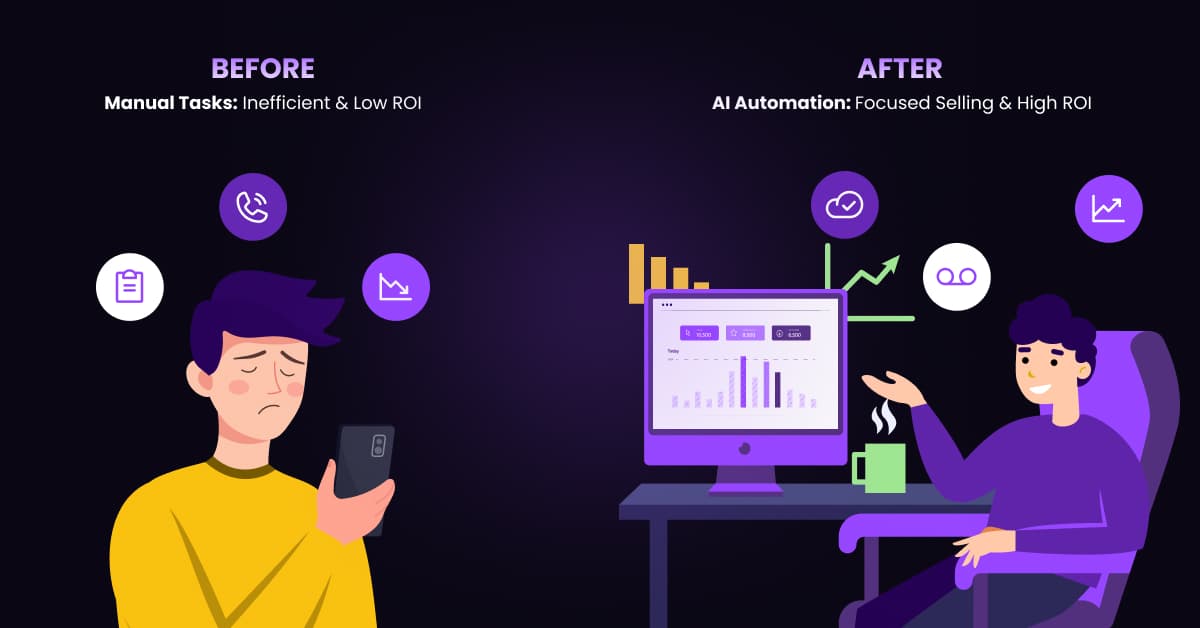
Is your sales team overwhelmed by repetitive tasks like dialing and logging data? Are you looking for a way to streamline workflows, increase engagement, and boost your Lead conversion rate? The answer lies in AI Sales Automation. This powerful technology is transforming sales by automating mundane tasks and allowing human teams to focus on relationship-building and closing.
This expert guide will provide the ultimate roadmap. We will clearly explain how AI Sales Automation works, cover the top automated sales tools on the market, and, most critically, show you how Voicemail marketing and Voicemail integration with platforms like VoiceDrop.ai streamline workflows for higher efficiency and conversions. You will learn the best practices, workflow strategies, and key performance indicators (KPI) to ensure your team is set up for success in 2025. VoiceDrop’s mission is to help businesses achieve 10X their leads, meetings, and deals with ringless voicemails.
What Is AI Sales Automation?
AI Sales Automation is the use of artificial intelligence to streamline sales workflows. It automates repetitive, time-consuming tasks across the sales cycle, enabling teams to prioritize and close leads more efficiently. The goal is to maximize the time human agents spend on high-value activities like complex negotiations and customer consultation. This is crucial for AI Sales.
Key functions of AI Sales Automation include lead scoring, which uses data to predict which prospects are most likely to convert, automated follow-ups, and pipeline management. AI Sales tools leverage Predictive analytics to provide agents with timely insights, improving decision-making and overall productivity. This technology is essential for any modern sales organization looking to escape the limitations of manual effort. It transforms outreach from a time sink into a reliable Follow-up system that never misses an opportunity. Implementing effective sales outreach starts with understanding the power of Effective Sales Voicemails.
Top AI Sales Automation Tools in 2025
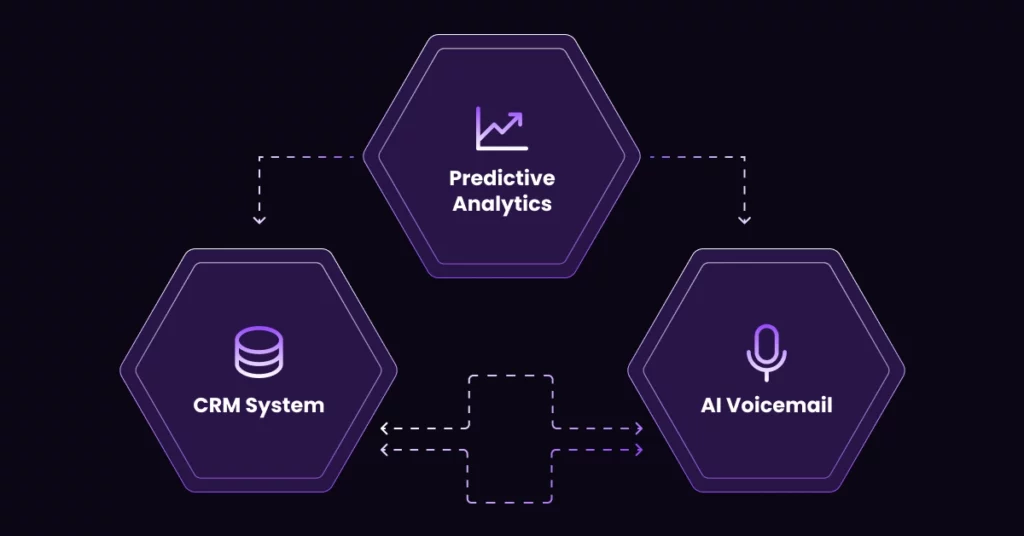
The modern sales stack relies on a variety of specialized tools that work together to create a seamless Workflow automation process. Choosing the right automated sales tools is critical. You must emphasize features that save time, increase AI lead engagement, and drive higher conversions. Successful platforms combine Voicemail integration, CRM tools automation, Predictive analytics, and multichannel outreach capabilities.
Features to Look For
Essential features in any modern AI Sales Automation platform include sophisticated lead scoring to prioritize the hottest leads instantly, robust Workflow automation to handle step-by-step actions automatically, and AI personalization capabilities. Look for detailed Analytic reporting dashboards and, most importantly, seamless CRM integration. These tools must work together without friction.
AI-Powered Voicemail Platforms
Platforms like VoiceDrop.ai offer a dedicated solution for Voicemail marketing and automation. These tools, featuring AI voice cloning technology, deliver personalized messages directly to voicemail inboxes without the phone ringing (ringless voicemail automation). VoiceDrop’s core technology can clone any voice with just a 30-60 second recording, creating a digital replica that sounds ~90% like the original voice. They provide deep analytics and automated responses for callbacks via the AI Inbound Agent, transforming cold outreach into warm, data-driven interactions.
CRM and Workflow Automation Tools
Core to all AI Sales Automation is the CRM system. Tools like HubSpot, Salesforce, and Pipeliner CRM manage the pipeline, store all customer data, and trigger follow-up sequences automatically. Integrating these tools with voice messaging platforms ensures that every lead interaction is logged and every follow-up is executed reliably. This provides a single source of truth for the entire team. Learn more about Pipeliner CRM integration and how it streamlines your Workflow automation.
Predictive Analytics Tools
Predictive analytics tools use machine learning to forecast lead quality, identify the Optimal Timing for outreach, and determine the most effective communication channel for each prospect. These AI Sales tools move beyond simple reporting by providing actionable foresight, often based on historical data and real-time engagement signals. They ensure agents spend time on activities that actually lead to sales.
Benefits of Combining AI Sales Automation with Voicemail
The true power of AI Sales Automation is unlocked when it is combined with personalized voice messaging. This Voicemail integration enhances efficiency, boosts AI lead engagement, and drastically improves Conversion Rates. By pairing the scalability of AI with the intimacy of a Natural Voice, businesses can run large campaigns without sacrificing the personalization that drives revenue.
Increased Lead Engagement
Personalized AI voicemails capture attention in a way that generic emails or interrupted live calls cannot. The sound of a human voice, even cloned, conveys tone and authenticity, encouraging leads to respond faster. Voicemail marketing ensures the message is received non-intrusively, leading to higher quality callbacks and better engagement. Because the message lands in a voicemail box rather than interrupting a call, VoiceDrop drops get listened to on the prospect's own schedule, and replies come back as inbound callbacks.
Better Follow-Up Consistency
Workflow automation ensures no leads are ever dropped. An Automated sales Follow-up system incorporating Voicemail integration executes every step reliably, exactly when scheduled. This consistent, multi-touch outreach strengthens relationships, builds trust, and keeps your brand top-of-mind. This consistency is key because leads often require multiple non-intrusive touchpoints before converting.
Data-Driven Insights for Optimization
Analytics from AI Sales Automation and Voicemail marketing tools track listener behavior, callback rates, and Conversion Rates. This robust data allows teams to perform precise ROI measurement. For example, the system tracks the Delivery rate (60-80% industry standard) and automatically provides Undeliverable reason codes. These insights help refine messaging and adjust the Optimal Timing of campaigns, leading to continuous improvement and higher ROI.
Integrating Voicemail Marketing
Voicemail marketing must be seamlessly integrated into the broader AI Sales Automation workflows, alongside email, SMS, and CRM system operations. This Voicemail integration creates a cohesive, multi-touch sales strategy that automatically triggers voice messages based on specific actions (e.g., a form submission or a lack of email response).
Platforms like VoiceDrop.ai are designed to automate, personalize, and track voicemail campaigns within existing sales processes. Ringless voicemail marketing provides a powerful channel for automated, non-intrusive outreach, filling the gap left by low email open rates and frustrating cold calls. Two-way sync capabilities with your CRM ensure all customer data is current.
Workflows & Playbooks
Designing effective AI Sales Automation workflows involves creating sales playbooks that outline step-by-step sequences of automated actions, including emails, SMS, and AI voicemail drops. These structured workflows ensure consistency, efficiency, and superior AI lead engagement.
For example, a Workflow automation playbook for a cold lead might involve:
- Day 1 (Morning): Personalized cold email sent from the CRM system.
- Day 2 (Afternoon): AI voicemail drop featuring a Natural Voice and a brief, personalized value proposition. This is triggered only if the email was not opened.
- Day 3 (Evening): A low-pressure SMS text message follow-up, triggered if the voicemail was successfully delivered but no callback was received.
- Day 5 (Morning): AI Inbound Agent is enabled for 24/7 coverage to qualify the resulting callbacks.
- Day 7: Human Voice agent attempts a live call, prioritized based on engagement scores.
This structured Follow-up system improves consistency and ensures personalization at scale, moving leads through the pipeline efficiently.
Implementation Tips
Successfully integrating AI Sales Automation and Voicemail integration requires thoughtful execution and attention to detail. These Implementation tips ensure smooth adoption, Compliance, and effective use of AI-powered tools.
Start Small and Test
We recommend piloting AI voicemail campaigns with a small, high-quality segment of leads to measure effectiveness. This allows you to test scripts, the Optimal Timing (e.g., testing messages 15% faster for better retention), and personalization strategies before scaling up. Emphasize continuous A/B testing of message variants based on callback rates.
Align with Sales Processes
You must meticulously map AI automation and Voicemail integration into existing sales workflows. Ensure the human sales team knows exactly when the automated outreach occurs, what message was sent, and when they are expected to step in. VoiceDrop’s real-time analytics can be integrated with your CRM system to log all activity immediately, preventing redundant human calls and freeing up time.
Monitor and Optimize
Continuously track KPI such as callback rate, engagement, and conversion. Use the robust Analytic reporting provided by the tools to continuously refine messaging, timing, and targeting. This data-driven approach is key to achieving consistent success and maximizing ROI.
Ensure Compliance
Legal and ethical considerations, including TCPA and opt-in requirements, must be paramount. Utilize compliance features like built-in DNC checking and time restrictions offered by platforms like VoiceDrop. The platform handles state-specific compliance for places like Florida and California. This focus on Compliance helps maintain Privacy consent and protects your business from unnecessary Legal considerations.
ROI Measurement
Measuring the Return on Investment (ROI measurement) for AI Sales Automation requires tracking tangible results beyond simple vanity metrics. You must compare the campaign costs (platform fees, unit usage) versus the tangible sales results.
Key metrics for ROI measurement include:
- Callback Rate: Top VoiceDrop accounts hold 6% to 7%, and the best campaigns reach 8% to 10%.
- Lead Conversion: The percentage of callbacks that convert to booked meetings or closed deals.
- Time Savings & Cost: Automated campaigns offer an estimated 80-90% reduction in outreach costs and convert what takes 10 hours of calling into 30 minutes of automation. The average Cost per Callback is typically under $3.00.
VoiceDrop clients consistently report achieving ROI-positive status within 3-5 days of launching a campaign.
Closing Thoughts
AI Sales Automation, especially when paired with personalized Voicemail marketing, is essential for any business aiming to scale its sales operation. This integration drastically improves efficiency, ensures a consistent Follow-up system, and boosts conversions by leveraging the human touch of voice at a massive scale. By carefully selecting AI-powered tools and implementing clear, data-driven workflows, your team can transform cold outreach into warm, high-converting engagement. The future of AI Sales relies on this powerful partnership between intelligent automation and personalized communication.
Ready to maximize your sales potential? Stop wasting human agent time on repetitive tasks. Integrate AI Sales Automation with Voicemail integration and start getting warm callbacks instantly.
Click here to schedule a demo and see the AI-powered difference.
FAQ’s
1. How does voicemail fit into AI sales automation?
Voicemail, especially AI-powered or ringless voicemail automation, complements automated workflows by delivering personalized messages directly to leads, increasing AI lead engagement and callbacks.
2. What are the benefits of combining AI sales automation with voicemail?
Combining these tools improves efficiency, ensures consistent follow-ups, enhances personalization at scale, and provides actionable data for optimization.
3. Which tools are best for AI sales automation?
Top automated sales tools include CRM system platforms, Predictive analytics software, and AI Voicemail marketing platforms like VoiceDrop.ai.
4. How do I measure the ROI of AI voicemail campaigns?
Track metrics such as callback rates, listen-through rates, engagement, Lead Conversion, pipeline velocity, and overall revenue impact (ROI measurement).
5. What are common mistakes to avoid with AI sales automation?
Over-automation, ignoring personalization, failing to track performance, and non-compliance with Legal considerations are common pitfalls.