It is every sales representative’s recurring nightmare. You receive a notification about a “hot lead,” drop everything to make the call, and are met with a disconnected line. Momentum is killed. Time is wasted. Revenue is lost.
In the world of high-velocity sales, speed-to-lead is useless if the lead itself is fake. In today’s data-driven economy, the “Submit” button on your website is your first line of defense.
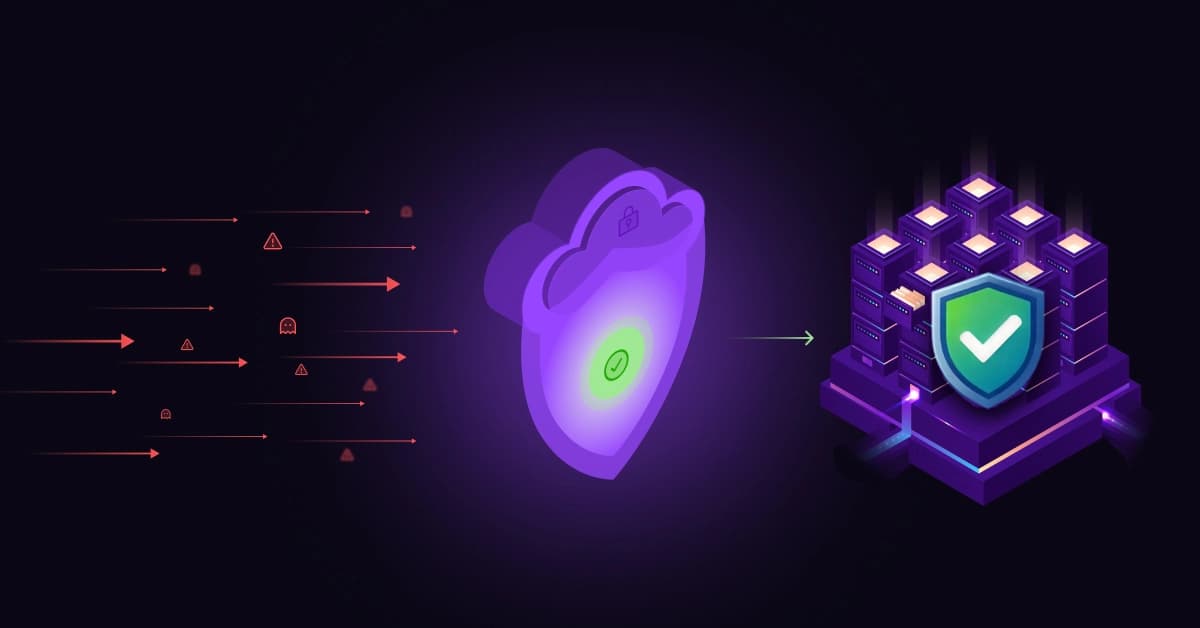
A Real-Time Verification API is not just an IT tool; it is a revenue protector that filters out bots, typos, and fraud in real time.
The Hidden Cost of “Dirty Data” on Your ROI
Many businesses think a big database means big revenue. But if that data is “dirty,” it is actually a risk.
The 1-10-100 Rule of Data Quality
The financial impact of inaction is exponential. The “1-10-100 Rule” breaks it down simply:
- $1: The cost to verify a record at the point of entry.
- $10: The cost to clean or correct it later (deduplication, appended data).
- $100: The cost per record if nothing is done (wasted ad spend, squandered sales hours, and brand damage).
Sender Reputation and Blocklisting
Beyond direct financial loss, bad data damages your infrastructure. If you consistently send mass SMS or emails to invalid addresses, carriers will notice. So, they mark your domain as spam. This hurts your delivery rates for real customers. Your best marketing messages might never reach their inbox.
What is Real-Time Verification? (Beyond Basic Validation)
Real-time verification is often confused with simple format checking, but it is far more sophisticated. It involves a live interrogation of data points to ensure legitimacy.
Synchronous vs. Asynchronous Validation
“Real-Time” means the check is performed in real time while the user is on your form. This takes milliseconds. This is different from “Batch Processing.” That method cleans data days later. By the time you clean a batch list, the prospect has often moved to a competitor.
The API as a “Digital Bouncer”
Think of a Real-Time API as a bouncer at an exclusive club. The bouncer checks IDs at the door to ensure everyone inside is supposed to be there. Similarly, the API checks the validity of an email or phone number at the “gate” of your form. As a result, your CRM party stays exclusive to real humans.
The Three Layers of API Verification
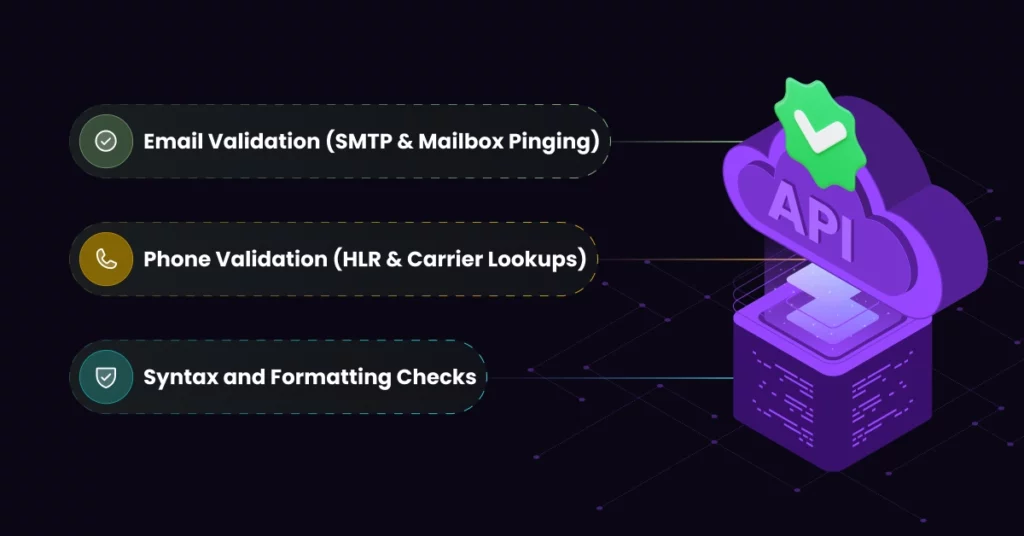
A robust API doesn’t just look at the surface; it digs deep into the data’s infrastructure.
Phone Validation (HLR & Carrier Lookups)
The most accurate way to verify a phone number is to ping the Home Location Register (HLR). The API queries the mobile carrier network directly to ask critical questions:
- Is this number active?
- Does it belong to a mobile device or a landline?
- Is it currently roaming?
🛡️ Instant Verification: Unsure if an IP or phone number is legitimate? Run a free carrier and IP check on 1Lookup to instantly separate real leads from bots.
Email Validation (SMTP & Mailbox Pinging)
For email, the API goes beyond checking for “@gmail.com.” By performing a technical SMTP handshake, the tool ‘knocks’ on the email server’s door. This step confirms the mailbox exists and is valid. Crucially, the verification happens without sending an actual email to the user.
Syntax and Formatting Checks
This is the simplest yet most necessary layer. It acts as a spell-checker, catching user errors like name@gmil.com or identifying missing digits in a phone number before they hit the database.
Cybersecurity: Blocking Bots and Fraudsters
For tech-savvy teams, the value of an API extends into security. Modern web forms are constant targets for malicious actors.
Detecting Disposable Emails (Burner Accounts)
Fraudsters use temporary inboxes (like 10MinuteMail) to steal content. They want your whitepapers or trials without giving real info. These “burner” accounts offer no value. They also mess up your analytics.
🚫 Stop Fake Signups: Don’t let burner emails pollute your CRM. Use 1Lookup’s detection tool to block disposable domains and high-risk IPs at the source. 1Lookup is built by the same team as VoiceDrop.
IP Intelligence and Risky Behavior
Furthermore, the API can cross-reference the user’s IP address against global blocklists. If the IP matches a known bot farm, a scraper, or a high-risk VPN, the lead is immediately flagged for manual review.
Improving User Experience (UX) to Boost Conversions
Marketers often fear that verification will slow down the user. But when done right, it actually improves the experience.
Reducing Friction with Autocomplete
Good APIs don’t just block users; they assist them. For example, if a user types “yaho.com,” the API can prompt with a message: “Did you mean yahoo.com?” This feature helps real users fix honest typos, ensuring they receive the information they requested.
Invisible Background Checks
Modern APIs are incredibly fast, typically running in under 500 milliseconds. Because this happens in the background, the user doesn’t even know they are being verified. This ensures the checkout or signup flow remains smooth and uninterrupted.
Enhancing VoiceDrop Campaigns with Clean Data
For businesses utilizing automated outreach, data quality is the fuel for the engine. Integrating verification directly impacts the success of your campaigns.
Maximizing SMS Deliverability
Carriers are strict about spam. They will block your numbers if you have a high “Hard Bounce” rate. This is why real-time verification is vital for mass text messaging automation. It ensures you only text valid mobile numbers. This protects your sender score and saves your budget.
Efficient Ringless Voicemail Drops
Similarly, VoiceDrop technology relies on accurate carrier data. By verifying that a number is a mobile device rather than a landline before you drop your voicemail, you ensure your voicemail drops are successful.
Implementation Guide for Developers & Marketers
Setting up this technology is easier than most teams anticipate. It does not require a complete overhaul of your current systems.
Native Integrations vs. Webhooks
You can often connect the verification API directly to popular form builders like WordPress, HubSpot, or Salesforce. Alternatively, for a no-code solution, you can use tools like Zapier to bridge the gap.
To see how these connections work in practice, you should check out VoiceDrop integrations to streamline your data flows.
Setting Thresholds (Soft vs. Hard Gating)
Implementation allows for flexibility based on your business logic:
- Hard Gating: Block the submission entirely if the data is invalid (Best for high-security forms).
- Soft Gating: Allow the submission through, but flag it as “Low Quality” in the CRM for lower-priority follow-up (Best for maximizing lead flow).
Compliance & Legal Safety
Today, handling data responsibly is required. Verification plays a key role in legal safety.
TCPA and GDPR Compliance
Verifying that a number belongs to the person filling out the form helps establish a trail of “prior express written consent.” This is vital for TCPA compliance regarding text messaging.
Data Retention Policies
Additionally, you must ensure that your API provider respects user privacy. They should not store your customer data indefinitely. Adhering to GDPR compliance standards is crucial for processing data legally and maintaining customer trust.
Conclusion
Ultimately, a database containing 10,000 unverified leads is a liability, whereas a database of 1,000 verified leads is a high-performing asset. The API acts as the bridge between these two realities, filtering out the noise so your team can focus on the signal.
Stop guessing who is on your list. Get a demo of VoiceDrop today to integrate real-time verification and watch your conversion rates soar.
FAQs
Will real-time verification slow down my website?
No, modern APIs respond in milliseconds, often faster than the user can click “Submit.” The process is asynchronous and invisible to the user.
Can I verify international phone numbers?
Yes, robust APIs support global verification. They can validate and format numbers according to local standards (E.164 format) for over 200 countries.
Does this work for B2B and B2C?
Absolutely. It works for corporate emails by checking domain health and for consumer mobiles equally well. This clean data paves the way for effective AI-powered communication and automated follow-ups.