Comprehensive guide to political marketing strategies that help candidates connect with voters and win elections at any level.
Will your political campaign break through the noise in 2025, or will it get lost in the crowd? How can candidates not only capture attention but genuinely connect with voters on a personal level?
And in a rapidly evolving digital age, what strategies will ensure your message reaches the right people at the right time? These are the questions every campaign team must grapple with to stand out.
The election cycle is shaping up to be one of unprecedented change. Social media is more influential than ever, cutting-edge technology like AI is transforming voter outreach, and the rise of personalized, direct communication methods is revolutionizing connections with supporters.
Traditional tactics like rallies and door-to-door canvassing remain important, but their impact is magnified when paired with data-driven strategies such as ringless voicemails, targeted SMS marketing, and AI-enhanced personalization.
If you’re preparing for an election, we, as the best innovative marketing platform, can help you navigate how to run political campaigns. Let’s explore how to future-proof your campaign for success!
What Is Political Marketing?
Political marketing is the strategic application of marketing principles in the political sphere to influence voter behavior, craft a strong candidate image, and effectively communicate policy goals. It combines traditional communication methods with modern techniques, such as social media, email campaigns, and analytics, to identify voter needs and influence decisions.
Over time, political marketing has evolved from simplistic propaganda methods to highly sophisticated strategies.
Today, campaigns use a blend of personalized messaging, emotional storytelling, and expansive voter outreach tools like mass text messaging and voice broadcasts. The human touch offered by mass voice messaging allows campaigns to build personal connections with constituents that text alone may not achieve.
Core Objectives of Political Marketing Strategies
The primary goals of political marketing are:
Voter Database
A strong voter database underpins everything in political marketing. Databases store critical details about voter demographics, behaviors, and engagement history. This information enables campaigns to segment their audience and craft targeted messages. They directly address voters’ concerns, a strategy emphasized in both campaign data management and the insights from using a tool for call tracking and analytics.
For instance, campaigns can use voter data to identify individuals who prefer auditory content and engage them using personalized voice messages.
Strong Campaign Messaging
Campaign messaging forms the backbone of voter engagement. A clear and consistent narrative, aligned with voter priorities, elevates your campaign. Emotional appeal is essential; rather than inundating voters with facts, campaigns use stories to foster connection.
Tools like voice broadcast services allow campaigns to relay these stories directly to voters’ voicemail inboxes. Utilizing tone, pitch, and emotion lets candidates amplify authenticity, a key advantage.
Branding & Candidate Image
Branding is about more than a catchy slogan; it’s about crafting a memorable identity for the candidate. A cohesive visual identity (logos, slogans, colors) coupled with a relatable personal image reinforces voter trust. Beyond appearances, brand-building thrives on emotional connection, which is where voice messaging excels.
Top Political Marketing Strategies That Win Elections
Winning elections requires a multifaceted approach. Here’s a closer look at proven strategies:
Digital & Social Media Campaigning
Social media platforms are vital for modern campaigns. They offer a cost-effective way to distribute tailored content, interact with voters, and collect feedback in real-time. Campaigns can use different content formats-video, infographics, and live streams-to reach diverse demographics.
Complement these social media efforts with mass voice broadcasts, which allow candidates to follow up on discussions sparked online. Combining digital media ads with auditory communication enhances campaign reach and engagement.
Email & SMS Marketing
Direct communication channels like email and SMS have long been campaign staples due to their immediacy and broad reach, and they remain incredibly effective for two-way conversations. Platforms like VoiceDrop enhance these methods with voice broadcast capabilities. Campaigns can send voice messages tailored to recipients, leveraging warmth and empathy to encourage action.
For example, emails deliver detailed policy papers, while SMS reinforces key points with concise communication. So, mass voice messaging rather than text messaging adds depth, as a recipient hears a personalized message in the candidate’s own voice, which builds trust.
Grassroots Organizing & Field Operations
Grassroots efforts like canvassing, community meetups, and phone banking create meaningful voter interactions. While door-to-door meetings remain invaluable, campaigns can make these initiatives more effective by integrating digital tools, including ringless voicemail drops.
For example, following personal interactions, campaigns can send follow-up voicemails thanking voters for their time or inviting them to community events. Combining field operations with digital engagement guarantees wider outreach and stronger voter relationships.
Data-Driven Decision Making
Modern campaigns lean heavily on data analytics. Platforms like VoiceDrop enable campaigns to track engagement, optimize outreach schedules, and measure strategy effectiveness. By analyzing which regions respond best to specific messaging tactics, campaigns can allocate resources effectively and refine future outreach efforts.
Get Out the Vote (GOTV) Campaigns
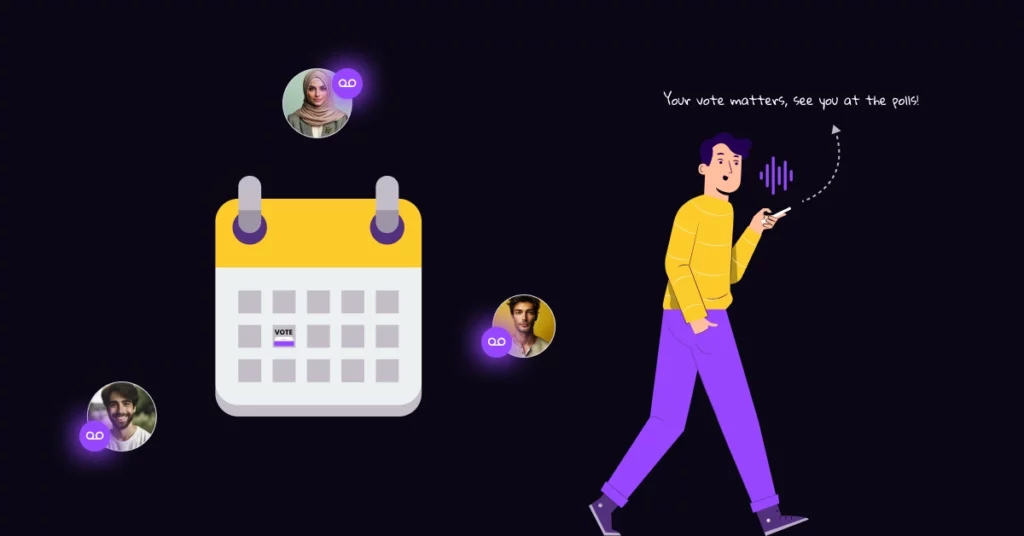
Mobilizing voters on election day is a campaign’s final challenge. GOTV efforts often rely on reminders sent via calls, email, or SMS. However, AI voice technology takes these efforts to the next level by seamlessly dropping motivational messages into voters’ inboxes. This ensures minimal disruption while maximizing accessibility.
Traditional Campaigning Methods That Still Work
Offline tactics remain powerful, especially with older or less tech-savvy audiences. Methods such as mailing flyers, canvassing neighborhoods, and placing yard signs build local visibility and trust. For many, physical campaign materials provide a tangible connection, complementing digital strategies like SMS or voice drops.
Here are some traditional political campaigning methods that are still on the road:
- Door-to-door voter engagement to build trust, answer questions, and foster connections.
- Mailing physical campaign materials like flyers and brochures for tangible voter outreach.
- Hosting local events to connect with voters, hear their concerns, and share policy positions.
- Utilizing yard signs, posters, and banners for visibility and name recognition.
- Personalized phone calls to voters to address concerns, explain policies, and encourage voter turnout.
- In-person gatherings, like dinners or auctions, are used to engage donors and encourage financial support.
Budgeting and Resource Allocation for Political Campaigns
Marketing budgeting and resource allocation for political campaigns are essential processes that determine how effectively a campaign can reach and engage its target audience. A well-structured marketing budget outlines the expected income from various sources, such as:
- Individual contributions
- Political action committees (PACs)
- Fundraising events
It also details the expenses associated with key marketing activities, including advertising, campaign materials, and outreach efforts. By prioritizing high-impact marketing strategies, campaigns can maximize their return on investment and ensure that resources are allocated to initiatives that resonate most with voters.
Compliance, Ethics, and Legal Guidelines
Compliance, ethics, and legal guidelines are essential in political marketing. Campaigns must navigate these areas to ensure effectiveness and legality. Key points include:
- Understand regulations on how funds can be raised and spent, including contribution limits and disclosure requirements.
- Ensure all claims in advertisements are truthful and clearly state who funded the ad to maintain transparency.
- Be aware that violations can lead to legal repercussions, fines, and damage to the campaign’s credibility.
- Focus on promoting candidates and policies rather than engaging in negative campaigning, which can alienate voters.
- Safeguard personal information collected from voters and obtain informed consent for its use.
Emerging Trends in Political Marketing
Emerging trends in political marketing this year are heavily influenced by advancing technology and shifting voter engagement preferences. Look at these innovations to underscore how technology and personalization are reshaping political marketing:
- AI advanced tools analyze voter behavior and preferences to deliver hyper-personalized messages and campaign strategies.
- Social media platforms like Instagram, TikTok, and Twitter enable direct interactions, live updates, and community building with voters.
- Interactive content marketing campaigns utilize quizzes, polls, and interactive infographics to engage voters and create meaningful interactions.
- Using tools like ringless voicemail and SMS for personalized, scalable, and timely outreach that quickly connects with large voter groups. Automating reminders and motivational messages through ringless voicemail to boost voter turnout efficiently.
- Incorporating real-time analytics tools to monitor voter engagement, optimize outreach timing, and refine messaging strategies.
Creating Your Political Marketing Plan
Building a robust marketing plan involves:
- Define clear objectives. For example, success may mean reaching 1,000 new local voters through voice messages, converting 10% into active supporters.
- Outlining phases helps campaigns stay organized:
- Phase 1: Build voter databases and prepare materials.
- Phase 2: Launch with high visibility, combining digital ads, canvassing, and strategic voice drops.
- Phase 3: Sustain audience engagement through frequent follow-up.
- Teams with clear roles-from strategists to field operatives-ensure smooth execution. Voicemail marketing platforms help teams save time and focus on high-priority objectives without spreading resources too thin.
Final Thoughts: Winning Through Strategic Political Marketing
Strategic, data-driven, and innovative political marketing strategies define the path to election wins in 2025. Tools like VoiceDrop allow for automation of outreach, personal connection through voice, and effective GOTV efforts. By combining proven strategies with emerging technologies, campaigns can stay ahead, engage voters meaningfully, and secure victory. Book a demo to get advanced functionality and set up a campaign today.