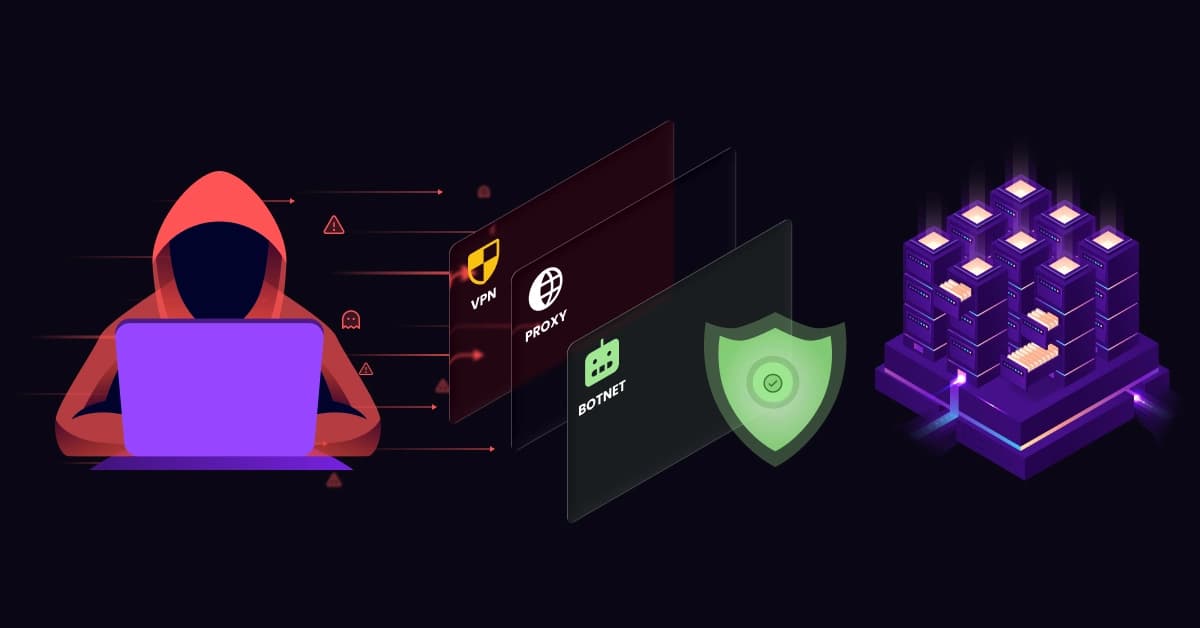
In modern cybersecurity, visibility is survival. Attackers rarely strike directly; they hide behind layers of anonymity tools, masking a request from a Russian botnet to look like a suburban home in Ohio.
If your security stack relies solely on standard analytics logs, you are operating blindly. You see the mask, not the threat behind it.
The urgency for this technology has never been higher. Static blacklists, the old standard of security, are effectively dead.
Bad actors now rotate their IP addresses every few minutes, rendering static lists obsolete the moment they are downloaded. To stay secure, you need real-time, programmatic API lookups.
What is a Proxy/VPN Detection API? (The Technical Definition)
For backend developers and architects, a Proxy/VPN Detection API is a RESTful intelligence layer.
It functions as a real-time risk assessor: your server sends an incoming IP to the endpoint, and within milliseconds, receives a JSON response detailing the connection type, ISP owner, and a calculated fraud score.
This replaces “blind trust” with cryptographic verification of the connection’s integrity.
This solves the problem of “blind trust.” It allows your application to validate the integrity of the connection, ensuring that the user isn’t just where they say they are, but who they say they are.
How the API Distinguishes Real Users from Proxies
The core mechanism involves ASN (Autonomous System Number) Analysis. Every IP address belongs to an Autonomous System, which is categorized by its function.
- Real Users: Typically connect via Residential ISPs (e.g., Comcast, AT&T, Jio, Verizon).
- Proxies/VPNs: Often route traffic through Hosting or Datacenter ASNs (e.g., DigitalOcean, AWS, Linode, Leaseweb).
If the API detects a user claiming to be a “home shopper,” but their traffic originates from a Data Center ASN (like AWS or DigitalOcean), it instantly flags the connection.
This ASN mismatch is the single strongest indicator of non-human traffic. Dev Tip: You can test this logic manually.
Check if your current IP is flagged as a proxy or see your ISP details for free on 1Lookup’s proxy and VPN detection tool to understand how these ASNs appear in raw data. 1Lookup is built by the same team as VoiceDrop.
Beyond the Basics: Deep Packet Inspection & Fingerprinting
Static databases aren’t enough. Sophisticated APIs utilize TCP/IP Stack Fingerprinting to analyze packet characteristics.
They look for anomalies like MTU (Maximum Transmission Unit) mismatches, a common side effect of tunneling traffic through a VPN encryption layer.
This allows the API to detect “clean” IPs that are actually masking a hidden connection.
The 3 Main Categories of Anonymizers (And Why They Matter)
Not all masked traffic carries the same intent. A robust API must differentiate between these three categories to apply the correct security logic.
Datacenter Proxies (The Low-Hanging Fruit)
These are IPs hosted on cloud servers. They are cheap, fast, and readily available in bulk. While they are the easiest to detect, they remain the most common tool for high-volume DDoS attacks and content scraping.
Residential Proxies (The Silent Killer)
These are the hardest threats to detect. Fraudsters route traffic through legitimate home Wi-Fi networks, often via devices hijacked by malware. Because these requests carry valid residential ISP tags (e.g., Comcast), they bypass standard firewalls. Only behavioral analysis and historical peer groups provided by a dedicated API can distinguish these from genuine users.
Tor Exit Nodes & Onion Routing
The Tor network routes traffic through multiple encrypted layers to ensure total anonymity. While this is valuable for privacy activists, for e-commerce or SaaS platforms, the anonymity often correlates with malicious intent and the inherent risks of Tor traffic.
Tor nodes are frequently used for carding, hacking, and illegal transactions. The API should instantly tag these IPs, allowing you to implement immediate blocking rules.
Critical Use Cases: Where to Implement the API?
Preventing Geo-Location Spoofing (Streaming & Gaming)
In industries bound by regional licensing, such as video streaming or iGaming, users often use VPNs to bypass geo-restrictions. A user might appear to be in the UK to access betting sites, while physically residing in a restricted region.
The API detects the “True IP” behind the mask. This allows the platform to enforce regional laws strictly, ensuring compliance and preventing fines.
Stopping Credential Stuffing & Account Takeovers
Automated scripts test thousands of stolen credentials against your login endpoints. To evade rate limiting, attackers rotate their IP addresses after every few attempts.
This credential stuffing relies on the server’s inability to track the source of the traffic. An API looks beyond the IP, identifying the proxy infrastructure enabling the attack and blocking it at the root.
Reducing Chargebacks in E-Commerce
One of the biggest red flags in fraud prevention is a location mismatch. If a high-value order is placed using a credit card with a billing address in New York, but the traffic is coming via a VPN from a different continent, the risk is critical.
Ignoring these signals contributes significantly to the rising impact of e-commerce fraud. Using an API to catch these anomalies prevents the sale from processing, saving the merchant from chargeback fees and lost inventory.
Managing False Positives: The “Smart Blocking” Strategy
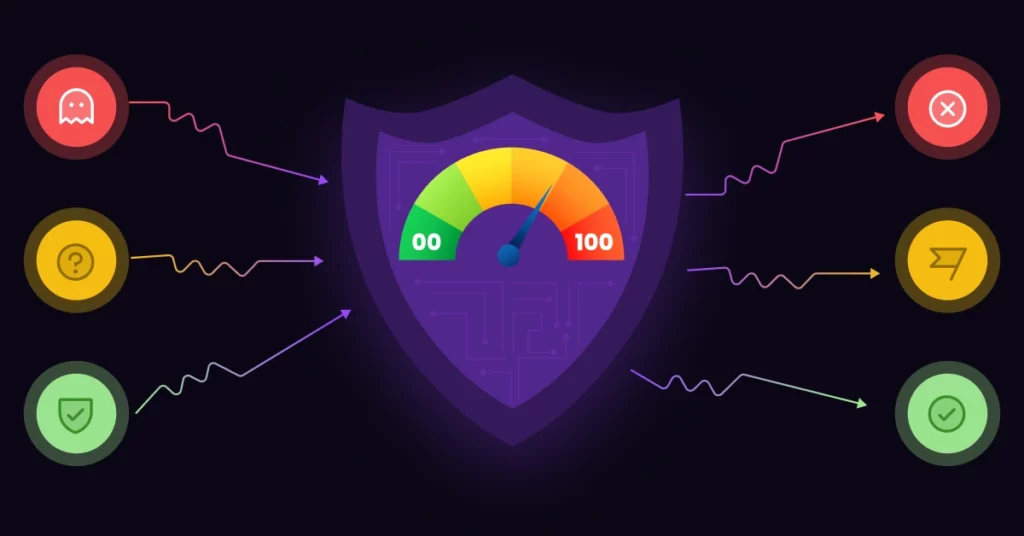
A common fear among businesses is blocking legitimate users, such as privacy-conscious customers using corporate VPNs. The solution is not to “Block All,” but to use Context-Aware Security Logic.
Context-Aware Security Logic. Instead of a binary “Block All” approach, use the API score to determine the path:
- High Risk (Tor/Botnet): Hard Block (403 Forbidden).
- Low Risk (Corporate VPN): Allow (200 OK).
- Medium Risk (Grey Area): Trigger a challenge.
Pro Tip: If you are unsure about a specific user during a manual review, you can cross-reference their IP and view its fraud score instantly using the free tool at 1Lookup.
Verifying Suspicious Traffic via VoiceDrop
When the API returns an inconclusive result (e.g., a Residential Proxy that might be a real user), do not block them. Instead, verify them.
For those “Medium Risk” users, static CAPTCHAs are often solved by advanced bots. A better approach is to verify users with Ringless Voicemail.
By sending a One-Time Password (OTP) directly to their phone, you confirm possession of a physical device, something a bot cannot simulate, without adding unnecessary friction for real humans.
Developer’s Guide: Integrating the API
JSON Response & Error Handling
A professional API provides granular data, not just a binary result. Look for a JSON response that includes fields such as is_proxy, proxy_type, isp, and risk_score.
Developers should also implement “Fallback Logic.” Decide whether your system should “Fail Open” (allow traffic) or “Fail Closed” (block traffic) in the rare event the API call times out.
Seamless Integration with Existing Stacks
This API technology is platform-agnostic. It can be integrated into Python, Node.js, or PHP backends or deployed directly at the edge using Cloudflare Workers.
Security data shouldn’t live in a silo. You can explore VoiceDrop Integrations to see how this risk data can flow downstream into your CRM.
This ensures your sales team isn’t wasting time calling leads generated by bots, keeping your pipeline clean and efficient.
Performance Matters: Latency and Uptime
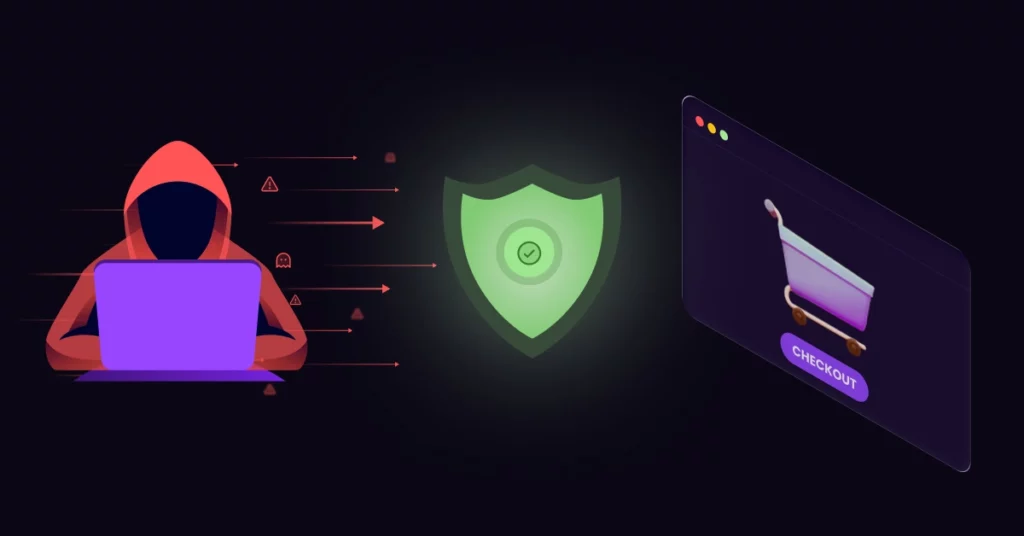
In the checkout flow, speed is security. The API check must happen in under 100ms. If the latency is too high, legitimate users will experience lag and abandon their cart.
Ensure your provider guarantees high uptime. If the detection API goes down, your digital gate is left wide open to attacks.
Conclusion
Privacy is a digital right, but anonymity is a business risk. Businesses must draw a clear line between a private user protecting their data and a masked attacker hiding their intent.
You cannot afford to operate based on guesswork. Proxy/VPN Detection APIs provide the visibility required to secure your digital perimeter against sophisticated, anonymized threats.
Ready to secure your perimeter? Master the fundamentals first in our Ultimate Guide to IP Lookup Tools & APIs.
Stop the invisible attacks. Get your free API Demo today and start seeing the true nature of the traffic on your network.
FAQ’s
Can this API detect VPNs on mobile devices?
Yes, the API analyzes connection characteristics regardless of the device. It can distinguish between legitimate mobile carrier data (4G/5G) and traffic that is being routed through a mobile VPN app.
Is it legal to block VPN traffic?
Yes. While users have a right to use VPNs, private businesses have a right to deny entry to anonymous connections to prevent fraud, protect intellectual property, or enforce licensing agreements, provided this is stated in the Terms of Service.
What is the difference between an IP blacklist and an API?
A blacklist is a static file that becomes outdated within hours as hackers discard used IPs. An API queries a live threat intelligence database that tracks IP changes in real-time, offering much higher accuracy and protection.