Win back lapsed donors with proven nonprofit donor reactivation strategies that reconnect and reengage past supporters.
If someone used to give to your charity but stopped, have you ever thought about what happened to them? These “lapsed donors” are more than just names on a list; they hold an important chance. Most of the time, it’s cheaper to get old fans to give again than to find new ones.
Think about it: they have already shown they believe in your work and know what your goal is.
Go through actionable donor reactivation campaign strategies to successfully reconnect with supporters. With these actions, you can retain these valuable past supporters, turning them back into active champions for your cause.
What Is Nonprofit Donor Reactivation?
Reactivating nonprofit donors is the practice of reaching out to people who have donated to your organization in the past but have ceased giving for a while. Restoring former donors to your active donor base is the goal. This procedure is part of the larger donor lifecycle, which also consists of donor acquisition, nurturing, retention, and, in the event of a donor’s lapse, reactivation.
Retention aims to keep current contributors involved and making regular contributions, whereas reactivation concentrates on attracting back previous donors. Both are important, but it’s particularly important to concentrate on lapsed donors.
Reactivating lapsed donors are frequently less expensive and more effective than finding a new one from the beginning. These people are a more sympathetic audience than entirely fresh prospects since they already have a connection to your cause.
Best Ways to Reconnect with Past Donors
Successfully reconnecting with past donors requires a thoughtful, multi-faceted approach. It’s not just about sending another appeal; it’s about understanding why they left and showing them why they should come back.
Identify and Segment Your Lapsed Donor List
To reactivate lapsed donors, the initial step is to verify their identity. Define the term “lapsed” in the context of your organization. Donors who have not made a gift in the past 12, 18, or 24 months are frequently included in common definitions. Upon identification, compile this list from your donor management system.
Next, segment these donors. Not all lapsed donors are the same, and a one-size-fits-all approach won’t work. Segment them by:
- Gift amount: Were they major donors, mid-level, or small givers?
- Recency: How long has it been since their last gift? (e.g., 12-24 months vs. 3-5 years)
- Giving history: How many gifts did they make? Were they recurring donors?
- Engagement type: Did they attend events, volunteer, or only donate?
Segmenting helps you tailor your reactivation efforts. A former monthly donor who stopped last year needs a different message than someone who gave a small, one-time gift five years ago. This targeted approach makes your efforts more effective.
Understand the Reasons Behind Donor Attrition
Donors stop giving for various reasons. Understanding these common factors is crucial for crafting messages that resonate and address potential concerns.
- Lack of engagement: They might feel disconnected from your mission or unsure how their previous donation made a difference.
- Poor communication: Too many asks, too few updates, or irrelevant messages can lead to disinterest.
- Financial changes: Personal financial hardship is a common reason for donors to stop giving.
- Life events: Major life changes (moving, new job, family changes) can shift priorities.
- Org issues: Perceived mismanagement, negative news, or a change in leadership can deter donors.
- Lost in the shuffle: They might simply have forgotten about your organization amidst other commitments.
By understanding these reasons, you can craft more personalized and effective reactivation strategies. For example, if you suspect lack of engagement, your message can focus on impact stories. If it’s financial, a softer “we miss you” approach with a small ask might be better.
Craft Compelling Reactivation Campaign Messages
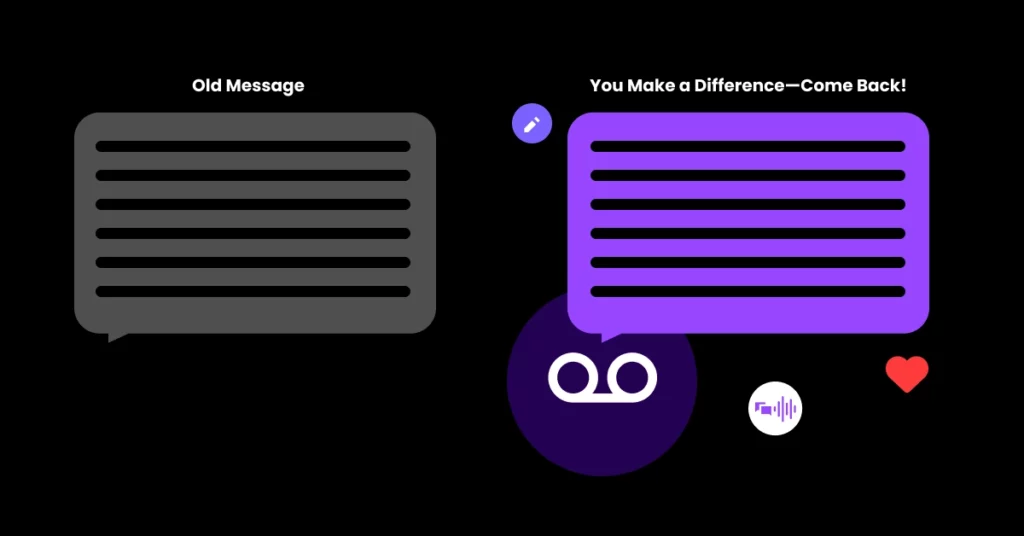
Your reactivation messages must grab attention and reignite interest and trust. Here are some writing tips:
- Emotionally resonant: Connect with their feelings. Remind them why they cared about your cause in the first place.
- Personalized: Use their name. Reference their last gift or involvement. Make it feel like you remember them.
- Storytelling: Share a powerful, concise story about your impact that their past donation helped make possible.
- Donor-centric language: Focus on “you” and “your impact,” not “we” and “our needs.”
- Gratitude-based appeals: Start with a sincere “thank you” for their past support. Acknowledge their importance.
- Clear Call to Action: Make it easy for them to give again, or re-engage in another way.
Consider elements for strong messages:
- Subject lines: Make them intriguing or personal (“We miss you, [Donor Name]!”, “A quick update on the impact you helped make.”).
- Opening: Start with gratitude for their past support.
- Body: Briefly remind them of your mission and a specific, compelling impact story.
- Solution: Show how their return can solve a current problem or achieve a new goal.
- Impact: Clearly state the difference their renewed gift will make.
For example, VoiceDrop can be a powerful tool for delivering emotionally resonant, voice-based messages to lapsed donors. A voice message often feels more personal and less transactional than email, increasing response rates. It allows you to convey warmth and sincerity directly.
Reactivation Channels That Work
Using a multi-channel approach often yields the best results, as donors have different preferences.
- Email: It is a cost-effective, fast, easy-to-automate, and segmentable tool. Good for general updates and soft asks, but it can be ignored or sent to spam. Use compelling subject lines, clear calls to action, and mobile-friendly designs. Send a series of 2-3 emails.
- Phone: It is a personal, immediate feedback that allows for a two-way conversation. Very effective for reconnecting. However, this channel is time-consuming, can feel intrusive, and requires trained callers. Start with a “thank you” and “we miss you” tone, not an immediate ask. Focus on understanding why they lapsed. You can use AI voice assistant technology advancements as an alternative to a live call.
- Direct Mail: It is a tangible that stands out in a crowded digital inbox, can feel very personal. Effective for older demographics or high-value donors. However, it has a higher cost, slower delivery, and less immediate feedback. Use high-quality paper, a handwritten note (or a printed one that looks like it), and a compelling story. Include a self-addressed, stamped envelope.
Timing and tone are crucial across all channels. Start with a softer re-engagement message and build up to an ask. Use multi-touchpoint sequences (e.g., an email, followed by a voice message, then a direct mail piece) to increase response rates.
Leverage Donor Data and Automation Tools
Smart use of technology can dramatically improve your reactivation efforts, even with limited staff. Nonprofits can use:
- CRM tools like Salesforce for Nonprofits, Bloomerang, or Virtuous help you track every interaction with a donor. This includes their giving history, communication preferences, and engagement with your campaigns.
- Many CRMs and separate analytics tools can show you patterns in donor behavior, helping you identify who is at risk of lapsing before they even stop giving.
- Segmentation tools allow you to easily create targeted lists of lapsed donors based on various criteria.
You can streamline your outreach with automation, such as email drip campaigns or triggered messages. These automations drastically improve reactivation efficiency and personalization.
Incentivize Return with Impact-Driven Appeals and Matching Gifts
Sometimes, donors need an extra push to return. Incentives, especially those tied to impact, can be very effective.
Clearly show the donor’s potential impact. Instead of “Donate $50,” try “Your $50 gift will feed 10 families for a week.” This directly connects their money to a tangible outcome, making their return feel more meaningful. Use vivid descriptions and powerful images or videos.
A matching gift program means a company or individual pledges to match every donation, often dollar for dollar, up to a certain amount. This creates urgency and effectively doubles the donor’s impact. Use phrases like “Your gift today will be doubled!” or “Help us unlock these matching funds.” This can significantly boost re-engagement rates. Limited-time matching offers create a sense of urgency, encouraging immediate action from lapsed donors.
By showing donors the profound difference their return can make, you re-establish their connection to your mission and encourage them to give again.
Re-engagement Through Non-Ask Touchpoints
Reactivating a donor does not always mean immediately asking for money. Sometimes, you need to rebuild the relationship first. These “non-ask” touchpoints can warm up cold donors and prepare them for a future ask.
- Thank-you notes: Send a personalized thank-you for their past support, even without an immediate ask.
- Newsletters: Send your regular impact newsletters to show them what your organization has been up to.
- Impact updates: Share stories or brief reports on your recent achievements.
- Surveys: Ask for their feedback on your communications or their interests. This shows you value their opinion, not just their money.
- Event invites: Invite them to an informational session, a volunteer event, or an online webinar.
These interactions focus on rebuilding the relationship and reminding them of your value before making a financial appeal. VoiceDrop is ideal for these types of non-fundraising interactions, like ringless voicemail for event promotion. You can use it to send thank-you notes, impact updates, or simple “we miss you” messages that do not include a direct ask. This approach feels personal and less transactional, making it easier to re-engage donors.
Track, Analyze, and Optimize Your Reactivation Strategy
Just like any other campaign, your donor reactivation efforts need to be measured. You need to know what’s working and what’s not.
Analyze the key performance metrics:
- Reactivation rate: The percentage of lapsed donors who made a new gift.
- Response by channel: Which channels (email, phone, mail) yielded the most reactivated donors?
- Donation volume: The total amount of money brought in through reactivation efforts.
- Average gift size: How much did reactivated donors give, on average?
- Cost per reactivated donor: How much did it cost to bring each donor back?
Experiment with different subject lines, messaging (e.g., impact vs. urgency), calls to action, or even send times. Send version A to one segment of your lapsed list and version B to another. See which performs better.
Use the data from your CRM and communication tools to understand donor behavior. Did they open the email? Click the link? Listen to the voice message?
Use these insights to refine your messaging and targeting over time. Continuously optimize your strategy based on actual results. This data-driven approach ensures your efforts are as effective and efficient as possible, maximizing your limited resources.
Final Thoughts: Reactivation Is Just the Beginning
Nonprofit donor reactivation is not a one-time campaign. It is the crucial first step in a longer journey of engagement and stewardship. Once a donor is reactivated, the goal is to keep them. This means continuously nurturing your relationship with them through consistent, personalized communication. Treat reactivated donors like new donors, but with the added knowledge of their past connection.
Tools like VoiceDrop can help in this ongoing stewardship. We offer ringless voicemail for Nonprofit organizations to follow up, thank, and maintain relationships with reactivated donors in a human, scalable way. You can ensure they feel appreciated and connected without overburdening your small team. Ready to enhance your donor reactivation and stewardship efforts? Get the demo today.