
The sound of a failing call center isn’t chaos, it’s silence.
It’s the sound of agents waiting 45 seconds between connects. It’s the sound of your dialer churning through thousands of dead numbers while your payroll clock keeps ticking. This is the “Silent Floor” phenomenon, and it is the fastest way to drain your operational budget.
In high-volume sales, Data Quality > Data Quantity.
You don’t need more leads to fix this; you need cleaner leads. A bulk phone number validator is the gatekeeper that stops “dead air” from entering your system, ensuring every dial is a revenue opportunity.
The Financial Impact of “Dirty Data” on Call Centers
Many managers view list scrubbing as a line-item expense. In reality, “dirty data” costs 10x as much as cleaning it.
Wasted Telecom & VoIP Usage Costs
Every call attempt costs money. Even short-duration calls to disconnected numbers consume “ports” on your dialer and utilize server resources.
If you are running a campaign with 100,000 leads and 30% are invalid, you are paying for the server load to process 30,000 useless events. While the per-minute cost might seem negligible, at scale, this adds up to thousands of dollars in wasted budget that yields zero return.
The Cost of Agent Burnout
Agents are fueled by momentum. There is nothing more demoralizing than hitting 20 voicemails or “Number Disconnected” recordings in a row.
Key Stat: High turnover rates are directly linked to low connection rates. When agents feel they are shouting into the void, they quit. Clean lists protect your talent pipeline.
What is Bulk Phone Number Validation? (Beyond Basic Formatting)
To solve the problem, you need to understand the technology. Many CRMs claim to “validate” numbers, but they often only perform a superficial check.
Syntax Checks vs. Real-Time Pinging
- Syntax Check: This is the most basic level. The system simply checks if the number has the correct amount of digits (e.g., Area Code + 7 digits). This catches obvious typos, but it cannot tell you if the number is dead.
- Real-Time Ping: This is what a true bulk validator does. It queries the network in real time to determine whether the line is actually open and capable of receiving a call.
HLR (Home Location Register) Lookups Explained
The “Gold Standard” of validation is the HLR Lookup. This process involves querying the Home Location Register, a central database that contains details of every mobile phone subscriber authorized to use the GSM core network.
A true bulk validator performs an HLR Lookup. It queries the global mobile network databases in real-time to answer three questions:
- Is the number active?
- Does the SIM card have an active network registration?
- Is the phone currently roaming?
This is distinct from a database check; it is a live ping to the carrier infrastructure. For a deeper technical dive, read about understanding HLR technology.
👉 Want to see the difference between a guess and a real network ping? Test 1Lookup’s HLR validation for free. 1Lookup is built by the same team as VoiceDrop.
Why You Must Distinguish Line Types: Mobile vs. Landline vs. VoIP
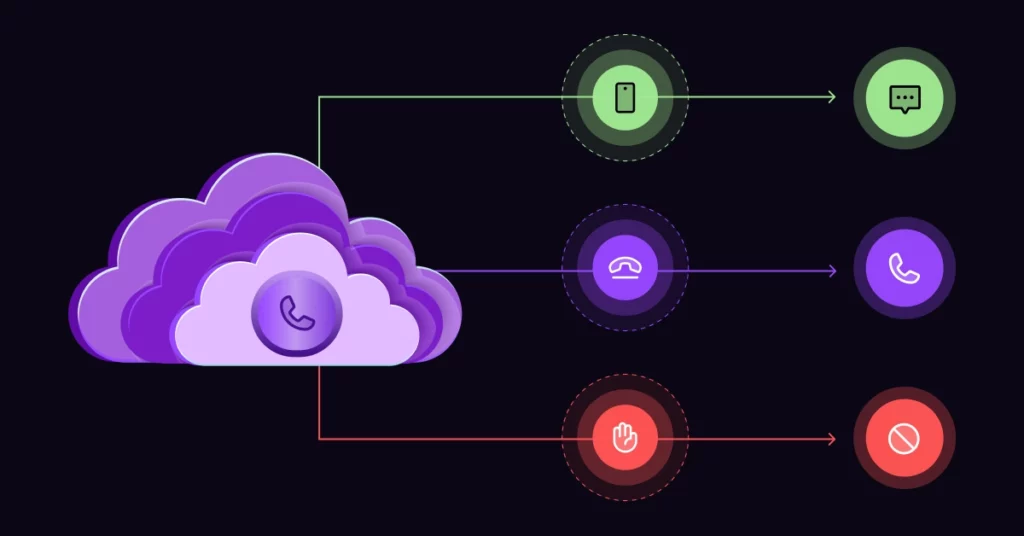
Not all phone numbers are created equal. Modern outreach is hybrid (Call + SMS), making line segmentation critical.
- The SMS Compliance Trap: Sending SMS to landlines results in “Hard Bounces.” If your bounce rate exceeds carrier thresholds, your 10DLC (10-Digit Long Code) reputation tanks, and carriers will block all your messages.
- Smart Segmentation: Validation automatically tags leads as “Mobile” (Safe for SMS/RVM) or “Landline” (Call Only).
This segmentation is the backbone of successful mass text messaging campaigns, ensuring high delivery rates.
Improving Your “Answer Seizure Ratio” (ASR)
In telecom, metrics are everything. One of the most critical health indicators for a call center is the ASR.
What is ASR and Why Does It Matter?
ASR = (Successful Calls / Total Calls Attempted) x 100.
If your dialer attempts 1,000 calls and only 200 connect (even to voicemail), your ASR is 20%. Telecom carriers monitor this ratio. A consistently low ASR signals to carriers that you are likely a robocaller or spammer, leading them to label your calls as “Spam Likely” on the recipient’s phone.
How Validation Boosts ASR Instantly
Validation fixes the math. By removing the 30% of leads that are disconnected before you dial, you decrease the “Total Calls Attempted” while keeping the “Successful Calls” the same. Your success rate mathematically jumps up. This protects your Caller ID reputation and ensures your calls actually ring through to the prospect.
The Compliance Safety Net: TCPA and Reassigned Numbers
Beyond efficiency, list hygiene is a legal necessity. The Telephone Consumer Protection Act (TCPA) imposes heavy fines for non-compliance.
Avoiding the “Reassigned Number” Trap
Here is a frightening scenario: A lead gave you consent to call them 6 months ago. However, they canceled their service last month, and the carrier reassigned that number to a new person today.
If you call that number, you are calling someone who never gave you consent. This is a violation. Bulk validation helps mitigate this risk by checking the status against the Reassigned Numbers Database (RND). Adhering to FCC call authentication rules is vital for keeping your agency out of the courtroom.
DNC (Do Not Call) Scrubbing
Good validators do more than check connectivity; they also flag known litigators and numbers listed on the Federal DNC registry. This adds an extra layer of protection to your outreach.
Essential Features to Look for in a Validator Tool
When choosing a validator for your call center, look for these key capabilities:
Accuracy and Global Coverage
Does the tool only work in the US, or does it cover international codes? If you have global clients, you need a tool that can query international carrier databases effectively.
Speed and Bulk Processing Capacity
Speed is Strategy. Lead data “decays” quickly. You cannot wait 24 hours for a file to return. You need a validator that acts as a toll booth, processing thousands of leads in minutes, so your agents can dial immediately.
🚀 Need to scrub a massive list fast? Validate 50,000+ numbers in minutes with 1Lookup.
How to Integrate Validation into Your VoiceDrop Workflow
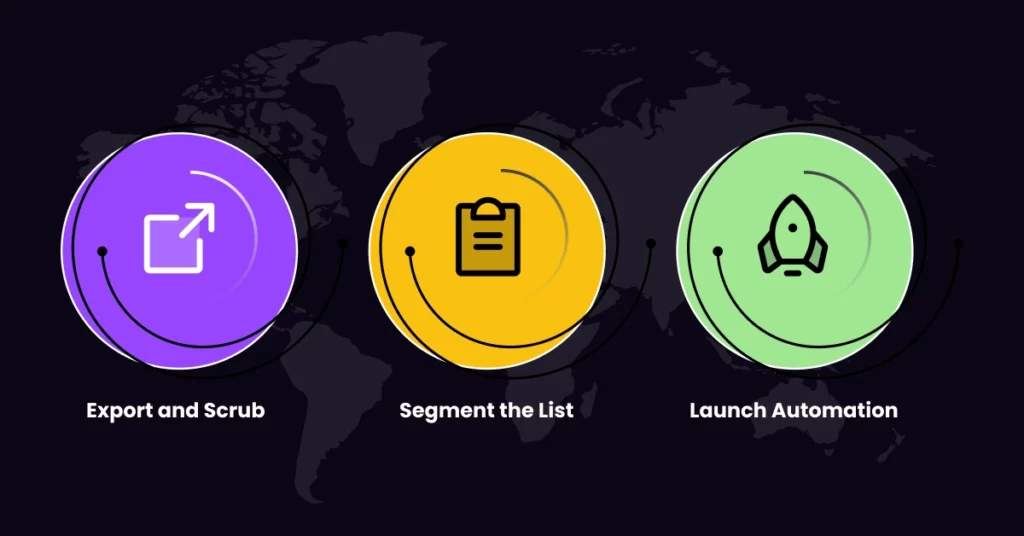
Implementing validation is simple and fits right into your existing operations.
Step 1: Export and Scrub
Before you start a new campaign, export your raw leads from your CRM. Run them through your bulk validator to flag invalid, disconnected, and DNC numbers.
Step 2: Segment the List
Take your clean file and split it. Create one list for “Mobile High Intent” (perfect for SMS and Ringless Voicemail) and another for “Landline” (perfect for traditional cold calling).
Step 3: Launch Automation
Upload the clean, segmented lists to VoiceDrop. Because the data is clean, your analytics will be accurate. You will be able to see true engagement rates, free from the noise of bad data. This is crucial for measuring campaign performance effectively and optimizing your scripts.
Conclusion
In a saturated market, the call center that moves the fastest with the highest precision wins. You cannot afford to pay agents to listen to disconnected tones.
Bulk validation isn’t an “extra step,” it is the foundation of modern dialing. It protects your budget, saves your agent’s sanity, and ensures your VoiceDrop campaigns land at exactly the right time.
Stop guessing. Start connecting. Get started with a clean list strategy today and watch your connection rates soar.
FAQs
How accurate are bulk phone number validators?
Most reputable tools offer 95-99% accuracy because they use HLR technology to ping the carrier network directly, rather than relying on outdated databases.
Will validating a number alert the user?
No. The “ping” happens at the carrier network level. The user’s phone does not ring, and they are unaware that the check has been performed.
How often should I scrub my call lists?
We recommend scrubbing any list older than 30 days. Approximately 3-5% of phone numbers disconnect or change ownership every month, so data decays quickly.
Can validation detect a fake burner phone?
Yes, high-quality validators can identify prepaid lines or VoIP numbers often used as “burner” phones, allowing you to filter them out if you are looking for long-term prospects.