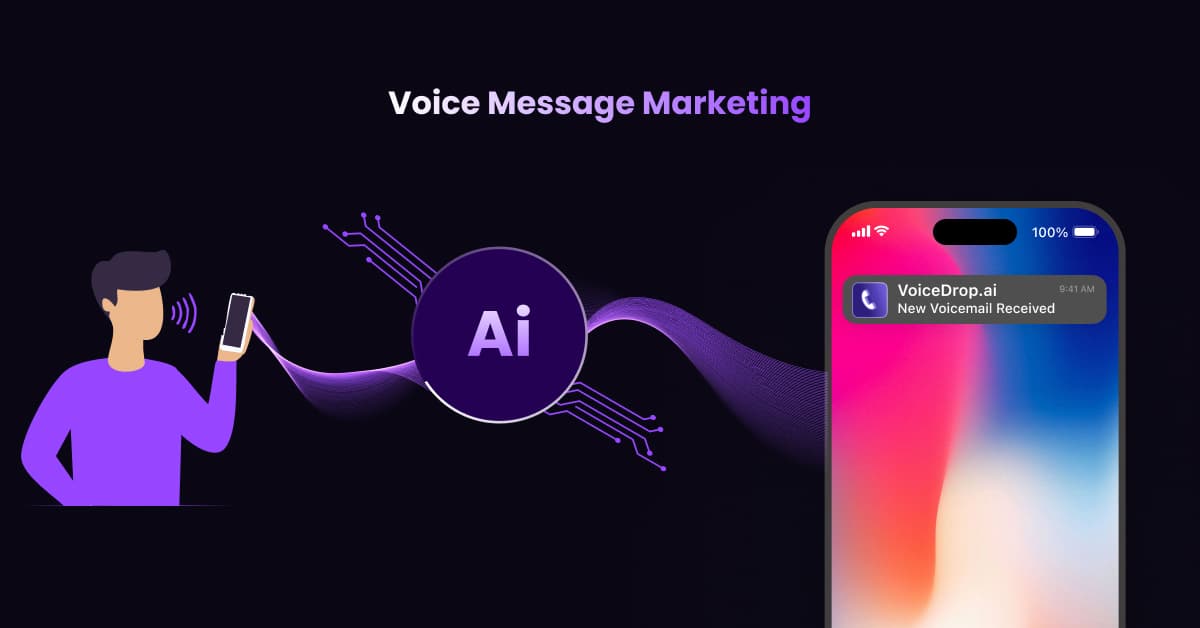
Is your sales team struggling to connect with prospects? Are your emails and SMS messages getting lost in the noise? Do you wish you could scale your outreach while still sounding like a human? The solution lies in Voice Message Marketing. This powerful strategy enhances personalization, builds trust, and drives better engagement than outdated methods.
This expert guide will explore how voice messages, delivered directly to the inbox without interrupting the recipient, are transforming Customer Outreach. You will learn the benefits, best practices, and tools like VoiceDrop.ai needed to implement effective voice campaigns at scale. It is time to stop leaving deals on the table and start leveraging the power of the human voice.
What Is Voice Message Marketing?
Voice Message Marketing involves sending pre-recorded or dynamically generated voice messages to customers or prospects to increase engagement and callbacks. This is a next-generation approach to voicemail outreach that leverages technology, such as ringless voicemail marketing (RVM), to bypass the phone ringing stage.
Businesses use this method across many departments: sales, customer service, and recruitment. The goal is simple: humanize communication and make prospects feel valued. The core difference between voice marketing and mass voice messaging is the emotional connection; the voice conveys tone and authenticity that text or email cannot. VoiceDrop is an industry leader providing automated voice messages at scale. You can review how voice compares to text messaging for outreach here: Voice vs Text Messaging.
Why Voice Marketing Matters in 2025
Voice Message Marketing matters because of several key trends. First, consumers have a growing preference for personal communication over generic digital blasts. Second, mobile usage continues to soar, making the voicemail inbox a prime, non-intrusive channel. Finally, voice messages deliver significantly higher response rates compared to text messages.
Voice marketing provides a critical competitive advantage. It allows for scalable voice messaging that creates an emotional connection, improving overall customer engagement via voice. This strategy moves beyond traditional text and email to meet the modern demand for dialogue-driven communication. For more on this, explore the concepts of conversational marketing.
Benefits of Voice Message Marketing
Voice Message Marketing is an incredibly effective outreach method because it taps into both emotional and practical advantages. It improves customer engagement, builds trust, and increases Conversion Rates.
Humanizing Customer Outreach
Voice Messages create a personal, authentic connection with recipients that text or email often cannot. The sound of a human voice conveys tone and emotion, instantly building trust and rapport. This genuine engagement strengthens customer relationships, which is vital for long-term success.
Scalability for Large Campaigns
Automation tools, such as VoiceDrop.ai, allow businesses to send personalized voice messages to large audiences efficiently. This is the essence of scalable voice messaging. The technology achieves a critical balance: delivering a personal touch while handling massive volume, ensuring you reach thousands of prospects without increasing your sales team’s workload.
Improving Engagement and Conversions
Voice Messages encourage faster responses and higher callback rates compared to email or SMS. For instance, real estate campaigns using voice messages see significantly higher callback rates than text-based outreach. This has a measurable impact on Lead Generation, sales, and customer follow-ups. Personalized voice drops reach the prospect in a channel they still check, in a voice they recognize. You can learn specific methods to increase your response rates here: Increase Callback Rates.
Versatility Across Industries
Voice Message Marketing is versatile and can be used effectively in many sectors: sales, customer service, recruitment, real estate, and healthcare. The approach adapts to different business goals, audiences, and campaign types. This adaptability makes it a powerful asset for diverse Marketing Campaigns.
How Brands Are Using It
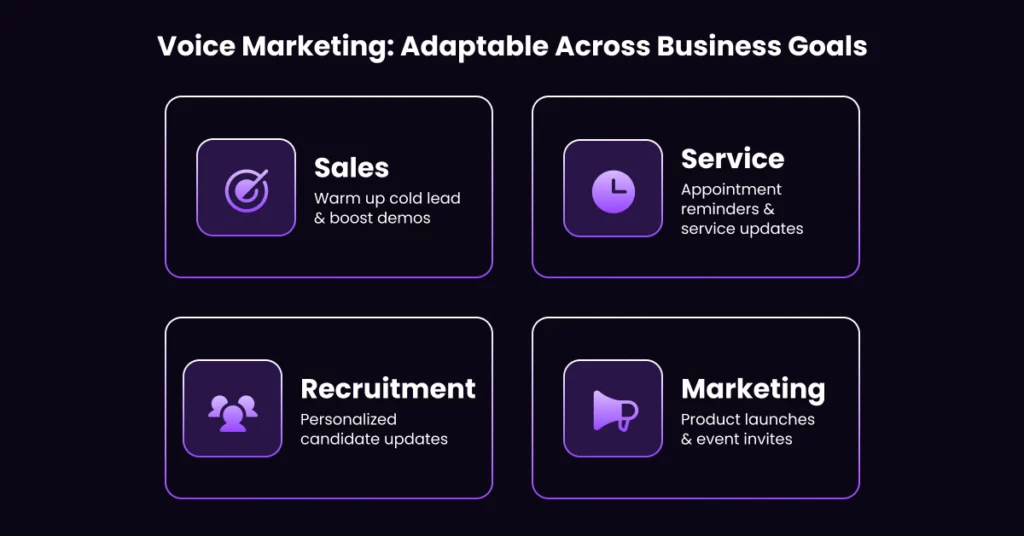
Real-world applications of Voice Message Marketing demonstrate its effectiveness across industries. Innovative use cases show how businesses connect with customers and prospects, delivering measurable results.
Sales & Lead Generation
Brands use voice messages to warm up cold leads, follow up on inbound inquiries, nurture prospects, and increase Conversion Rates. Personalized messages that reference a specific action or interest, such as “I saw you downloaded our guide on X,” drive high callback rates and engagement. This makes the sales process more efficient.
Customer Service & Support
Companies use voice messages for crucial service notifications: appointment reminders, payment notifications, or proactive service updates. This is essential for maintaining customer satisfaction and reducing no-shows. Voice messages streamline communication by delivering urgent or time-sensitive information in a personal way. For tips on creating an effective customer service strategy, see this resource: Customer Service Strategy.
Recruitment & Hiring
HR teams leverage voice messages to provide personalized updates to candidates, schedule interviews, or confirm application submissions. The voice adds a crucial personal touch to the hiring process, which improves the candidate experience and can help secure top talent faster.
Marketing Campaigns & Promotions
Brands use voice messages for product launches, special offers, and event invitations. The high engagement of voice messages provides a competitive edge compared to low open rates of email or saturation of SMS. For businesses looking to implement a comprehensive system for these campaigns, a dedicated platform is key.
Best Practices
Actionable tips are essential for creating effective Voice Message Marketing campaigns. Quality and compliance are paramount.
- Keep it Concise: Messages should be under 30 seconds.
- Be Clear: State your name, company, and purpose immediately.
- One CTA: Include one single, clear call-to-action (CTA), usually asking for a callback.
- Compliance First: Follow TCPA guidelines and ensure you are working with opt-in or existing customer lists. VoiceDrop offers built-in DNC checking.
- Sound Natural: Ensure your voice messages sound authentic, not robotic. Use a quiet environment for cloning.
Tools to Get Started
To run Voice Message Marketing at scale, you need powerful voice marketing tools. These platforms handle scheduling, personalization, automation, and analytics.
VoiceDrop.ai is the recommended solution. It offers features like AI voice cloning, 24/7 AI inbound agent for handling callbacks, and comprehensive Integration capabilities. It gives you the power to automate campaign messaging.
Crafting Authentic Messages
Writing genuine voice messages is an art. Guide writing messages that feel personal and engaging for the audience. Maintain a conversational tone and use variables (like the prospect’s name) to avoid sounding like a mass broadcast. Remember, the goal is to create an authentic connection to maximize response and trust.
Channel Integration (SMS/Email)
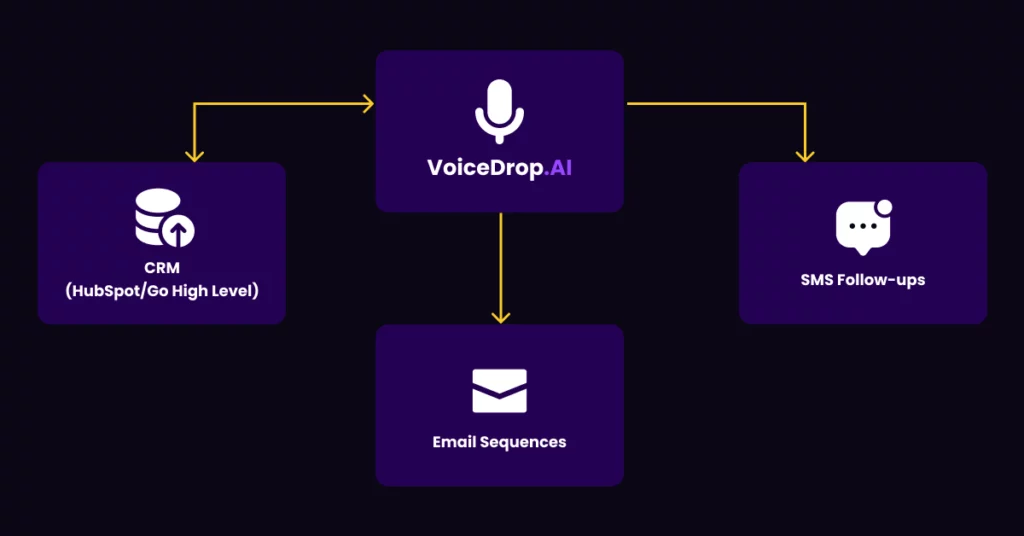
Integrating voice messages with other channels like SMS, email, or CRM Tools creates cohesive multi-channel campaigns. This allows for synchronization and automated tracking of engagement across all channels. This strategy is crucial for optimizing the customer journey.
VoiceDrop offers native integrations with platforms like Zapier, HubSpot, and Go High Level. Integrating voice with a CRM system helps you track contacts, segment audiences, and manage follow-ups effectively. You can use your voice messages within your pipeline management; this is known as Channel Integration.
Budgeting & ROI
Running Voice Message Marketing campaigns involves platform fees, staffing, and, potentially, production costs. However, the cost per callback is drastically lower than manual calling.
To calculate your ROI effectively, track key metrics: delivery rates, callbacks, and Conversion Rates. VoiceDrop clients report achieving ROI ROI-positive status typically within 3-5 days. The platform’s efficiency drives a significant increase in pipeline value and reduces the cost per acquisition.
Next Steps
You are now ready to start implementing Voice Message Marketing campaigns. First, choose the right voice marketing tools and plan out your initial voice messages. Segment your audience to ensure maximum personalization.
We encourage the use of VoiceDrop.ai to streamline campaign setup, automate delivery, track metrics, and ensure compliance. This approach helps businesses achieve measurable results efficiently and transform their Customer Outreach.
Ready to transform your outreach? Stop sending cold emails and start receiving warm callbacks. The best VoiceDrop campaigns reach 8% to 10% callback rates. Your voice is your most powerful tool; let AI put it to work.
Click here to schedule a demo and see the AI-powered difference.
FAQ’s
1. What is voice message marketing?
Voice Message Marketing involves sending pre-recorded or dynamically generated voice messages to customers or prospects to increase engagement, build trust, and drive callbacks.
2. How does voice marketing humanize customer outreach?
Voice messages add a personal touch by conveying tone, emotion, and authenticity that text or email often cannot, helping businesses strengthen relationships with their audience.
3. Can voice messages be automated?
Yes. Platforms like VoiceDrop.ai allow businesses to schedule, personalize, and deliver voice messages at scale without manually calling each contact.
4. What are the benefits of voice message marketing?
Key benefits include improved engagement, higher callback rates, scalability, personalization, and a stronger emotional connection with recipients.
5. Is voice message marketing legal?
Yes, if it follows TCPA regulations and opt-in rules. Compliance ensures businesses avoid legal penalties while using voice marketing campaigns effectively.