
Are you a business in Canada looking for a new way to reach potential customers without annoying them? Have you heard about Ringless Voicemail and wondered if this non-intrusive method is allowed north of the border? Is Ringless Voicemail Legal in Canada? The question is vital for any marketer trying to avoid massive fines.
The answer is complex. Unlike the United States, which relies on the TCPA, Canada has the comprehensive Canadian Anti-Spam Law that governs all unsolicited digital communication. This expert guide explains how Ringless Voicemail works and, more importantly, how it fits into Canada’s strict anti-spam and telecommunication regulations. We will clarify the rules around consent, explore provincial variations, and show businesses how compliant platforms like VoiceDrop (Site Name) can ensure your Marketing message legal requirements are met, protecting your business from serious financial risk.
What Is Ringless Voicemail?
Ringless voicemail (RVM) is a technology that allows businesses to deliver a pre-recorded or dynamically generated audio message directly into a recipient’s voicemail box. The key feature is the silent delivery; the recipient’s phone never rings. Instead, they receive a notification indicating a new voice message is waiting, just as they would with a missed call.
The technical process of Ringless voicemail involves a direct connection between the RVM provider’s server and the mobile carrier’s voicemail server. The message bypasses the phone’s live network, which is what eliminates the ringing tone. This provides massive advantages over traditional telemarketing. It is non-intrusive, respectful of the recipient’s time, and highly efficient for high-volume campaigns. Businesses use it for simple notifications, appointment confirmations, and lead follow-up. Understanding the mechanics of how ringless voicemails work is the first step toward using them legally and effectively.
Canadian Regulations for Ringless Voicemail
The legality of Ringless voicemail in Canada is determined primarily by federal statutes, specifically Canada Anti-Spam Law (CASL) and the regulations set by the CRTC (Canadian Radio-television and Telecommunications Commission). Unlike US law, which focuses heavily on the act of calling, Canadian law focuses on the nature of the message. The overarching rule is that unsolicited commercial electronic messages (CEMs) are illegal without consent.
CASL (Canada’s Anti-Spam Legislation) Overview
CASL is one of the strictest anti-spam laws in the world. It regulates commercial electronic messages (CEMs). The law’s goal is to prevent unsolicited electronic messages, including email, texts, and voice messages, from reaching consumers and businesses without proper consent. Crucially, CASL considers voice messages as a type of electronic message in certain contexts, especially if they are commercial in nature. This is why businesses must treat ringless voicemail with the same caution they would treat a bulk email campaign.
Consent Requirements
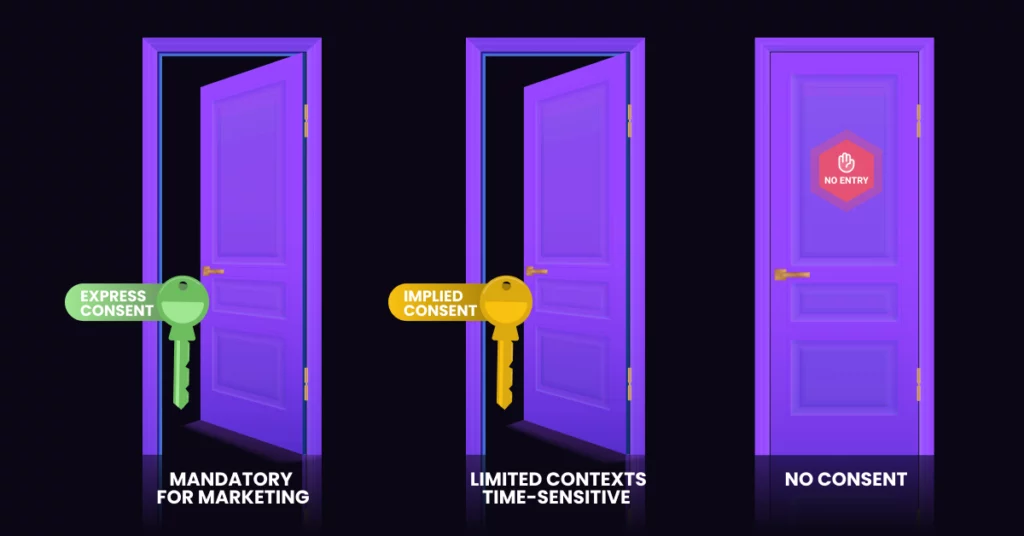
The most critical element for Telemarketing compliance Canada under CASL is consent. CASL mandates a clear distinction between Express vs implied consent. Express consent is the gold standard; it requires the recipient to actively and clearly agree (usually in writing) to receive messages from your business. Implied consent is limited and typically applies only when an existing business relationship (EBR) or existing non-business relationship (ENBR) is in place, and only for a limited time. For sales or marketing messages sent to unfamiliar recipients, express consent is mandatory to comply with Electronic message regulations.
Provincial Telecommunication Rules
While CASL is a federal statute, some provinces have additional rules that impact marketing practices. Businesses must check for local regulations because some provinces may impose additional telecommunication rules that affect the legality of ringless voicemail. The CRTC is the federal regulator for telecommunications, but provinces may govern certain intra-provincial communications or have consumer protection rules. For instance, provinces like Quebec or Ontario may have specific consumer guidelines. Businesses should consult the guidelines on Canadian telecommunication rules to ensure national coverage.
How Ringless Voicemail Differs From Robocalls
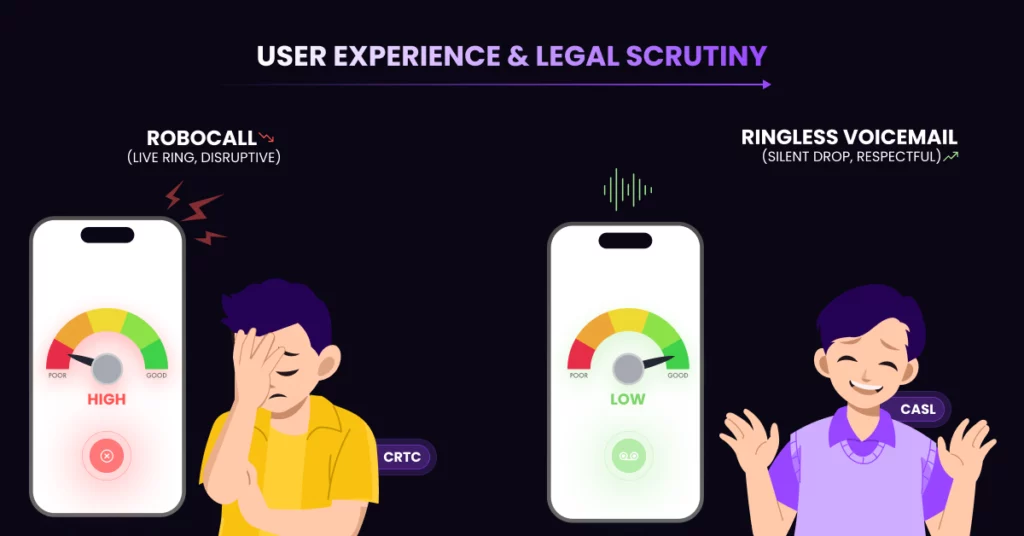
Understanding the technical and legal distinctions between Ringless voicemail vs robocall is essential for Telemarketing compliance Canada. While both methods deliver automated Voice messages, their user experience and legal risks differ significantly.
A traditional robocall uses an autodialer to make a live phone connection, causing the recipient’s phone to ring. The message plays upon answering. This is highly intrusive and is strictly regulated under CRTC rules and the National Do Not Call list. Ringless voicemail, in contrast, bypasses the live call network altogether, injecting the message directly into the voicemail server. This non-intrusive delivery is the key user-experience distinction and often the primary legal defense, though compliance is still required. The difference in intrusion means RVM generally generates far fewer complaints than a noisy robocall, but both are scrutinized by Electronic message regulations.
Common Misconceptions About Ringless Voicemail in Canada
Many businesses approach Ringless voicemail with inaccurate assumptions based on outdated or non-Canadian laws. These misconceptions create unnecessary legal risks for Canadian outreach.
Ringless Voicemail Is Always Legal
This is false; legality depends entirely on having verifiable consent from the recipient and following all message requirements. The misconception that Ringless voicemail is always legal stems from its ability to bypass the phone ring. However, CASL applies to the content and intent of the electronic message, not just the delivery method. If the Voice messages is commercial, CASL rules apply.
No Consent Is Needed Since the Phone Doesn’t Ring
This is the most dangerous misconception, as CASL considers ringless voicemail an electronic message in certain contexts, meaning consent is often required. Businesses must treat RVM messages as they would an email advertisement. If the primary purpose of the message is sales or promotion, compliance with Marketing message legal requirements demands consent, regardless of the non-ring delivery method.
Ringless Voicemail Isn’t Monitored by Regulators
Canadian authorities, specifically the CRTC, actively enforce CASL and investigate complaints regarding unsolicited Electronic Message Regulations. Regulators track complaints related to unsolicited commercial Voice messages. The notion that Ringless voicemail campaigns go unnoticed is simply untrue. Businesses that ignore the rules expose themselves to investigations and substantial Ringless voicemail penalties.
Businesses Can Send Unlimited Messages Without Risk
This belief is highly risky due to the severe Ringless voicemail penalties and reputational damage for non-compliance. The CASL penalty structure is severe, with fines reaching up to $10 million per violation for businesses. Even a few hundred complaints can lead to devastating financial and legal action. Businesses must always operate within the bounds of Telemarketing Compliance Canada.
Tips for Sending Ringless Voicemail Legally in Canada
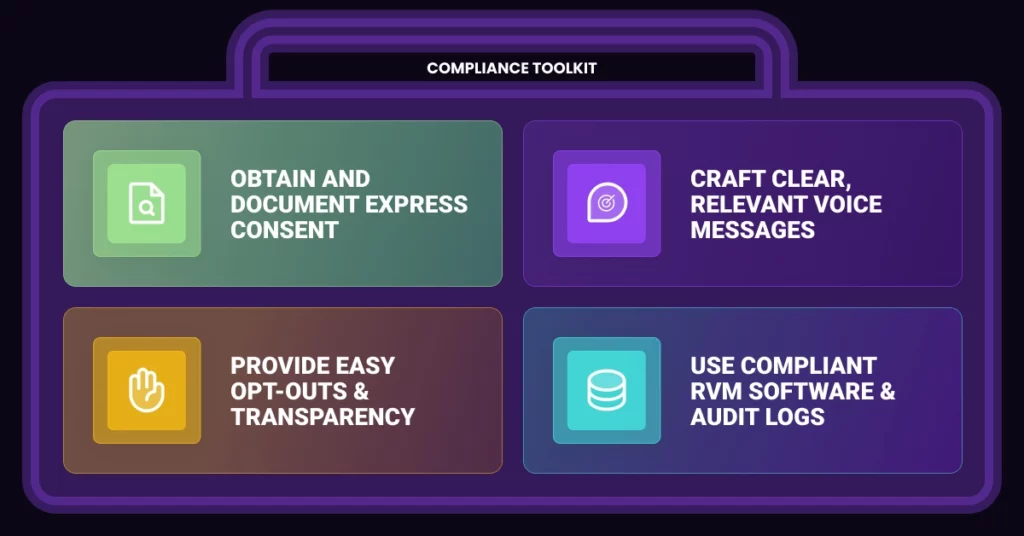
To ensure your Ringless voicemail campaigns remain compliant with Canada anti-spam law, follow this practical, actionable guidance. These steps are crucial for mitigating legal and reputational risks.
Obtain Proper Consent
Explain the critical difference between express and implied consent, emphasizing that express consent is mandatory for most marketing messages. Express consent must be clearly documented, stating that the recipient agreed to receive commercial electronic Voice messages from your organization. For implied consent (like an existing business relationship), you must clearly define and document the relationship and the time limit for contact.
Craft Clear and Relevant Messages
Advise keeping messages concise, professional, and targeted only to consented recipients. The message content must clearly identify your business and its purpose. It should provide value to the recipient, ensuring it does not sound like generic spam. Personalization, even minor, improves the user experience and reduces complaints. You can even use AI automation tools to personalize messages at scale.
Maintain Documentation and Transparency
Suggest keeping detailed records of consent, including the date, method of collection, and purpose of agreement, for audits. Transparency is key. Always include clear instructions within the Voice messages for the recipient to easily unsubscribe or withdraw consent from future Electronic message regulations. Compliant platforms help measure voice messages performance and compliance.
Avoid High-Volume or Spammy Campaigns
Warn against sending excessive messages, as high volume will trigger complaints and serious legal penalties. The quantity of messages must align with the quality of your consent list. Focus on quality over quantity. An unsolicited, spammy Marketing message legal requirements violation is more likely to result in an investigation, especially if you have not fully addressed Telemarketing compliance Canada.
Tools and Platforms for Compliant Ringless Voicemail
Modern AI automation tools are essential for navigating Telemarketing compliance Canada. They provide the infrastructure necessary to manage consent, execute personalized campaigns, and maintain audit logs. Relying on simple, non-specialized tools significantly increases your risk exposure.
Ringless Voicemail Software Options
Trusted platforms like VoiceDrop provide specialized software for Ringless voicemail delivery. These platforms are built with compliance features specifically designed to help businesses adhere to the stringent requirements of Electronic Message Regulations. Look for a vendor that provides strong deliverability, high-quality audio, and robust security. For example, some offer AI voice cloning to create personalized but compliant messages.
Features to Look for in a Platform
When selecting a platform, prioritize features like consent tracking, which automatically logs and validates recipient permission. Look for clear audit logs, which document every message delivery and the associated consent status. Message personalization features are also key to improving engagement and satisfying Marketing message legal requirements. Always check that the platform allows for easy, one-click opt-out functionality. The ability to measure voice messages data in a compliant manner is essential.
Integrations With Marketing and CRM Tools
The most efficient Ringless voicemail platforms integrate seamlessly with existing CRM (Customer Relationship Management) and Marketing Automation tools. This allows you to segment your audience based on their consent status and previous engagement, ensuring compliant and targeted outreach. For instance, an integration can automatically remove a contact who withdrew consent from all future Voice messages campaigns. Explore solutions that offer robust CRM integration to streamline your workflow and compliance.
Cost and Scalability Considerations
Businesses must evaluate pricing and scalability based on their volume needs. Ringless voicemail is generally cost-effective compared to human dialing, but pricing tiers should align with your campaign size. Ensure the platform can scale rapidly without compromising security or Telemarketing compliance Canada. Choosing a platform that offers clear, predictable costs per drop helps manage your budget effectively.
Conclusion
Is Ringless Voicemail Legal in Canada? Yes, but only when used with extreme caution and verifiable Express vs implied consent. Canada’s anti-spam law treats commercial Voice messages as electronic messages, imposing severe Ringless voicemail penalties for non-compliance.
The key takeaway for businesses is simple: You must ensure consent, use compliant platforms, maintain meticulous records, and follow best practices to minimize legal risk and protect your reputation. Solutions like VoiceDrop provide the necessary AI automation tools to execute effective Ringless voicemail campaigns while meeting every Marketing message legal requirements under CASL.
Ready to launch high-engagement voice campaigns in Canada without risking massive CASL fines? Ensure your outreach is both effective and legal.
Click here to schedule a demo and see how VoiceDrop provides compliant, automated ringless voicemail solutions for Canadian businesses.
FAQ’s
Do I need express consent for ringless voicemail in Canada?
Yes, express consent is often required for marketing messages under Canadian anti-spam law. Implied consent applies only in limited contexts, such as an Existing Business Relationship.
What penalties exist for non-compliant ringless voicemail?
CASL violations can result in significant Ringless voicemail penalties, with fines reaching up to $10 million per violation for businesses, plus reputational damage and potential legal action.
Can ringless voicemail be used safely for marketing?
Yes, if you obtain proper Express vs implied consent, send relevant Voice messages, and follow Telemarketing compliance Canada rules and provincial regulations.
Are there differences in ringless voicemail laws across provinces?
Some provinces may have additional rules or guidelines, so businesses should always check local telecommunication regulations alongside federal Electronic Message Regulations for full compliance.
How can businesses ensure compliance with ringless voicemail laws?
Keep detailed records of Express vs implied consent, use compliant Ai automation tools like VoiceDrop, craft clear messages, and regularly review applicable federal and provincial regulations.