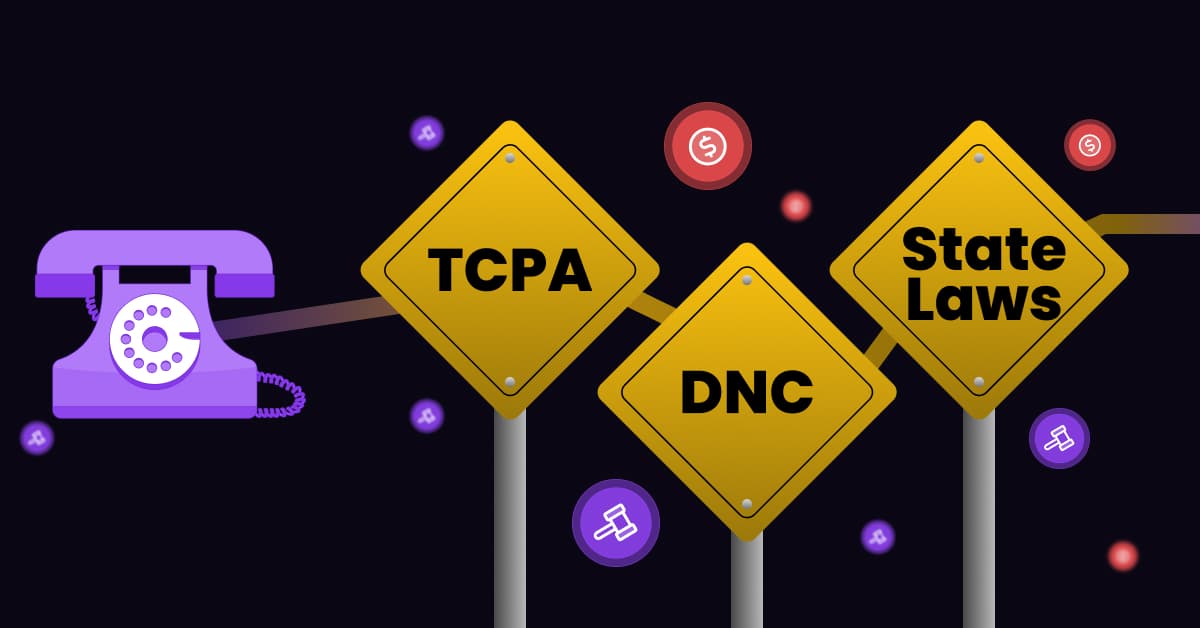
Is the old method of cold calling completely illegal in the USA? Are you worried that one wrong move could trigger massive fines under consumer protection laws? How can your business execute powerful outbound calling rules without violating the National Do Not Call Registry rules or the TCPA? The truth is, while cold calling is not entirely banned, it is heavily regulated. Businesses face significant TCPA fines and penalties for non-compliance.
This expert guide clarifies the legal status of cold calling in the USA. We detail the strict federal rules (TCPA, DNC) you must follow to ensure compliant sales outreach. We also explore modern, effective cold calling alternatives like Ringless Voicemail (RVM), which helps you scale safely and efficiently. By understanding these regulations, you can transform your outreach strategy from high-risk to high-reward.
Understanding Cold Calling
Cold calling is a fundamental sales activity. It is the practice of reaching out to potential customers who have had no prior interaction or established relationship with the business. A salesperson initiates the call hoping to generate interest, qualify a lead, or secure a meeting. Cold calling is a primary tool for lead generation, prospecting, and customer acquisition across many industries.
Its purpose is simple: to start a relationship with a prospect. In sales and marketing, cold calling serves as a necessary, if difficult, first touchpoint. However, due to its intrusive nature and historical misuse (e.g., aggressive telemarketers), many consumers assume it is completely banned. This is a common misconception. Cold calling is not banned in the USA; it is strictly regulated. This distinction is key for businesses navigating telemarketing regulations today. Understanding these regulations is vital for maintaining a successful sales process. Learn how modern AI is changing the practice of cold calling.
Types of Cold Calls
Not all cold calls are treated equally under the law. Regulations and effectiveness vary depending on the target audience and the technology used. Understanding the different categories is the first step toward compliant sales outreach.
B2B Cold Calling
B2B cold calling targets other businesses, often for software sales, partnerships, or lead qualification. Federal and state regulations are generally more lenient for calls made to business phone lines compared to individual consumers. However, some regulations still apply, particularly regarding automated calls and respecting internal DNC lists. Agents must maintain professional conduct and accurately represent their product or service.
B2C Cold Calling
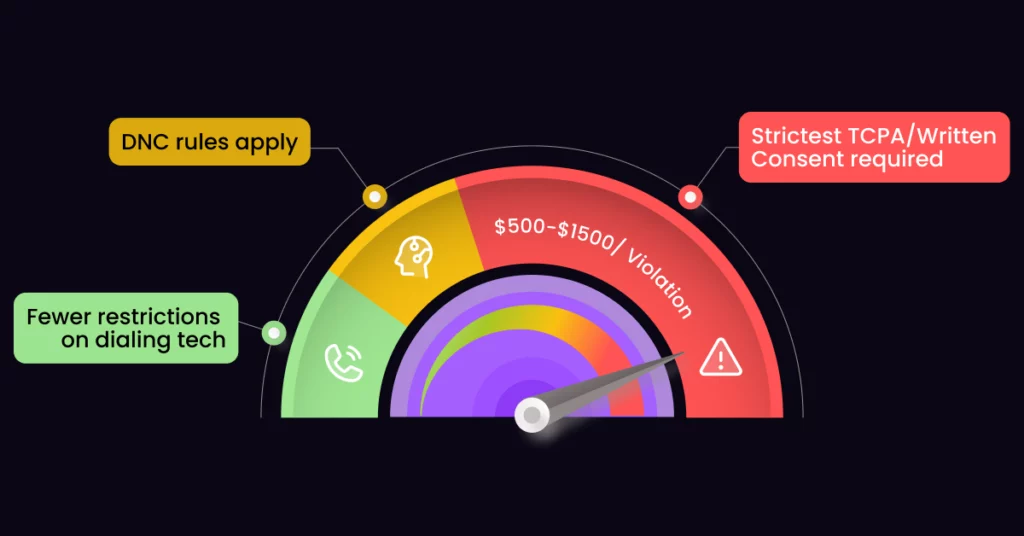
B2C cold calling targets individual consumers at their residential or mobile numbers. These calls are subject to the strictest TCPA and DNC compliance rules. B2C calls carry a much higher risk of complaints and severe penalties if you violate federal and state consumer protection laws. This is the most dangerous form of outreach for compliance officers.
Automated vs. Human-Initiated Calls
Automated calls use robocall systems, auto-dialers, or AI systems (like those using text-to-speech) to dial numbers and deliver prerecorded voice messages. Human-initiated calls are made by a live agent who dials the number manually. Automated calls face far stricter regulations under the TCPA, often requiring explicit written consent. Human-initiated calls, while still subject to DNC rules, carry fewer restrictions on the dialing technology itself. Modern platforms may also use voice cloning to deliver highly realistic automated messages.
Federal Regulations Governing Cold Calling
While cold calling is legal in the USA, compliance is mandatory. Businesses must adhere to federal laws to avoid crippling TCPA fines and penalties. Failure to comply is not just bad customer service; it is a major legal risk.
TCPA Requirements
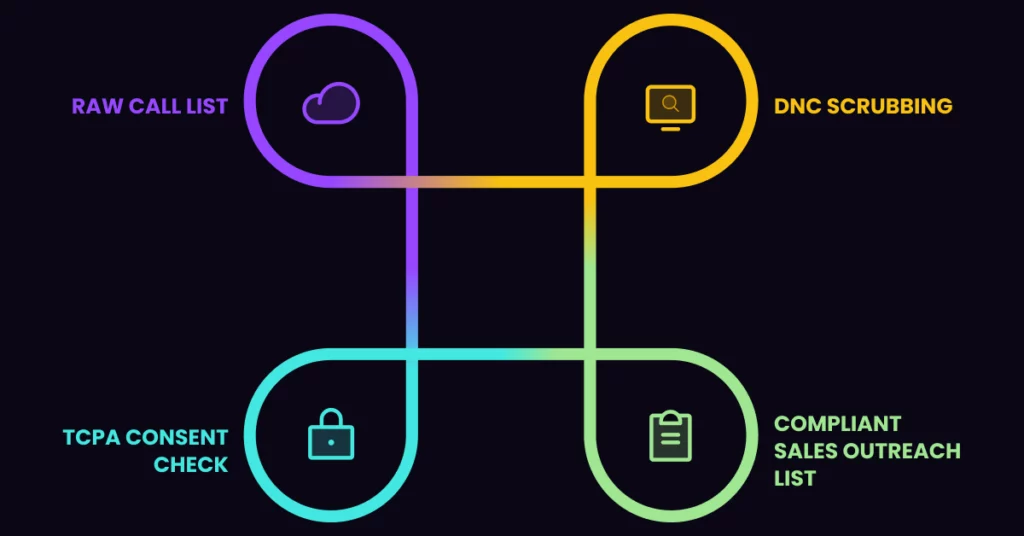
The Telephone Consumer Protection Act (TCPA) governs how businesses can use automated dialing equipment and prerecorded voices. The core rule is consent: prior express written consent is required for most telemarketing calls, texts, and automated messages to mobile phones. TCPA places severe restrictions on robocall compliance. It restricts the use of Automated Telephone Dialing Systems (ATDS), prerecorded messages, and AI callers. Violations of the TCPA can result in fines ranging from $500 to $1,500 per violation, meaning every non-compliant call can be a costly mistake. Understand the key TCPA requirements and FAQs to protect your business.
Do Not Call (DNC) Rules
The National Do Not Call Registry allows U.S. consumers to opt out of unsolicited telemarketing calls. Businesses must scrub their call lists regularly (at least every 31 days) against the DNC registry before making any calls. There are limited exemptions, such as calls to businesses (B2B) or calls to consumers with whom you have an existing business relationship (EBR). However, the DNC rules are the easiest way to violate outbound calling rules and incur regulatory action. The Federal Communications Commission (FCC) provides guidance on Do Not Call rules.
State-Specific Cold Calling Laws
Federal laws (TCPA and DNC) set the national baseline, but individual states may enforce stricter cold calling regulations. Businesses operating in multiple states must comply with both federal law and all applicable state laws.
State-Level DNC Lists
Explain the differences between state-level DNC lists and the federal registry. Some states maintain their own DNC lists that cover calls not covered by the national registry or have different registration rules. Businesses must verify numbers against these state-specific registries before calling consumers in those jurisdictions. Compliance requirements often include separate registration and periodic scrubbing of contact lists for each state where outreach occurs. This patchwork of state telemarketing restrictions complicates national campaigns.
Penalties for Violations
Violating state cold calling laws carries significant legal consequences. State attorneys general can pursue enforcement actions, and individual consumers can file lawsuits. Penalties in key states can be steep. For example, some states impose separate fines in addition to federal penalties. Consistent compliance practices, backed by robust call consent documentation, are the only way to mitigate the risk of these cumulative penalties.
Best Practices for Legal Cold Calling
Since cold calling is legal but regulated, businesses must adopt best practices to ensure compliant sales outreach while maximizing effectiveness. These practices reduce the risk of fines, complaints, and reputational damage.
Obtain Prior Consent
Explain the importance of obtaining the correct consent. For telemarketing calls and automated messages, this means prior express written consent, a signed agreement (often digital) that clearly discloses the consumer will receive automated calls. For existing customers, implied consent may apply, but written consent is always safer. Provide examples of how businesses can collect and document consent properly using time-stamped digital forms.
Respect DNC Lists
Explain the importance of scrubbing contact lists against both federal and state DNC registries before calling. Implement automatic software or services to manage DNC compliance efficiently. This proactive compliance is critical for any phone marketing guidelines and helps focus efforts on leads who are open to receiving calls.
Limit Call Frequency & Timing
Recommend appropriate calling hours (8 a.m. to 9 p.m.) to avoid disturbing recipients, as required by the Telemarketing Sales Rule. Discuss limiting call frequency to reduce complaints. Excessive, rapid-fire calling is a red flag for regulators and can lead to immediate legal action. Limiting frequency ensures you avoid being flagged as spam and reduces legal risks.
Record-Keeping and Compliance Tools
Explain the importance of maintaining call logs, consent records, and documentation to prove compliance in case of audits or complaints. This means tracking when and how every contact opted in. Suggest using platforms that help track consent, call history, and compliance automatically. CRM integration is vital here for centralized record-keeping. Platforms like VoiceDrop offer easy [CRM integration to link data.
Are Ringless Voicemail Legal?
Ringless Voicemail (RVM) is generally legal in the USA, provided businesses follow the same strict TCPA and DNC rules as other automated calls. RVM is not exempt from the need for prior express consent. The FCC has ruled that RVM messages sent to mobile phones are considered “calls” under the TCPA.
Clarity on legality depends on obtaining prior consent, respecting opt-out requests, and adhering to federal and state regulations. However, RVM is often preferred because it is non-intrusive. It delivers a message silently, leading to a much better customer experience and fewer complaints compared to an abrasive, ringing cold call. VoiceDrop helps businesses send legal, compliant ringless voicemail campaigns by simplifying consent tracking. The full legal status is detailed in our guide on ringless voicemail legality.
Alternatives to Traditional Cold Calling
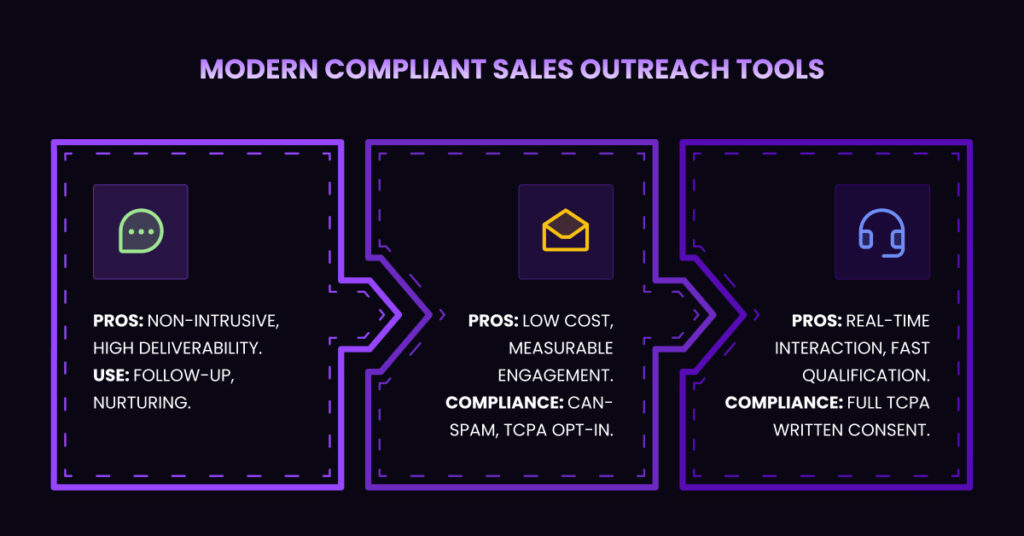
The risk and inefficiency of traditional cold calling have spurred the rise of modern compliant sales outreach methods. These cold calling alternatives improve user experience, deliverability, and ROI compared to manual dialing.
Ringless Voicemail
Ringless Voicemail (RVM) delivers pre-recorded messages directly to a recipient’s voicemail without ringing their phone, making it highly effective and less intrusive. Benefits include high deliverability, compliance-friendly when call consent documentation is obtained, and easy scalability using platforms like VoiceDrop. Use RVM for low-friction lead follow-ups, promotions, and appointment reminders.
Email and SMS Outreach
Email and SMS campaigns serve as effective alternative touchpoints for outreach. They offer benefits like low cost, high personalization, and measurable engagement. Compliance considerations include the CAN-SPAM Act for email and TCPA for SMS. Obtain and document opt-in for both channels. Email and SMS can easily be sequenced with RVM drops for a powerful multi-channel approach.
AI Callers
AI-powered calling automates live conversations using speech synthesis and natural language processing. Pros: scalable and interactive. Cons: intrusive, subject to strict TCPA compliance, and can sound robotic. AI Callers are best for high-volume, repetitive tasks like appointment confirmations or lead qualification scripts before transferring to a human agent.
Final Thoughts: Staying Compliant While Maximizing Outreach
Cold calling is not banned in the USA; it is strictly regulated. Businesses must comply rigorously with TCPA, DNC, and state laws to avoid massive TCPA fines and penalties. Ignoring telemarketing regulations is a recipe for disaster in the modern marketing automation legality landscape.
Ringless Voicemail offers a modern, less intrusive, and highly effective alternative for outreach. It allows you to scale while delivering a personal touch. VoiceDrop.ai is a platform that helps businesses automate RVM campaigns, ensure compliance through centralized call consent documentation, and optimize ROI. Embrace compliant outreach methods that balance efficiency with a positive Customer Experience.
Ready to stop risking penalties and start maximizing compliant outreach? Adopt the modern solution for sales and marketing.
Click here to schedule a demo and see how VoiceDrop enables TCPA-safe, high-conversion RVM campaigns.
FAQ’s
1. Is cold calling legal in the USA?
Yes, cold calling is legal, but businesses must comply with TCPA, DNC, and state-specific rules to avoid penalties.
2. What is the National Do Not Call (DNC) Registry?
The DNC registry allows consumers to opt out of unsolicited calls. Businesses must scrub their lists regularly to comply with phone marketing guidelines.
3. Do the rules for B2B and B2C cold calls differ?
Yes. B2C calls are subject to stricter telemarketing regulations, while B2B calls often have more lenient rules, though compliance is still required.
4. Are automated calls or AI callers legal?
Automated calls are legal only if prior express consent is obtained. AI callers must also follow TCPA and DNC regulations.
5. Can state laws be stricter than federal laws?
Yes, some states like California, New York, and Florida have additional requirements or state telemarketing restrictions that businesses must follow.