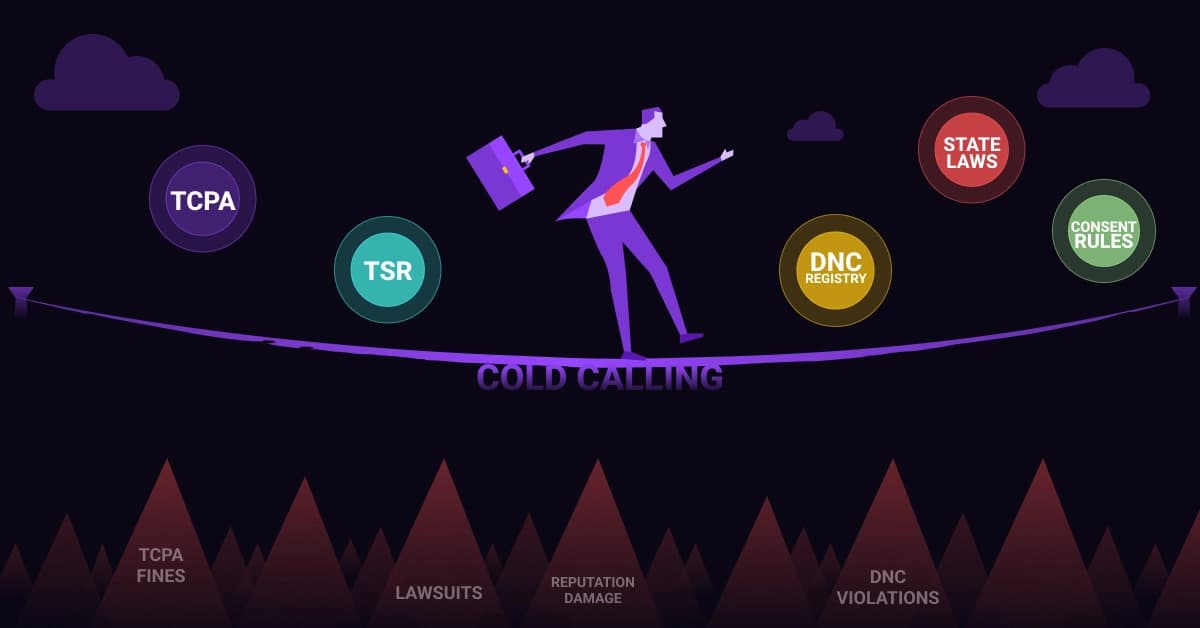
Are you worried that one wrong call could trigger massive fines for your business? Do you wonder, Is Cold Calling Illegal Now? The fear of violating complex Telemarketing compliance laws often paralyzes small business owners and sales teams. Given the rise of Robocall regulations and frequent lawsuits, it is easy to assume that cold calling is entirely banned. This assumption is a common concern for businesses trying to grow.
The good news is that cold calling is not illegal. The bad news is that it is heavily regulated. You must follow strict federal and state rules, including the TCPA, TSR, and Federal DNC list rules. This guide provides a comprehensive overview of the rules you need to follow. We explain exactly what Automated calls rules you need to know to stay compliant. For modern AI voice outreach and safe, scalable solutions, VoiceDrop.ai (Site Name) offers tools to help you navigate this complex environment responsibly.
Introduction: Is Cold Calling Actually Illegal?
Let us be very clear: Cold calling is not illegal in the USA. However, it is one of the most heavily regulated business activities under federal and state laws. This regulation is the reason for all the confusion. The law does not ban human-to-human cold calls. It severely restricts how and when companies can use technology to make these calls.
The confusion exists for good reason. High-volume, unsolicited robocalls and spam calls have led to massive fines and class-action lawsuits. The penalties for violating the TCPA compliance for businesses are severe. Stricter state rules and ongoing litigation constantly change the rules. Because the risk is so high, many businesses mistakenly believe the activity is banned. We believe compliant outreach is possible. Tools from VoiceDrop help businesses stay compliant by providing responsible, permission-based Modern business communication tools that avoid risky violations.
What Laws Regulate Cold Calling in the United States?
You must follow major federal laws that control how cold calling works in the U.S. These laws cover everything from getting Consent for cold calls to how you handle customer data. Understanding these laws is non-negotiable for Telemarketing compliance.
Telephone Consumer Protection Act (TCPA)
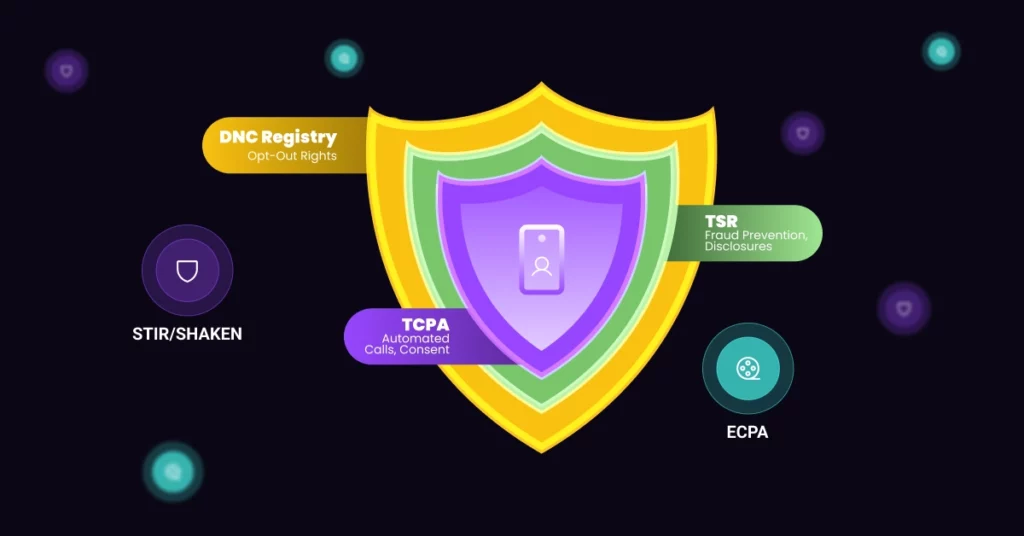
The Telephone Consumer Protection Act (TCPA) is the most important federal law for cold calling. Its core requirement is prior express consent for certain types of calls. Specifically, it limits the use of automatic dialing systems and prerecorded messages, especially to mobile phones. If you use any form of AI voice outreach or bulk dialing, you must follow the Automated calls rules strictly. The TCPA also sets specific time-of-day restrictions, generally allowing calls only between 8:00 a.m. and 9:00 p.m. Violating the TCPA can result in massive fines per call, making compliance vital for small businesses.
Telemarketing Sales Rule (TSR)
The FTC’s Telemarketing Sales Rule (TSR) focuses on preventing fraudulent and abusive telemarketing practices. The TSR mandates several practices. These include clear caller ID rules and mandatory disclosures. You must clearly state your identity and the purpose of the call at the start. It strictly prohibits misrepresentation and aggressive sales tactics. The TSR also governs all sales calls and requires adherence to the National Do Not Call Registry. Reviewing the full Telemarketing Sales Rule compliance guide is a key step for any business.
National Do Not Call Registry (DNC)
The National Do Not Call Registry (DNC) is a list of phone numbers whose owners have opted out of receiving most telemarketing calls. Businesses must pay for access and regularly scrub their call lists against the Federal DNC list. This mandatory scrubbing must happen at least every 31 days. Ignoring the do-not-call rules is a direct path to penalties. There are exceptions, such as calls to businesses (B2B) or calls to consumers with whom you have an Existing Business Relationship (EBR). However, you must still maintain proof of that relationship.
STIR/SHAKEN & Anti-Spoofing Rules
STIR/SHAKEN are new protocols implemented by the FCC to combat illegal robocalls and caller ID spoofing. These protocols verify that the number shown on the Caller ID is the actual source of the call. They strengthen anti-spam enforcement. Compliance with these protocols is crucial. If carriers cannot verify your calls, they will flag or block your number, severely affecting call deliverability and customer trust. The FCC provides additional details on call authentication protocols.
Electronic Communications Privacy Act (ECPA)
The Electronic Communications Privacy Act (ECPA) protects the privacy of electronic and wire communications, including phone calls, texts, and voicemail. ECPA affects cold calling by controlling how you handle communication data. Most importantly, it governs Call recording laws. Many states are Two-party consent states, meaning you must inform and receive consent from all parties before recording a call. Failing to understand ECPA can expose your business to criminal penalties and privacy lawsuits.
Consequences of Breaking Cold Calling Laws
Ignoring Telemarketing compliance is not just poor business practice; it is a serious financial and legal threat. The consequences of violating the telemarketing laws USA quickly escalate, putting your entire business at risk.
Fines and Penalties
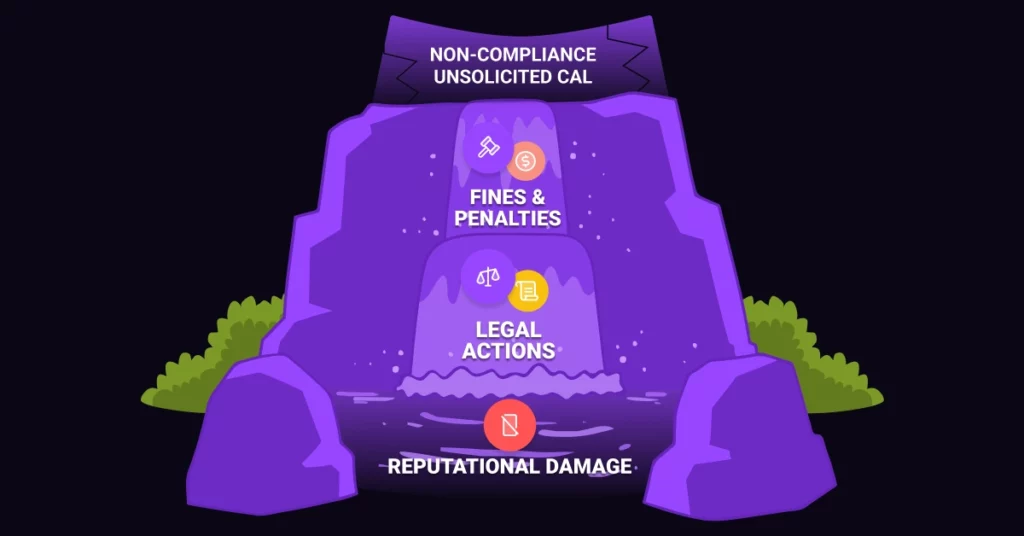
The financial risk is huge. The TCPA fines and penalties are $500 to $1,500 per violation (per call). For high-volume Automated calls rules campaigns, these fines multiply rapidly, bankrupting small businesses overnight. State laws often impose additional fines, compounding the financial disaster. You must budget for Telemarketing penalties and prioritize prevention over damage control.
Legal Actions
Consumers can and do file lawsuits for unlawful robocalls, lack of Consent for cold calls, or contacting DNC numbers. These often become class-action suits. Compliance failures put businesses at risk of expensive settlements, court fees, and legal injunctions. Using a compliant platform, like VoiceDrop, and maintaining accurate logs can significantly reduce this legal exposure.
Reputational Damage
Non-compliance severely harms brand trust. When a customer receives an unwanted, non-compliant call, it damages the customer relationship immediately. Repeated complaints lead to negative reviews, social media backlash, and carriers flagging or blocking your outbound numbers. This makes future, compliant outreach impossible. Compliant calling practices, like non-intrusive ringless voicemail, help maintain credibility and customer confidence.
Cold Calling Compliance Checklist for Businesses
This step-by-step checklist ensures your business meets the mandatory Telemarketing compliance requirements before, during, and after making cold calls.
Obtain Proper Consent
Under major regulations (TCPA, TSR), you need the right type of consent. Express written consent is necessary for most Automated calls rules and prerecorded messages. This means a clear, signed agreement. Implied consent (from an EBR) is limited and requires meticulous proof. Never assume consent when using automated tools.
Scrub Against DNC Lists
Scrubbing your lists against the Federal DNC list is mandatory under the TCPA and TSR. Businesses must also check against State-level DNC restrictions, as some states maintain their own lists that are stricter than the federal one. Use reliable software, like VoiceDrop’s phone number validator, to perform continuous checks.
Respect Call Timing Rules
Federal law restricts telemarketing calls to the window between 8:00 a.m. and 9:00 p.m. local time of the recipient. Always calculate the local time of your prospect. Be aware that some State-level DNC restrictions or local ordinances may enforce even shorter calling windows.
Maintain Call Logs & Disclosures
You must document everything to prove Telemarketing compliance. This includes detailed call logs, agent IDs, and, most importantly, consent records. You must also provide mandatory disclosures at the start of every call, clearly stating your identity, the purpose, and an easy opt-out option.
How VoiceDrop Helps You Stay Compliant
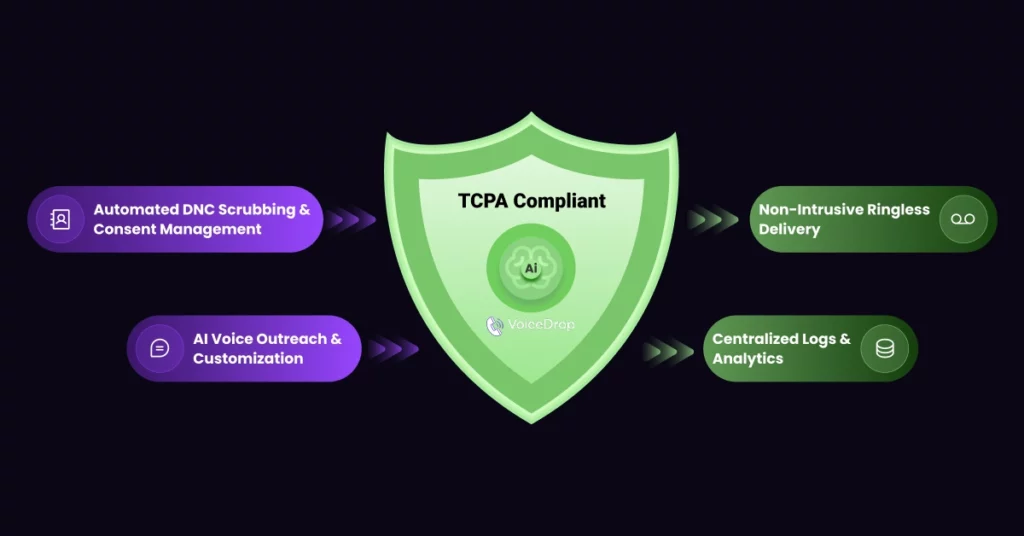
VoiceDrop is designed to address the complexity of telemarketing laws USA head-on. As a ringless voicemail platform, it allows you to automate mass voice messaging in a non-intrusive, compliant way. The platform is built for Telemarketing compliance.
Key compliance features include:
- Consent Management: Built-in tools for tracking and documenting Consent for cold calls.
- DNC Scrubbing: Automated scrubbing using the phone number validator feature.
- Non-Intrusive Outreach: Ringless delivery avoids the high-risk live call, reducing consumer complaints.
- Personalization: Uses features like AI voice outreach and voice cloning to maintain authenticity and build trust.
- Integration: Seamless CRM integration centralizes records and compliance data.
Conclusion – Staying Compliant and Effective with Modern Outreach
Is Cold Calling Illegal Now? The clear answer is no, but only if you adhere to strict Telemarketing compliance rules. The cost of non-compliance, from massive Telemarketing penalties to irreparable reputational damage, far outweighs the cost of compliance.
The best solution is to pivot toward safer, more effective Modern business communication tools. Ringless voicemail, provided by VoiceDrop, offers a compliant alternative to risky cold calls. It allows you to scale outreach, reduce legal risk, and improve your customer relationships through efficient, measurable campaigns. Prioritize compliance and embrace AI voice outreach to grow your business safely.
Ready to protect your business from TCPA fines and start generating leads with compliant outreach?
Click here to schedule a demo and learn how VoiceDrop can future-proof your sales communication.
FAQ’s
Q1: Is cold calling illegal in the USA?
Cold calling is not illegal, but businesses must follow federal (TCPA, TSR) and state regulations, including Federal DNC list rules and Consent for cold calls requirements.
Q2: What does “two-party consent” mean?
Two-party consent states require all parties on the call to agree to be recorded. You must inform everyone and receive consent before using the Call recording laws.
Q3: Can pressing “9” stop telemarketing calls?
Not always. Pressing “9” signals consent withdrawal for that specific call, but it does not automatically stop future calls unless the number is on a Federal DNC list.
Q4: Are ringless voicemails legal?
Yes, in most cases, as long as businesses comply with TCPA, DNC, and Consent for cold calls rules. Ringless voicemails are a less intrusive form of Automated call rules compliance.
Q5: How can businesses stay compliant with cold calling laws?
Use proper Consent for cold calls, scrub contact lists against DNC registries, respect call timing rules, and maintain detailed call logs and disclosures.