You dial. Silence. You dial again. “The number you have reached is not in service.”
In 2026, getting a prospect to answer the phone is the hardest part of real estate investing. Aggressive carrier filtering and “Spam Likely” labels have already stacked the deck against you. When you finally get through the spam filters, dialing a wrong number isn’t just an annoyance; it is a fatal error.
Your script and sales skills are irrelevant if you are pitching to a dead line. While you cannot control carrier regulations, there is one variable you can control: Data Quality.
The “Hidden” Data Supply Chain: Where Does It Come From?
Many new investors assume that all skip tracing providers are essentially the same. They believe these companies “find” numbers using a proprietary magical algorithm. The reality is much more industrial.
Skip tracing providers do not “manufacture” data; they aggregate it. Most investors don’t realize that the industry relies on two distinct supply chains. Knowing the difference between the “Financial Stream” and the “Public Stream” is the key to profitability.
What is Tier 1 Data? (The Credit Header)
Tier 1 data is the “Gold Standard” of the skip tracing industry. This information is sourced directly from the major Credit Bureaus (TransUnion, Equifax, and Experian).
The Mechanism: Because this data is tied to financial institutions, it is dynamic. The moment a consumer applies for a credit card, refinances a mortgage, or signs a lease for a new car, their contact information is updated in the bureau’s database.
The Identifier: What makes Tier 1 data superior is that it is anchored to a Social Security Number (SSN). This ensures that the phone number provided actually belongs to the target individual, rather than just someone with a similar name.
For a deeper technical understanding, you can review the official credit header definition to understand why this data is considered the most reliable source for identity verification.
What is Tier 2 Data? (The Aggregated Layer)
Tier 2 data is often referred to as “Public Record” data. While useful in certain contexts, it lacks the precision of financial data.
- The Source: This data is scraped and aggregated from a wide variety of unverified sources, including utility bill registrations, magazine subscriptions, warranty cards, voting records, and social media profiles.
- The Lag Time: The biggest drawback of Tier 2 data is latency. It can take 3 to 6 months for a change of address or phone number to reflect in public records. If a motivated seller moved last month, Tier 2 data will likely send you to their old address or a disconnected landline.
- The “Household” Issue: Tier 2 data often relies on surname matching at an address level. This means you might be looking for the property owner, but the data returns the mobile number of their spouse, child, or even a former roommate.
The Economics of Accuracy: Calculating the True Cost
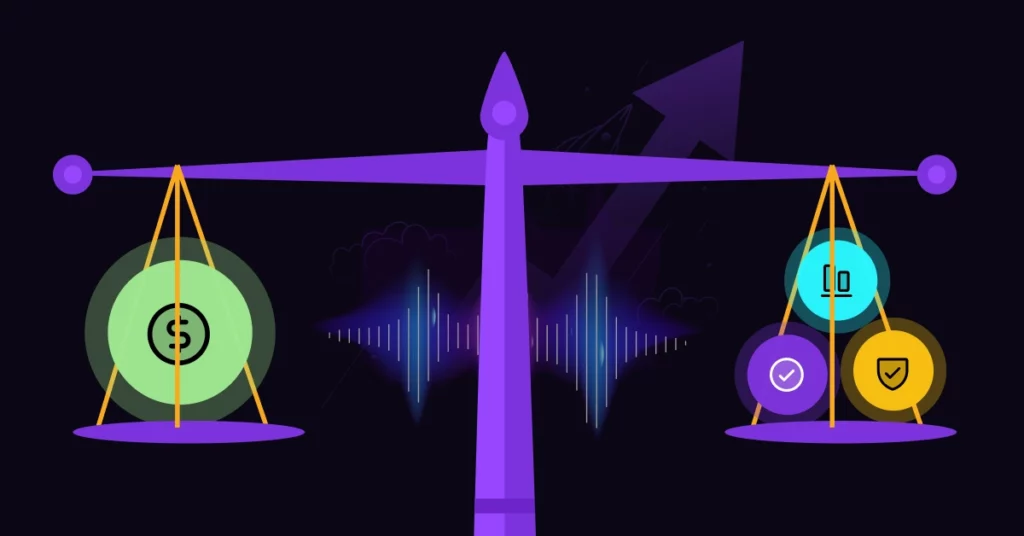
Smart investors do not look at “Price per Lead.” They look at “Cost per Acquisition.” When you analyze the numbers, cheap data is often the most expensive line item on your P&L.
The “Cheap Data” Trap
At $0.03 per record, Tier 2 data looks like a bargain. But with a 60% accuracy rate, 400 out of every 1,000 numbers are dead ends.
If your sales team spends just 2 minutes dialing and documenting each bad number, that is 13+ hours of wasted labor. You aren’t just paying $30 for data; you are paying hundreds of dollars in salary for your team to talk to nobody. Cheap data is the most expensive line item on your P&L.
Ready to fix your connection rates? Integrate 1Lookup low-latency API for reliable, real-time data that keeps your pipeline moving. 1Lookup is built by the same team as VoiceDrop.
The ROI of Premium Data
Now, contrast this with Tier 1 data, which may cost between $0.12 and $0.15 per record.
- Upfront Cost: $120 – $150.
The sticker price is higher, but the Right Party Contact (RPC) rate is typically 90%+. Your team spends their time pitching sellers, negotiating deals, and building rapport, not listening to “disconnected” tones.
Recent industry analysis highlights the impact of bad data on revenue, validating that poor data quality silently undermines pricing power and growth by inflating operational costs.
Head-to-Head Comparison: Tier 1 vs. Tier 2
To visualize why the price gap exists, here is a direct comparison of the two data types.
Accuracy (RPC) Rates
- Tier 1: Delivers a 90-95% Right Party Contact rate. When the phone rings, the decision-maker answers.
- Tier 2: Averages a 60-70% Right Party Contact rate. You will encounter significantly more wrong numbers and dead air.
Stop guessing and start validating. Get 50 Free Credits on 1Lookup today and test our Tier-1 accuracy against your current provider.
Data Decay and Latency
“Data Decay” refers to how quickly information becomes obsolete. Roughly 15% of the population moves or changes numbers annually.
- Tier 1: Captures these changes in real-time via credit triggers.
- Tier 2: Relies on public filing updates, which suffer from a 3-6 month lag.
Legal Access and Regulation
- Tier 1: Is harder to access. Providers must be vetted and compliant with the GLBA (Gramm-Leach-Bliley Act) to access credit header information.
- Tier 2: Is generally open to anyone with a credit card, as public records are not as heavily regulated.
Strategic Implementation: When to Use Which?

Does this mean you should never use Tier 2 data? Not necessarily. A savvy investor knows how to match the data tier to the strategy.
The “Shotgun” Strategy (Tier 2)
If you are blasting a generic marketing campaign to 50,000 records in a broad zip code, and your primary goal is coverage rather than precision, Tier 2 is acceptable. The sheer volume helps make up for the inaccuracy, and the lower cost per record makes the massive blast affordable.
The “Sniper” Strategy (Tier 1)
If you are targeting a specific, high-value list, such as “Driving for Dollars” leads you personally collected, or high-equity probate lists, you must use Tier 1. You spent hours finding these houses; they are too valuable to burn by calling the wrong number.
The “Waterfall” Method (The Hybrid Approach)
You don’t always need to pay top dollar. Large acquisition firms use a “Waterfall” approach to balance the budget with accuracy:
- Filter with Tier 2: Run your massive list through a cheaper Tier 2 provider first. This catches the “easy” finds, people who haven’t moved in years.
- Isolate the Misses: Take the records that returned “No Hits,” “Disconnected,” or low confidence scores.
- Enrich with Tier 1: Run only those difficult records through a premium Tier 1 provider.
This strategy ensures you aren’t overpaying for easy leads, but you aren’t missing out on the difficult-to-find deals where the real profit lies.
Specialized Searches: LLCs and Trusts
One of the biggest pain points for investors is the “Corporate Wall.” How do you call a house owned by “123 Main St LLC”?
Why Tier 2 Fails on LLCs
Public record searches usually point to the Registered Agent. In most cases, this is just an attorney or a generic filing service, not the property owner. Calling them will not get you a deal; it will get you a lecture.
Tier 1 “Corporate Scrubbing”
Premium Tier 1 APIs can “pierce the corporate veil.” They cross-reference the corporate filing with credit header data to identify the Beneficial Owner, the actual human being behind the LLC. This allows you to bypass the lawyer and speak directly to the decision-maker.
From Data to Deal: The Outreach Strategy
Once you have secured Tier 1 data, you have the right number. Now, how do you engage without being intrusive?
The “Soft Touch” with Ringless Voicemail
Once you have verified mobile numbers from Tier 1 data, you can bypass the “Cold Call” anxiety. Utilize Ringless Voicemail Drops to deposit a friendly, pre-recorded message directly into the seller’s inbox without their phone ever ringing. This respects their time and “warms up” the lead before you dial.
The Omni-Channel Approach
Don’t just rely on a single call. Use your premium data to trigger a sequence.
- Day 1: Ringless Voicemail.
- On Day 2: SMS Follow-up.
- Finally, Day 3: Email.
Because Tier 1 data often includes verified email addresses that Tier 2 misses, you can surround the lead on multiple platforms. Effective mass text messaging campaigns rely heavily on the validity of the mobile numbers you import.
Compliance and The Law
Using high-level data comes with high-level responsibility. Building trust is essential, but staying legal is mandatory.
TCPA and The DNC (Do Not Call) List
Because Tier 1 data is so accurate at finding personal mobile numbers, investors must be extra vigilant. You must scrub your lists against the DNC registry. Calling a number on the DNC list can result in massive fines per violation. Always verify your lists against the national DNC registry before launching a campaign.
Litigator Scrubbing
Top-tier data providers often include a “Litigator Scrub” feature. This identifies known serial plaintiffs, individuals who intentionally bait telemarketers into calling them so they can sue for TCPA violations. Tier 2 providers rarely offer this protection.
Conclusion
In 2026, the investor with the cleanest data wins. The market is too competitive to waste time dialing dead numbers or pitching to the wrong people. Stop stepping over dollars to pick up pennies.
Ready to stop guessing? Don’t just trust the claim, experience the connection rate yourself. Click here to test our Tier 1 accuracy and see the difference reliable data makes in your pipeline.
FAQs
Why is Tier 1 data more expensive?
Tier 1 data is more expensive because the providers (Credit Bureaus) charge a premium for access to regulated, financial-grade data. You are paying for the verification and real-time updates that public records cannot provide.
Can I use Tier 1 data for ringless voicemail?
Yes, Tier 1 data is excellent for RVM because it accurately differentiates between mobile numbers (which work for RVM) and landlines (which do not). This ensures your delivery rates remain high.
How often is Tier 1 data updated?
Tier 1 data is updated virtually instantly. As soon as a credit inquiry is made or a financial account is updated, the header data reflects the new contact information.