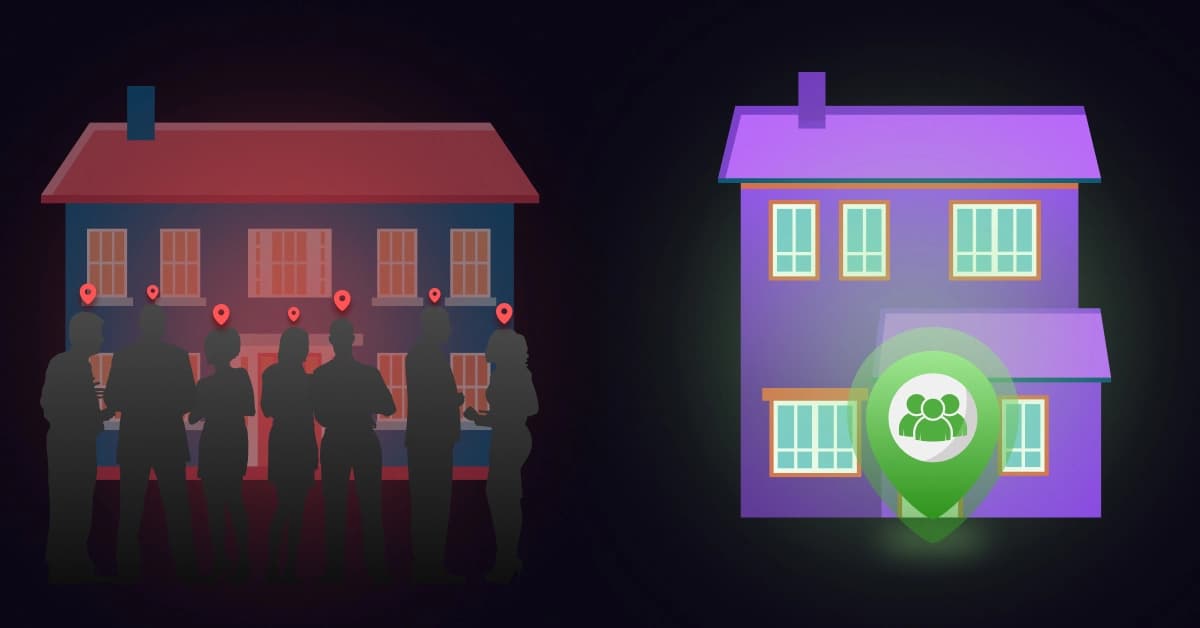
Inventory is tight. Margins are shrinking.
In 2026, the MLS is a “shark tank.” If you are fighting over the same Zillow listings as 50 other investors, you have already lost. The math simply doesn’t work when you are paying retail prices in a bidding war.
To win in this climate, you must stop competing for what is listed and start finding what isn’t. Enter Reverse Address Lookup, the strategy that allows you to bypass the competition, go direct-to-seller, and secure deals before they ever hit the market.
Why “Off-Market” is the Only Way to Win in 2026
The shift in the market is undeniable. Relying on the MLS means you are paying full retail price, or often above it. In real estate, you make your money when you buy, not when you sell. Paying a premium just to secure a property eats into your equity from day one.
Real wealth in real estate is built by finding problems to solve before they are listed publicly. The “off-market” approach allows you to control the deal flow rather than waiting for the market to feed you scraps.
The Economics of the “Hidden” Deal
Why hunt for the “hidden” deal? Because the ROI is unmatched.
- Instant 6% Equity: On a $300,000 home, agent fees eat $18,000 of profit. Off-market, that money stays in your pocket.
- No Bidding Wars: You are the only buyer at the table. You set the price based on your numbers, not market hype.
- Creative Terms: Without gatekeeper agents, you can negotiate win-win scenarios like seller financing or subject-to deals directly with the owner.
Finding the owner is hard work, but that friction is exactly what protects your profit margins.
Understanding the “Inventory Shortage”
There are simply fewer houses for sale today than in previous decades. High interest rates have locked many homeowners into their current mortgages, reducing the turnover of properties. This means investors cannot wait for inventory to appear; they must create their own.
You must become a “deal hunter,” identifying motivated sellers who haven’t listed yet but are ready to sell for the right solution.
Current inventory shortage statistics validate that waiting for the market to correct itself is a losing strategy. You have to go out and find the inventory yourself.
What exactly is Reverse Address Lookup?
At its core, Reverse Address Lookup is a simple concept with powerful implications. It is the process of taking a physical location, a specific property address, and working backward to find the human decision-maker attached to it.
The goal is to retrieve the owner’s Name, Phone Number (Mobile/Landline), Email Address, and current Mailing Address.
The Difference Between “Property Data” and “People Data”

Bricks don’t sign contracts. People do.
Most rookies confuse “Property Data” with “People Data.”
- Property Data (Easy): Square footage, year built, lot size. You can find this on Zillow in seconds.
- People Data (Hard): The owner’s personal mobile number, current email, and forwarding address.
A vacant house is useless if you can’t reach the decision-maker. The gap between seeing the house and calling the owner is where the money is made.
Methods of Execution: Free vs. Paid Strategies
Not all lookup methods are created equal. Depending on your budget and the volume of leads you are processing, you can choose from three main tiers.
The “Free Grind”: County Tax Assessor Records
If you have more time than money, you can start at the source: local government records. Every property pays taxes, and those records are public. You can visit the county tax assessor’s office or use their online GIS maps to find the owner’s name and mailing address.
While free, this method is slow and clunky. Furthermore, government records rarely contain phone numbers or email addresses, meaning you are limited to direct mail. You can use a public records portal to help locate the specific tax assessor website for the county you are targeting.
The “Middle Ground”: White Pages & People Finders
The next step up involves using generic “people finder” websites. You might pay a small fee (e.g., $1) to search for a name you found on the tax records.
The Limitation: These services often rely on outdated public directories. You will frequently find disconnected landlines, old numbers, or information for the wrong “John Smith.” For a serious business, this data is often too unreliable.
The “Pro” Method: Batch Skip Tracing & APIs
Serious investors and wholesalers use professional skip tracing software. These tools pull data from “Tier 1” sources, such as credit headers and utility datasets.
- Speed: You can upload a list of 1,000 addresses and get results in minutes.
- Accuracy: These tools prioritize mobile numbers over landlines, giving you a direct line to the decision-maker.
In 2026, speed is the only metric that matters. While your competitor is manually clicking through county tax maps, you could have already extracted 1,000 verified mobile numbers using a Tier-1 API.
The cost of “free” data is often the deal you lost because you were too slow.
Pro Tip: Stop guessing with outdated public records. Get 50 Free Credits on 1Lookup today and test our Tier-1 accuracy against your current provider.
Identifying the “Invisible” Seller: Who to Look Up?
Reverse Address Lookup costs money and time, so you shouldn’t look up every single house on a block. You need to focus your resources on “High-Motivation Signals.”
The “Driving for Dollars” List
This is the classic, most effective method. Drive through neighborhoods and look for physical signs of distress:
- Tall, overgrown grass (indicating vacancy).
- Boarded-up windows or peeling paint.
- Mail is piling up in the mailbox or on the porch.
- Code violation stickers on the door.
These visual cues scream that the owner is neglecting the property and may be motivated to sell to get rid of the headache.
Absentee Owners & Tired Landlords
An “Absentee Owner” is someone who owns a property but sends the tax bill to a different address. This often indicates a landlord. Many landlords are “tired”; they are sick of dealing with tenants, repairs, and late rent. If you call them with a cash offer, they are often relieved to sell.
Probate and Inherited Properties
Properties held in trusts or estates often belong to people who have recently inherited a house they don’t want. They may live out of state and just want a quick sale to liquidate the asset and split the cash among heirs. These are some of the best off-market leads available.
From Lookup to Contact: The Outreach Strategy
You have performed the reverse lookup, and you have the phone number. Now what? This is the critical pivot point. Data is useless if you don’t act on it immediately.
The “Speed to Lead” Rule

If you spotted a vacant house, chances are another investor did too. The clock is ticking. You cannot afford to wait until “next week” to make contact. You need to reach out the same day you get the data.
Don’t let the lead go cold waiting on data. Integrate 1Lookup low-latency API for reliable, real-time mobile numbers that keep you ahead of the competition. 1Lookup is built by the same team as VoiceDrop.
The “Soft Touch” with Ringless Voicemail
Manual cold calling is grueling. It leads to burnout and low morale. Smart investors use automation to do the heavy lifting.
Instead of dialing manually, use stealthy voicemail drops to deliver your pitch at scale. You can drop a friendly, pre-recorded message directly into the owner’s inbox without their phone ever ringing.
The Script: “Hey, this is Mike. I drove by your property on Main St today… It looks like a great house with potential. I’m buying in the neighborhood and wanted to make a cash offer. Call me back if you’re interested.”
This filters the leads for you. You only speak to the sellers who call you back.
The “Double Tap”: Following Up with SMS
Statistics show that response rates skyrocket when you use multiple channels. If they don’t call back after the voicemail, you should have an automated text message go out 24 hours later.
Using SMS follow-up sequences ensures your message is seen. A simple text like “Hi, I left you a voicemail yesterday regarding the property on Main St. Are you the owner?” can start the conversation instantly.
Dealing with Corporate Owners (LLCs and Trusts)
A common frustration for investors is doing a lookup and finding the owner is listed as “123 Main St LLC” or “The Smith Family Trust.”
Corporate Skip Tracing
You cannot call an LLC. You need to find the human behind it. This requires “Corporate Skip Tracing,” which involves searching Secretary of State records to identify the registered agent or the “Beneficial Owner.” Advanced skip tracing APIs often include this feature, digging deeper to find the actual person you need to negotiate with.
Legal & Ethical Compliance
While finding owners is a powerful strategy, you must operate within the law to build a sustainable business.
Respecting the DNC (Do Not Call) List
Telemarketing laws are strict. Before you call or text a list of numbers you’ve skip-traced, you must scrub them against the National Do Not Call Registry. Violating federal DNC rules can result in hefty fines. Always ensure your outreach platform handles compliance or that you are scrubbing your data before hitting “send.”
Conclusion
The Fortune is in the Follow-Up
Reverse Address Lookup unlocks the door to off-market inventory, but consistent outreach kicks it open.
The investors who win in 2026 won’t be the ones with the most cash; they will be the ones with the fastest data and the most efficient outreach. Stop driving for dollars without a plan. Get the right data, find the owner, and automate your deal finding with VoiceDrop.
The market is waiting. Go find your deal.
FAQs
How accurate are free reverse address lookups?
Free lookups, such as those found on county sites or white pages, are usually 50-60% accurate regarding mailing addresses. However, they rarely provide active mobile numbers, which are crucial for modern outreach.
Can I find the owner if the house is abandoned?
Yes. Even abandoned homes have a legal owner who is responsible for paying taxes. A reverse address lookup will identify who is on the title, even if they haven’t visited the property in years.
Is it legal to text someone about their house?
Yes, provided you comply with TCPA guidelines. This generally includes obtaining consent where necessary or ensuring you are not messaging numbers on the DNC list. You must also always include an opt-out mechanism (like “Reply STOP to unsubscribe”) in your messages.