Speed is the product, but it is also the vulnerability.
Modern borrowers demand instant decisions. If you take 24 hours to review a loan, you lose the customer. If you approve in 5 minutes, you risk funding a fraudster.
Fraudsters know this. They exploit “instant approval” workflows to slip fake applications past underwriters before the ink is dry. For Fintech lenders in 2026, relying solely on document uploads is a losing battle.
To stop fraud without killing your conversion rate, you must stop looking at the PDF and start looking at the digital footprint.
The Blind Spot in Traditional Underwriting
Why do lenders with robust credit checks still suffer from first-payment defaults? Because standard credit checks verify history, not existence.
A credit bureau can tell you that a Social Security Number (SSN) has a 750 FICO score. It cannot tell you that the person applying is actually a bot operating out of a server farm in a different country.
The Rise of Synthetic Identity Fraud
The most dangerous threat to modern portfolios is Synthetic Identity Fraud. This occurs when fraudsters create “Frankenstein” identities by combining real data (like a stolen SSN from a child or someone with a dormant credit file) with fake information (like a made-up name and date of birth).
Because the SSN is real, the credit inquiry often goes through without raising alarms. These profiles often have “clean” credit histories, making them invisible to standard bureau checks. However, while the credit report may look real, the device applying often reveals the truth.
By analyzing connection data, lenders can spot the anomaly even when the credit score looks perfect.
Why “KYC” Documents Can Be Forged
Traditionally, lenders rely on Know Your Customer (KYC) documents, driver’s licenses, utility bills, or bank statements to verify identity. In the age of Generative AI, this is a crumbling defense.
A novice fraudster can alter a PDF bank statement or Photoshop an ID card in minutes. These documents are pixel-deep and easily manipulated. Lenders need a verification signal that is infrastructure-deep and cannot be forged: the IP address.
The Technology Under the Hood: What IP Analysis Reveals
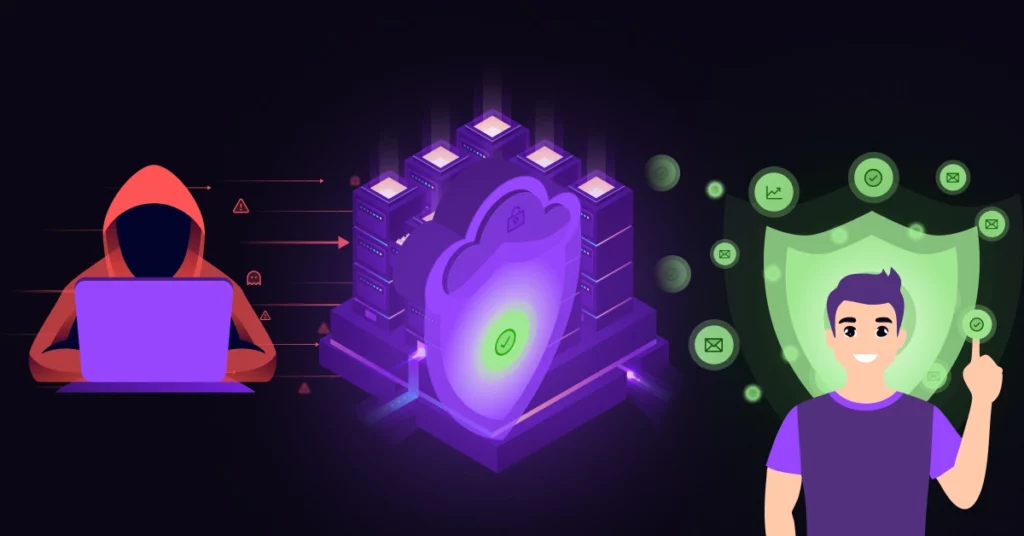
IP analysis is not just about identifying a city. An IP address is a treasure trove of metadata that provides context about the user’s intent. By decoding these signals, you can separate a legitimate borrower from a bot.
Signal 1: Geolocation Mismatch (Distance Check)
This is the most basic but effective check. When a user applies for a loan, they manually enter a home address. IP analysis automatically detects the physical location of the device submitting the form.
If an applicant states their address is in Chicago, IL, but the IP address geolocation pins them in Vietnam, or even a different US state without a logical explanation, this is an immediate red flag. While people do travel, a massive distance mismatch usually indicates a stolen identity being used from a remote location.
Signal 2: Connection Type (Residential vs. Datacenter)
This signal is crucial for risk scoring. You must ask: Is this a human or a server?
- Residential/Mobile IPs (Low Risk): This is a human connecting via Home Wi-Fi or a 5G cellular network.
- Datacenter IPs (Critical Risk): Real humans do not apply for loans using cloud servers (like AWS or DigitalOcean). If you see this, it is almost always a bot.
Is your current approval process leaking money? Stop guessing. Run a free IP analysis on your recent applications with 1Lookup’s free IP lookup. 1Lookup is built by the same team as VoiceDrop.
Signal 3: Proxy and VPN Detection
Honest borrowers rarely feel the need to hide their digital tracks when asking for a mortgage or personal loan. They rarely use Tor browsers or anonymizing VPNs to access a banking portal.
Detecting the use of these privacy tools during the application process is often the “smoking gun” for fraud. It suggests the applicant is intentionally trying to mask their true location and identity.
Advanced Patterns: Catching “Fraud Farms”
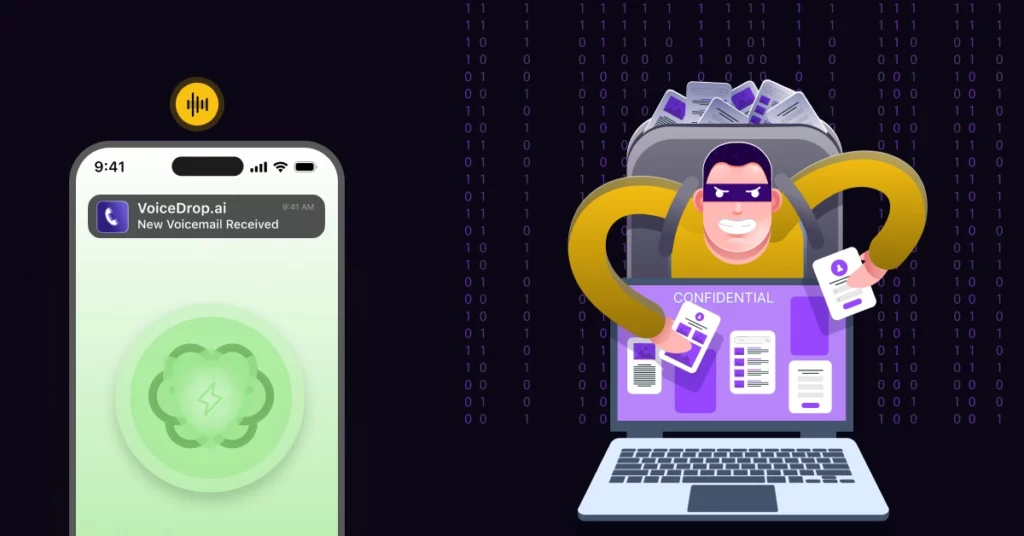
While spotting individual bad actors is important, IP analysis shines in detecting large-scale coordinated attacks.
Understanding IP Velocity
Catching “Fraud Farms” with Velocity Checks. Sophisticated fraudsters don’t submit one application; they submit hundreds.
IP Velocity tracks the frequency of requests. If 20 different loan applications (with 20 different names) originate from the same IP address within one hour, you are under attack.
Regardless of how “clean” the credit reports look, the IP velocity proves these applications are coming from a single source, a synthetic identity fraud ring.
Implementing IP Scoring in Your Workflow
The biggest fear for marketing teams is that adding security measures will hurt conversion rates. However, modern IP analysis is passive.
The Silent Check (Frictionless UX)
Security Without Friction Marketing teams often hate fraud tools because they add friction (like extra document uploads) that kill conversion rates.
IP Analysis is different. It is a passive check.
- No extra forms.
- No selfie requirements.
- Sub-millisecond response.
Your user never knows the check happened. You simply set your API thresholds:
- Score 0-20: Auto-Approve (Fast-track the funding).
- Score 61+: Auto-Decline (Block the bot).
For developers, you can integrate real-time IP scoring directly into your loan origination system with a few lines of code.
From Verification to Funding: Communication Strategy
Once 1Lookup confirms the applicant is real, you have a competitive advantage: Certainty.
You know the phone number is valid, and you know the device is a mobile phone (not a landline). This allows you to aggressively pursue the signature without fear of TCPA violations.
Automated Notifications with Ringless Voicemail
Email open rates are dropping, and phone calls often go unanswered. Don’t let your approval notification get buried in a spam folder.
A highly effective strategy is using Ringless Voicemail (RVM). This technology allows you to drop a friendly, pre-recorded reminder directly into the borrower’s phone notification center without ringing the device. A simple message like, “Hi, your loan application has been approved! Please sign the final docs in your portal,” can significantly boost conversion.
- Learn more: Ringless Voicemail for Lenders
Secure SMS Reminders
Since you have already verified (via your IP and phone line checks) that the user is on a mobile device and not a landline, you can safely utilize text messaging. SMS has a 98% open rate, making it the perfect channel to send secure links for document signing.
Using verified data ensures high deliverability and protects you from carrier blocking, making this a vital strategy for compliant mass texting during the onboarding phase.
The ROI of Fraud Prevention
Investing in verification tools should not be viewed as an expense, but as a profit protection strategy.
Reducing the “First Payment Default” Rate
The most painful loss for a lender is the “First Payment Default,” where a borrower is approved, takes the money, and never makes a single payment. This is the hallmark of Synthetic Identity Fraud.
By catching these actors before origination, you save 100% of the principal amount. When you consider the global cost of financial fraud, the ROI of blocking even one synthetic loan application covers the cost of verification software for the entire year.
Conclusion
In 2026, the winners in Fintech will be the lenders who can distinguish a human from a bot in under 200 milliseconds.
Don’t wait for the first payment default to realize you’ve been scammed. Use 1Lookup to verify the digital footprint, and VoiceDrop to close the verified borrower instantly.
Ready to secure your portfolio and boost funding rates? Start verifying and converting leads today.
FAQs
Can legitimate users be flagged by IP analysis?
Yes, false positives (like a user applying while on vacation or using a workplace VPN) can happen. This is why IP analysis should be a “flag” for manual review or step-up authentication, not always an instant ban.
Does this work for mobile banking apps?
Yes, the API can analyze IP addresses from mobile devices (4G/5G) just as easily as desktop connections. It can differentiate between cellular networks and public Wi-Fi.
Is using Ringless Voicemail for loan updates legal?
Yes, as long as the borrower has given consent during the application process to be contacted about their loan status, RVM is a compliant and effective way to communicate important updates like approvals or funding notifications.