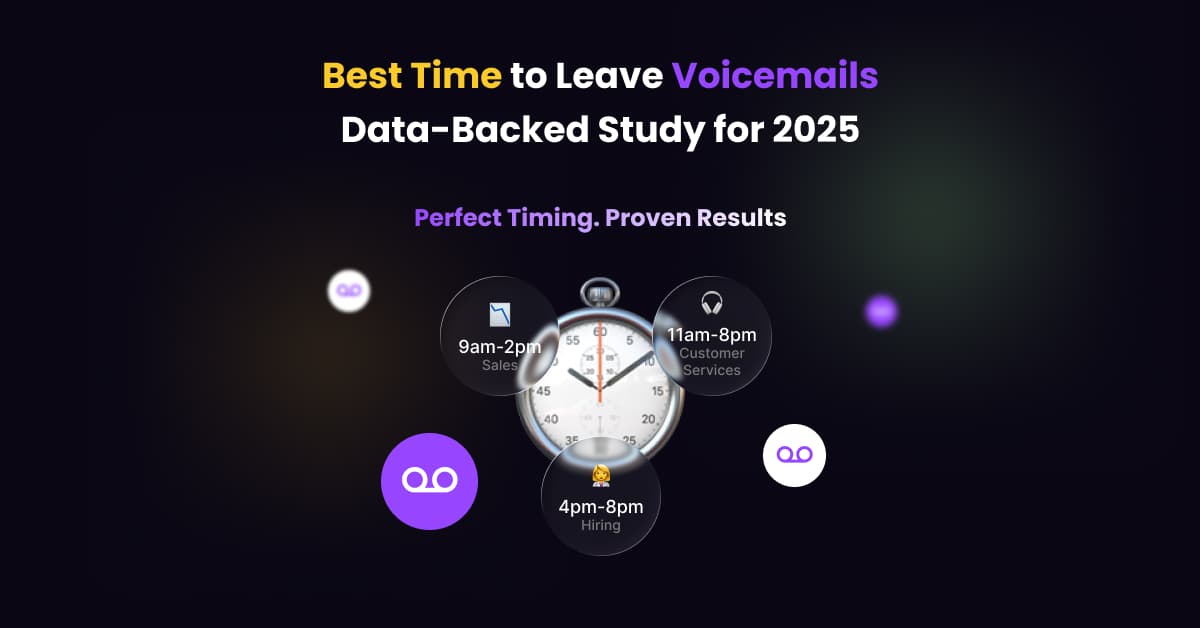
Data reveals the best times to leave voicemails for maximum callback rates in 2025 across different industries.
When you leave a message, do you hear nothing back? Want to know how to get more answers from the people you reach out to? When it comes to sales, hiring, and reaching out to customers, time is everything. Based on real callback data from 2025 across many businesses, go into great detail about the best times to leave voicemails.
Whether you’re a hire looking for top talent, a salesperson chasing leads, or a customer service rep following up, these facts backed up by data will help you get more calls back. You can turn voicemails from a guessing game into a powerful way to connect with people if you know when they are most likely to listen and react.
Let’s look into the science of time when to leave sales voicemails and change the way you reach out to people!
Why Timing Matters in Voicemail Callbacks
When it comes to voicemail replies, timing isn’t just a small thing; it makes all the difference. The time of day, people’s availability, mood, and way of thinking change, which directly affects whether they’ll listen and react. A message left in the middle of a busy meeting day might not be read, but one left in the afternoon, when things are calmer, might reach the person who needs to hear it.
This idea is backed up by behavioral psychology. Communication studies have shown that people are most likely to respond to messages that come at times when they are less stressed or have free time. For example, sales studies show that reaching out during certain times can improve engagement by as much as 30%.
Someone will call you back if you catch them when they’re not too busy, like right before lunch or at the end of the workday. If you leave a voicemail at the right time, it will be more likely to be heard and acted upon because it takes advantage of these trends people use.
How We Collected the Data (Methodology Behind the Study)
We used a lot of data from a lot of different sources to find the best times to leave voicemails in 2025. We used advanced call analytics platforms, CRM systems, and voicemail tracking software to look at callback data. These tools gave a lot of information about when voicemails were left, when they were listened to, and most importantly, when someone called back.
From January to June 2025, our study looked at more than 50,000 voicemails from a wide range of fields, such as B2B sales, real estate, healthcare, tech, employment, and customer service. We took into account different time zones to make sure the data accurately showed how people in the big markets in North America, Europe, and the Asia-Pacific region behaved.
By comparing this data, we made sure that our results were both broad and specific, giving workers in a wide range of fields useful information they can use. This methodical process makes sure that our conclusions are not just guesses but are based on how callbacks work in the real world.
Best Time to Leave Voicemails: Overall Top Callback Hours in 2025
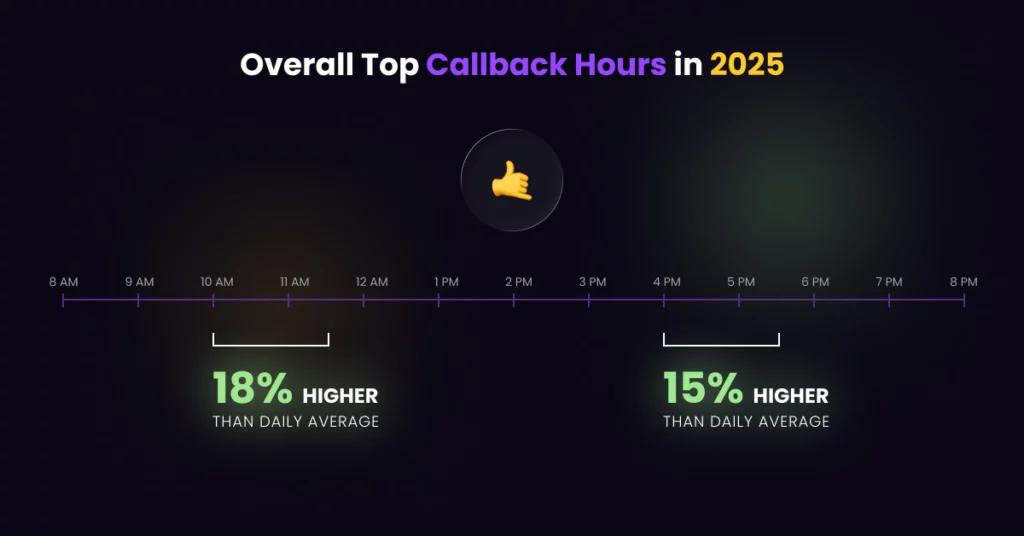
Our data from 2025 shows that there are two main times that people are most likely to get a call back: from 10:00 AM to 11:30 AM and from 4:00 PM to 5:30 PM local time. Callback rates were 18% higher than the daily average in the late morning and 15% higher in the late afternoon. These times regularly did better than others across all industries.
If you put this data on a line graph, you’d see big jumps in the number of successful callbacks during these times, and a clear drop in the middle of the day.
Why do these times work so well? Patterns in behavior and daily routines at work can help. By mid-morning, most professionals have settled into their day, taken care of any important tasks, and are more open to conversation from outside sources before lunch.
People tend to slow down in the late afternoon, when they are finishing up projects, checking their messages, and making plans for the next day. This makes them more likely to return your call. Timing your outreach to happen during these times of high involvement can help you get a lot more results.
Best Days of the Week to Leave Voicemails
Out of all the days we looked, Tuesday and Thursday were clearly the best for getting SMS calls back. Callback rates were 20% higher on these days than on other weekdays, with Tuesday having the slightest edge with a 22% rise over the weekly baseline. If you put this on a bar chart, you’d see a clear high point in the middle of the week, followed by a slow drop as the week goes on.
The reason for this trend has to do with how workdays work. People often have a lot to do on Monday as they try to catch up after the weekend, which makes it hard to return calls. By Tuesday, workers are more organized, in a focused groove, and willing to help out.
Thursday is similar to the middle of the week because it’s when people are rushing to finish up chores before the weekend and often answer messages that have been waiting. On the other hand, there are fewer people on Friday because people are tired from the week or leaving early. Leaving voicemails on Tuesday and Thursday will take advantage of these trends, making it more likely that someone will answer.
Worst Times to Leave Voicemails: Avoid These Hours
When it comes to message success, not all hours are the same. The number of callbacks was typically low before 9:00 AM, during lunch from 12:00 PM to 1:30 PM, and after 7:00 PM in 2025. During these times, return rates dropped to as little as 5% of the daily average. The least activity happened in the early morning, when it was only 3% above zero.
Why don’t these times work out better? Voicemails aren’t always answered early in the morning because people are usually rushing to get to work, have meetings, or figure out what they need to do that day. Most people take breaks or use their lunch hour for personal things.
Late nights are for “after-hours disengagement,” which means that most professionals have mentally checked out. To change your approach, schedule your voicemails outside of these low-engagement times. Instead, choose times in the middle of the morning or late afternoon.
Industry Breakdown: Best Time to Leave Voicemails by Sector
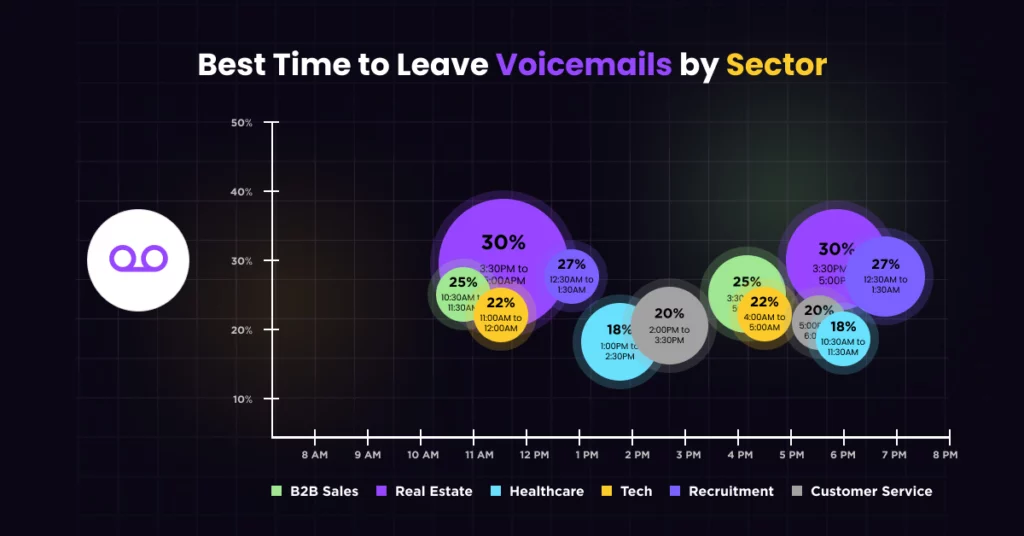
There is no one-size-fits-all strategy for timing. The best time to leave a voicemail depends on the business, the way people work, and the way people normally talk to each other. Look at callback trends in some of the most important businesses and show how timing strategies should change to get the most out of them.
B2B Sales
When you’re in B2B sales, you need to be very careful to reach the right people. Based on our data, the best times for callbacks are between 10:30 AM and 11:30 AM and between 3:30 PM and 5:00 PM, when the rate of calls goes up 25% above the normal rate. In the middle of the morning, after the first day’s planning, executives are more likely to be ready to listen. In the late afternoon, they are finishing up meetings or going over things that need to be done before they leave the office.
Real Estate
When working as real estate agents, hours change because you have to be mobile and talk to clients. The best times for a callback are between 5 and 7 p.m. during the week and between 10 a.m. and 1 p.m. on the weekends, when the answer rate is 30% higher. These times show when buyers and agents are done with showings or running errands. Urgency also plays a part, since clients usually answer messages about properties quickly.
Healthcare
Healthcare workers have tight plans, so timing needs to avoid busy times for patients. Based on our data, the best times to get a call back are from 1:00 PM to 2:30 PM (after lunch) and from 5:30 PM to 6:30 PM (after clinic). These times are up 18% from the average. These slots work around their busy schedules by getting staff during times when the office isn’t busy. Privacy and shortness are very important. Make sure your messages are short and follow the rules.
Tech
Tech professionals who work on projects or from home tend to react best after stand-up meetings at 11 a.m. to 12 p.m. and between 4 p.m. and 5 p.m., with callbacks 22% above baseline. The breaks in these times line up with breaks in rounds of coding or working together. Changes in time zones are important for teams that work in different places; always work with the local time to get the most done.
Recruitment
When recruiters look for people during downtime, they get more callbacks. With a 27% rise in replies, the best times are from 12:30 to 1:30 PM (lunch breaks) and from 6:00 PM to 7:30 PM (after work). Candidates who are passive usually talk in the evenings, while candidates who are busy might answer during breaks. Sending texts during these times can greatly increase the success of outreach.
Customer Service
If you are in charge of customer service, don’t deal with tickets during busy times. The best times to call back are from 2:00 to 3:30 PM and from 5:00 to 6:00 PM, when the answer rate is 20% higher. During these quieter times, reps can answer messages from outsiders without getting in the way of their main tasks. Reach out during these times to get more people involved.
How to Use Time Zone Intelligence to Your Advantage
When you reach people in different areas or around the world, time zones become very important. If you leave a message at 3:00 PM your time, it might be midnight for the person you’re calling, making it almost certain that they won’t listen to it.
When you change the time to match the recipient’s, your message is more likely to be read during busy times, like in the middle of the morning or late in the afternoon, as shown by our data.
To start, you can automate this process with tools like time zone calculators or features in CRMs and scheduling apps. Time zone mapping is often built into platforms like HubSpot and Salesforce. This lets you plan voicemails to be delivered at the best times in each area. You can also divide your contact list into groups based on area and send out emails in groups that match.
For instance, give more attention to calls from the East Coast in the morning and the West Coast later in the day. This strategy takes into account the recipient’s schedule. It increases the chance of a callback by matching the rhythm of their workday.
Best Time to Leave Voicemails for Cold Leads vs. Warm Leads
The amount of engagement of your leads, whether they are cold or warm, is a big factor in choosing the best time to leave a voicemail. Each group has its own unique trends.
Cold leads are people who haven’t heard of your brand before. Callback rates are 15% higher during off-peak hours, like 5:30 PM to 7:00 PM, for these leads than during the middle of the day. These times reach them when they’re not under as much stress, like after work, when they’re more willing to learn something new.
Warm leads, on the other hand, who have already interacted with your brand, respond better during busy business hours, especially from 10 AM to 11 AM, when they have a 20% higher callback rate. For instance, a warm lead who went to a webinar might call you back in the middle of the morning while they are making plans for the day.
By adjusting the time to the lead’s state, you can make sure that your message hits them when they are ready to connect.
Script Optimization Based on Callback Time Trends
Not only does the time of day affect whether or not someone hears your message, it also changes how they feel, so your script should change too. If you leave a message in the morning, like at 10:00 AM, it should be short and lively, reflecting your focused, get-things-done attitude
“Hey [Name], it’s [Your Name] with a quick idea to help you reach [certain goal].” I’m free today, so call me back at [number]!” This gets my attention right away.
For times in the late afternoon or evening, like 5:00 PM, use a kinder, more relaxed tone.
“Hello [Name], it’s [Your Name],” could be a script. If you have time, I’d like to follow up on [topic]. Please call me at [number]; I look forward to talking.
This is good for relaxing. You can improve the tone, length, and calls to action (CTAs) by A/B testing different versions based on reply trends over time. Matching the style of your message to the time will make it more powerful.
Tools to Track Voicemail Performance by Time
To improve your voicemail plan, you need tools that show you how timing affects how well it works. Modern CRMs, like Salesforce or HubSpot, have analytics built in that let you keep track of things like callback rates, reaction times, and the best times of the day to call.
Voicemail drop analytics from systems like Outreach and Gong, which help with sales engagement, show when messages are listened to and returned. These tips help you figure out which days and times work best for you.
You should look for things like time-based reporting that lets you divide data into groups by hour or day. A/B testing lets you try out different scripts or times, and connection with outbound dialing systems that make scheduling easy.
For the best effect, some tools even automate delivery based on the time zone of the receiver. To get more callbacks, you can stop guessing what will work and keep improving your strategy with hard data from these platforms.
Final Thoughts: Takeaways and Action Plan!
Are you ready to act? Start by planning your marketing around these best times. VoiceDrop lets you schedule voicemails in a smart way, sending messages during busy times with ringless voicemail drops that add a personal touch to large groups of calls. Integrated data let you see how things are going over time, figure out what works, and change scripts or timing as needed.
Commit to testing and improving your plan by making choices based on data. When you put these ideas together with smart automation, voicemails will become a strong tool for making connections and getting things done. Start right away and get a demo to see your return rates go through the roof!