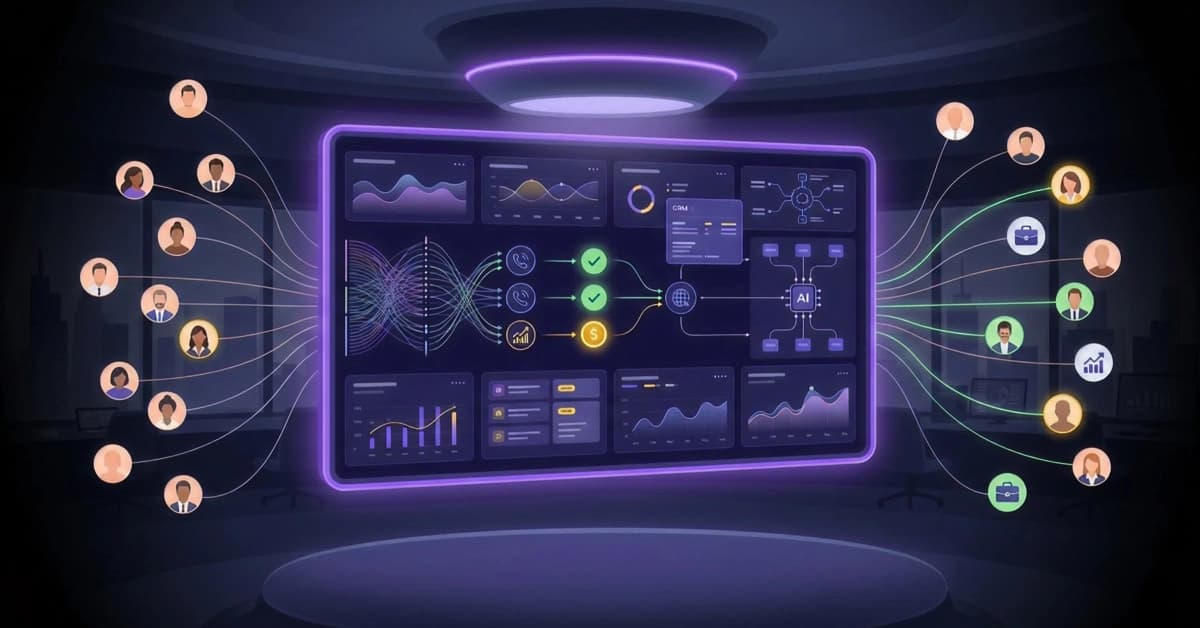
Enterprise telemarketing has evolved far beyond the crowded “call centers” of the past. Today, it is a complex, data-driven revenue engine where precision is just as critical as volume.
For modern organizations, the goal isn’t just “making calls,” it is orchestrating sophisticated outreach campaigns that integrate seamlessly with broader sales strategies.
However, scaling volume without sacrificing personalization remains the number one struggle for enterprise VPs. In an era where every lead costs more, your enterprise stack must do more than just dial; it must predict, connect, and convert.
Consequently, choosing the right [telemarketing tools for enterprise] is not merely an operational decision but a strategic imperative for revenue growth.
Why Legacy Systems Are Failing Large Teams
Many large organizations are still held back by the “elephant in the room“: clunky, outdated software built for a different decade. While these systems may be stable, they often lack the agility required to compete in 2026.
The Cost of Disconnected Data Silos
One of the most significant issues with legacy infrastructure is the prevalence of data silos. Old dialers that do not communicate bidirectionally with the CRM result in lost data, inaccurate forecasting, and frustrated sales reps. Enterprise teams cannot afford “blind spots” where customer interactions go unrecorded.
Therefore, if your dialer operates independently from your central database, you are likely losing valuable insights. This disconnect ultimately leads to a disjointed customer experience and missed revenue opportunities.
Moreover, even the best integration fails if the input data is flawed. To prevent “garbage in, garbage out,” you must stop wasting budget on dead numbers.
We recommend you verify your enterprise lead lists instantly with 1Lookup’s phone number validation before you dial to ensure your expensive infrastructure is working on valid leads. 1Lookup is built by the same team as VoiceDrop.
Inability to Scale with AI
Furthermore, legacy systems frequently struggle to integrate modern AI tools. As a result, sales teams using outdated tech are left behind competitors who utilize automation for tasks like voicemail drops and sentiment analysis.
Speed and adaptability are the new currencies in sales. Without AI, your team spends more time on administrative tasks and less time selling.
In fact, recent studies highlight significant sales productivity challenges that stem directly from an inability to adopt hybrid AI-human workflows.
Critical Features for Enterprise-Grade Tools
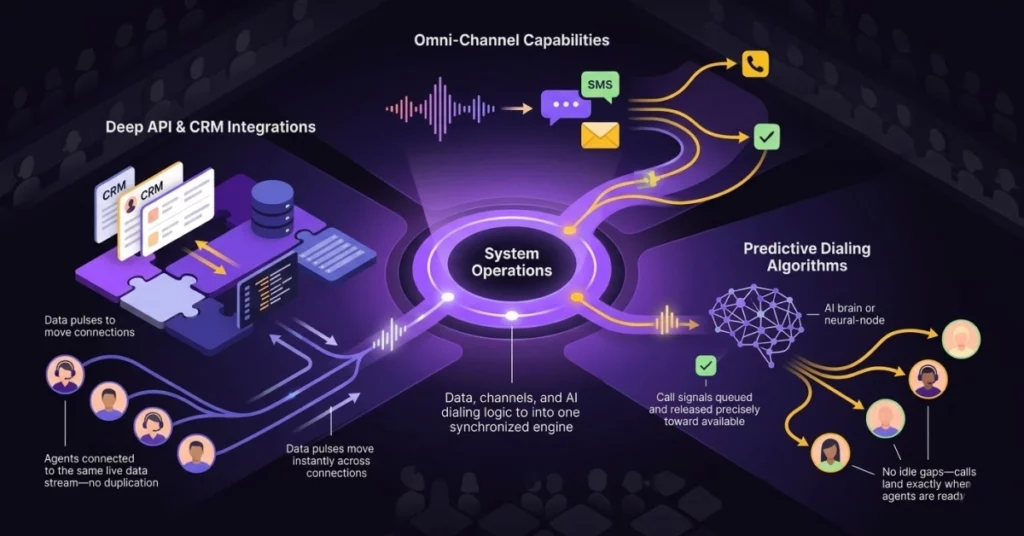
To drive genuine growth, you must distinguish between basic tools and true enterprise solutions. Here are the “must-haves” for a tool to be considered “Enterprise Ready.”
Deep-Dive API & CRM Integrations
First and foremost, it is not enough to simply “connect” to a CRM. The tool must support robust, bi-directional sync with platforms like Salesforce, HubSpot, or custom ERPs.
For teams of 50+ agents, real-time data flow is non-negotiable. Information must update instantly across all systems to prevent calling the same lead twice.
Implementing seamless CRM API integration ensures that your tech stack functions as a single, cohesive unit rather than a collection of fragmented apps.
Omni-Channel Capabilities
In addition to voice, enterprise tools must handle multiple communication channels. Modern outreach requires the ability to trigger SMS and emails automatically based on specific call outcomes.
For example, if a prospect does not answer, the system should immediately send a follow-up text, thereby increasing the chances of engagement.
Predictive Dialing Algorithms
Finally, efficiency at scale requires advanced dialing logic. Predictive dialing algorithms use AI to analyze answer rates and average call durations.
Consequently, the system predicts agent availability to minimize wait times, unlike basic power dialers used by smaller teams. This ensures that your agents spend their time talking to prospects, not listening to dial tones.
Top Rated Telemarketing Tools for Enterprise (2026 Review)
When evaluating the landscape, we must categorize solutions based on their primary operational strengths:
The Heavyweights (Genesys / Five9)
These are the traditional giants. Generally, they are excellent for large inbound support centers that require complex workforce management. However, they can be surprisingly slow and expensive to deploy for agile sales teams.
The Agile Contenders (Aircall / Talkdesk)
Newer players like Aircall have gained popularity due to their modern UI. They are excellent for ease of use, though they sometimes lack the deep, high-volume automation features required for massive outbound blitzes.
The High-Velocity Layer (VoiceDrop)
For organizations that need speed, VoiceDrop occupies a unique space. Rather than replacing your entire contact center, it acts as a “Speed Layer” that sits on top of these tools to handle massive outbound campaigns.
You can verify how these different approaches stack up by reviewing current enterprise software comparisons to see which feature set aligns with your specific KPIs.
How VoiceDrop Solves the “Volume vs. Cost” Problem

VoiceDrop addresses the critical balance between high-volume outreach and operational costs through innovative technology.
Ringless Voicemail for Mass Outreach
Imagine being able to reach your entire total addressable market in a single afternoon. With Ringless Voicemail (RVM), an enterprise can send 50,000 notifications or offers in an hour without hiring a single extra agent.
This technology delivers a pre-recorded message directly to the prospect’s voicemail server without ringing the phone. Thus, it respects the prospect’s time while ensuring your message is delivered.
By implementing enterprise ringless voicemail, you effectively filter your list. Your agents stop dialing cold leads and start speaking only to prospects who listened to the message and called back, effectively reversing the cold call.
White Label & Agency Solutions
Moreover, flexibility is key for large partners. Large organizations or marketing agencies can brand the solution as their own, ensuring brand consistency across all client interactions.
Using white-label telemarketing solutions allows enterprises to resell or repackage these powerful tools, creating new revenue streams while maintaining a cohesive corporate identity.
Security and Compliance at Scale
For Enterprise CTOs and legal teams, security is the most important section of any software evaluation.
TCPA and DNC Compliance
The legal risks associated with non-compliance are massive. Therefore, automated scrubbing against the Do Not Call (DNC) list is mandatory to avoid class-action lawsuits.
Ensure strict compliance by accurately identifying mobile vs. landline numbers. Validate your carrier data with 1Lookup.
Your software must handle these checks in real time, blocking calls to protected numbers before they are dialed. Adhering to strict telemarketing compliance rules is the only way to safeguard your organization’s reputation and finances.
Data Encryption & Call Recording
Additionally, data security protocols must be rigorous. Enterprise tools require secure storage of call logs and recordings for quality assurance and legal protection. Encryption, both at rest and in transit, ensures that sensitive customer data remains protected from breaches.
Advanced Analytics & Reporting for VPs
Ultimately, enterprise leaders don’t make calls; they read reports to make strategic decisions.
Real-Time Dashboards
Visibility is crucial for management. VPs need the ability to see live agent performance and campaign health in real time. Real-time dashboards allow managers to spot trends, correct course immediately, and identify high-performing scripts or agents.
Attribution Tracking
Even more importantly, you must connect activity to results. Attribution tracking involves connecting the call directly to revenue generated in the CRM.
By focusing on sales metrics that matter, leaders can determine the exact ROI of their telemarketing campaigns and allocate budget more effectively.
Conclusion
In summary, the telemarketing landscape is divided. While “Heavy” tools like Five9 handle support effectively, “Agile” tools like VoiceDrop drive new revenue through speed and automation.
For the best results in 2026, consider a hybrid stack: Use your main system for CRM and support, but plug in VoiceDrop for high-speed outbound campaigns.
Don’t let legacy software slow down your growth. Add the velocity layer your enterprise needs. Ready to scale your outreach securely? Schedule an Enterprise Demo today to see the difference.
FAQ’s
What is the difference between a predictive dialer and a power dialer for an enterprise?
A predictive dialer uses AI to dial multiple lines per agent based on answer probability, which is ideal for teams of 30+ agents to minimize downtime.
Conversely, a power dialer calls one number at a time, which is generally better for smaller, high-touch teams that prioritize call preparation over pure volume.
How do I ensure my telemarketing tools are TCPA compliant?
To ensure compliance, you must choose software that includes built-in DNC (Do Not Call) scrubbing, time-zone protection rules, and smart litigator scrubbing.
These features automatically prevent your team from calling restricted numbers or known predatory lawyers, keeping your operations safe.
Can VoiceDrop integrate with Salesforce or HubSpot?
Yes, enterprise-grade tools like VoiceDrop utilize Zapier and native Webhooks. This allows the system to sync call dispositions, recordings, and lead status directly into your major CRM in real-time, ensuring your data is always accurate and up-to-date.