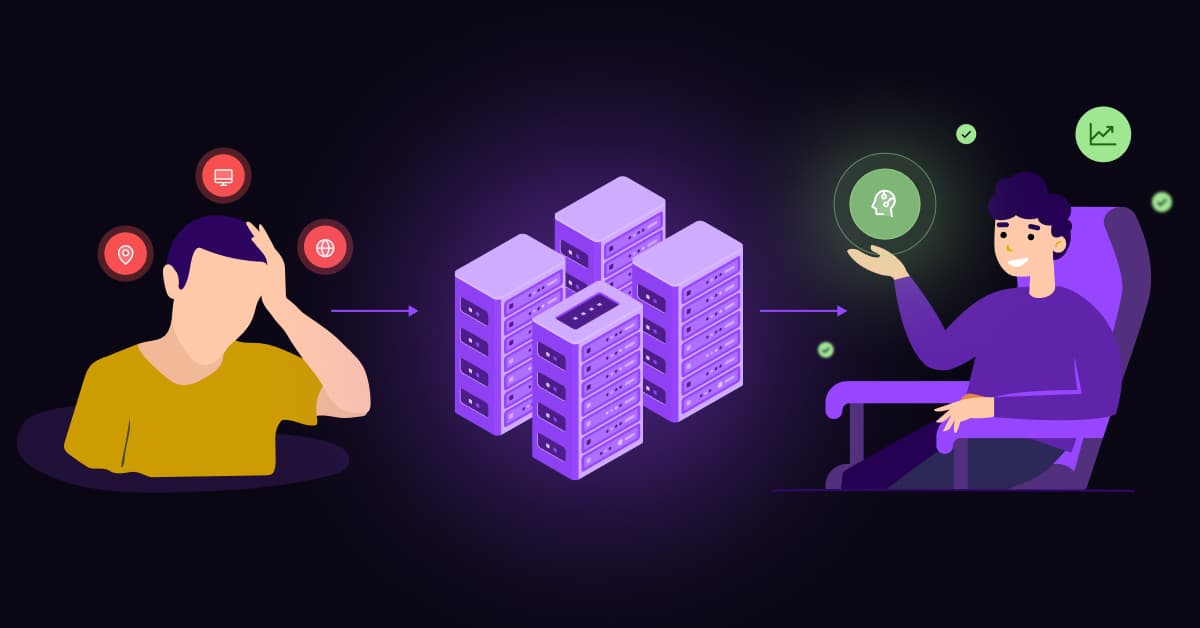
Every investigator, process server, and debt collector knows the feeling: You have a name, an old address, and a disconnected phone number.
You are staring at a “Cold Case.” The subject has “gone ghost,” leaving no digital footprint on the surface web.
For professionals in this industry, hitting a dead end isn’t just frustrating; it costs money. Spending hours manually searching Google, scrolling through social media profiles, or calling neighbors often yields nothing but outdated information.
In 2026, reliance on public search engines is a guaranteed way to fail. To close cases, you need a Professional Skip Tracing Tool. These tools act as a “digital detective,” bypassing the surface web to uncover hidden location data, connecting you with subjects who do not want to be found.
What is Professional Skip Tracing and How Does It Differ from “People Search”?
Skip tracing is the professional process of locating a person’s whereabouts for specific legal, debt recovery, or investigative purposes. Unlike casual searching, it is a systematic approach to data aggregation.
The Data Difference: Credit Header vs. Public Web
Free “people search” engines rely on static, scraped data that is often months out of date. Professional skip tracing tools leverage “Credit Header” data.
This is dynamic, real-time information pulled from the top of credit reports. When a subject applies for a loan or updates a billing address, that header updates instantly.
This gives you a live window into their current location, drastically increasing your Right Party Contact (RPC) rates compared to public web scraping.
The Role of Utility and Carrier Data
Beyond credit data, advanced tools aggregate utility and telecom information. When a subject moves, they inevitably turn on electricity, set up water service, or register a mobile device.
Professional tools pull data from these utility connections and mobile carrier updates to pinpoint a physical location with high accuracy, often before the subject has even updated their driver’s license.
Core Features Every Investigator Needs in a Skip Tracing Tool
Not all data providers are created equal. To solve difficult cases, you need specific technical capabilities.
Real-Time Gateway vs. Stored Databases
- Stored Databases: These are static repositories of data. They are cheaper to access but are typically updated only once a month.
- Live Gateway: This is essential for fugitive recovery. A live gateway hits the credit bureau in real-time. If the subject applied for a store credit card five minutes ago, a live gateway can see that inquiry address.
Relatives and Associates Mapping (The Social Graph)
Subjects who don’t want to be found will screen unknown numbers. However, they rarely cut ties with their inner circle. Top-tier tools generate a “Social Graph,” mapping out spouses, roommates, and neighbors. This allows you to leverage “double-blind” calls or leave messages with relatives, forcing the subject to reach out to you.
Asset and License Plate Recognition (LPR)
For repossession agents and private investigators, knowing where a person lives is helpful, but knowing where they drive is better.
High-end tools include vehicle sighting data (LPR) and asset ownership records (homes, boats), allowing you to predict where a subject and their collateral might be headed.
The Workflow: Batch Processing vs. Single Search
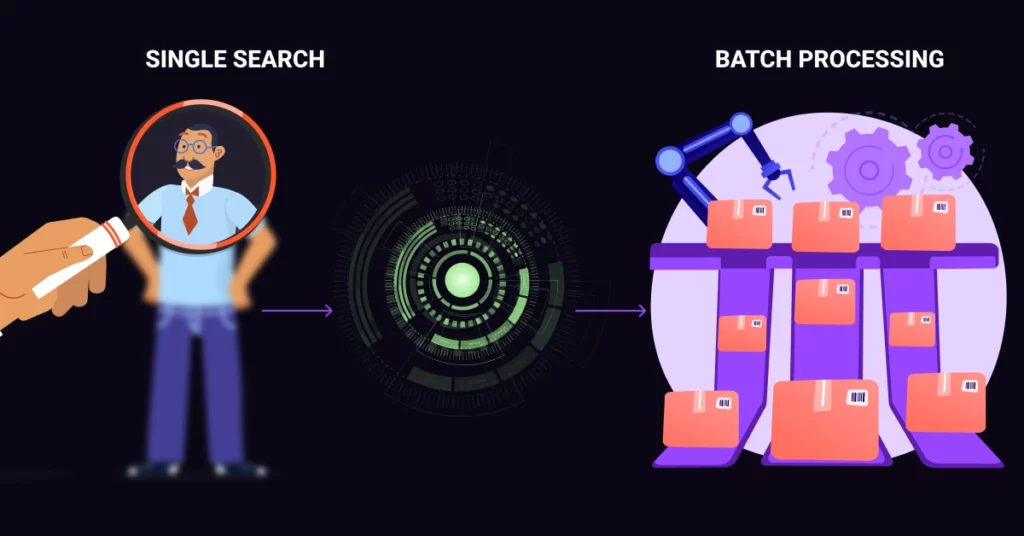
Depending on your caseload, you will utilize skip tracing in two distinct ways.
Single Search (Deep Dive Investigations)
This method is best for Private Investigators (PIs) working a specific, high-value case. It allows for a granular, manual review of address history, criminal records, and known associates to build a complete profile of a difficult subject.
Batch Skip Tracing (High Volume Collections)
Efficiency is key in debt recovery. Batch processing allows agencies to upload CSV files with thousands of records and instantly append updated phone numbers and addresses.
This bulk approach reduces cost-per-search and transforms a stagnant list into an actionable call queue in minutes.
Ensuring Legal Compliance (GLBA & DPPA)
Accessing sensitive personal data comes with significant legal responsibility. Using non-compliant tools can lead to license revocation and lawsuits.
Understanding Permissible Purpose (GLBA)
GLBA Compliance is not optional. Accessing credit header data requires a verified “Permissible Purpose,” such as debt collection, fraud prevention, or litigation. Using non-compliant tools that do not vet users puts your agency at risk of federal fines.
Always ensure your provider adheres to the Fair Credit Reporting Act (FCRA).
Driver’s Privacy Protection Act (DPPA)
Investigators must also be wary of the DPPA, which governs the access and use of DMV records. Strict rules apply to accessing driver’s license numbers and vehicle registrations. Always ensure your data provider verifies your permissible purpose before granting access.
For a deeper understanding of federal reporting guidelines, refer to the Fair Credit Reporting Act (FCRA) to ensure your investigation remains compliant.
From “Found” to “Contacted”: The Outreach Strategy
Finding the correct phone number is only Step 1. The goal is to make contact without violating harassment laws or wasting time on dead ends.
Verifying Line Types (Mobile vs. Landline)
Before you dial or send a text, you must know what kind of line you are targeting. Sending automated texts to landlines results in failed delivery, while using auto-dialers on mobile phones without consent can violate the TCPA.
Don’t risk TCPA violations by guessing. Before you load numbers into your dialer, verify carrier and line types instantly with 1Lookup to ensure you are only texting mobile numbers. 1Lookup is built by the same team as VoiceDrop.
Using Ringless Voicemail for Discrete Contact
For debt collection or sensitive investigations, an aggressive cold call can scare the subject off. A smarter approach is using Ringless Voicemail.
This technology allows you to deposit a pre-recorded message directly into the subject’s voicemail inbox without their phone ringing.
It is less intrusive and allows the subject to call back on their own terms, often resulting in higher callback rates. Learn more about how Ringless Voicemail Drops can streamline your outreach.
Integrating Skip Trace Data into Your CRM
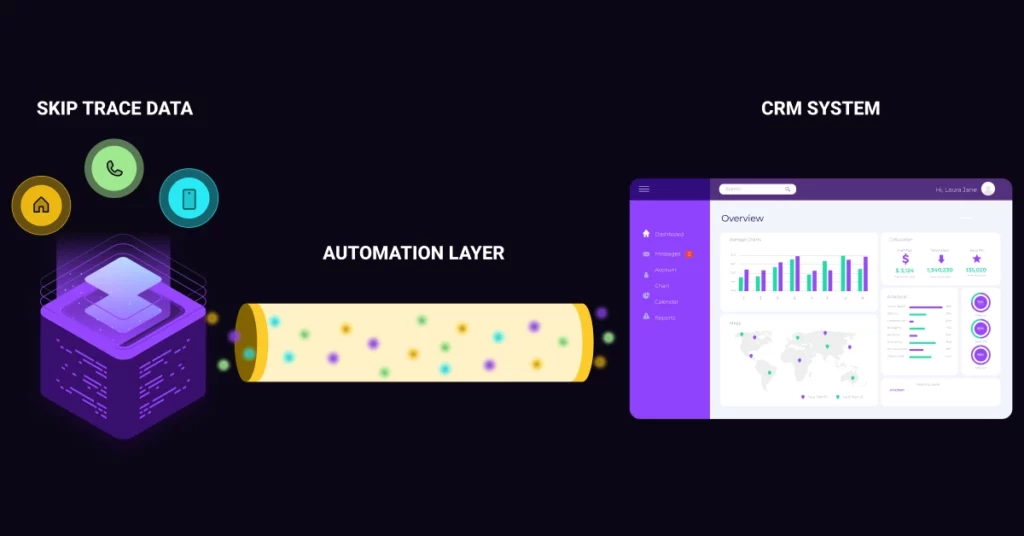
Data is useless if it is trapped in a spreadsheet. To maximize efficiency, your skip tracing results should flow directly into your case management software.
Automating the Flow to Salesforce, Clio, or Pipedrive
Modern skip tracing tools offer API connections. This means that as soon as a new address or phone number is found, it is automatically pushed to the correct file in your CRM. This eliminates data entry errors and ensures your team is always working with the freshest data.
Explore VoiceDrop Integrations to see how you can connect your data sources directly to your communication workflow.
Common Pitfalls and How to Avoid Them
The “Cheap Data” Trap
Beware of “unlimited search” plans for pennies. These providers typically sell stale data that is 1–3 years old. The money you save on the search is lost instantly in wasted man-hours dialing dead numbers.
Sanity Check: Not sure if your data provider is legit? Run a few numbers through a free lookup on 1Lookup. If the numbers come back disconnected, switch providers immediately.
Ignoring the “Do Not Call” (DNC) Scrub
Even if you find a valid number, debt collectors and telemarketers must respect the National Do Not Call Registry. Always run your skip-traced lists through a DNC scrub unless you have a specific exemption (such as an existing business relationship or debt collection purpose).
Conclusion
In the investigation industry, information is the only currency that matters. You cannot close a case you cannot locate. By upgrading to professional skip tracing tools and automating your outreach, you turn dead ends into closed files. Stop chasing ghosts and start making contact.
Ready to revolutionize your workflow? See it in action and automate your skip tracing and outreach today.
FAQ’s
What is the average hit rate for professional skip tracing?
Tier-1 providers typically deliver hit rates between 80-95% for identity matches and 60-80% for phone numbers, depending on the quality of the input data.
Is skip tracing legal for private individuals?
While basic public record searches are legal, accessing credit header data usually requires a verified business license and a documented “permissible purpose” under the GLBA.
How much does a skip trace cost?
Costs vary by volume and provider, generally ranging from $0.15 to $0.50 per successful hit for high-quality, real-time data.