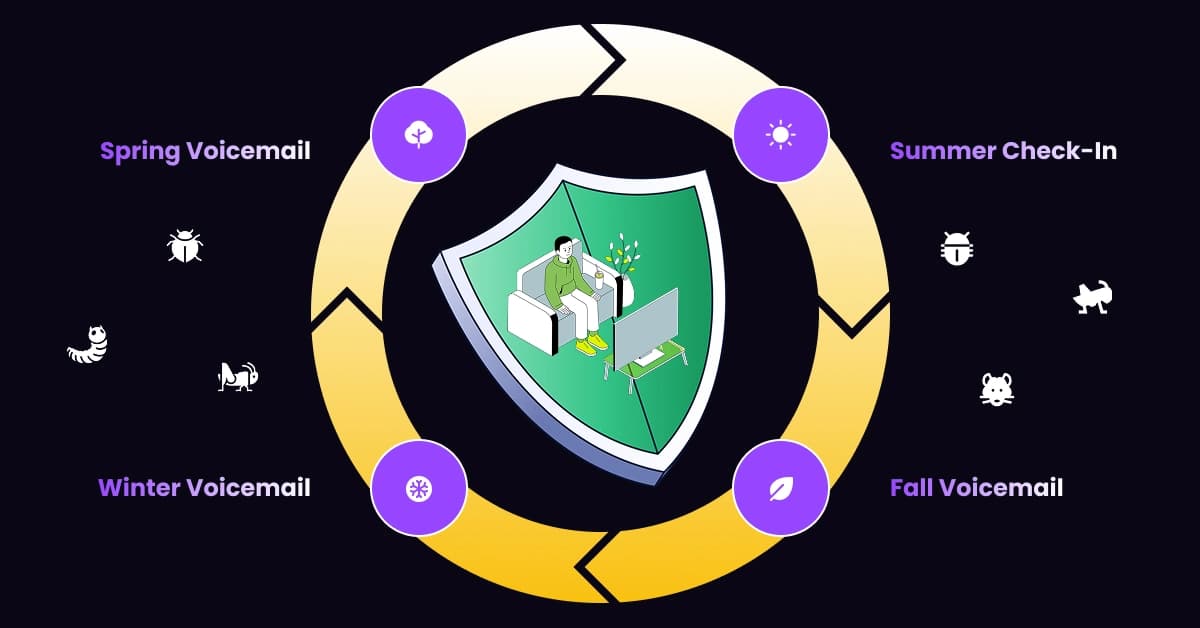
The “Winter Drop-off” isn’t just a seasonal trend; it’s a profit leak.
When the temperature drops in November, your phone stops ringing. The dispatch board empties, and customers start canceling quarterly services because they “haven’t seen a bug in weeks.”
But retention isn’t about killing bugs; it’s about communication. If your customers don’t hear from you, they assume they don’t need you. Implementing a “Seasonal Voice Loop” solves this. It keeps your value high even when pests aren’t visible, ensuring your recurring revenue remains stable year-round.
The Hidden Cost of “Silent Churn” in Field Service
Losing customers is bad for business, but the actual financial impact is often far worse than business owners realize. When communication goes silent, churn spikes.
The Cost of Acquisition (CAC) vs. Retention
Replacing a lost customer is significantly more expensive than keeping one. In fact, replacing a cancelled quarterly contract costs roughly 5x as much in marketing spend as keeping the existing one. Consequently, focusing your budget on acquisition while neglecting retention is a recipe for burning cash.
Perceived Indifference
Why do customers actually leave? Surprisingly, it is rarely due to a technician’s mistake. Statistics show that 68% of customers leave a business simply because they believe the business doesn’t care about them. This “Perceived Indifference” occurs when a customer hears from you only when a bill is due.
The LTV (Lifetime Value) Crumble
You must look at the bigger picture. One cancellation isn’t just a lost $99 service visit; it’s a lost $4,000 over the next 5 years when you factor in referrals the client would have provided. The lifetime value crumbles even further, proving that silent churn is a silent killer of profitability.
Why Voice Loops Outperform Email Drip Campaigns
You need to reach out, but the method matters. Email is saturated. To save a customer, you need a personal touch.
- The Open Rate Problem: Emails die in the “Promotions” tab. Homeowners ignore generic newsletters about “Winter Pests.”
- The Personal Touch of Audio: A voicemail feels human. It sounds like a technician calling specifically to check in. This triggers “Reciprocity,” the psychological urge to return the favor (and the call).
- Non-Intrusive Delivery: Unlike a cold call that interrupts dinner, Ringless voicemail marketing respects the homeowner’s time. You drop a friendly reminder directly into their inbox without the phone ever ringing.
Designing the “Seasonal Voice Loop” Strategy
The goal of this strategy is to create a continuous loop of communication. By staying ahead of the seasons, you prove your value.
Pre-Emptive Education
The key is contacting the customer before the season starts. You aren’t selling; you are warning them. If you wait until they see a bug, you are too late. You must position yourself as the expert who anticipates their needs.
Spring (The Awakening)
As the ground thaws, focus on ants and reproductive termites. Your script should be about “Perimeter Defense.” Remind them that establishing a barrier now will prevent an infestation later in the spring.
Summer (Peak Activity)
During the heat, focus on lifestyle pests like mosquitoes and ticks that ruin backyard fun. According to the National Pest Management Association, these pests are most active when families are trying to enjoy the outdoors, making it the perfect time to offer yard protection.
Winter (The Rodent Rush)
Finally, as winter approaches, focus on exclusion. Mice and rats are looking for warmth, and your home is their target. This is the ideal time to sell insulation checks and exclusion services to keep their home secure.
Step 1: Data Hygiene and List Segmentation
Precision is required. You cannot blast a message to your entire database and hope for the best.
Exporting from Your CRM
Pull lists from PestPac, FieldRoutes, or Jobber. Segment these lists based on “Last Service Date” to ensure you target the right people with the right message.
Identifying Mobile Numbers
It is important to note that ringless voicemail only works on mobile phones. Therefore, you must filter out landlines to avoid delivery errors and ensure your delivery rates remain high.
Cleaning the Data
Ringless voicemail only works on mobile phones. If you send drops to landlines, they will fail. Furthermore, you must ensure you are contacting the current homeowner. Calling the previous owner destroys credibility.
By utilizing tools that offer 1Lookup Data Coverage, you can verify homeowner details and mobile numbers before launching the campaign.
Step 2: Crafting the Perfect Retention Script
The tone must be a “Service Notification,” not a “Sales Pitch.” You are helping, not selling.
The “Value Add” Script
“Hi [Name], it’s [Company]. Just a heads up that tick season is arriving early this year. I wanted to see if you wanted a free yard inspection while our trucks are already in [Neighborhood] later this week.”
The “Missed You” Script
“Hi [Name], I noticed we haven’t been out to service the property in about 4 months. I want to make sure the spiders haven’t returned, so give me a call back if you’d like us to swing by.”
The Upsell Pivot
You can also use the check-in to introduce new services. For example, using the check-in to introduce Insulation or Wildlife services is a great way to increase ticket value without being pushy.
- 💡 Pro Tip: Don’t call the Previous Homeowner. Nothing kills a retention campaign faster than calling “Mr. Smith” when “Mrs. Jones” moved in 6 months ago. Before you launch your seasonal loop, ensure your contact details match the current property owner. Update Homeowner Data Instantly on 1Lookup ➔. 1Lookup is built by the same team as VoiceDrop.
Step 3: Automating the Workflow with VoiceDrop
Automation allows you to scale this personal touch without hiring more office staff.
- The “Golden Hour”: Schedule drops between 4:00 PM and 6:00 PM. This is when homeowners are winding down and checking notifications.
- Set Recurring Campaigns: Don’t do this manually. Set the system to trigger these loops every 90 days automatically.
- Handle the Inbound Flood: If you drop 1,000 voicemails, expect 50-100 callbacks immediately. Use VoiceDrop Integrations to connect your voicemail software to your CRM, ensuring your team is ready to book.
Compliance and Best Practices
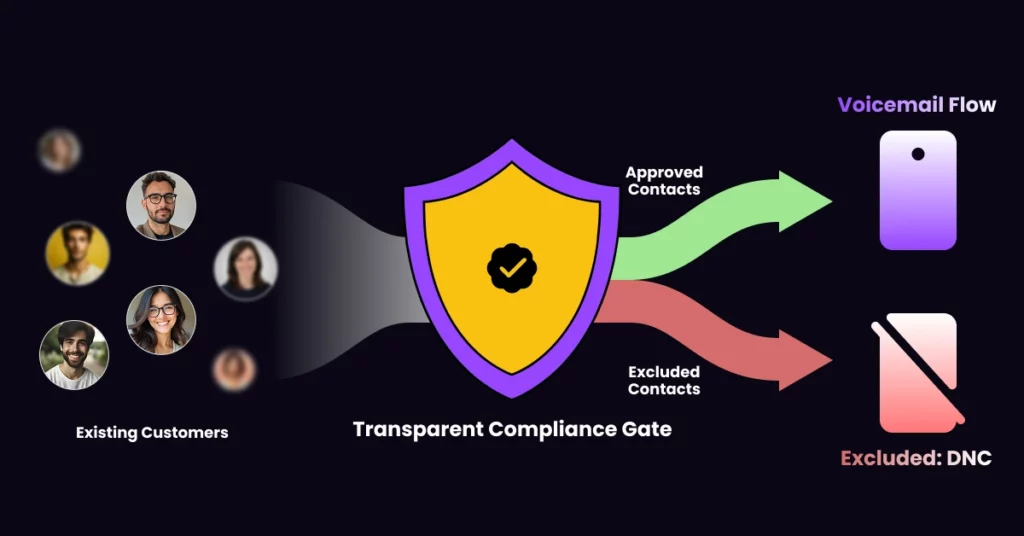
While automation is powerful, you must operate within legal boundaries to protect your business.
Existing Business Relationship (EBR)
Fortunately, TCPA rules are more flexible when you are contacting current customers about their service than when you are cold calling strangers. This “Existing Business Relationship” (EBR) allows for more direct communication.
DNC Scrubbing
However, even with current customers, it is best practice to respect those who have explicitly asked not to be called. Always refer to a TCPA compliance guide to ensure your campaign remains legally compliant and respectful of privacy.
Conclusion
Customer retention is the easiest, most cost-effective way to grow revenue. By automating communication through seasonal voice loops, you maintain relationships at scale.
Stop letting the winter freeze your revenue. Be proactive, stay top-of-mind, and Start Your Free Trial today to begin your seasonal voice loop.
FAQs
How often should I send a voice loop to my customers?
Ideally, you should send a voice loop once per quarter, about 2 weeks before the season shifts. This keeps you top-of-mind without being annoying.
Does this work for commercial pest control accounts?
Yes, but the script should be different. For commercial clients, you should focus on “Audit Readiness” and “Compliance” rather than comfort.
What happens if the customer doesn’t answer?
That is the beauty of Ringless Voicemail. It goes straight to their inbox, so they can listen to your message when they are free, significantly increasing the likelihood of a callback.