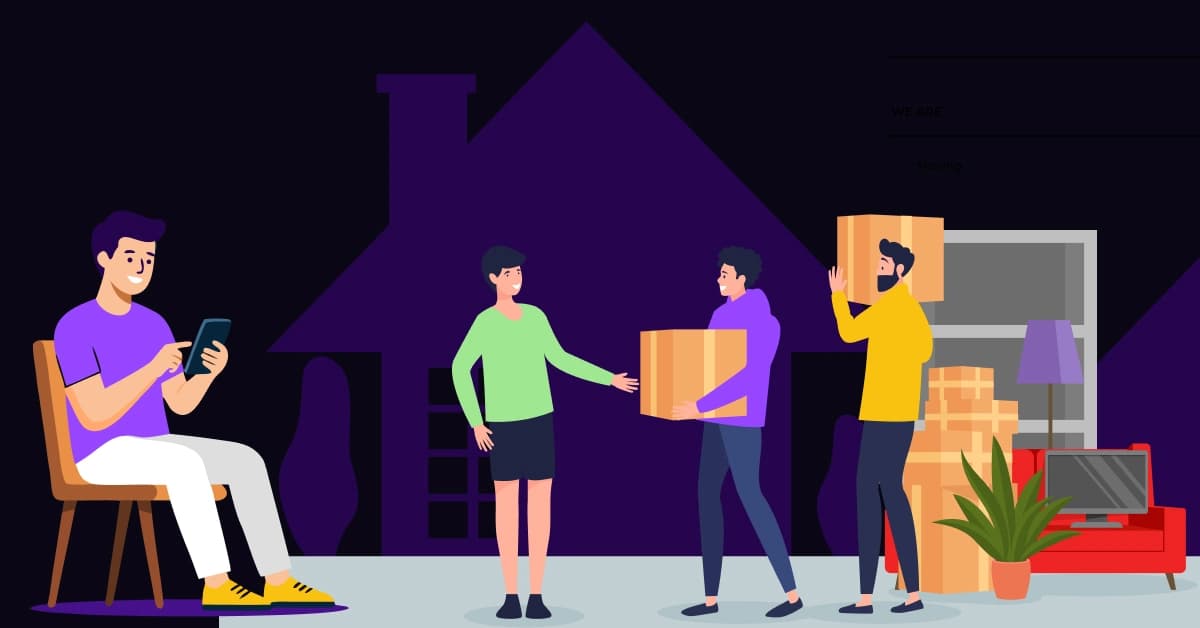
In the moving industry, second place is the first loser. It is a brutal “race to the lead,” and if you don’t book a customer within 10 minutes of their inquiry, your chances of securing that move plummet.
You know the nightmare scenario: A hot lead requests a quote. You call immediately. They don’t answer. You call again an hour later… silence. Suddenly, they are “ghosting” you, and your expensive lead has turned into a dead end.
The problem isn’t that you aren’t calling enough; it’s that you are calling with the wrong message. To break the silence, stop asking for the sale and start offering immediate value. This is where the “Free Boxes” Hook changes the game.
Why Traditional Follow-Up Fails (The “Just Checking In” Trap)
Most moving sales teams use the same tired script: “Just checking if you’re still moving.“
This voicemail adds zero value to the customer’s day. It is just noise. Your leads are currently experiencing peak “Sales Resistance.” Moving is stressful, and a single quote request often triggers an avalanche of calls from ten different hungry movers. Overwhelmed and annoyed, customers start screening their calls to avoid the pressure.
The data confirms this reality: 78% of customers buy from the company that responds first. But if you miss that 5-minute window, your odds of qualifying for that lead drop by 80%. Once that window closes, a generic “checking in” voicemail won’t reopen it. You need a pattern interrupt.
The Psychology Behind the “Free Boxes” Hook
To revive a dead lead, you must leverage a powerful psychological trigger: The Principle of Reciprocity.
This social norm dictates that when someone offers us value upfront, we feel a natural, subconscious urge to reciprocate. You can dive deeper into how this drives negotiation by studying the Principle of Reciprocity.
Why boxes? Because they are a universal pain point. Every person moving needs boxes, yet everyone hates paying for them or hunting for them behind grocery stores.
By offering them for free, you signal that you are helpful rather than just sales-hungry. Consequently, the lead is far more likely to return your call, not just to claim the boxes, but to discuss their move.
The Economic Logic: Cost vs. Customer Acquisition
For the skeptical business owner, giving away inventory might sound like a loss. But let’s look at the Customer Acquisition Cost (CAC) logic:
- The Investment: A bundle of 10–15 boxes costs roughly $20–$30.
- The Return: The average local or long-distance move brings in $1,500 – $5,000+.
Spending $30 to secure a $3,000 move isn’t a loss; it is a highly efficient marketing expense. Compare this to the cost of buying fresh leads that never convert. Investing in a “loss leader” to close a lead you have already paid for is the smartest ROI play in your playbook.
In comparison, buying fresh leads that never convert is far more expensive. Ultimately, investing a small amount in a “loss leader” like boxes is significantly cheaper than losing the customer entirely.
Step-by-Step: Automating the “Free Boxes” Campaign
Manual execution of this strategy is impossible. You cannot have high-paid sales reps manually calling every dead lead to offer cardboard. It takes too much time. You need to automate this using Ringless Voicemail (RVM).
The Workflow Setup
- Sanitize Your Data: Before automating, ensure you aren’t messaging dead numbers. Validate your lead list for free with 1Lookup’s phone lookup tool to ensure every voicemail reaches a real person. 1Lookup is built by the same team as VoiceDrop.
- Trigger the Status: Set your CRM to change a lead’s status to “Stalled” if there is no contact after 24 hours.
- The Drop: VoiceDrop detects this status change and instantly sends a Ringless Voicemail to their mobile device.
- The Result: The voicemail drops silently in the background. The prospect sees a notification, listens to the value-first offer, and calls you back.
This process happens entirely on autopilot. To visualize this workflow, you can see VoiceDrop in action.
The Exact Script to Use. The script must sound casual, “off the record,” and genuinely helpful to work.
- Script: “Hey, this is [Name] with [Company]. I saw you were looking for a move, but we haven’t connected. I have a stack of extra moving boxes at the office I’m trying to get rid of. If you still need boxes, give me a call back, and you can have them for free. My number is…”
Why it works: It removes the pressure to sell. It sounds like a friendly tip from a local business, not a call-center pitch.
The Exact Script to Use
The success of this campaign depends heavily on the delivery. The script must sound casual, “off the record,” and genuinely helpful.
Script: “Hey, this is [Name] with [Company]. I saw you were looking for a move, but we haven’t connected. I have a stack of extra moving boxes at the office I’m trying to get rid of. If you still need boxes, give me a call back,k and you can have them for free. My number is…”
This script is effective because it removes the sales pressure. It sounds like a friendly tip rather than a pitch.
Integrating with Your Moving CRM
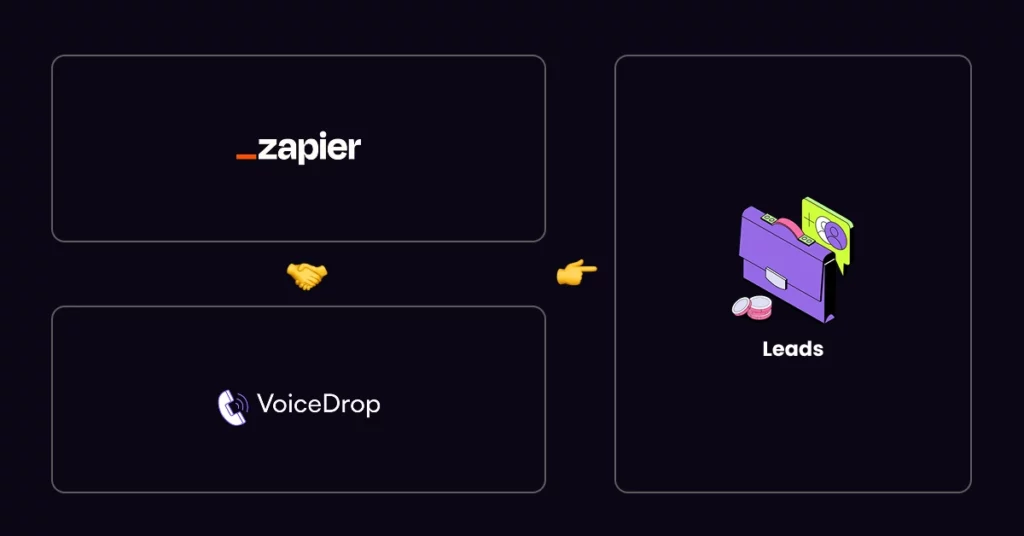
For this strategy to be scalable, it must live inside your existing software ecosystem. Whether you use SmartMoving, MoveGurus, or Salesforce, the automation should trigger without manual input.
Fortunately, modern tools allow for seamless connections. VoiceDrop integrates via Zapier or API to trigger these voicemails based specifically on “Lead Status” changes in your CRM. You can explore the full range of VoiceDrop Integrations to see how it fits into your current tech stack.
Compliance & Best Practices for Movers
Before launching this campaign, you must address the legal landscape. Moving is a heavily regulated industry, and telemarketing regulations are equally strict.
TCPA and Consent. Even if you are offering free items, you must have “prior express written consent” to use automated technologies such as Ringless Voicemail on mobile phones. Never skip this step. For general industry guidelines, moving companies should stay up to date with resources such as FMCSA Protect Your Move.
Technical Compliance (Mobile vs. Landline) Ringless Voicemail and SMS only work on mobile devices. Sending these to landlines will result in errors and potential compliance flags.
- Pro Tip: Ensure your campaigns land correctly by checking line types on 1Lookup. This instantly separates mobile numbers from landlines, keeping your domain reputation safe.
Advanced Strategy: The “Double Tap” (SMS + RVM)
To maximize your response rate, consider using the “Double Tap” method. This involves sending a text message immediately after the voicemail lands.
The text reinforces the offer and makes it easy for them to reply.
- Text Script: “Hey, left you a voicemail about those free boxes. Let me know if you want me to set them aside for you. – [Name]”
This combination ensures your message is seen and heard, doubling your chances of engagement.
Conclusion
Dead leads represent a massive amount of lost revenue, but they don’t have to be a lost cause. By shifting your approach from “asking for the sale” to “offering free value,” you can revive these ghosts and fill your calendar.
A simple box offer can be the key to breaking the silence. Don’t let your hard-earned leads slip away to competitors who are willing to be more creative. Automate your follow-up today.
Ready to implement this strategy? Start Your Free Trial now and turn your dead database into a goldmine.
FAQ’s
Does the “Free Boxes” strategy work for long-distance moves?
It is most effective for local moves where the client can easily pick them up, or you can drop them off. For long-distance moves, you should offer a “Packing Kit Credit” or a voucher instead, as physical delivery may not be feasible.
Is Ringless Voicemail legal for moving companies?
Yes, it is legal, provided the lead has consented to being contacted. You must always adhere to TCPA guidelines to avoid penalties. For a detailed understanding of the rules, you can review the TCPA Rules Summary.
How many times should I follow up with a moving lead?
Industry data suggest that it takes 5-7 touchpoints to close a deal. Unfortunately, most movers stop after just 1 or 2 calls, effectively leaving money on the table for their competitors.