Every modern salesperson knows the feeling. You spend hours curating the perfect lead list, dial with high energy, and wait. Silence. You make 50 calls and get zero pickups.
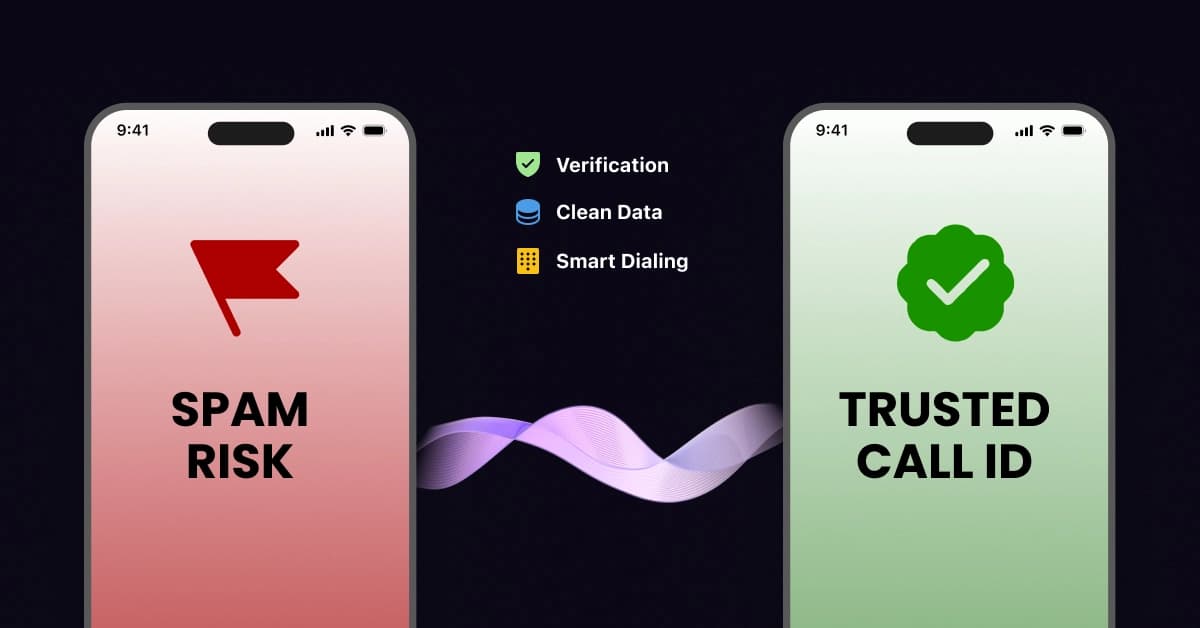
Then, you realize the truth: your number isn’t showing up as your business name. It’s flashing “Scam Likely” or “Spam Risk” on their screen.
This isn’t just paranoia; it is a revenue killer. In 2026, carrier algorithms are aggressive. If you get flagged, your outreach is dead on arrival. However, this isn’t a life sentence. With proper registration, strict data hygiene, and strategic dialing habits, you can restore your reputation.
The Anatomy of a “Spam Likely” Flag
To solve the problem, you must first understand why it is happening. Crucially, you need to realize that this is not personal. There is no human at AT&T or Verizon manually adding your company to a blocklist. Instead, it is a mathematical equation run by automated systems designed to spot patterns.
The Algorithms Are Watching (Volume & Velocity)
To fix the problem, you must understand the math behind it. There is no human at AT&T manually blocking you. Instead, automated algorithms flag you based on two specific behaviors:
- Volume & Velocity: If a single number makes 100+ calls in an hour, the system flags it immediately.
- Short Call Duration: If you make hundreds of calls that last under 15 seconds (typical of hang-ups), the algorithm assumes you are a robocaller.
Aggressive dialing without meaningful conversation is the fastest way to burn a number.
The Role of SHAKEN/STIR Protocols
In addition to behavioral patterns, there is a technical layer known as SHAKEN/STIR. This is an FCC framework designed to combat illegal caller ID spoofing. It is the technology that verifies if a call is actually from whom it claims to be.
If your number has a low “Attestation Rating” (specifically Level C), carriers cannot verify the call’s origin, and you are automatically treated as suspicious. For a deeper understanding of these regulations, you can review the official FCC Call Authentication framework.
The Immediate Fix: Registering Your Reputation
Once you know you are flagged, you need to tell the carriers that you are a legitimate business. Fortunately, you do not have to call every telecom provider in the world to prove your innocence.
The “Free Caller Registry” (The Holy Grail)
Stop guessing and start registering. You do not need to call every carrier individually to prove your innocence.
- The First Step: Submit your data to the Free Caller Registry. This portal submits your legitimate business details to the three major analytics engines (Hiya, First Orion, and TNS) simultaneously. This one action clears your reputation across nearly all major US carriers at once.
Handling Carrier-Specific Remediation Portals
While the central registry is powerful, sometimes stubborn flags remain on specific networks. In such cases, you must appeal directly to the carrier. Below is a list of direct dispute portals for the major providers:
| Carrier | Analytics Partner | Remediation Action |
| AT&T | Hiya | Submit a request via the Hiya support ticket system. |
| T-Mobile | First Orion | Use the T-Mobile Call Reporting site to correct the label. |
| Verizon | TNS | Register your number on the TNS Call Guardian portal. |
The “Behavioral” Fix: Changing How You Dial
Registering your numbers is only half the battle. If you register your business but continue to dial like a spammer, the algorithms will flag you again within days. Therefore, you must fundamentally change your approach to outreach.
The 30-Day Number “Warm-Up” Strategy
A common mistake is buying a new number and immediately blasting 200 leads on Day 1. This “0 to 100” activity is unnatural and suspicious. Instead, you should implement a 30-day “warm-up” strategy to build trust.
- First 5 Days: Make only 10-20 calls per day per number.
- Next 10 Days (6-15): Gradually increase to 30-40 calls per day.
- Remainder of Month (16-30): Ramp up to standard volume (50-60 calls).
By slowly increasing traffic, you establish a history of legitimate usage. Do not rush this process.
⚠️ Pro Tip: Don’t Warm Up with “Dead” Data. Your reputation score drops with every failed call. If you dial disconnected numbers during your warm-up, you will be flagged immediately. Run a Free List Check on 1Lookup to remove bad numbers before you dial.
Avoiding “Short Call” Penalties
As mentioned earlier, carriers hate calls that last less than 6 seconds. This “short call” duration is a signature of a robocaller or predictive dialer that hangs up when it reaches voicemail.
To avoid this penalty, instruct your sales teams to stay on the line. Even if they hit a voicemail, they should leave a message. This extends the call duration past the 15-second mark, signaling to the carrier that a human is on the line.
The Role of Data Hygiene in Reputation Management
Your dialing habits are important, but who you dial is equally critical. Connecting bad data to your phone lines is a surefire way to destroy your reputation score.
The Danger of “Honeypot” Numbers
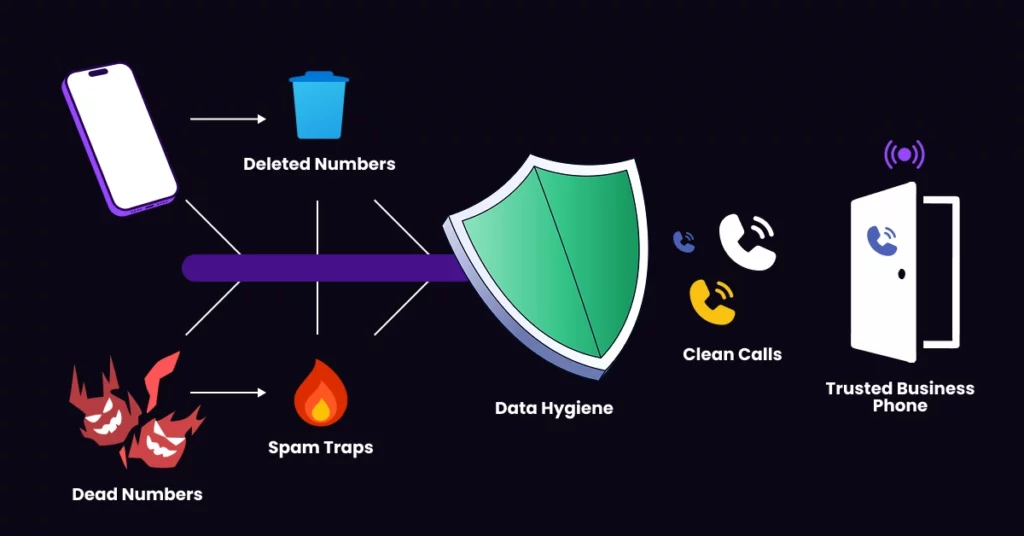
Carriers and spam blocking companies own inactive phone lines known as “Honeypots.” These are numbers that real users have disconnected and repurposed to trap spammers. If your dialer calls a number that has been dead for a year, the carrier knows instantly that you are using an old, purchased list. Consequently, they flag you immediately.
Cleaning Your List Before You Dial
To prevent hitting these traps, you must scrub your lead list. This process identifies mobile and landline numbers and removes dead numbers. Ultimately, this protects your number’s health score by ensuring you only dial active, real humans.
🛡️ Stop Dialing “Spam Traps”. Are you accidentally calling numbers that damage your reputation? Identify and remove ‘Spam Traps,’ landlines, and disconnected numbers instantly. Verify Your List with 1Lookup. 1Lookup is built by the same team as VoiceDrop.
Alternative Strategies: Bypassing the “Ring” Entirely
Sometimes, the best way to win the game is to change the rules. If aggressive spam filters are blocking your calls, consider using technology that bypasses the “call” event entirely.
Why Ringless Voicemail (RVM) is Safer
The most dangerous trigger for a spam flag is a “Short Duration Call” (under 6 seconds).
Ringless Voicemail bypasses this risk entirely. Since the message is dropped directly to the server without ringing the phone, there is no “call event” for the algorithm to flag. You deliver your full message without triggering the spam filters that guard the live call path.
To learn more about how this technology works, you can explore Ringless Voicemail Marketingstrategies.
Mixing Channels (SMS + Voice + Email)
Reliance on a single channel is risky. Don’t rely 100% on calling. Instead, use a multi-channel approach. By spreading your outreach across SMS, Email, and Voice, you reduce the load on your phone lines. This keeps your volume per number within safe limits while increasing the total touchpoints with your prospect.
Technical Setup: CNAM and Attestation
For IT managers and operations leads, fixing the backend technical configurations is just as important as the behavioral changes.
Fixing Your CNAM (Caller Name Display)
First, ensure your CNAM (Caller Name) is registered correctly. If your number displays as “UNKNOWN CALLER,” consumers will block it. If it displays as “ABC Plumbing,” they are more likely to answer. Verify that your business name is spelled correctly in the national CNAM database.
Integrating with Compliant CRMs
Additionally, the software you use matters. Ensure your dialer or CRM passes the correct “Identity Header” to receive an “A-Level” attestation token under SHAKEN/STIR rules. Using non-compliant software often results in lower trust scores.
For seamless setup, check out our guide on CRM Integrations that support proper dialing protocols.
Monitoring and Maintenance
Fixing “Spam Likely” is not a one-time task; it is an ongoing process of reputation management.
Weekly Reputation Checks
You should not wait for your sales team to complain about low answer rates. Advise the user to check their own numbers weekly using public tools to ensure a flag hasn’t reappeared. Vigilance is the only way to maintain a clean caller ID.
Rotating Numbers (The Last Resort)
In some extreme cases, a number may be “burned” beyond repair. If a flag persists despite all remediation efforts, you may need to retire that number. However, when you purchase a new one, remember to start the warm-up process from scratch.
Conclusion
Your phone number’s reputation is as valuable as your credit score. Don’t let an algorithm decide your revenue for the month.
The “Spam Likely” label is solvable, but only if you act. Register your numbers, clean your data, and switch to smarter tools like RVM to bypass the noise. Ensure your prospects hear your pitch, not your silence.
Ready to automate your outreach and protect your reputation? Start Your Free Trial of VoiceDrop Today
FAQs
How long does it take for “Spam Likely” to disappear?
Usually, it takes 24 to 72 hours for the label to disappear after registering with the Free Caller Registry. However, stubborn flags on specific carriers can take up to 7 days to clear fully.
Does Ringless Voicemail show up as Spam Likely?
Generally, no. Because the phone doesn’t ring, the carrier’s real-time call screening algorithms are often bypassed, delivering the message directly to the voicemail inbox without triggering a spam alert.
Can I just buy a new number to fix it?
Yes, you can buy a new number, but it is a temporary fix. If you don’t fix your dialing habits (e.g., calling bad data or calling too fast), the new number will be flagged within a week.