
Are your Cold Calls failing to connect with decision-makers? Is your B2B Sales Cycle stalling because key prospects never return your calls? How can you scale your Outbound Sales efforts while making every touchpoint feel personal? The key to unlocking B2B sales growth is B2B Voicemail Marketing. This strategy uses personalized voice messages to cut through the noise of crowded inboxes and generic outreach. It transforms a frustrating “no connection” into a warm, high-intent callback.
This expert guide explains how B2B companies are using automated Voice Mail drops to drive engagement and close more deals in 2025. You will learn the clear benefits, practical implementation steps, and smart strategies for maximizing your callback Response Rates. We will cover how to personalize your Voicemail Message, track success, and leverage automation tools like VoiceDrop.ai to scale your campaigns without losing the human touch.
What Is B2B Voicemail Marketing?
B2B Voicemail Marketing is a targeted sales strategy. It involves sending personalized Voice Mail Messages directly to a business prospect’s voicemail inbox. This happens without making the recipient’s phone ring. This method is often called “ringless voicemail drop” technology. It uses specialized software to deliver the audio file directly to the network.
This approach differs significantly from mass B2C marketing. B2B campaigns focus heavily on personalization, relevance, and precise timing. The goal is not just high volume. The goal is to connect with the right person at the right company. B2B Voicemail Marketing plays a critical role in the early stages of the Sales Cycle. It allows sales development representatives (SDRs) to introduce themselves and their value proposition non-intrusively. Compared to traditional Cold Calls, which are often ignored, B2B Voicemail Marketing offers a polite, efficient alternative. VoiceDrop offers a highly effective method for direct-to-voicemail marketing. You can read more about how this compares to traditional methods.
Why Voicemail Marketing Works for B2B Sales
Voicemail Marketing succeeds where other channels fail because it taps into natural human psychology. Hearing a personalized Voicemail Message triggers a stronger emotional and auditory response than reading an email or text. It humanizes the sender. This makes the recipient more likely to engage.
Personalized Voicemail Messages increase engagement by proving the message is meant specifically for the recipient. When a prospect hears their name and company mentioned early in the Voicemail Message, they immediately pay more attention. This attention translates directly into higher callback Response Rates. The perceived effort of leaving a personal voicemail shows commitment. It suggests the sender is a real person, not just a faceless bot. This leads to better recall and creates more conversion opportunities later in the Sales Cycle. Ringless delivery also respects the recipient’s busy schedule, making the prospect feel valued rather than annoyed. This low-friction approach is ideal for reaching a busy Target Audience.
How B2B Companies Implement Voicemail Marketing
Implementing effective B2B Voicemail Marketing requires more than just sending a recorded message. Companies must structure and execute campaigns strategically. They focus on practical tactics that increase engagement, improve callbacks, and drive sales. This process uses data to ensure personalization and proper timing.
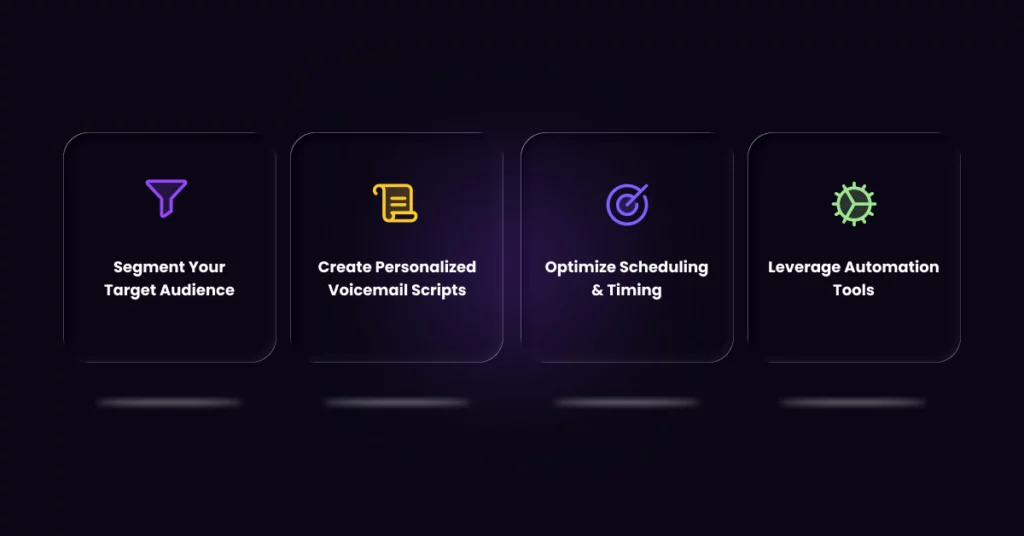
Segmenting Leads
Effective Voicemail Messages start with accurate segmentation. Describe how to categorize leads based on industry, company size, role, or previous interactions. Categorizing leads helps sales teams tailor the message. Segmentation ensures that every Voicemail Message is highly relevant to the recipient’s specific challenges. Targeting the right Target Audience improves message relevance dramatically. This directly results in higher Response Rates.
Crafting Effective Voicemail Scripts
Voicemail Scripts must be clear, concise, and persuasive. The message needs a strong opening that grabs attention, quickly states the value, and includes a single, clear call-to-action (CTA). Guidance on Voicemail Length is crucial: keep it short, ideally under 30 seconds. Avoid unnecessary details, jargon, or long explanations. Focus instead on personalization elements that hook the listener. A clear CTA tells the prospect exactly what to do next. Learn tips for writing effective [sales voicemail scripts for B2B results.
Scheduling & Timing Strategies
Timing your Voicemail Messages is essential. Highlight data-backed best times and days for leaving B2B Voice Mail Messages to maximize callbacks. Research often suggests mid-morning (10 AM to 11 AM) or mid-afternoon (2 PM to 4 PM) yields higher Response Rates. Proper timing aligns the message delivery with the recipient’s availability and decision-making cycles. Scheduling tools ensure your campaign hits the Target Audience when they are most likely to listen and respond.
Using Automation Tools
Scaling B2B outreach is impossible without automation. Platforms like VoiceDrop.ai introduce automation for scaling Voicemail Messages efficiently. They deliver Ringless Voicemail Messages instantly to thousands of contacts. Automation helps maintain consistency and ensures proper delivery across different time zones. This frees sales reps from repetitive manual dialing. They can then focus their time on high-priority follow-ups and warm leads generated by the initial Voicemail Message. These tools work well when paired with other channels, as seen in [multichannel sales outreach.
Best Practices for B2B Voicemail Marketing
Practical strategies maximize voicemail engagement and conversions. Successful B2B sales teams emphasize techniques that combine personalization, clarity, timing, and automation for better results.
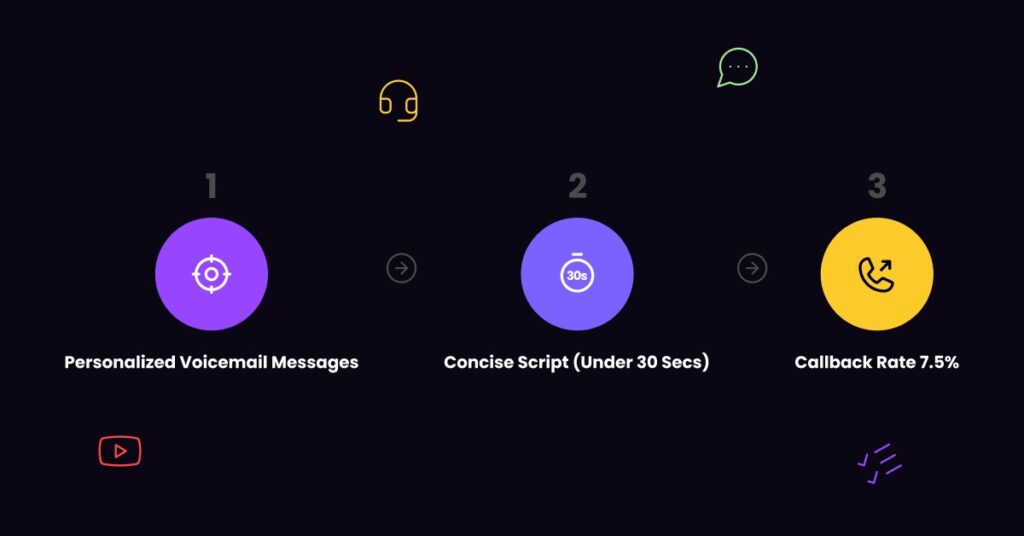
Personalize Your Messages
Tailor Voicemail Messages to the recipient’s name, company, role, and previous interactions. Explain why personalization boosts engagement. It increases callback Response Rates by making the message feel relevant and unique. Never use a generic script for your entire list. Always make the prospect feel like you researched their company before reaching out.
Keep Messages Short and Clear
Focus on concise 30–45 second Voicemail Messages with a single call-to-action (CTA). A long Voicemail Length invites the listener to hang up early. Avoid unnecessary details, jargon, or long explanations that can reduce effectiveness. Your goal is to spark curiosity and prompt a callback, not to deliver a full sales pitch.
Optimize Timing and Frequency
Highlight the best days and times to leave Voice Mail Messages for higher Response Rates. Suggest a follow-up cadence to maintain contact without overwhelming prospects. A multi-touch approach is necessary for the B2B Sales Cycle. Ensure you leave an appropriate time between contact attempts.
Leverage Automation Tools
Explain how automation tools like VoiceDrop.ai can scale campaigns efficiently while keeping messages human-like. Advise on balancing automated drops with personal follow-ups for high-priority leads. Integrate your Voice Mail platform with your CRM using a seamless process, such as a less annoying CRM integration.
Test, Measure, and Iterate
Encourage A/B testing scripts, timing, message length, and CTA phrasing. Show how continuous optimization improves engagement, conversions, and ROI. Never rely on a single script. Always test variations to see what resonates best with your Target Audience.
Measuring Success of Voicemail Campaigns
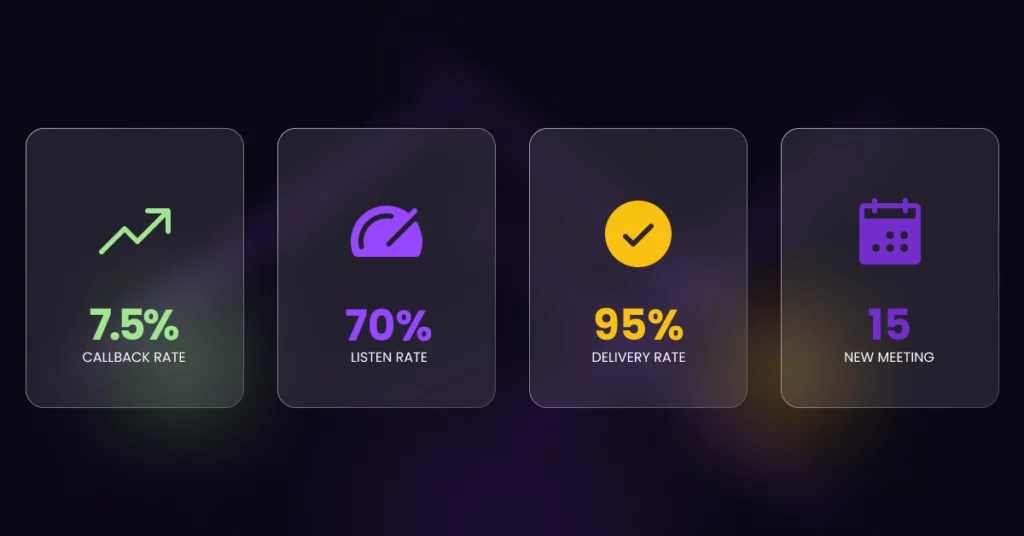
B2B companies must track the effectiveness of their Voicemail Marketing campaigns precisely. Analyzing campaign performance provides the data needed for optimization.
Key metrics include:
- Delivery Rate: Percentage of messages successfully delivered.
- Listen Rate: Percentage of the Voicemail Message the Target Audience hears.
- Callback Rate: The most critical metric, showing direct Response Rates generated by the Voicemail Message.
- Conversion Rate: Callbacks converted into booked meetings or demos.
Tools that integrate call tracking and analytics are essential for logging these metrics against the lead’s profile. This allows sales managers to see which Voicemail Messages drive the best results across different segments. Accurate measurement validates the ROI of your B2B Voicemail Marketing strategy.
Next Steps
B2B Voicemail Marketing is a proven strategy for sales growth. Start by auditing your current Outbound Sales process. Identify where Voice Mail can replace inefficient manual steps. Begin with a small segment of your Target Audience and test a concise, personalized Voicemail Message.
We strongly recommend VoiceDrop.ai as a platform for scaling and automating campaigns effectively. Its ringless technology, combined with easy CRM integration, allows you to maintain the human touch while achieving maximum Response Rates.
Ready to stop wasting time on manual dialing and start booking more meetings? Take control of your Sales Cycle and generate higher quality leads with personalized voice messaging.
Click here to schedule a demo and see the power of automated B2B Voicemail Marketing.
FAQ’s
Q1: What is B2B voicemail marketing?
B2B Voicemail Marketing is a strategy where businesses leave targeted, personalized Voicemail Messages for prospects to drive engagement, callbacks, and sales.
Q2: How do I personalize voicemails for B2B prospects?
Personalization can include mentioning the recipient’s name, company, role, past interactions, or relevant business challenges to make the Voicemail Message feel relevant and authentic.
Q3: When is the best time to leave B2B voicemails?
Data suggests mid-morning or mid-afternoon on weekdays typically yields higher callback Response Rates, but testing and segmenting by industry or audience type is recommended.
Q4: How can I track the success of my voicemail campaigns?
Track metrics such as callback rates, Response Rates, conversion rates, and ROI. Using analytics tools and A/B testing can help optimize campaigns.
Q5: Should I use automation for B2B voicemail campaigns?
Yes, tools like VoiceDrop.ai can scale campaigns efficiently while maintaining a human touch. Balance automation with manual follow-ups for high-value leads.