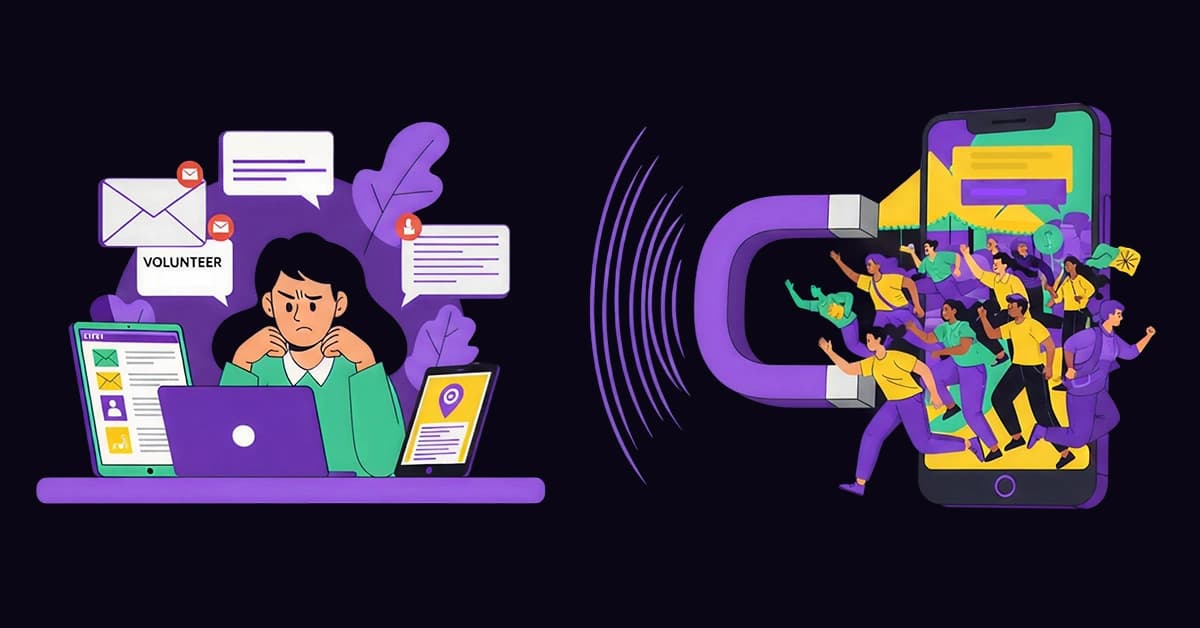
It is 48 hours before your biggest fundraising gala of the year. Or a disaster relief truck is scheduled to depart on Saturday morning. You look at the roster, and your heart sinks: you are still 20 volunteers short.
The email blast went out yesterday, and social media posts are live. Yet, the sign-up sheet remains stubbornly empty.
This is the “Empty Shift” nightmare that haunts every volunteer coordinator. In a world of overflowing inboxes, nonprofits can no longer rely on passive communication to fill urgent roles. To mobilize a community instantly, you need to cut through the digital noise. You need to speak to them directly at scale using Ringless Voicemail technology.
The “Empty Shift” Crisis: Why Traditional Recruitment Fails
For decades, nonprofits have relied on the same tools to rally their troops. However, in the modern digital landscape, these old methods fail to deliver results when time is of the essence.
The Email Black Hole
Your volunteers genuinely want to help, but they are fighting a losing battle against their inboxes. Between work updates, promotional spam, and family chains, your “Call for Help” gets buried.
With nonprofit email open rates hovering around 25%, the math is brutal: three out of four volunteers will never even see your request before the event begins. If they don’t see it, they can’t show up.
The Failure of Manual Phone Trees
When email fails, coordinators panic and grab the phone. But manual calling is a recipe for burnout. Calling 100 past volunteers takes roughly 5 hours of staff time. Most nonprofits simply do not have the workforce to make these individual calls while simultaneously managing event logistics.
The “Flake Factor” (No-Shows)
Even after securing sign-ups, organizations face “Volunteer Melt.” These are people who commit to a shift but forget to show up. This usually happens due to a lack of timely, personal reminders in the 24 hours leading up to the shift. The financial impact of this is significant.
According to the Independent Sector, the Value of Volunteer Time is currently estimated at over $30 per hour, underscoring the significant resource loss from empty shifts.
Why Audio Messages Mobilize Volunteers
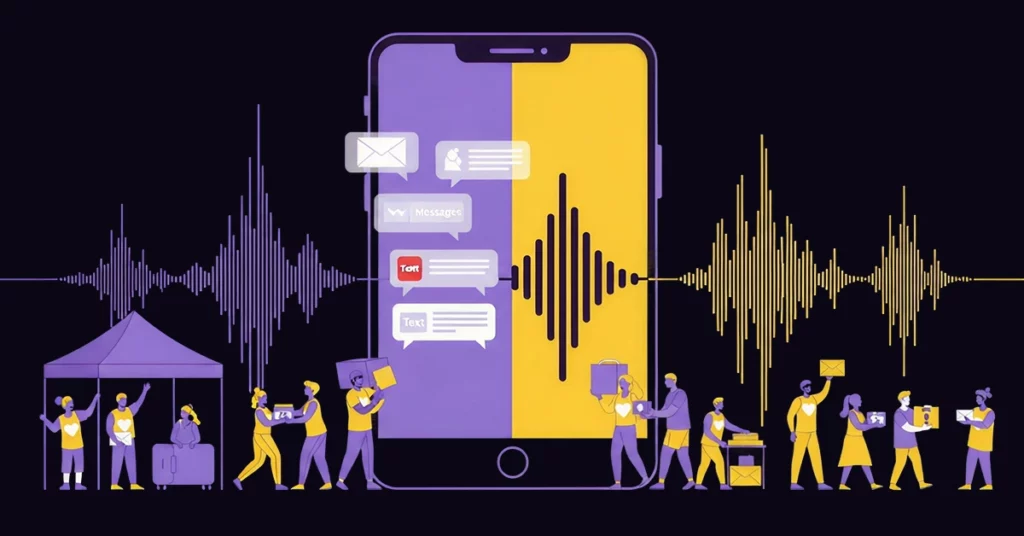
Why does a voice message succeed where a text-based email fails? The answer lies in the psychology of human connection and the nature of charitable work.
Emotional Urgency
A text message says, “We need help.” It is easy to ignore.
In contrast, a voice message from your Program Director saying, “We really need your help to feed families this Saturday,” carries emotional weight. The human voice conveys sincerity and urgency that text on a screen cannot replicate. Hearing a real person triggers a sense of social responsibility, driving the volunteer to act immediately.
Cutting Through the Noise
Visually, a “New Voicemail” notification stands out on a smartphone screen. It signals importance. When a volunteer sees that an organization took the time to “call,” they prioritize the message. To see how you can drop a message directly to their inbox without disturbing their day, explore Ringless Voicemail Marketing.
The Personal “Thank You”
Furthermore, this technology isn’t just for asking for favors; it is a powerful tool for gratitude. A CEO personally thanking volunteers via a voice note after an event significantly increases retention rates for the next campaign. Volunteers stay where they feel appreciated.
Step 1: Segmentation Strategies for Nonprofits
You cannot blast everyone for every single event. To avoid burning out your list and causing opt-outs, you must use smart segmentation strategies.
The “Reliable Regulars” List
These are individuals who have volunteered in the last six months. They do not need a sales pitch about the mission; they simply need a reminder of the schedule. Keep their messages short, logistical, and appreciative.
The “Donor-Volunteer” Bridge
You likely have a segment of donors who write checks but have never volunteered. This is an untapped goldmine. Target this group with a warm script inviting them to “see their dollars in action” by volunteering physically.
- The Challenge: You often only have donors’ email addresses.
- The Fix: Instantly find mobile numbers for your existing donor base and turn check-writers into changemakers with 1Lookup.
Skill-Based Groups
Segment your list by specific needs to ensure relevance. For example, send one message to those tagged as “Drivers needed” for food delivery and a different message to the “Event Setup crew” for heavy lifting.
You can easily identify these segments using modern tools, as seen in current trends in Volunteer management software.
Step 2: Ensuring Data Accuracy & Compliance
Nonprofits are often worried about rules regarding mass communication. Therefore, you must address data hygiene and the legalities of contacting your base.
Identifying Mobile Numbers
You cannot send voice drops to landlines, which many older donors still use as their primary contact. You need to filter your data to isolate mobile numbers before launching a campaign. This ensures your budget is spent on delivered messages rather than failed attempts.
Finding Lost Volunteers
Volunteers often move, change jobs, and change phone numbers. It is crucial to update contact info to reconnect with lapsed supporters who have gone silent. You can use tools specializing in Batch Skip Tracing to find current mobile phone numbers for lost volunteers or high-value donors. 1Lookup is built by the same team as VoiceDrop.
TCPA for Nonprofits
While strict rules exist for telemarketing, nonprofits often have specific allowances for informational messages sent to established members. Generally, communicating with your existing volunteer base regarding shifts is compliant, but we always advise checking your local laws to be sure.
Step 3: Crafting Scripts That Fill Shifts
To help you mobilize your team immediately, here are three actionable scripts you can record and send today.
The “Emergency Call” (Urgent)
“Hi [Name], this is [Director]. We are 5 people short for the food drive this Saturday. I immediately thought of you because you were so helpful last time. If you can spare three hours, please call us back or reply to the text I’m sending now.”
The “Event Reminder” (Retention)
“Hi [Name], just a quick reminder about your shift tomorrow. Parking is in the south lot. We can’t wait to see you there and appreciate your support!
The “Weather Update” (Logistical)
“Hi [Name], due to the rain, we are moving the registration tent inside the gym. Please enter through the west doors. See you soon!”
Step 4: Automating the Process with VoiceDrop
Drag, Drop, and Deploy. Manual calling is impossible when you are short on time. Here is the workflow that saves hours:
- Upload: Export your list from Salesforce, VolunteerMatch, or Excel, then upload the CSV directly to VoiceDrop.
- Schedule: Timing is everything. We suggest scheduling the recruitment blast for Tuesday evenings. This captures people as they plan their weekend, giving them enough notice without being too early.
- Sync: Ensure you track who was contacted. Use Integrations for Nonprofits to sync VoiceDrop with HubSpot or Zapier to automatically log every interaction.
Step 5: Handling the Inbound Response
The goal isn’t just to broadcast a message, but to fill the roster with actual bodies. Be prepared for the response.
The “I Can Help” Call-Back
The best VoiceDrop campaigns reach 8% to 10% callbacks, and half of all callbacks arrive within 8 minutes of the voicemail landing. Ensure a staff member is ready to answer the phone and add them to the roster instantly.
SMS Follow-Up
We suggest pairing the voicemail with a text message sent 10 minutes later. A simple text saying, “I just left you a voicemail about Saturday. Can we count on you?” significantly boosts response rates.
Measuring “Show-Up” Rate
Track your success by data. Compare the attendance rate of volunteers who received a VoiceDrop with that of volunteers who only received an email. You will likely see a sharp increase in reliability from the voice group.
Conclusion
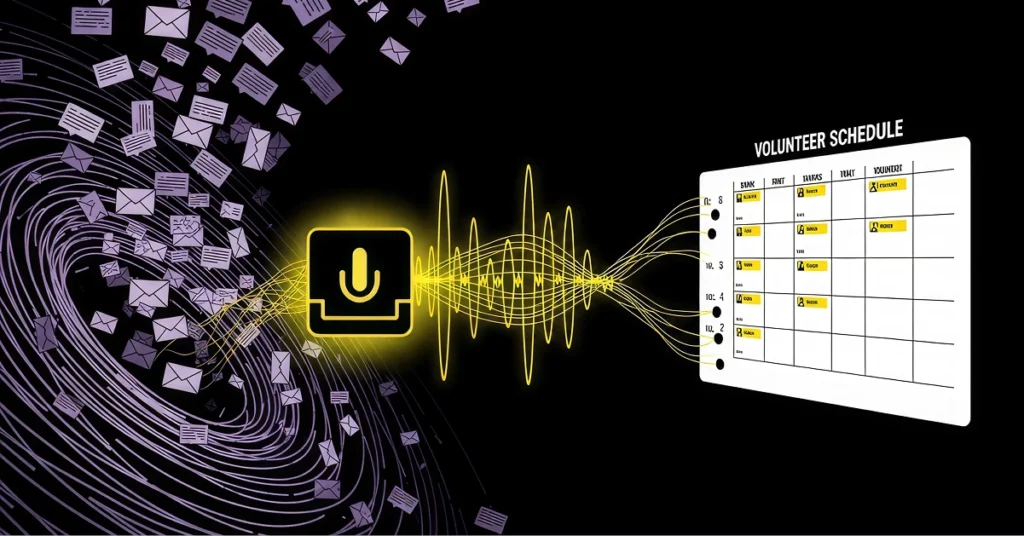
Stop Chasing Ghosts. Volunteers are the lifeblood of your organization, but you cannot afford to lose them to the “Email Black Hole.”
By moving away from passive emails and embracing the personal power of voice automation, you ensure that your shifts are full and your mission is supported. Don’t let your next event be affected by empty shifts.
Stop dialing manually. Start connecting emotionally. Get a Free Demo today and fill your roster in minutes.
FAQs
Is this legal for 501(c)(3) organizations?
Yes, communicating with your existing volunteer base regarding shifts is generally compliant, but always ensure you have consent from your supporters to contact them.
How much does it cost compared to direct mail?
It is significantly cheaper than postage and printing, and much faster, costing pennies per message compared to dollars per letter.
Can I record the message on my phone?
Yes, you can record a voice memo on your smartphone and upload it directly to the platform for a raw, authentic feel that resonates with volunteers.