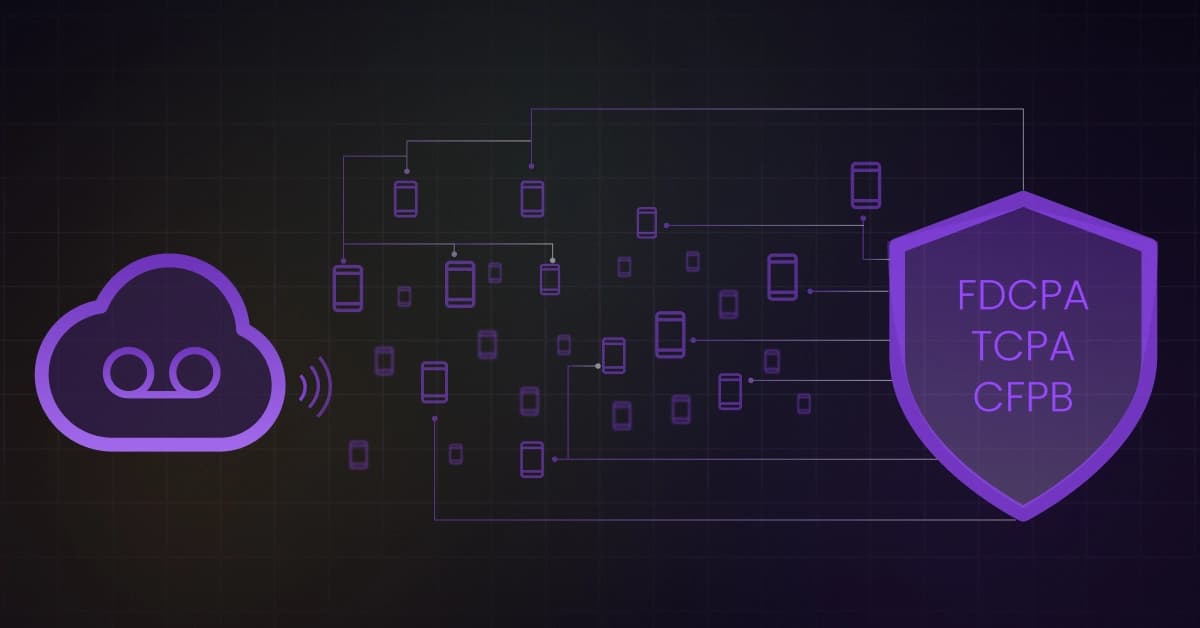
Is your agency spending too much time on manual Debt Collection Voicemail attempts that never connect? Are you worried that modern automation tools might expose you to massive legal risks under Consumer protection laws? How can debt collection agencies scale their outreach, improve payment response, and stay strictly compliant with FDCPA and TCPA rules? The environment for Debt recovery is tougher than ever. Agencies must prioritize efficiency and legal safety equally.
This expert guide explains how to use Debt Collection Voicemail automation effectively and legally. We will define how this strategy works, detail the strict legal framework you must follow (FDCPA, TCPA, CFPB), and provide actionable best practices. You will learn the importance of Limited-content messages, Record Keeping, and using specialized tools like VoiceDrop.ai to ensure safe, ethical, and highly effective Automated calls that deliver Payment reminders.
What Is Voicemail Automation in Debt Collection?
Voicemail automation is the use of specialized software to deliver voice messages directly into a debtor’s voicemail inbox. This happens without making the phone ring. This is known as Ringless voicemail technology in the context of mass outreach. This method allows debt collection agencies to send pre-recorded messages to hundreds or even thousands of contacts efficiently.
The benefit is immediate scalability. Debt collection agencies use voicemail automation to quickly deliver initial contact messages or Payment reminders. This non-intrusive contact is often viewed as less confrontational than a live call. It encourages debtors to call back when they are ready to talk. This leads to improved Response Rates compared to traditional live dialing. It frees up human agents from the tedious task of leaving repetitive messages, allowing them to focus on handling qualified callbacks. Platforms like VoiceDrop specifically offer compliant solutions for ringless voicemail in debt collection.
Legal Framework & Compliance for Debt Collection Voicemail
Compliance is the single most important factor when using Debt Collection Voicemail. Ignoring Compliance regulations like FDCPA, TCPA, and CFPB exposes agencies to severe legal penalties. You must understand how Consumer protection laws govern every step of your automated campaign.
FDCPA (Fair Debt Collection Practices Act)
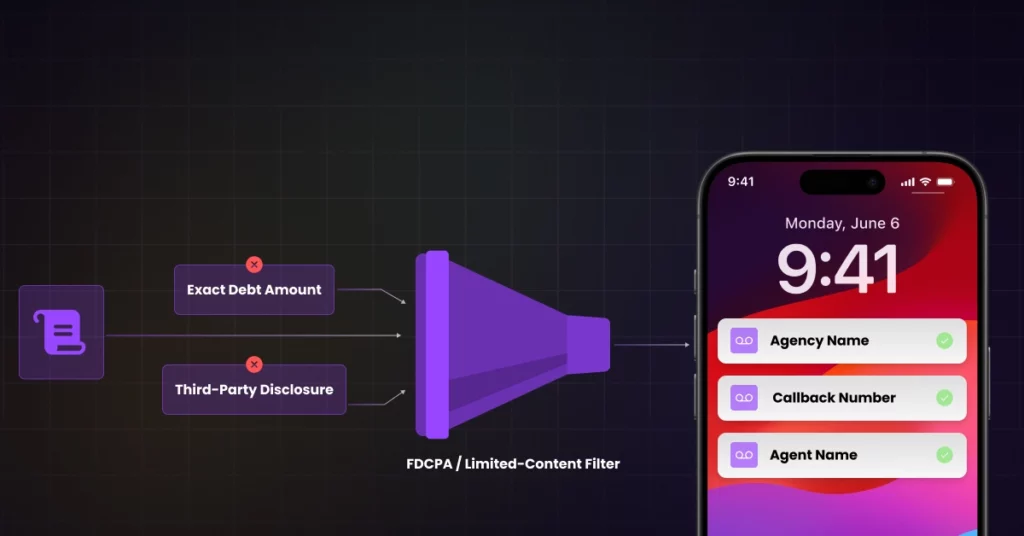
The FDCPA (Fair Debt Collection Practices Act) strictly governs what debt collectors can and cannot include in a Voicemail Message. It prohibits harassment, false statements, and threats. Crucially, the FDCPA restricts third-party disclosures. You cannot reveal sensitive debt details to anyone other than the debtor. A Voicemail Message must be carefully crafted to avoid disclosing that the recipient owes a debt, especially if a third party could hear it. This is why Limited-content messages are essential. Review the full FDCPA text to understand its requirements.
CFPB Debt Collection Rules
The Consumer Financial Protection Bureau (CFPB) provides modern rules that agencies must follow. These include clear limitations on the number of attempts and permissible contact hours. The CFPB introduced the concept of Limited-content messages. This is a Voicemail Message that provides enough information for the debtor to respond, but not enough to violate privacy if a third party hears it. Automated voicemail must fit within these rules, ensuring required disclosures are made without revealing sensitive information. These rules are key to Debt recovery success. Familiarize yourself with the CFPB’s official debt collection practices regulations.
FCC & TCPA Considerations
The FCC oversees telecommunications. The Telephone Consumer Protection Act (TCPA) restricts the use of automated dialing systems and pre-recorded messages. Generally, Automated calls require prior express consent. While the application of the TCPA to Ringless voicemail technology is still legally complex, the safest approach requires an Opt-out mechanism. Agencies must provide a toll-free number or key-press option for the consumer to stop receiving future calls. This protects the debtor and the agency. Learn more about the general TCPA regulations.
Time & Frequency Restrictions
The FDCPA and CFPB restrict the permissible hours for contact. Debt Collection Voicemail campaigns must only operate between 8 a.m. and 9 p.m. in the consumer’s time zone. You must limit the Frequency Rate of calls or messages to avoid harassment. Best practices suggest not exceeding one call or message attempt per week per account to ensure you adhere to Compliance regulations.
Recordkeeping & Documentation
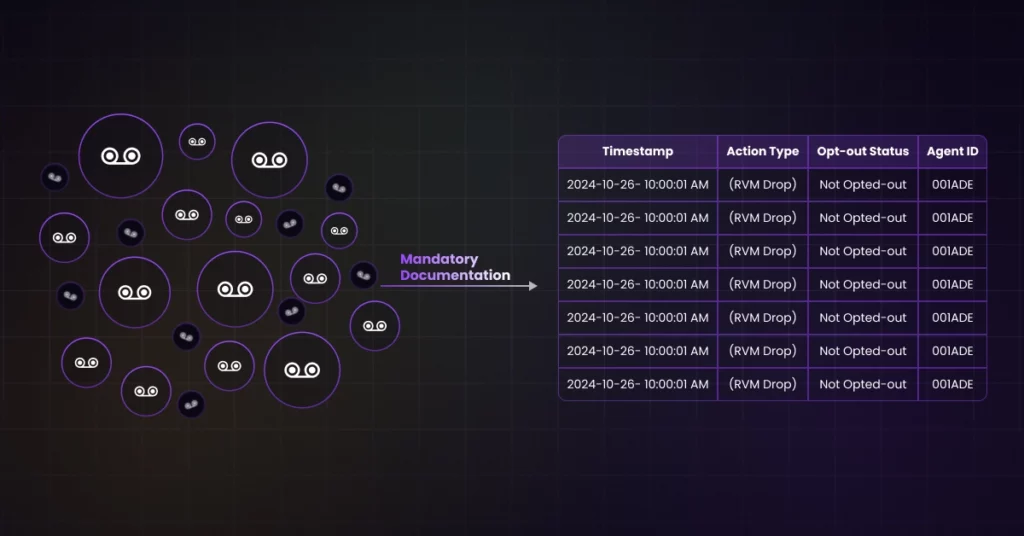
Agencies must keep detailed logs of all outreach attempts. This includes every Voicemail Message drop, live call attempt, opt-out request, and subsequent response. This documentation is crucial to demonstrate compliance during audits or legal reviews. Proper Record Keeping protects the agency in case of a consumer dispute or lawsuit.
How to Use Voicemail Automation Ethically & Effectively
Voicemail automation is a powerful tool for Debt recovery when used responsibly. Agencies must commit to ethical debt collection strategies, maintaining professionalism and respecting debtors while following all legal guidelines.
Designing Compliant Voicemail Scripts
Creating compliant Voicemail Scripts is a balancing act. You must identify your agency without stating that you are a debt collector. What to include: the business name (avoiding explicit “debt collector” reference), a request for a callback, the contact person’s name, and the phone number. What not to include: No detailed debt information, threats, or harassing language. Optional inclusions: the date and time of the message, suggested callback windows, and a professional greeting. These are all examples of Limited-content messages.
Setting Up Campaign Limits
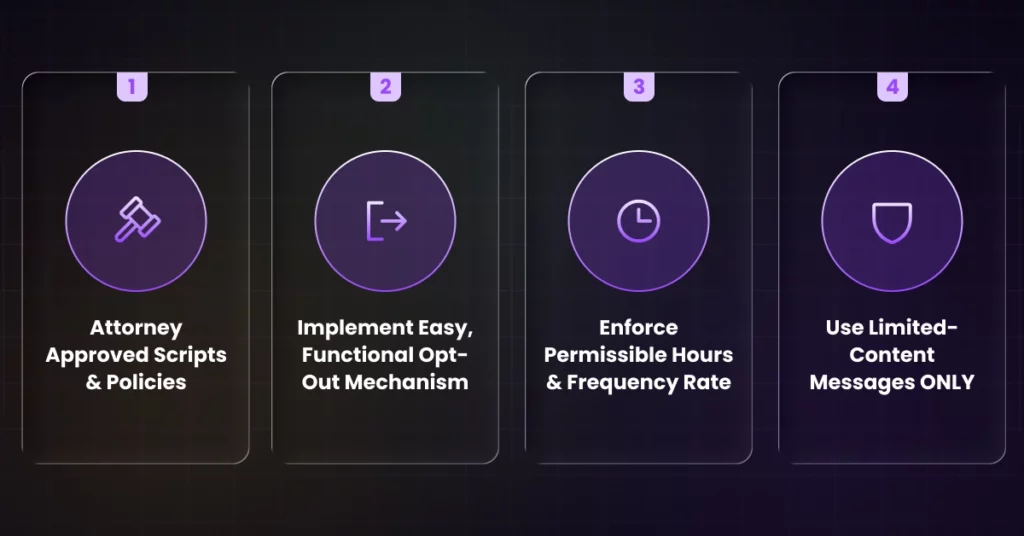
Agencies must use frequency caps within their automation software. This prevents excessive contact that could be considered harassment under the law. Schedule voicemails strictly during permissible hours (8 a.m. to 9 p.m.) in the consumer’s local time zone to ensure full Compliance with regulations.
Implementing Opt-Out
A functional Opt-out mechanism is necessary for legal compliance. Provide a toll-free number or interactive key-press option within the Voicemail Message itself. This allows recipients to stop further automated calls. The opt-out process must be easy to understand and immediately functional, ensuring all requests are honored quickly.
Maintaining Records
Agencies must keep detailed logs of all automated and manual outreach. This means tracking Ringless voicemail technology drops, all call attempts, and opt-outs. Maintaining comprehensive records provides strong documentation for compliance audits and legal verification.
Best Practices for Collection Messages
Collection messages must be professional, respectful, and concise. Focus on clarity, tone, and avoiding any language that could be perceived as threatening or harassing. This ensures compliance and fosters better consumer engagement.
Payment reminders are effective when delivered gently. A message might acknowledge the difficulty of the situation before asking for a call back. Suggest types of messages suitable for different scenarios. For example, use a soft Voicemail Message for the first contact. Use a slightly firmer, but still compliant, message for a follow-up after a broken Payment reminders promise. Always stay compliant with legal guidelines, framing the call as a courtesy rather than a demand.
Compliance Checklist & Tools
A practical checklist ensures all voicemail automation campaigns meet legal requirements. Always prioritize safety.
Key compliance items:
- Script review for FDCPA/TCPA compliance (ensuring Limited-content messages).
- An opt-out mechanism is in place and clearly stated in the Voicemail Message.
- Call frequency limits set (e.g., 7 attempts per 7 days).
- Restricted call times enforced (8 a.m.–9 p.m. local time).
- Clear logging and documentation are enabled for every drop.
Tools that help automate compliance, such as VoiceDrop.ai, offer built-in regulatory safeguards and reporting. These features help agencies automate campaign messaging safely and efficiently.
Risk Mitigation Tips
Strategies to reduce potential legal and reputational risks in Debt Collection Voicemail messaging are vital. Prioritize ethical practices over aggressive tactics. Use Limited-content messages exclusively, even for first-party debt. Always avoid mentioning sensitive debt details or the exact amount owed. Monitor and immediately honor all opt-out requests. Train staff thoroughly on compliant communication and the legal definition of harassment. Consistent training is the best defense against costly legal action.
Attorney Consultation Advice
Never launch a Debt Collection Voicemail campaign without legal review. Consult debt collection attorneys for script approval, campaign policies, and to verify local and federal Compliance regulations. An attorney ensures your Voicemail Scripts qualify as Limited-content messages under CFPB rules. They also verify that your Ringless voicemail technology and Opt-out mechanism meet TCPA requirements. This legal consultation is a necessary investment in safe and ethical Debt recovery. VoiceDrop offers insights on compliance specific to collection agencies.
Recordkeeping & Auditing
Maintaining accurate records is crucial for compliance and audits. Log every Voicemail Message drop, Automated calls attempt, opt-out, and subsequent response. This data proves adherence to FDCPA, TCPA, and company policies. Suggest periodic audits (quarterly or biannually) of campaign logs and scripts. These audits verify that the agency consistently follows Compliance regulations and uses only approved, Limited-content messages.
Message Timing Guidelines
Rules and best practices for when to send Debt Collection Voicemail are non-negotiable. Permissible hours are 8 a.m. – 9 p.m. in the consumer’s time zone. Avoid excessive frequency. Payment reminders should be spaced out. Automated systems must be configured to check time zones accurately. Balancing effectiveness with compliance reduces complaints and legal risk, promoting Ethical debt collection strategies.
Final Thoughts on Ethical Debt Collection Voicemails
Debt Collection Voicemail automation, when done ethically and in compliance with FDCPA, TCPA, and CFPB rules, improves collections efficiency and debtor engagement. Agencies must commit to Ethical debt collection strategies. Implement compliant voicemail campaigns, use tools like VoiceDrop.ai for automation and compliance, consult legal advisors, and maintain proper records to minimize risk. This is the only path to scalable, sustainable Debt recovery.
Ready to streamline your collections process while ensuring legal safety? Stop risking fines with non-compliant calls. Start delivering effective, compliant Payment reminders today.
Click here to schedule a demo and see how VoiceDrop can provide compliant automation.
FAQ’s
Q1: What is voicemail automation for debt collection?
Voicemail automation uses pre-recorded messages or AI-generated messages to reach debtors’ voicemail inboxes without ringing their phones, allowing agencies to efficiently deliver reminders or payment requests.
Q2: Is using voicemail automation for debt collection legal?
Yes, as long as it complies with FDCPA, TCPA, CFPB rules, and includes Limited-content messages, a proper Opt-out mechanism, and avoids harassment or threats.
Q3: What should a compliant debt collection voicemail include?
Include business name (avoiding explicit “debt collector”), callback request, contact person, and phone number. Optional additions: date/time, greeting, and suggested callback windows.
Q4: What should not be included in a voicemail message?
Do not include detailed debt information, threats, harassment, or sensitive personal data that could violate privacy or regulatory guidelines.
Q5: How often can I leave debt collection voicemails?
Frequency should follow legal guidelines, generally avoiding excessive calls (e.g., not more than 7 attempts per week) and staying within permissible hours (8 a.m.–9 p.m.).