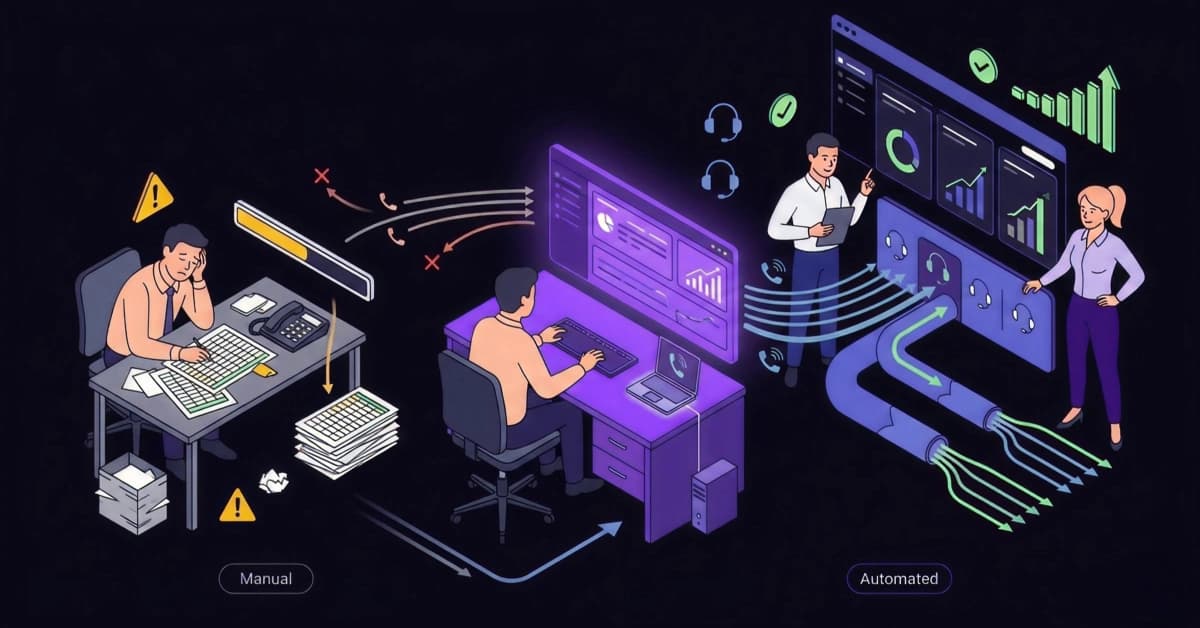
The sales landscape has shifted dramatically over the last few years, yet one truth remains: cold calling isn’t dead. However, the era of manual dialing is effectively over. In 2026, relying on a physical keypad or a spreadsheet to drive new business is not just inefficient; it is a recipe for stagnation.
Current industry data reveal a harsh reality: the average cold-calling success rate has dropped to approximately 2.3%.
Consequently, small businesses can no longer afford to waste valuable hours manually dialing 50 numbers a day only to face rejection or silence.
To compete with industry giants who operate massive call centers, small businesses need software that acts as a force multiplier, allowing a team of two to perform like a team of twenty.
Why Manual Dialing is Killing Your Small Business Growth
Before exploring the solutions, it is crucial to understand why the old methods are failing. Manual dialing creates bottlenecks that stifle revenue growth, often in ways that business owners do not immediately recognize.
The Hidden Cost of “Dial Time”
The most significant drain on a sales team is not the conversation itself, but the time spent trying to start one. When your team dials manually, they lose countless hours listening to dial tones, ringing signals, and voicemail greetings.
Stop wasting hours dialing disconnected numbers or contacting the wrong people. Use 1Lookup’s phone validator to pre-screen your prospects and only dial valid numbers. 1Lookup is built by the same team as VoiceDrop.
In fact, studies show that nearly 80% of a salesperson’s time is wasted on these non-conversational activities. Therefore, instead of pitching your product, your best talent is essentially waiting on hold, which destroys productivity.
Burnout and Call Reluctance
Beyond the financial cost, small teams face a severe psychological toll. High repetition combined with low connection rates inevitably leads to “call reluctance.” When a salesperson faces hours of unanswered calls, their energy for the next pitch diminishes.
As a result, morale drops, turnover increases, and revenue slows down because the team is simply too burnt out to perform at its best.
Key Features You Can’t Ignore in 2026
Not all sales tools are created equal. To truly accelerate growth, you must identify specific capabilities that distinguish “average” VoIP tools from true growth engines.
Power Dialers vs. Predictive Dialers
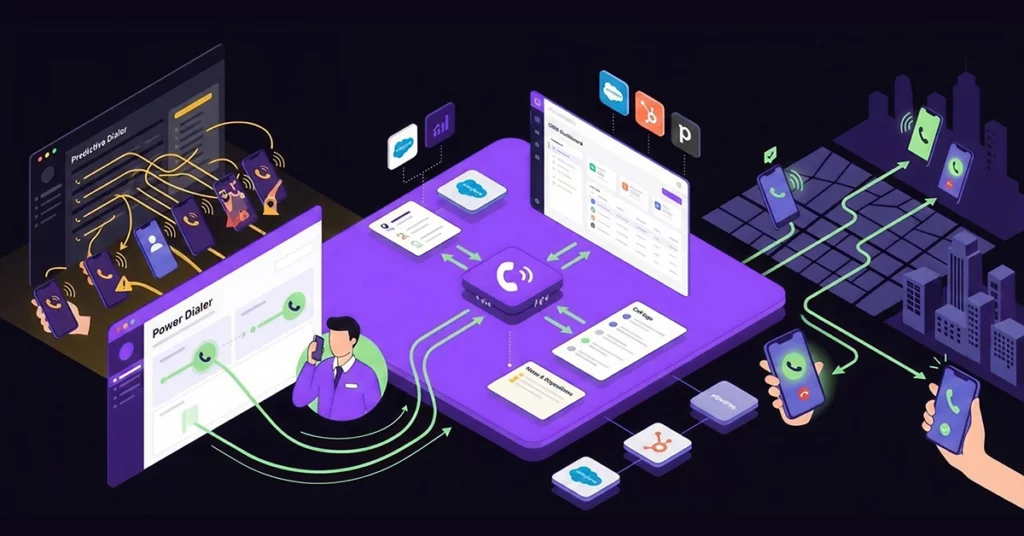
Understanding the difference between dialer types is essential for selecting the right tool. A Predictive Dialer calls multiple lines simultaneously and is generally best suited for large call centers with huge staffing levels.
On the other hand, small teams usually benefit more from a Power Dialer. This tool dials one number at a time but does so instantly after the previous call ends, ensuring your sales rep is always ready to speak without the awkward “hello?” pause typical of predictive systems.
CRM Integration & Data Sync
Efficiency is impossible if your data is siloed. If your calling software does not sync bidirectionally with your Customer Relationship Management (CRM) system, your team will waste hours on double data entry.
Seamless integration is the backbone of modern sales stacks, ensuring that every call log, note, and disposition is automatically saved.
For example, VoiceDrop offers CRM seamless integrations that connect effortlessly with platforms like Salesforce, HubSpot, and Pipedrive to keep your data pristine.
Local Presence Dialing
Another game-changing feature is Local Presence Dialing. This technology automatically adjusts your outgoing caller ID to match the prospect’s area code.
Because people are significantly more likely to answer a call that appears local, this simple feature can instantly boost your pick-up rates.
Top Cold Calling Software Contenders for 2026
Choosing the right software can be overwhelming given the number of options available. To help you decide, here is a curated list of top contenders, categorized by their strengths and weaknesses.
You can also cross-reference these options with current software review benchmarks to see how they stack up in real-time user satisfaction.
- Aircall (Best for Integration): Aircall is widely praised for its extensive app ecosystem. It integrates with almost every tool imaginable, making it a strong choice for tech-heavy teams, although it can become expensive on a per-user basis.
- RingCentral (Best for Unified Comms): If you need video meetings and team chats alongside your dialer, RingCentral is a solid all-in-one platform. However, for teams strictly focused on cold calling, its robust feature set might be overkill.
- Close (Best for Startups): Close is a CRM with calling features built directly into its core. It is excellent for startups building their process from scratch, though migration can be difficult if you already use a different CRM.
- Myphoner (Best for Budget): For solopreneurs or very small teams on a tight budget, Myphoner offers a lightweight, easy-to-use interface without the complexity of enterprise tools.
The “Smart” Alternative: VoiceDrop
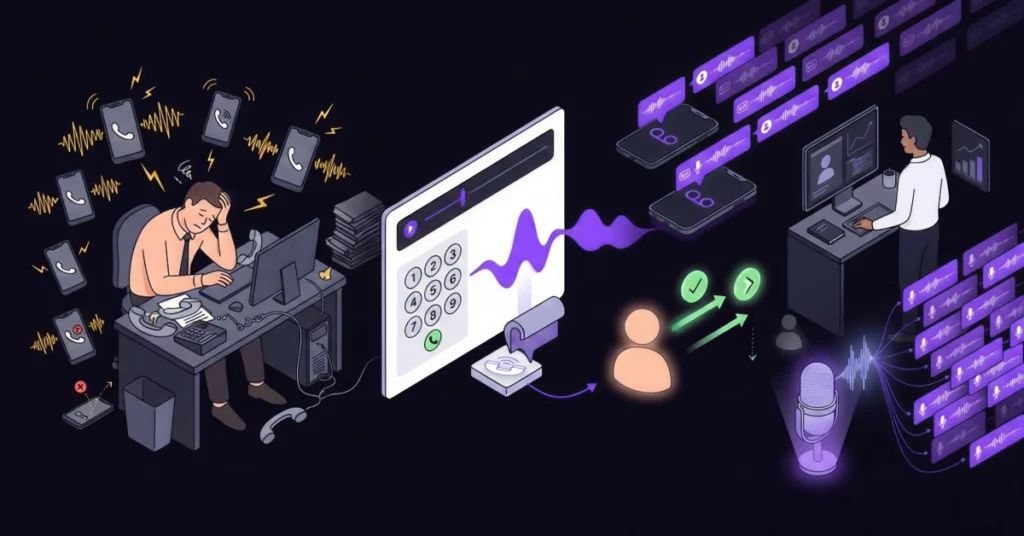
While standard dialers are effective, they still require a human to be present for every single attempt. There is a smarter way to scale that prevents burnout entirely.
Why Dial When You Can Drop?
Imagine reaching thousands of prospects without dialing a single phone number. Ringless Voicemail (RVM) technology allows you to drop a pre-recorded message directly into a prospect’s voicemail inbox.
This method respects the prospect’s time and allows a small business to reach thousands of prospects in minutes, not months. By using automated voicemail drops, your team only speaks to leads who listen to the message and call back, effectively filtering out uninterested parties.
AI Voice Cloning for Scale
VoiceDrop takes this a step further with AI voice cloning. This feature allows a business owner to create a synthesized version of their own voice.
Consequently, you can generate personalized voicemail campaigns where it sounds like you personally left 500 messages, all while you focus on closing deals rather than dialing phones.
Measuring Success: KPIs That Matter
A software tool is only as valuable as the data it provides. To ensure your investment is paying off, you must track specific Key Performance Indicators (KPIs).
Connection Rate vs. Conversion Rate
It is vital to distinguish between activity and results. Connection Rate measures how many people answer the phone, while Conversion Rate measures how many of those calls result in a next step or sale.
You need a tool that tracks both separately, as a high connection rate with low conversion indicates a coaching problem, while the reverse indicates a data problem.
Low connection rates are often a sign of bad data. Before you blame the dialer, verify the accuracy of your lead list with 1Lookup to ensure you’re dialing real people.
Average Talk Time
Furthermore, keep a close eye on your average talk time. Generally, longer calls indicate better-qualified leads and more meaningful conversations. If your talk times are short, your opening pitch may need adjustment.
For more context on what constitutes a healthy duration, you can review industry-standard sales performance statistics to benchmark your team against the competition.
Essential Compliance Features (Stay Legal)
Small businesses often overlook compliance, which can lead to devastating fines. Modern software must protect you from legal risks.
Automated DNC Scrubbing
Compliance begins with data hygiene. Your calling software must have a built-in feature that automatically checks your contact lists against the National Do Not Call (DNC) registry.
This ensures that you never accidentally dial a prohibited number, protecting your business from potential litigation.
Caller ID Reputation (STIR/SHAKEN)
In the age of spam filters, maintaining your number’s reputation is critical. Cheap software often recycles bad numbers, leading your calls to be flagged as “Scam Likely.”
You need tools that rotate numbers and adhere to the FCC call authentication framework (STIR/SHAKEN) to ensure your calls are delivered as verified and trustworthy.
Conclusion
Ultimately, the best cold calling software for your business isn’t necessarily the most expensive one with the most bells and whistles. Rather, it is the one that saves you time and allows your team to focus on selling rather than dialing.
For the best results in 2026, consider a hybrid approach. Use traditional power dialers for your highest-value, warmest leads, and utilize VoiceDrop automation for high-volume, top-of-funnel outreach. This strategy ensures you maximize coverage without burning out your staff.
Stop dialing manually. Start scaling intelligently. Try VoiceDrop Demo today to see how automation can transform your sales process.
FAQ’s
Is cold calling still effective for small businesses in 2026?
Yes, but only with the right technology. With conversion rates dropping, success relies on volume and precision, using software to automate dialing and data entry so you focus only on interested prospects.
How much does cold calling software cost for a small team?
Prices vary wildly. Basic VoIP starts around $20/user/month, while advanced AI-dialers can reach $100+/user. Tools like VoiceDrop offer high-volume packages that are often more cost-effective for reaching large lists.
Can I use my cell phone for business cold calling?
You can, but you shouldn’t. It risks your personal number being flagged as spam, lacks CRM integration, and offers no analytics. Always use dedicated software with a business number.